Artwork
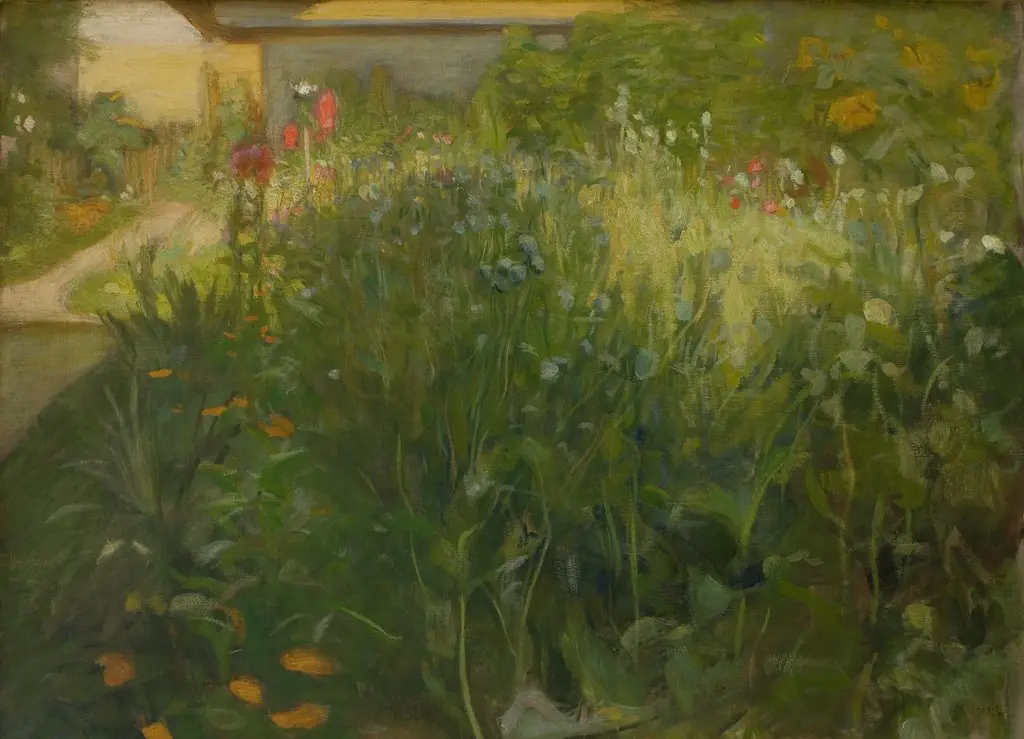
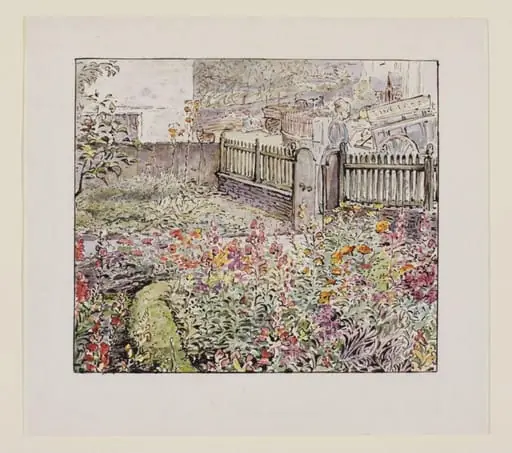
Phlox [a corner of a country garden]
![Phlox [a corner of a country garden], by Ernest Albert Chadwick, watercolor, 1910](https://artifactworldgallery.com/img/ernest-albert-chadwick--phlox-a-corner-of-a-country-garden--692a6ad859748433-w1024.webp)
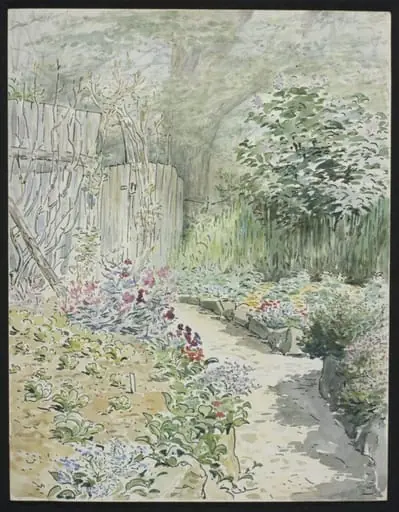
Phlox [a corner of a country garden] is a watercolor work on paper by the Post-Impressionist artist Ernest Albert Chadwick. It dates from 1910 and is held in the collection of the Victoria and Albert Museum.
About this work
Overview
Ernest Albert Chadwick’s 1910 watercolour, Phlox [a corner of a country garden], captures a quiet corner of a domestic garden in delicate washes.
Ernest Albert Chadwick’s 1910 watercolour, Phlox [a corner of a country garden], captures a quiet corner of a domestic garden in delicate washes. Executed in transparent pigments on paper, the work reflects the artist’s interest in intimate natural scenes. It is part of the Victoria and Albert Museum’s collection, where it stands as an example of early 20th-century British watercolour practice focused on botanical observation.
Subject & Meaning
The painting centers on a dense cluster of phlox flowers in vivid reds and pinks, their petals rendered with careful attention to form. Surrounding foliage in muted greens and soft yellows frames the blooms without overwhelming them. A distant suggestion of architecture implies a cultivated space, grounding the scene in domestic life. The composition invites quiet contemplation rather than dramatic narrative, emphasizing the beauty of ordinary botanical detail.
Technique & Style
Chadwick employed loose yet controlled brushwork to build texture and volume, allowing the paper’s white to suggest light on petals and leaves. Layers of transparent washes create depth without heaviness, while fine lines define individual stems and veins. The balance between spontaneity and precision gives the plants a lifelike presence, avoiding artificial rigidity while maintaining botanical accuracy.
History & Provenance
The painting was completed in 1910 and entered the Victoria and Albert Museum’s collection shortly thereafter. Its acquisition reflects the institution’s broader interest in documenting British decorative and fine arts of the period. No significant provenance gaps are recorded, and it has remained in public hands since its creation, consistently displayed as part of the museum’s watercolour holdings.
Context
In the early 1900s, British watercolourists often turned to garden subjects as a means of capturing fleeting natural beauty amid industrialization. Chadwick’s work aligns with this trend, sharing affinities with contemporaries like Walter Sickert and John Singer Sargent in their focus on light and intimate observation. The painting reflects a broader cultural appreciation for horticulture and the domestic landscape as worthy artistic subjects.
Legacy
Though not widely reproduced, Phlox remains a representative example of early 20th-century British watercolour technique. Its presence in the V&A’s collection ensures continued access for study and appreciation. The work contributes to the understanding of how artists of the period used watercolour not merely as a sketching medium, but as a refined vehicle for sustained observation of the natural world.
Artist & collection
Artist
English painter Ernest Albert Chadwick worked in watercolour, often small, neat scenes of everyday plants and corners of gardens.