Artwork
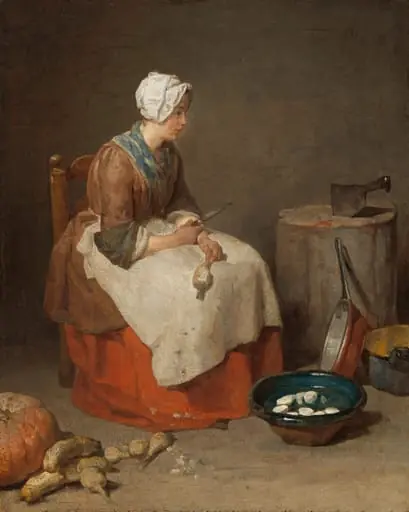
The Scullery Maid
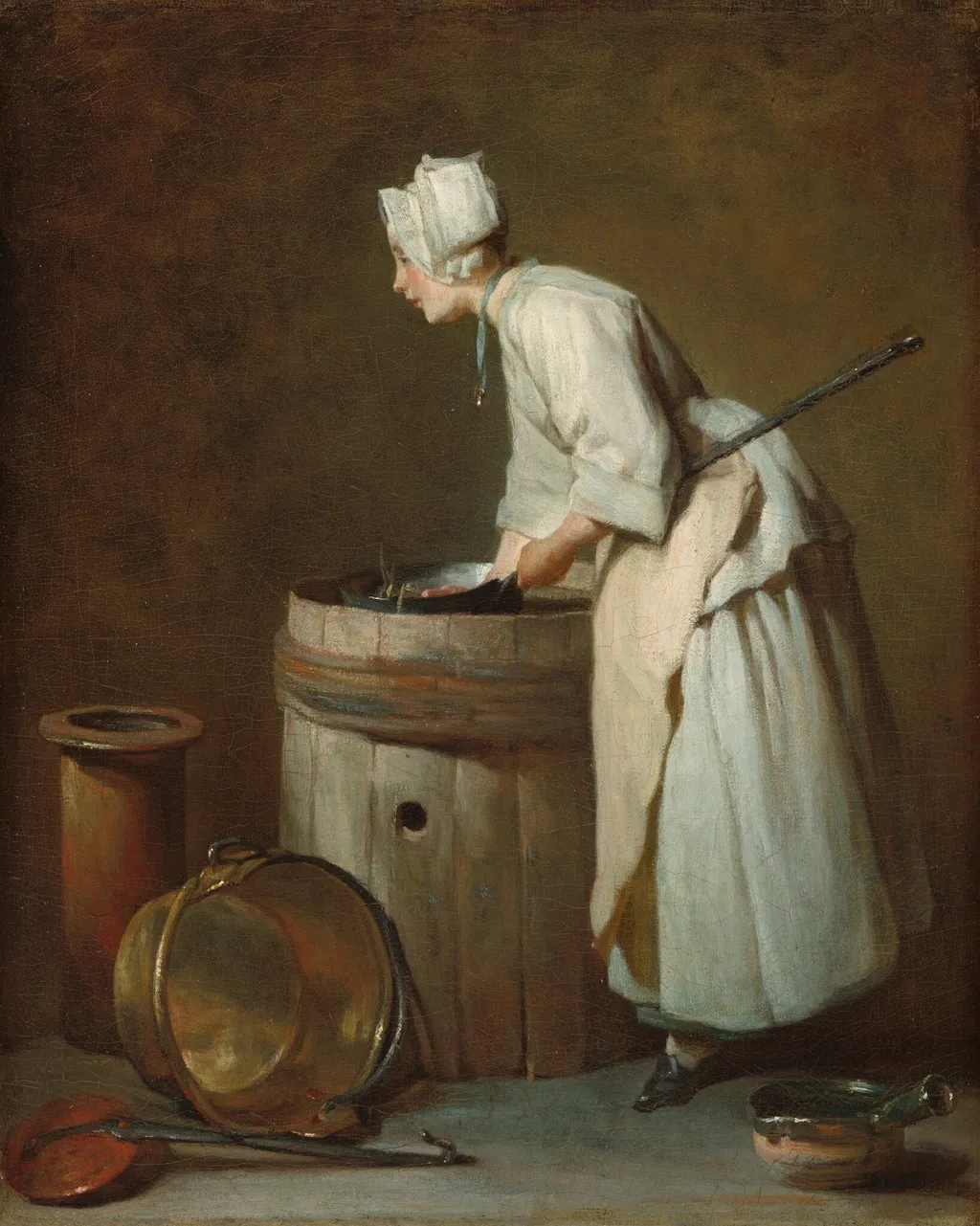
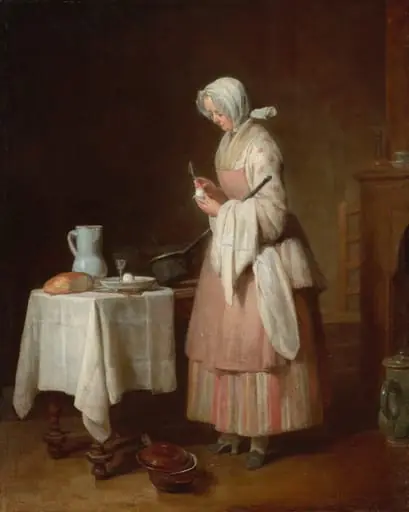
The Scullery Maid is an oil painting by the Baroque artist Jean Siméon Chardin. It dates from 1738 and is held in the collection of the National Gallery of Art.
About this work
Overview
Jean Siméon Chardin's painting, The Scullery Maid, rendered in oil on canvas around 1738, captures a moment of quiet domesticity.
Jean Siméon Chardin's painting, The Scullery Maid, rendered in oil on canvas around 1738, captures a moment of quiet domesticity. This genre scene depicts a young woman engaged in her daily tasks within a modest interior, surrounded by the tools of her trade. The artwork exemplifies Chardin's characteristic focus on the unadorned realities of common life, offering a window into the routines of 18th-century households.
Subject & Meaning
The painting portrays a maid absorbed in her work, her gaze directed downwards as she attends to her duties. Everyday objects like pots, pans, and various utensils are meticulously arranged around her, emphasizing the mundane yet essential nature of her labor. Chardin elevates this ordinary scene by imbuing it with a sense of quiet dignity and introspection, eschewing the dramatic narratives or idealized figures often favored in contemporary art.
Context
During an era when much of European painting celebrated grand historical events, mythological tales, or aristocratic portraits, Chardin distinguished himself by focusing on the humble and the domestic. The Scullery Maid exemplifies this artistic choice, presenting an unpretentious view of a working-class individual's life. This quiet observation of the everyday offered a novel perspective, inviting viewers to find beauty and significance in the ordinary rather than the extraordinary.
Own this work as a print
Artist & collection