Artwork
On the East Coast
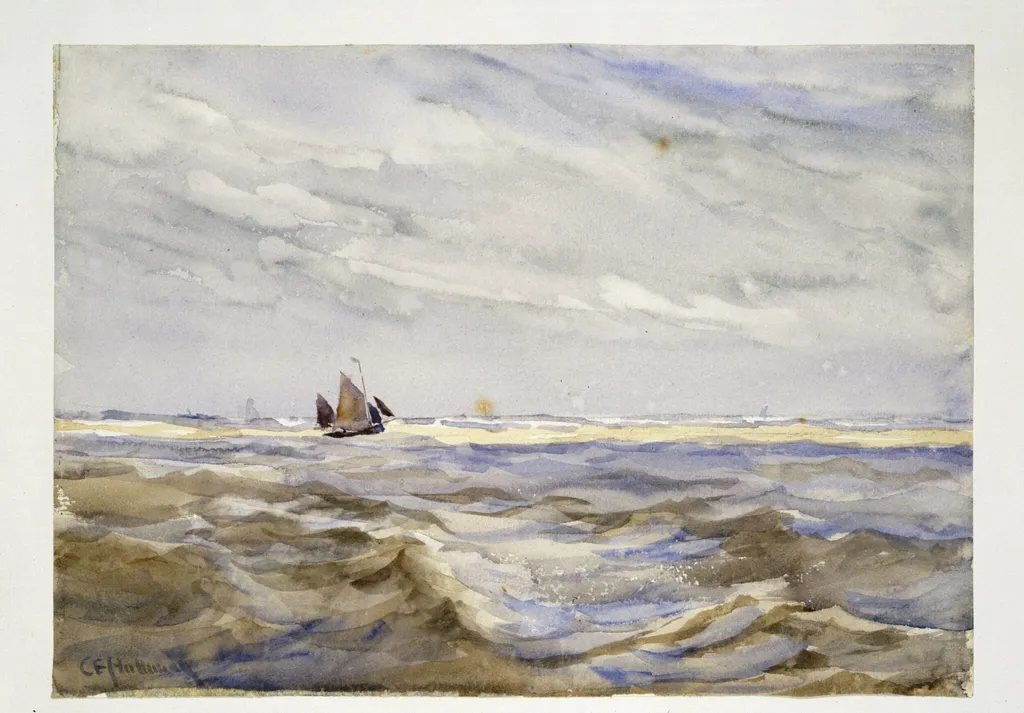
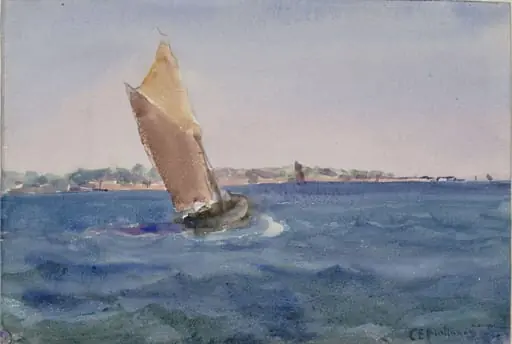
On the East Coast is a watercolor work on paper by Charles Edward Holloway. It dates from 1850 and is held in the collection of the Victoria and Albert Museum.
About this work
Overview
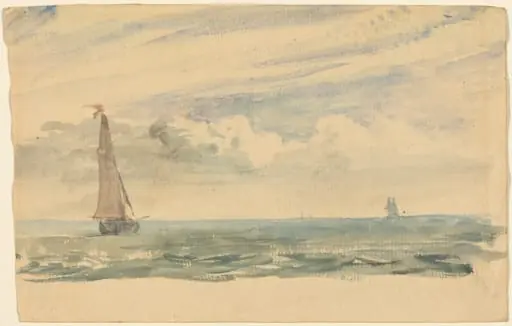
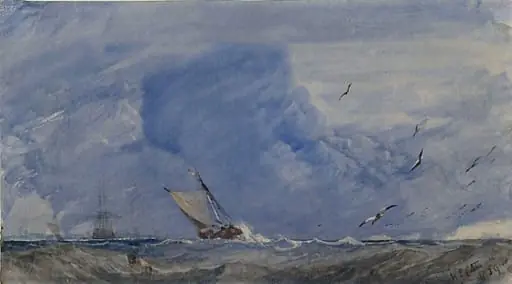
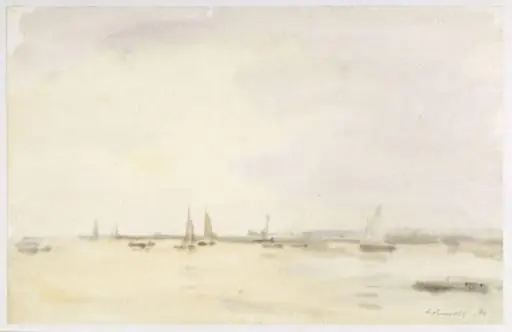
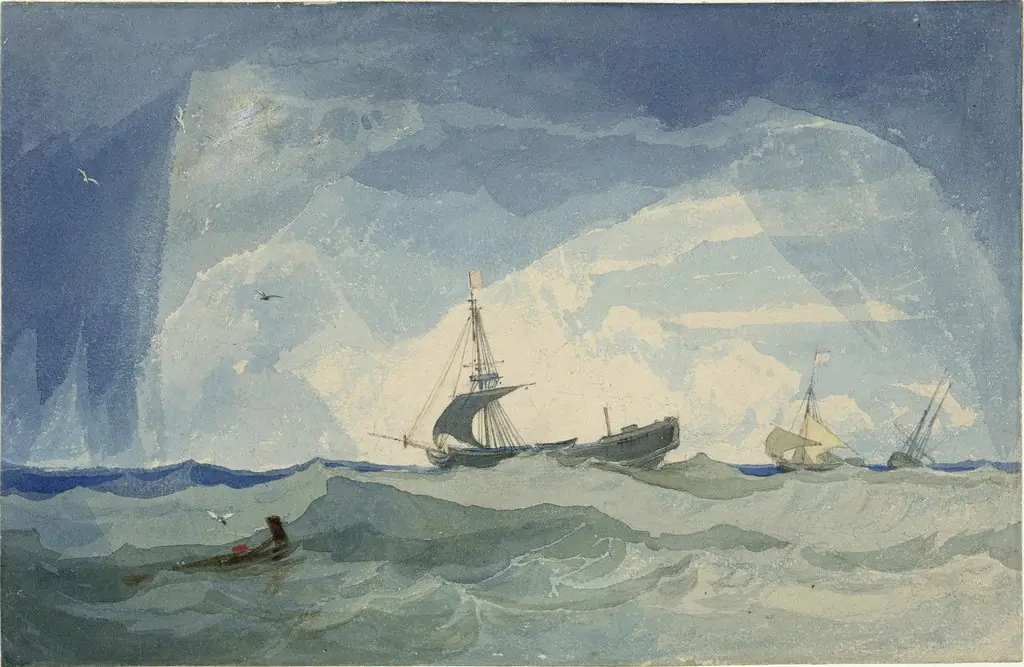
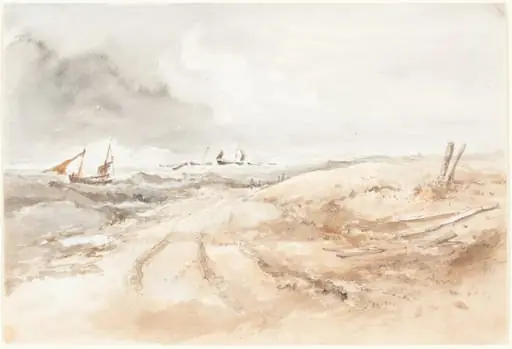
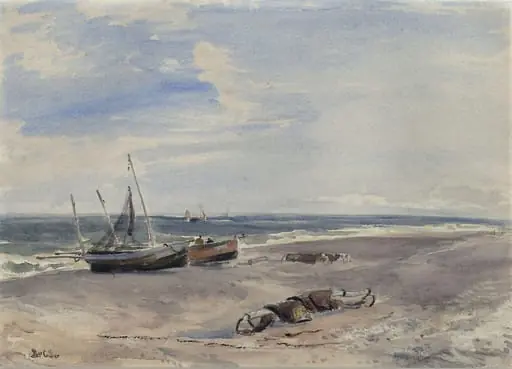
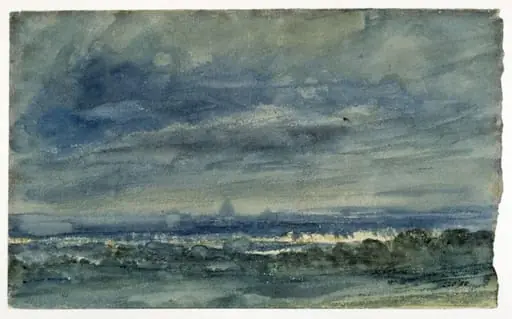
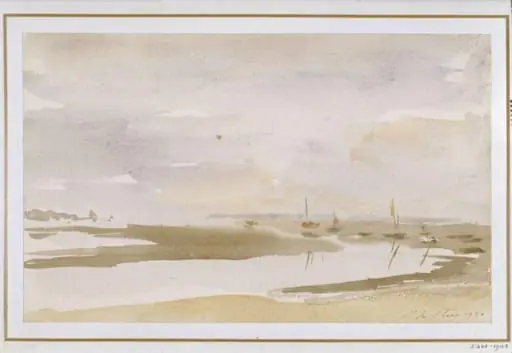
Painted in 1850 by Charles Edward Holloway, this watercolour captures a quiet maritime scene along the eastern coastline.
Painted in 1850 by Charles Edward Holloway, this watercolour captures a quiet maritime scene along the eastern coastline. The work is signed by the artist and executed in delicate washes, emphasizing atmosphere over detail. A small two-masted vessel drifts near the horizon, its sail catching a faint breeze. The composition balances stillness and subtle motion, inviting contemplation rather than narrative.
Subject & Meaning
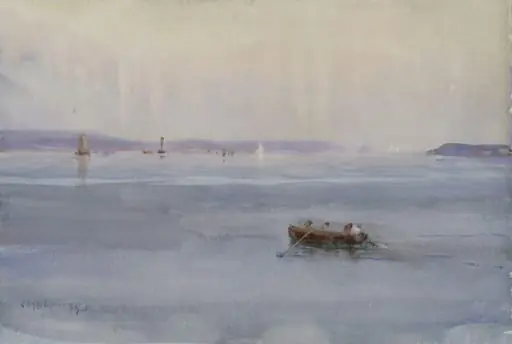
The painting presents a solitary boat adrift on a subdued sea, suggesting solitude or quiet labor. No figures are visible, and the horizon remains unbroken, reinforcing a sense of isolation. The absence of land or human activity shifts focus to the elemental relationship between vessel, water, and sky. It evokes the rhythm of coastal life without overt symbolism, leaving interpretation open.
Technique & Style
Holloway employed transparent watercolour washes to build layered tones of blue and gray, allowing the paper’s white to suggest light on wave crests. Soft edges and minimal detail create a hazy, atmospheric effect. The ripples are rendered with fine, fluid strokes, giving the sea a tactile, breathing quality. The technique prioritizes mood over precision, aligning with 19th-century British watercolour traditions focused on light and tone.
History & Provenance
Created in 1850, the work bears the artist’s signature, confirming its origin. While its early ownership is undocumented, it entered institutional collection through established channels typical of British watercolours of the period. The piece has remained in public hands since, with no record of private sale or significant alteration. Its preservation reflects its status as a representative example of Holloway’s output.
Context
In mid-19th century Britain, watercolour was widely used for landscape and coastal studies, often by amateur and professional artists alike. Holloway worked within this tradition, producing scenes that reflected the era’s fascination with nature’s subtleties. Unlike dramatic Romantic seascapes, his work favors restraint, echoing the quiet realism favored in regional art circles and exhibitions of the time.
Legacy
Holloway’s watercolours, including this one, are held in public collections as modest but well-crafted examples of Victorian coastal observation. Though not widely exhibited today, they contribute to the understanding of non-heroic marine painting in Britain. The work remains a quiet testament to the medium’s capacity for evoking stillness and the passage of time through restrained technique.
Own this work as a print
Artist & collection