Artwork
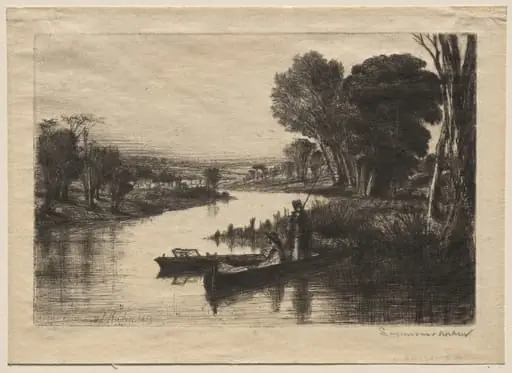
The Boat Trip: The Cabin Boy Fishing (Line Fishing)
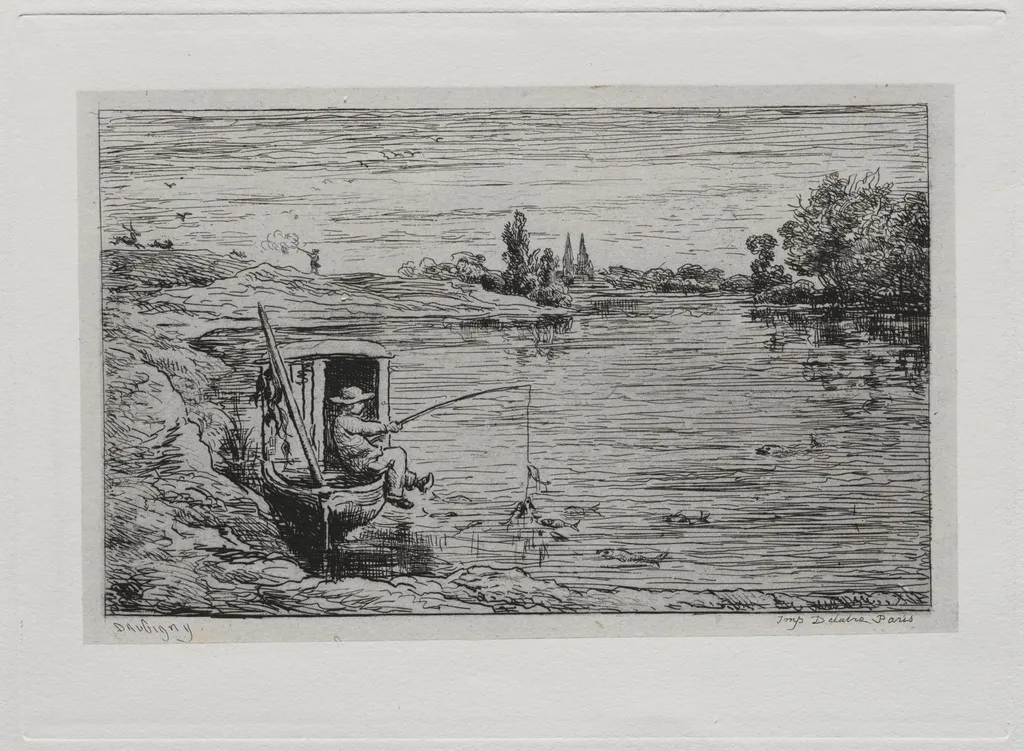
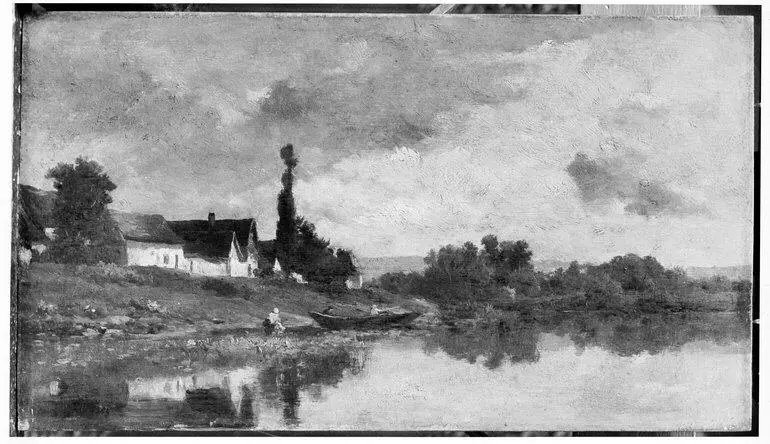
The Boat Trip: The Cabin Boy Fishing (Line Fishing) is a work on paper by the Impressionist artist Charles François Daubigny. It dates from 1861 and is held in the collection of the Cleveland Museum of Art.
About this work
Overview
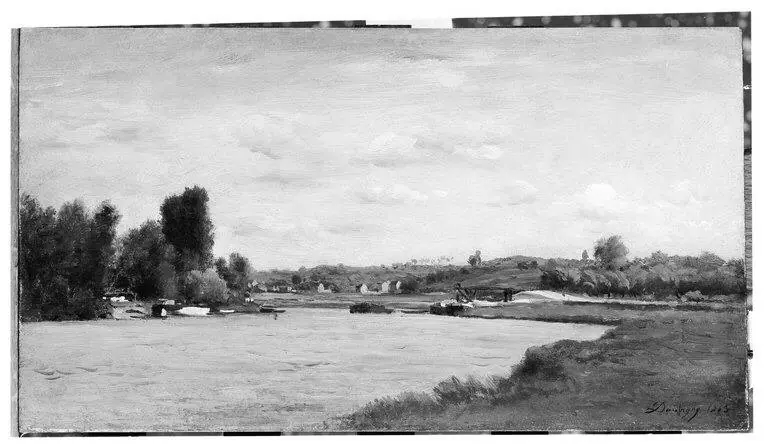
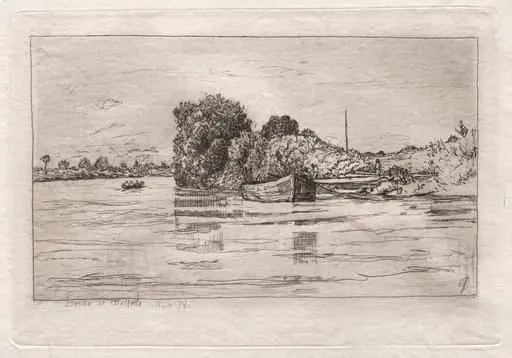
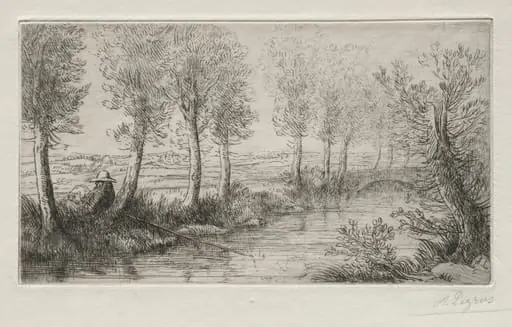
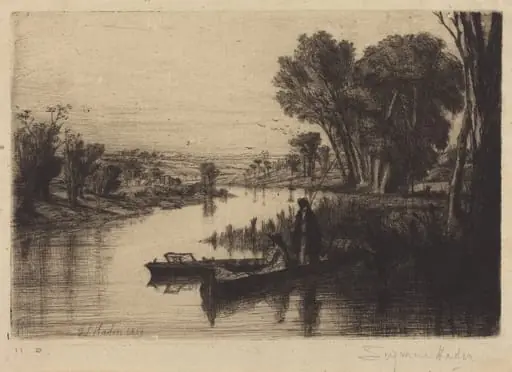
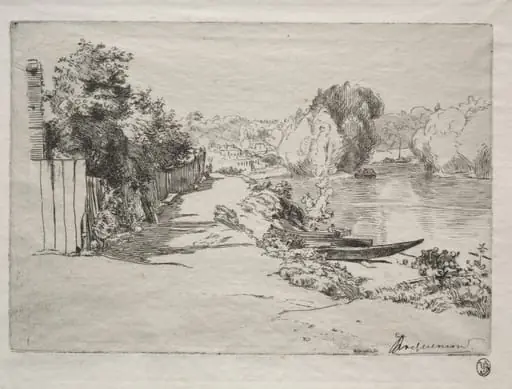
Created in 1861, *The Boat Trip: The Cabin Boy Fishing (Line Fishing)* is a black‑and‑white sketch by French artist Charles‑François Daubigny. Executed as part of a portfolio, the work captures a modest river scene in which a small boat drifts on water while a young cabin boy fishes with a line.
Subject & Meaning
The composition centers on a solitary vessel navigating a rippling river. Inside the boat, a figure holds a fishing rod, while another person stands at the bow, also engaged in angling. Distant trees line the banks and a building capped with a tall spire punctuates the horizon, suggesting a quiet, rural environment.
Technique & Style
Daubigny employs rapid, sketchy strokes to convey the movement of water and the immediacy of the scene. The monochrome medium emphasizes tonal contrasts, while the loose line work reflects his interest in capturing fleeting atmospheric effects, a practice that would later inform Impressionist approaches.
History & Provenance
The sketch belongs to a series of works Daubigny produced during his early career, a period when he was associated with the Barbizon school. Though primarily known for landscape paintings, he explored printmaking and drawing in this era, contributing to his reputation as an innovator in French art.
Context
Daubigny’s focus on riverine subjects aligns with the Barbizon emphasis on naturalistic observation of the French countryside. The work predates his later influence on Impressionism, illustrating his transition from detailed rural depictions toward a looser, more spontaneous visual language.
Artist & collection
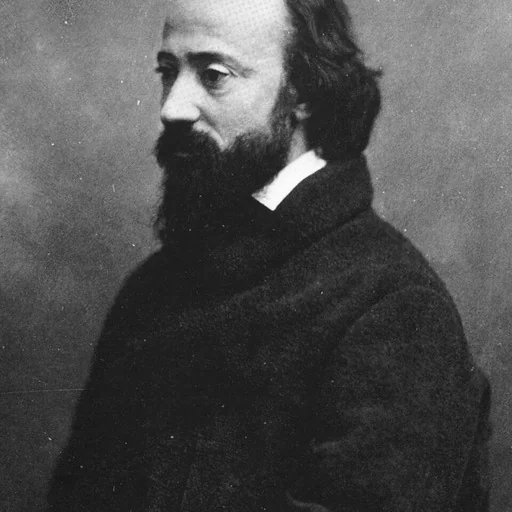
Artist
Charles-François Daubigny ( DOH-bin-yee, US: DOH-been-YEE, doh-BEEN-yee, French: ; 15 February 1817 – 19 February 1878) was a French painter, one of the members of the Barbizon school, and is considered an important precursor of…