Artwork
William I (1772-1843), King of the Netherlands
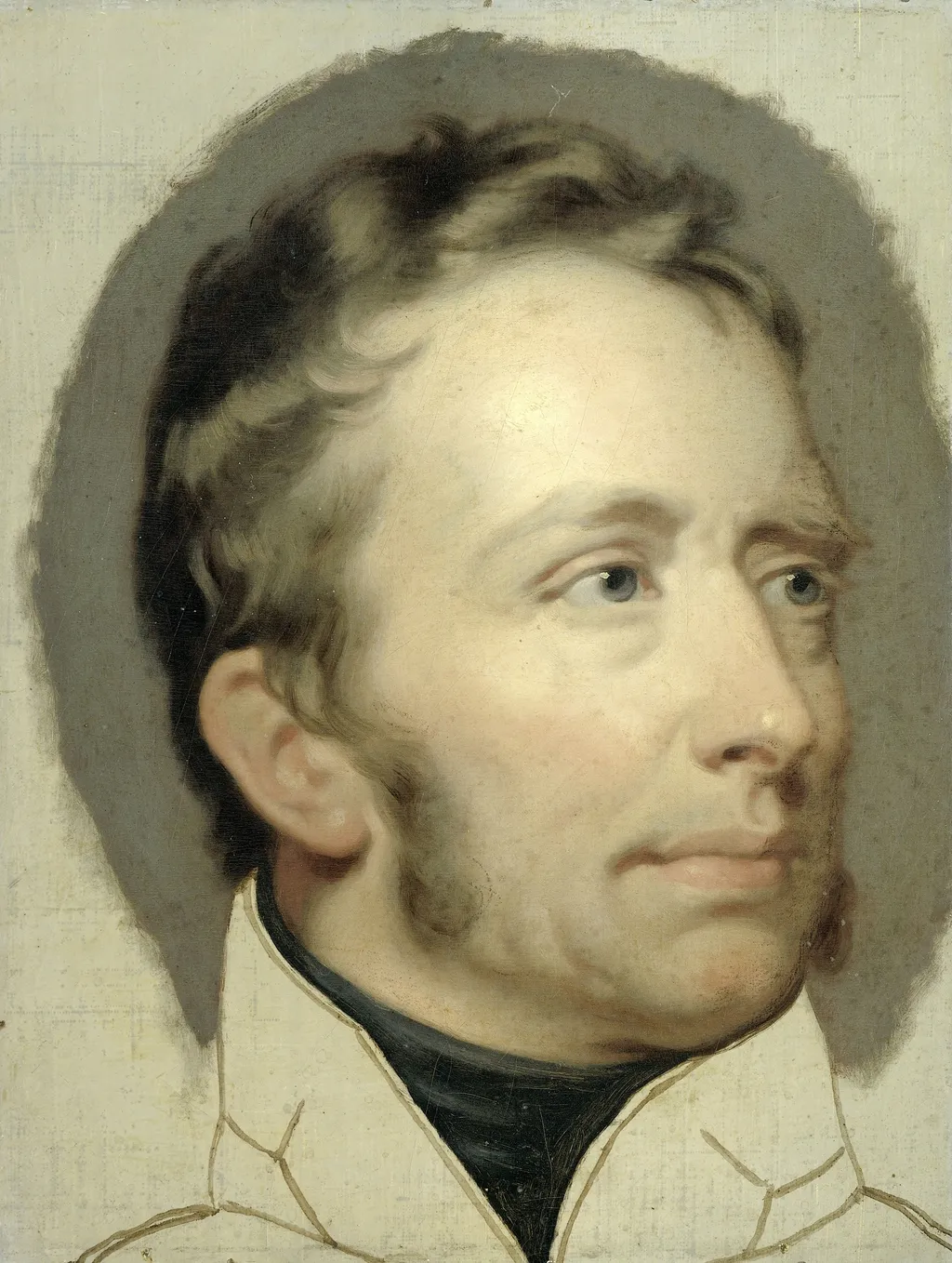
William I (1772-1843), King of the Netherlands is an oil painting by the Neoclassicist artist Charles Howard Hodges. It dates from 1815 and is held in the collection of the Rijksmuseum.
About this work
Overview
Charles Howard Hodges, an English artist who worked in the Netherlands at the turn of the 19th century, painted an oil portrait of William I in 1815. The canvas presents the newly crowned monarch in a formal pose, his gaze directed forward, conveying the authority associated with his recent accession after the Congress of Vienna.
Subject & Meaning
The sitter is William I, the first king of the United Kingdom of the Netherlands, born in 1772. Dressed in a white, high‑collared military jacket over a black shirt, he appears solemn and composed, reflecting the political stability the new regime sought to project during a period of European re‑ordering.
Technique & Style
Executed in a restrained neoclassical manner, the portrait relies on a limited palette of muted tones and a smooth, almost sculptural rendering of flesh and fabric. Hodges employs careful modeling to convey the texture of the jacket and the crispness of the collar, while the light gray background isolates the figure and emphasizes his dignified bearing.
History & Provenance
Completed shortly after William I’s coronation, the work entered the Dutch royal collection and later passed to the Rijksmuseum, where it remains part of the institution’s holdings of early‑19th‑century portraiture. Its provenance traces a clear line from the monarch’s court to the national museum.
Context
The portrait was created at a time when the Netherlands was reconstituted as a kingdom under the terms set by the 1815 Congress of Vienna. Hodges, an expatriate English painter, was among several foreign artists employed by the Dutch court to convey the new monarch’s legitimacy through the visual language of neoclassicism.
Artist & collection
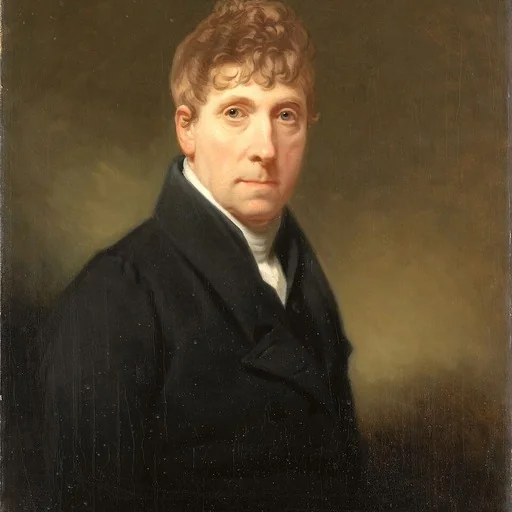
Artist
Charles Howard Hodges (1764 – 24 July 1837) was an English painter active in the Netherlands during the late 18th and early 19th centuries.

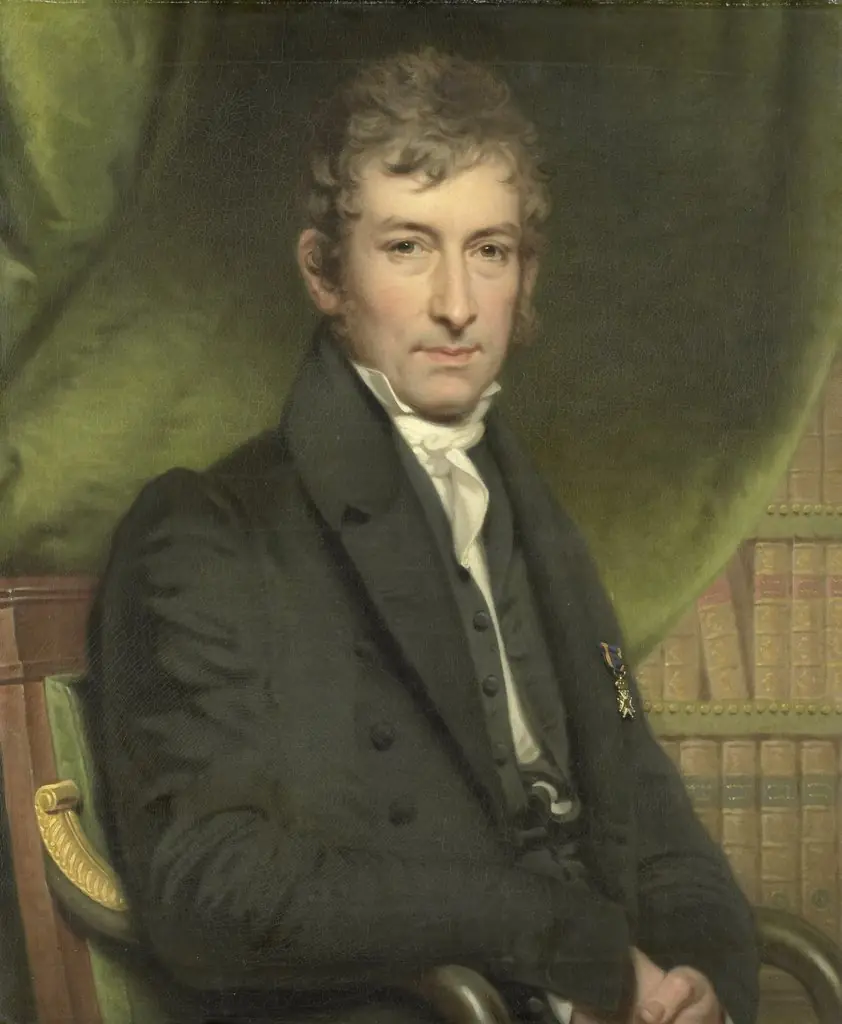 Portrait of Johan Fraser
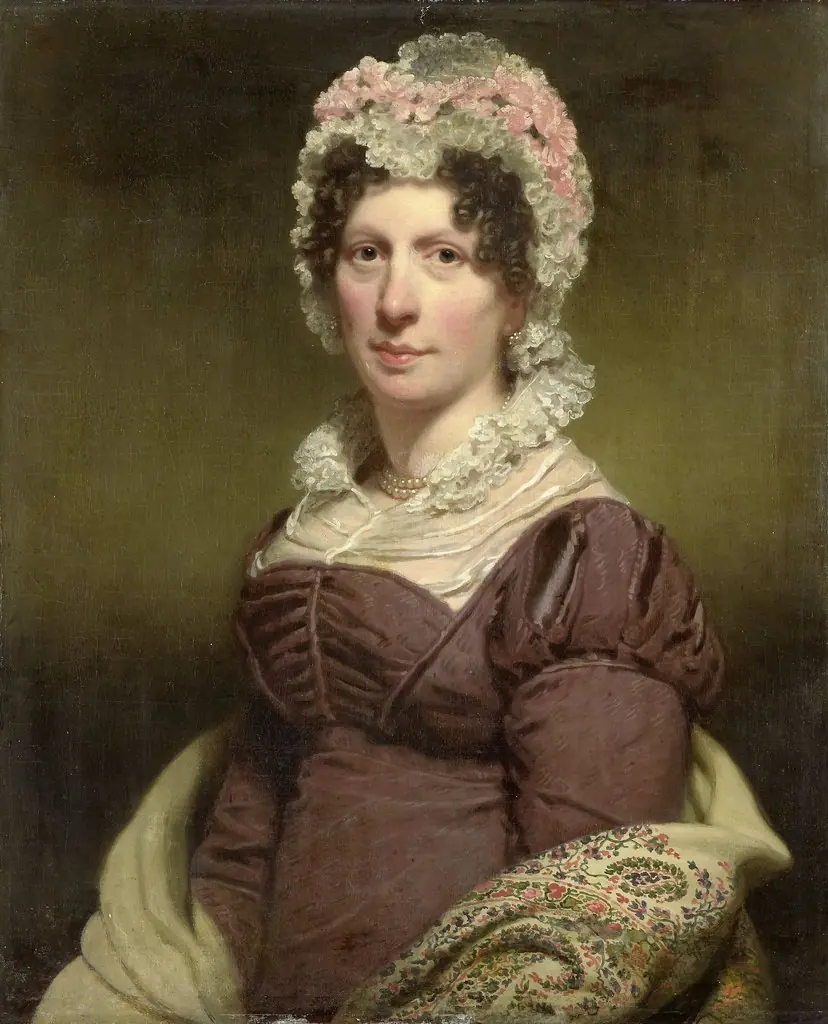 Portrait of a Woman
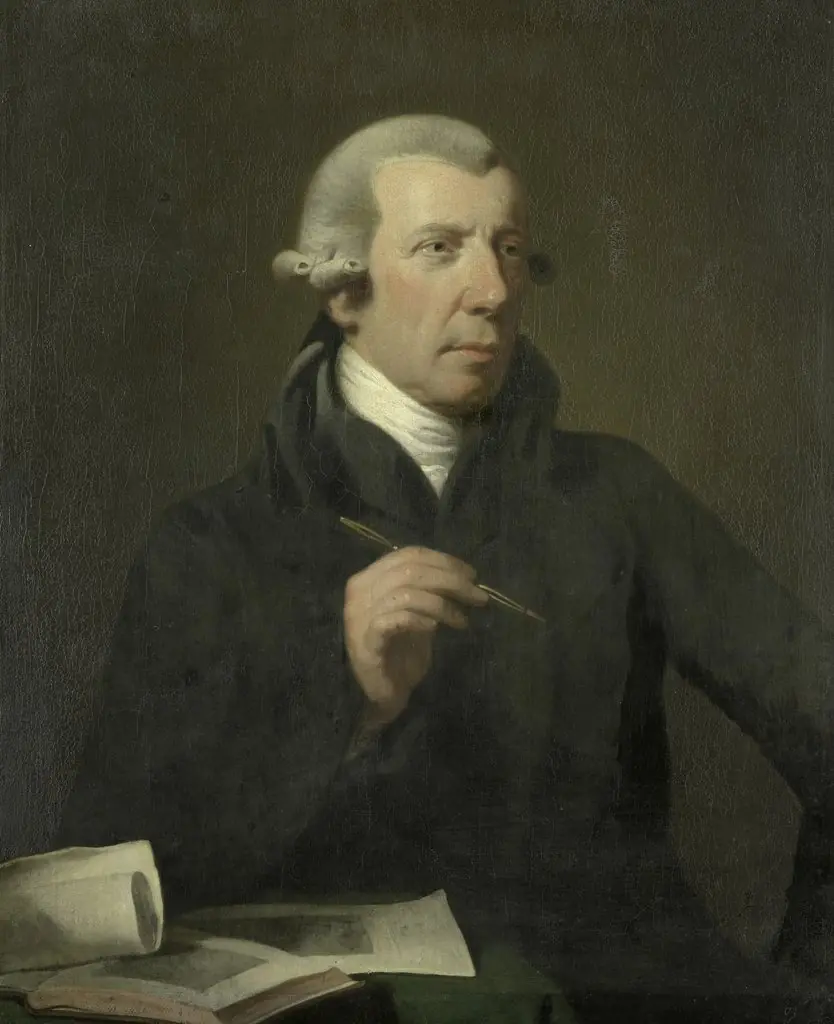 Portrait of Reinier Vinkeles, Draftsman and Engraver
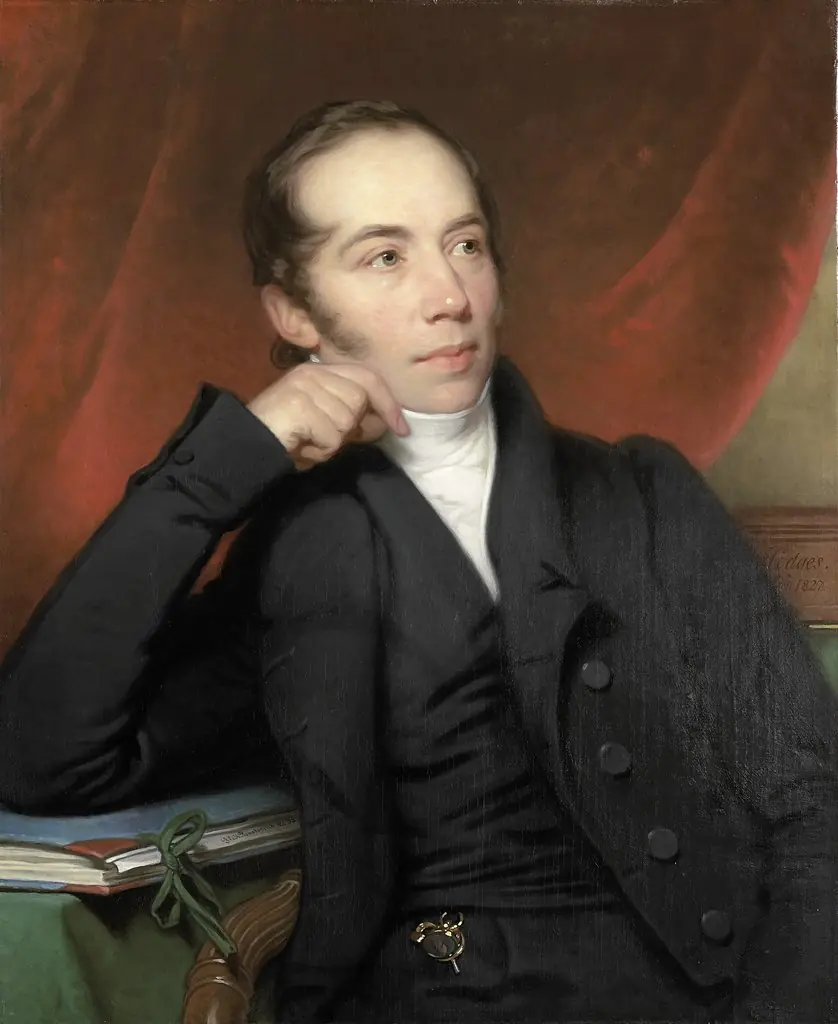 Portrait of Pieter Ernst Hendrik Praetorius, Broker, Draftsman and Painter. Chairman of the Board of the Rijksmuseum 1852-74
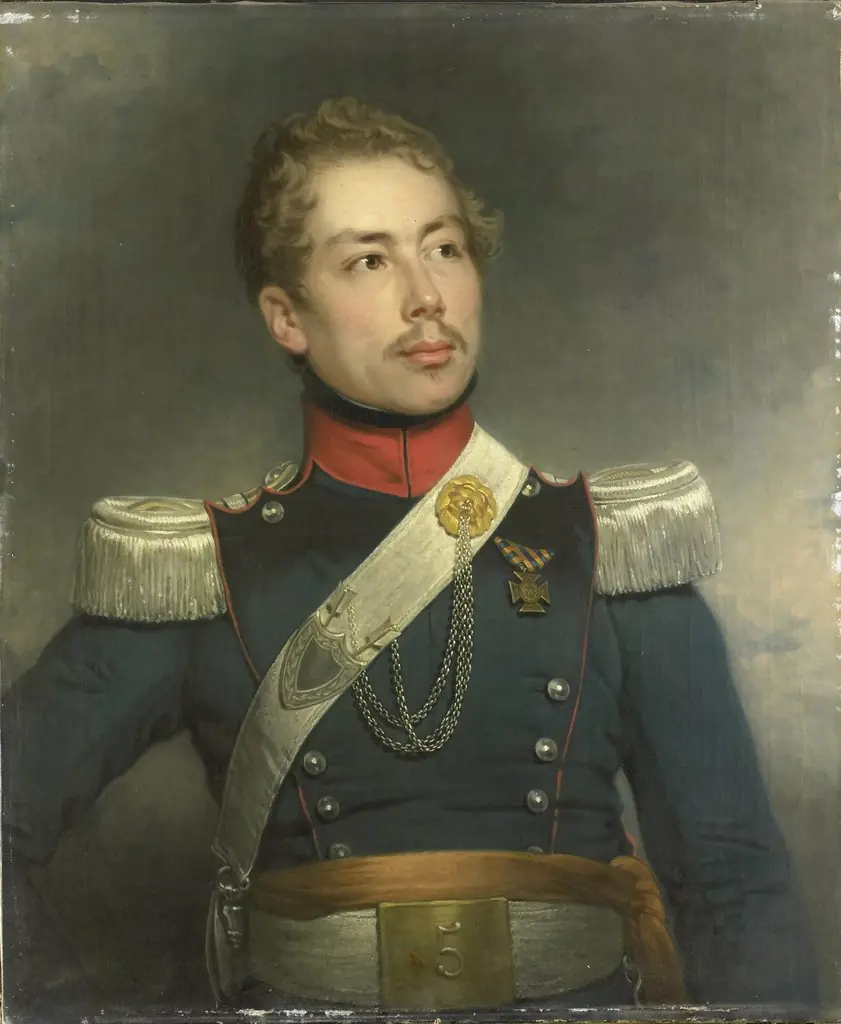 Portrait of Christian Edouard Fraser, Second Lieutenant of the 5th Regiment of the Dragoons
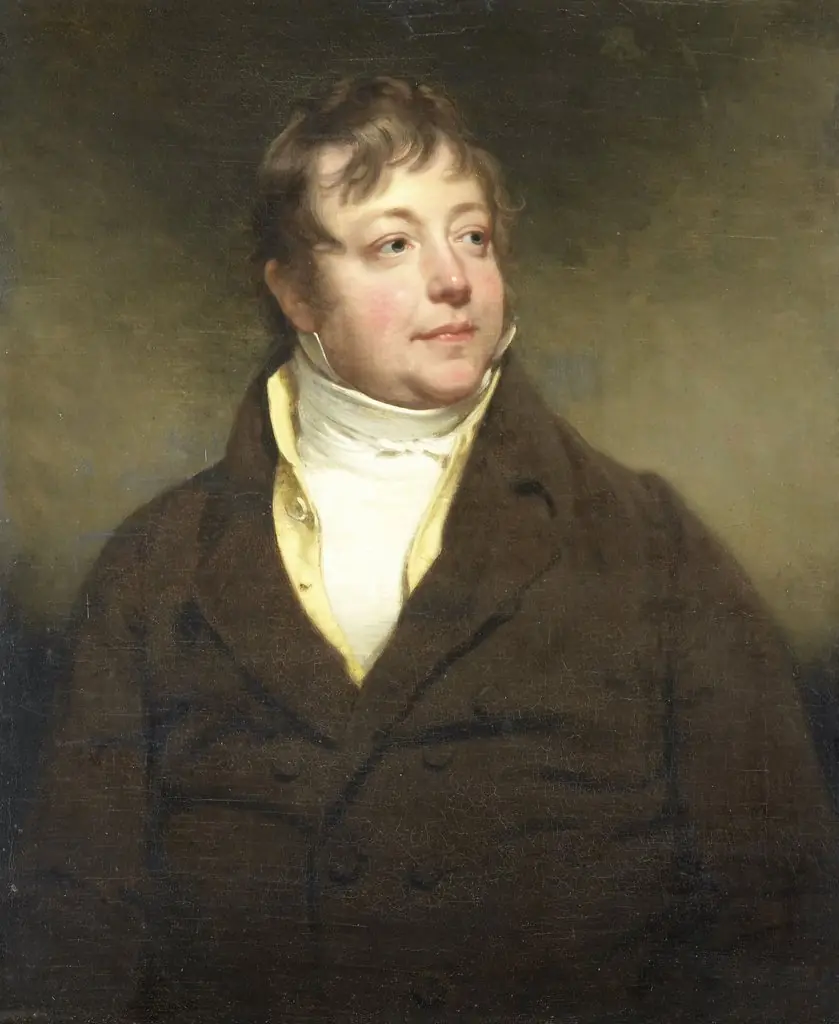 Portrait of a Man, perhaps J.W. Beynen
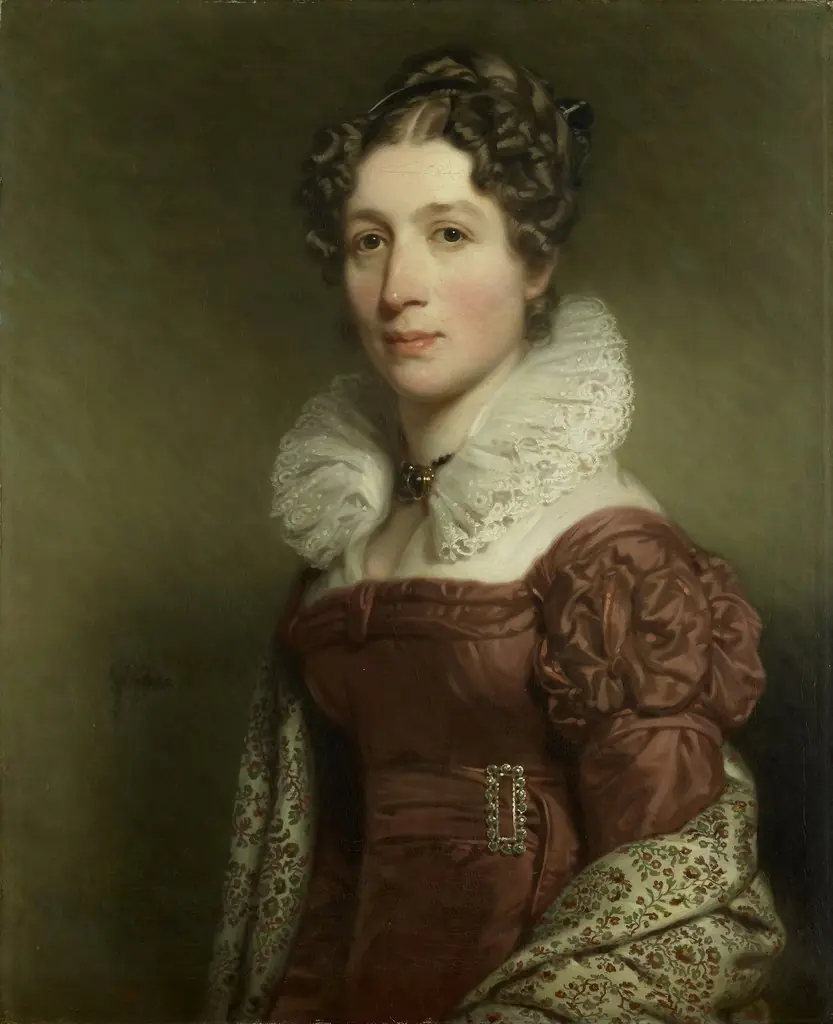 Portrait of Jacoba Vetter, Wife of Pieter Meijer Warnars, Bookseller in Amsterdam
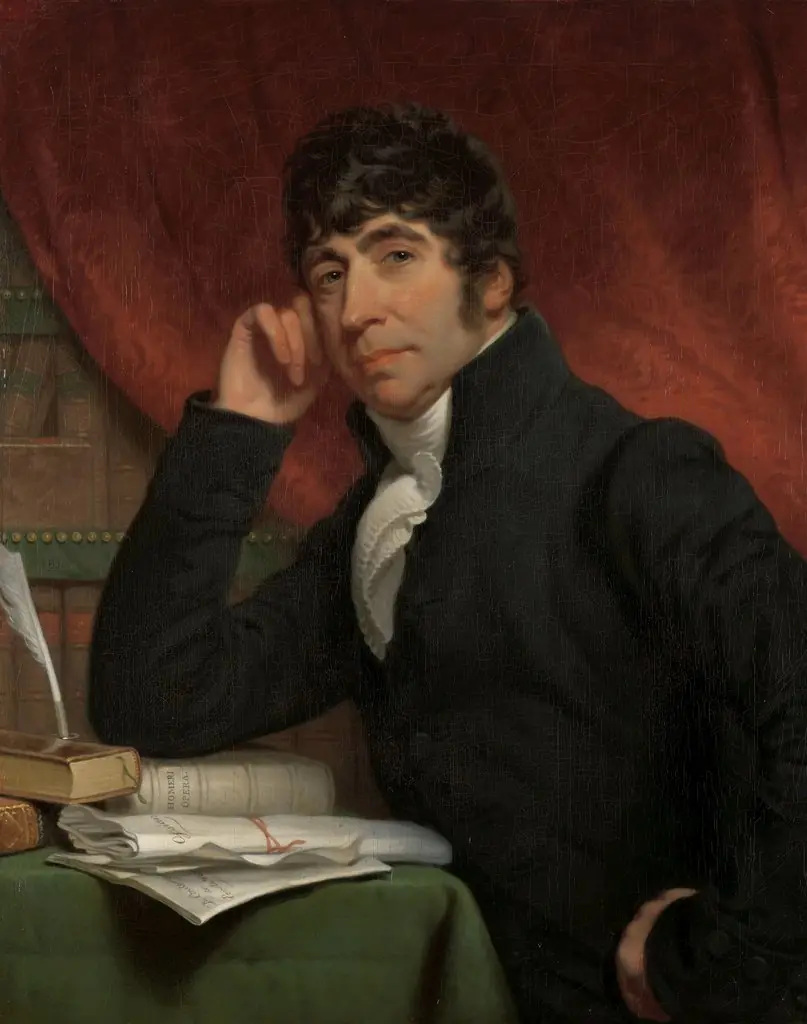 Portrait of Willem Bilderdijk