Artwork
Moreton Old (or Little) Hall (The back)
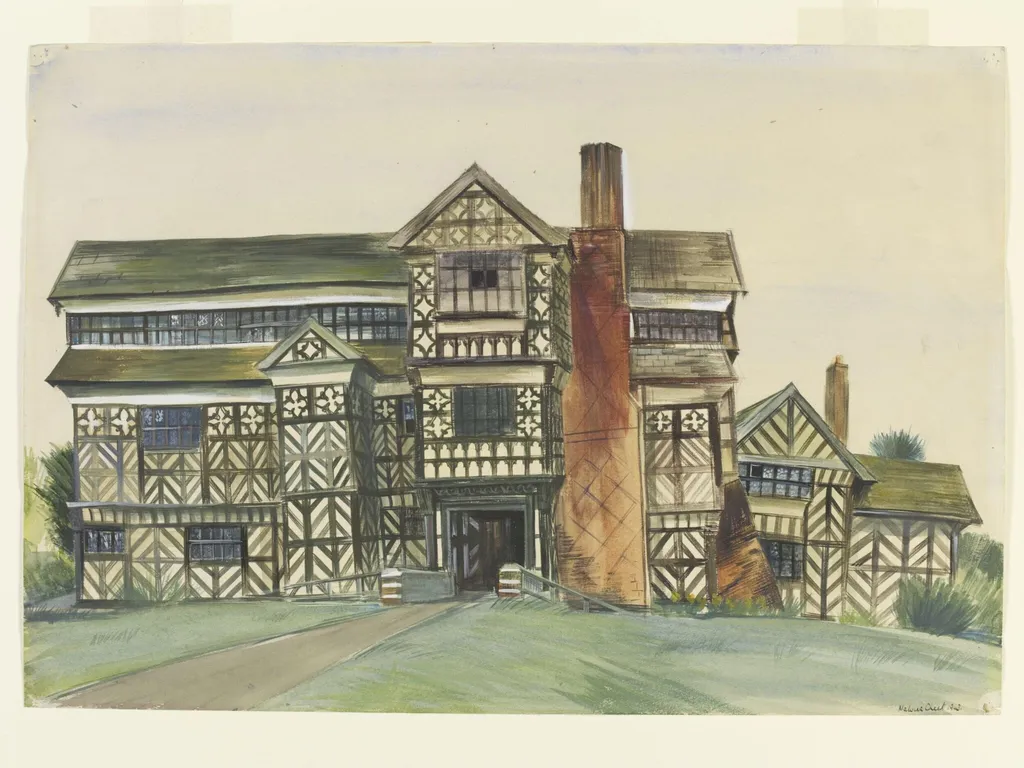
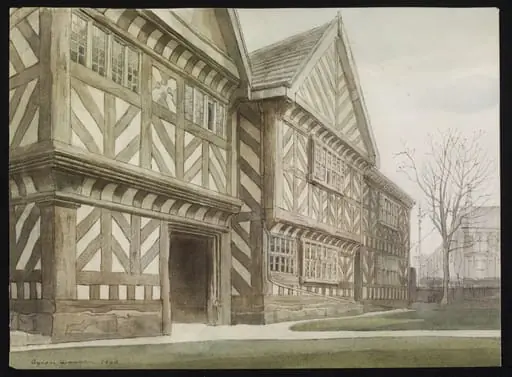
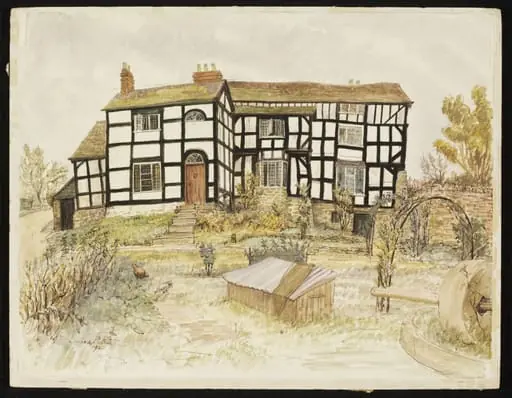
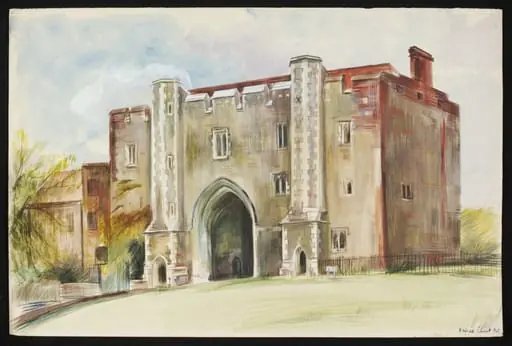
Moreton Old (or Little) Hall (The back) is a watercolor work on paper by Cheek. It dates from 1943 and is held in the collection of the Victoria and Albert Museum.
About this work
Overview
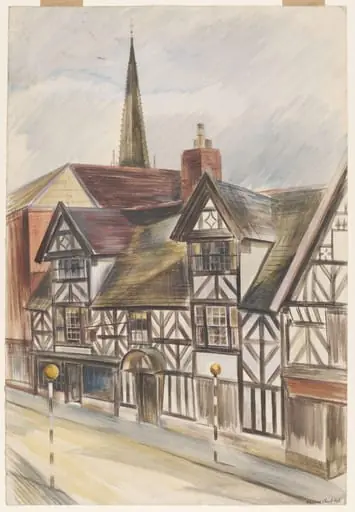
This 1943 watercolour by artist John Cheek portrays the rear aspect of Moreton Old (also known as Little) Hall. Executed in a light, sketch‑like manner, the image records the building’s timber frame, steep shingled roof and central chimney, set against a grassy foreground and a modest dirt path.
Subject & Meaning
The composition isolates the hall’s structural geometry, emphasizing its criss‑crossed dark beams, small square windows and the stark contrast of the timber infill. By omitting figures and ornamental detail, the work foregrounds the vernacular architecture as a symbol of rural English heritage.
Technique & Style
Cheek employed transparent watercolour washes to suggest form rather than render precise surface texture. The palette is restrained, with muted earth tones and subtle greys, while the quick, gestural brushwork conveys the building’s mass and spatial relationships in a concise study.
History & Provenance
Created under the Recording Britain scheme, the piece was part of a government‑sponsored effort (1940‑43) to document at‑risk historic sites across England. The project, organized by Sir Kenneth Clark and financed by the Pilgrim Trust, commissioned 97 artists to produce over 1,500 works, primarily watercolours of architecture, landscapes and rural customs.
Context
During World War II, many historic structures faced alteration or loss due to wartime development and neglect. Recording Britain aimed to capture a visual record of such places before they changed, reflecting a broader concern for national identity and cultural preservation in a period of upheaval.
Artist & collection
Artist
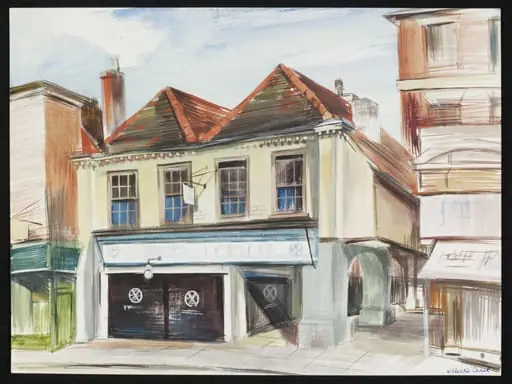
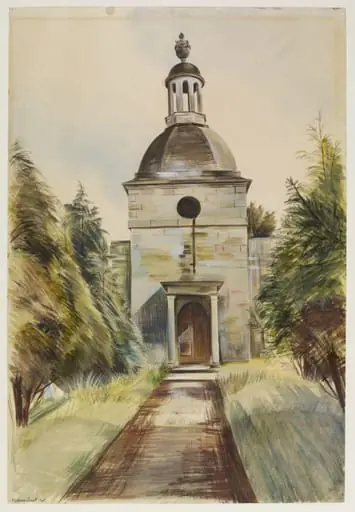
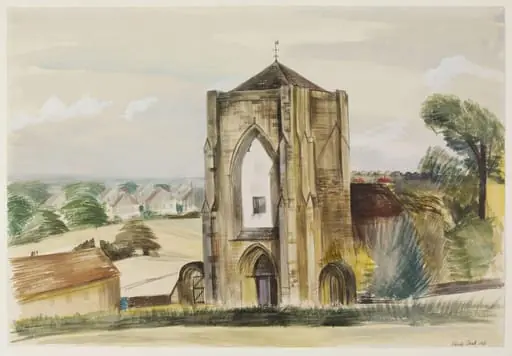
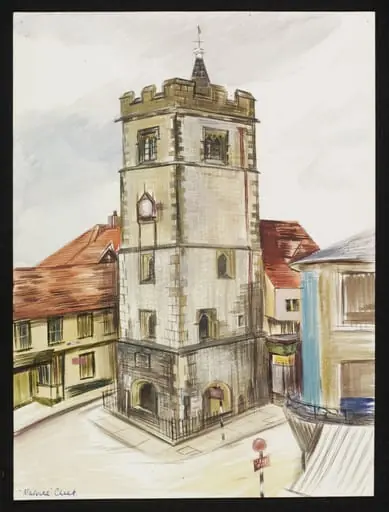
Cheek painted quiet British streets and landmarks in watercolor during the 1940s, leaving behind soft, unhurried scenes of St.

![Marlborough House [garden front], Falmouth, by Cheek](https://artifactworldgallery.com/img/cheek--marlborough-house-garden-front-falmouth--3a2b89526c7641e3-w320.webp)