Artwork
The Mountain of Five Cataracts
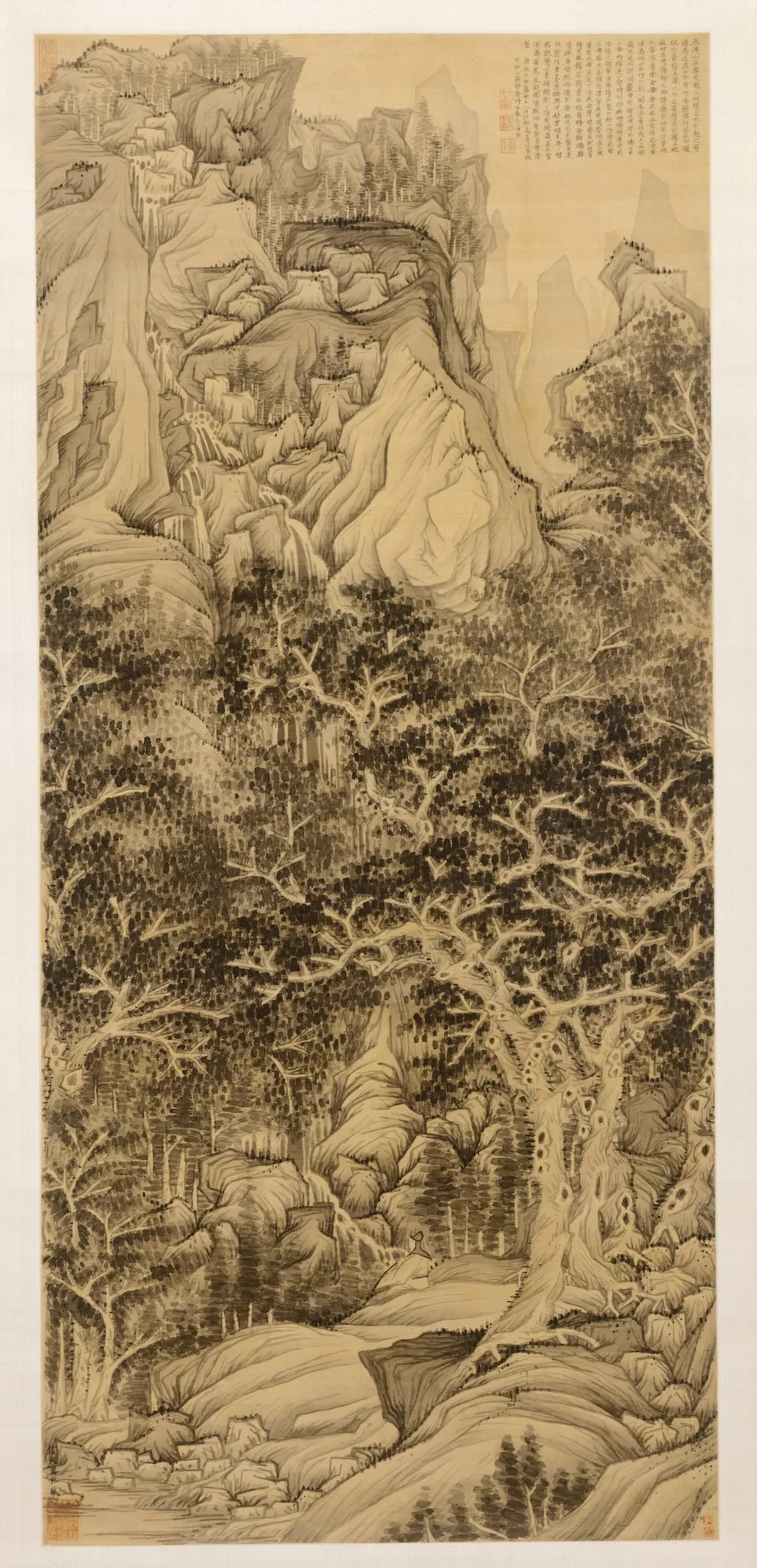
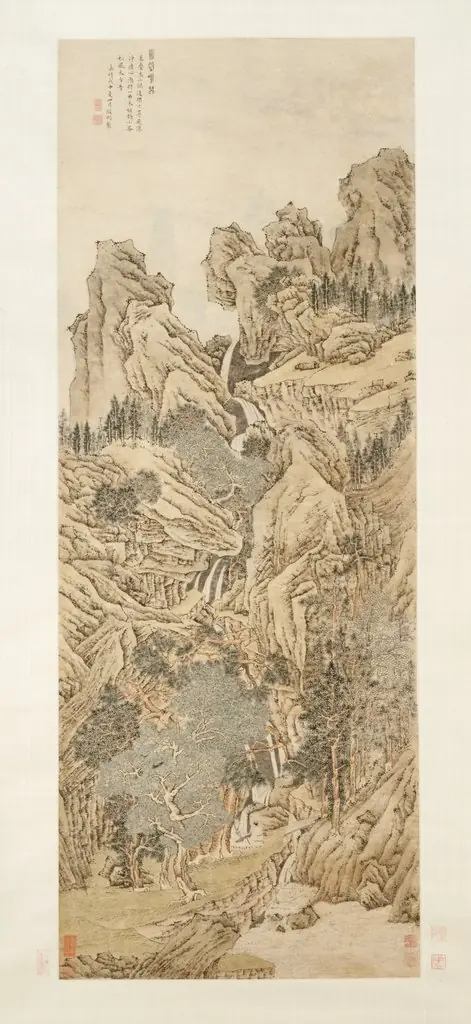
The Mountain of Five Cataracts is an unspecified painting by the Ming dynasty painting artist Chen Hongshou. It dates from 1630 and is held in the collection of the Cleveland Museum of Art.
About this work
Overview
The work titled The Mountain of Five Cataracts, executed in 1630 by Chinese painter Chen Hongshou, is part of the collection of the Cleveland Museum of Art. It presents a towering, jagged mountain rendered in muted browns and grays, with a narrow winding path that traverses its centre and a scattering of diminutive figures, trees, and structures at its base and distant summit.
Subject & Meaning
The composition emphasizes the monumental scale of the natural landscape, contrasting the massive, craggy slopes with tiny human presences that appear to climb or pause along the trail. This juxtaposition underscores themes of humility before nature and the arduous journey through rugged terrain, a motif common in Ming‑dynasty literati painting.
Technique & Style
Chen employs brisk, sketch‑like brushwork that scratches across the paper, creating a textured surface that conveys the mountain’s roughness. The economical use of line and limited palette of earth tones accentuates depth, while the small, almost calligraphic figures reinforce the sense of scale. The overall effect is a lively, spontaneous rendering rather than a polished finish.
History & Provenance
Created in the early seventeenth century, the painting entered the holdings of the Cleveland Museum of Art, where it remains on display. Its provenance traces back to private collections before being acquired by the museum, reflecting the growing Western interest in Chinese Ming‑period works during the twentieth century.
Artist & collection


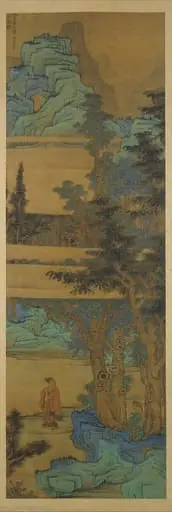 明 陳洪綬 樹下高士圖 軸|Scholar-recluse in blue-green landscape
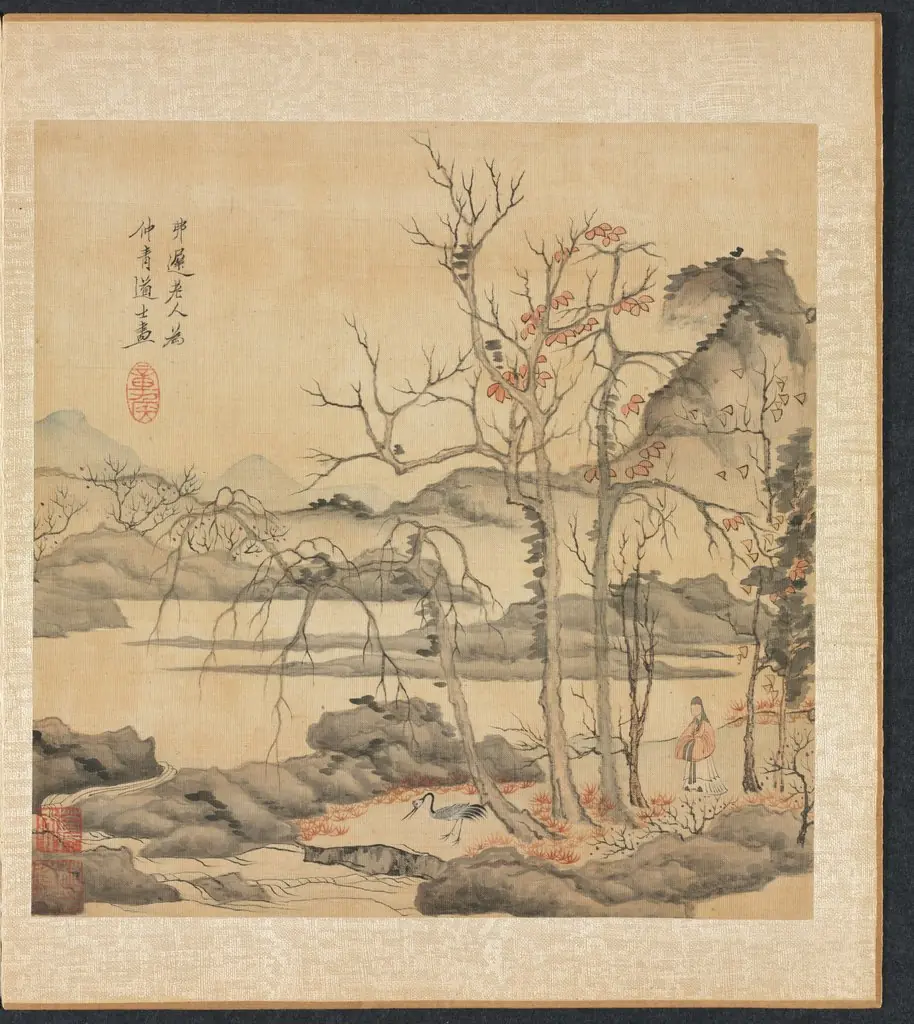 Paintings after Ancient Masters: Daoist and Crane in Autumn Landscape
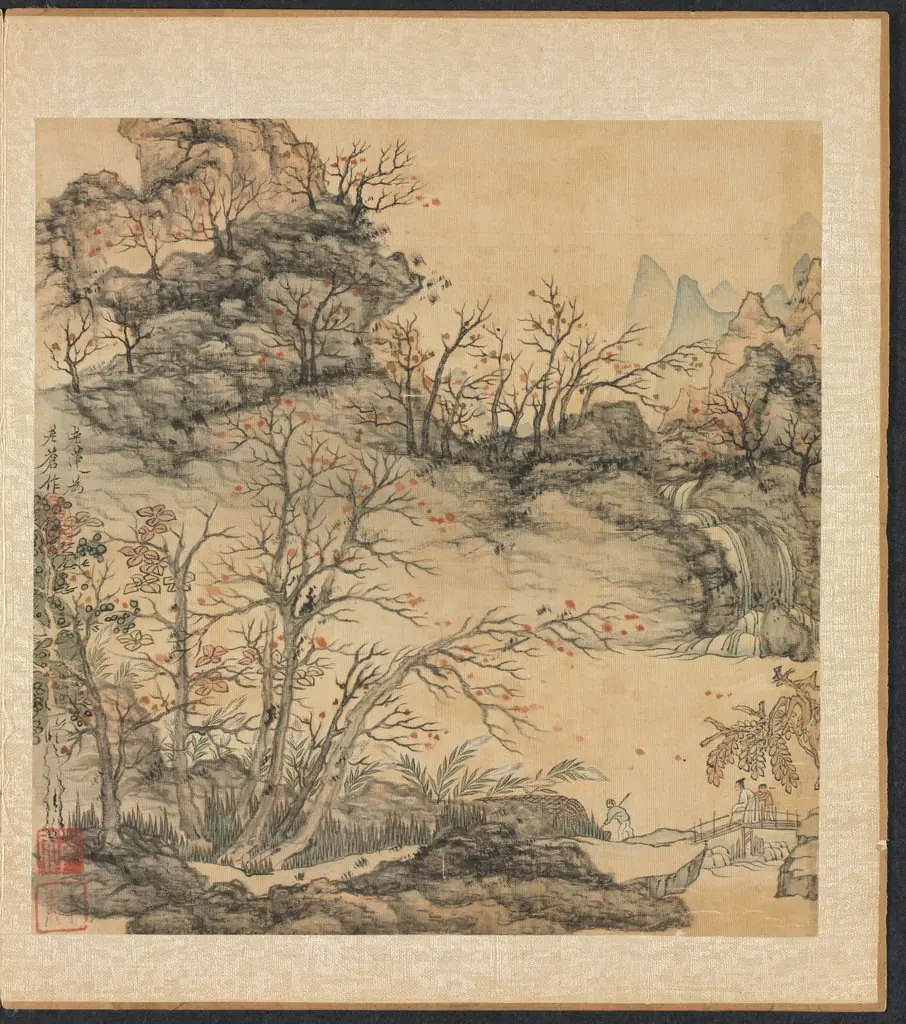 Paintings after Ancient Masters: Autumn Landscape
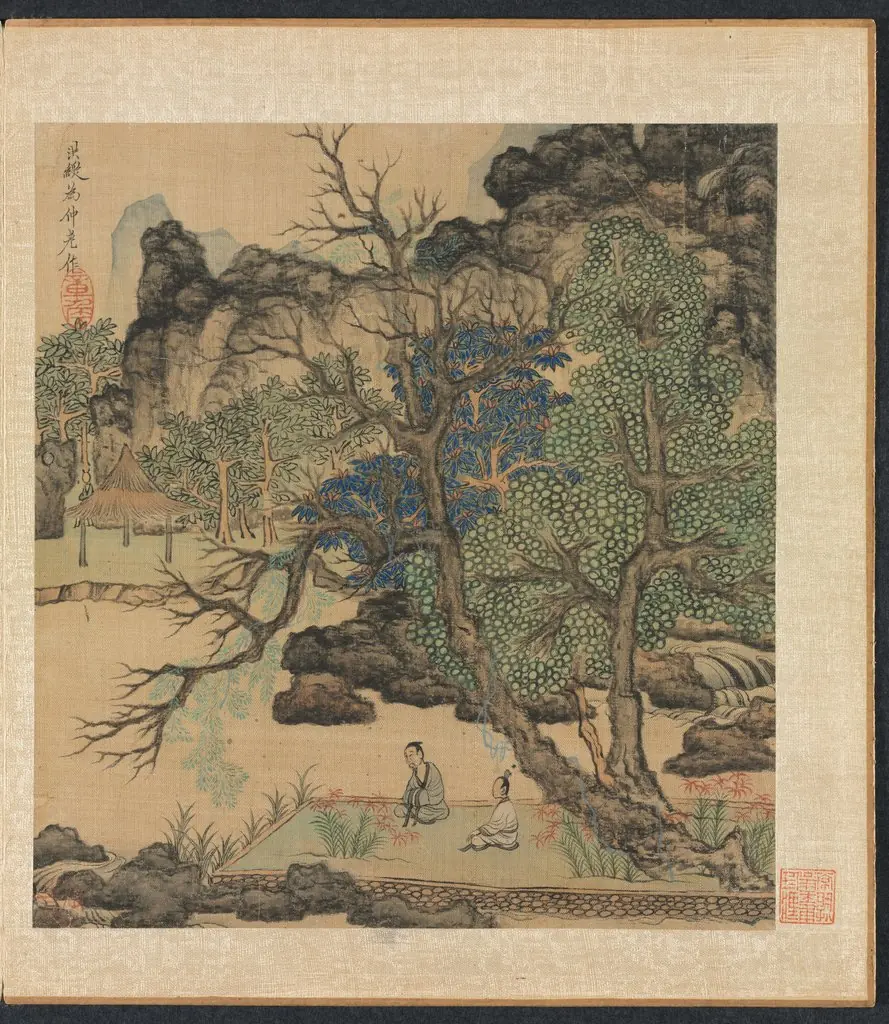 Paintings after Ancient Masters: Scholars in a Garden
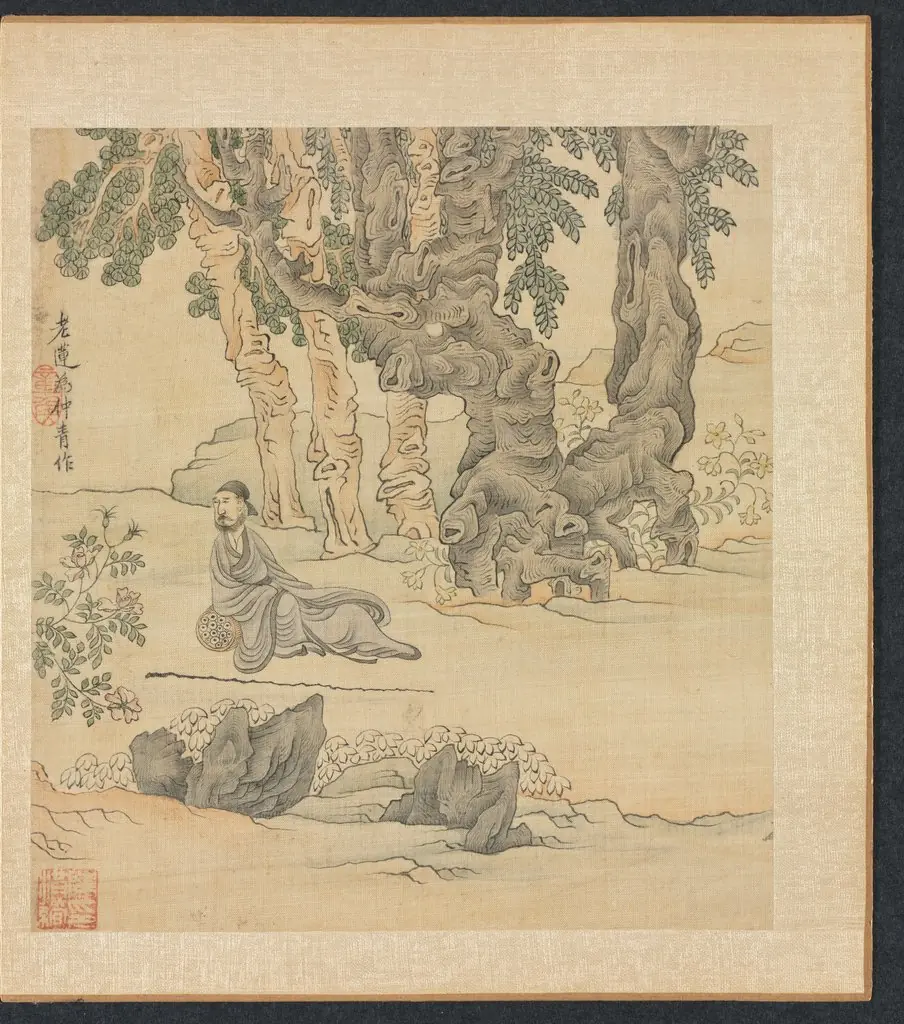 Paintings after Ancient Masters: Portrait of Zhongqing in a Landscape
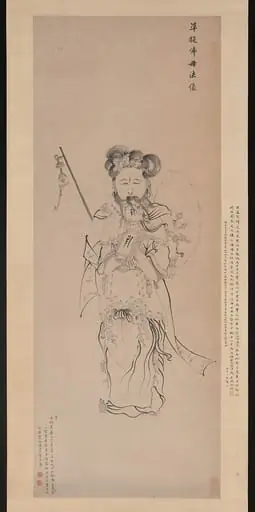 明 陳洪綬 準提佛母法像圖 軸|Bodhisattva Guanyin in the Form of the Buddha Mother
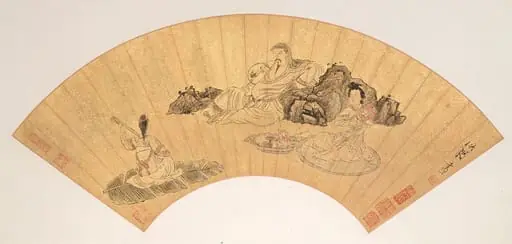 明 陳洪綬 山水花鳥人物圖 扇冊|Landscapes and Flowers
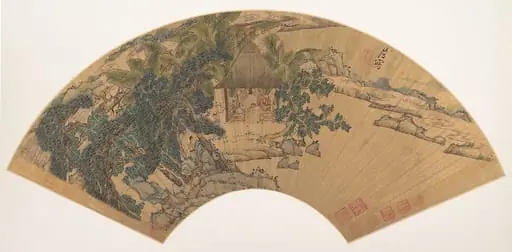 明 陳洪綬 山水圖 扇|Landscape