Artwork
The Woodcutter of Luofu
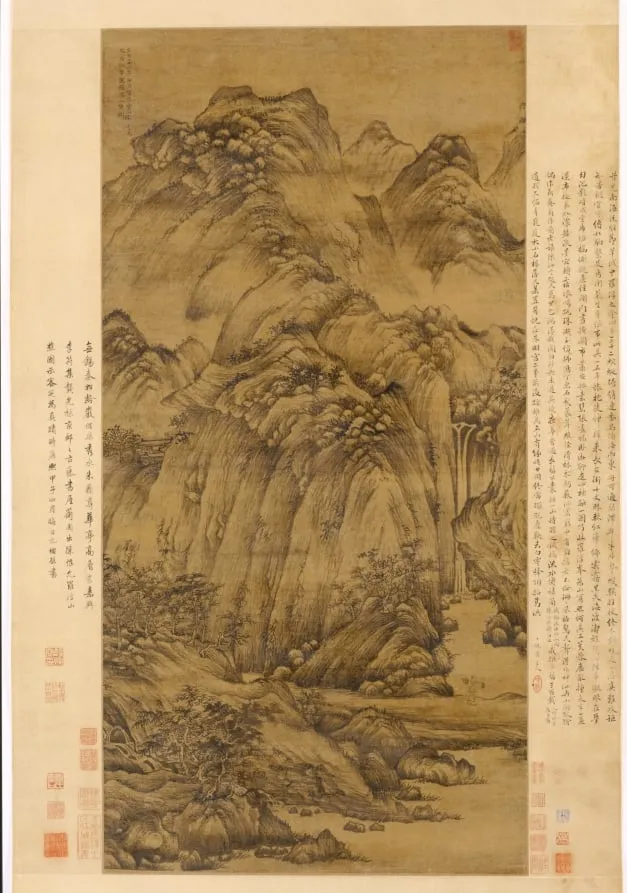
The Woodcutter of Luofu is an unspecified painting by the Ming dynasty painting artist Chen Ruyan. It dates from 1366 and is held in the collection of the Cleveland Museum of Art.
About this work
Overview
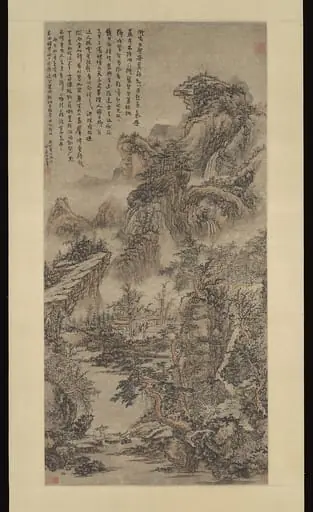
The Woodcutter of Luofu is an ink painting that presents a solitary figure engaged in felling trees beneath a dramatic, jagged mountain range. The composition follows a layout familiar from early Song dynasty landscapes, yet the handling of the brush introduces a fresh, more fluid sensibility. The overall effect is one of quiet labor set within a timeless natural environment.
Subject & Meaning
At the center of the scene a man leans on a shoulder pole, his axe poised to cut wood, embodying the humble toil of rural life. The towering peaks loom overhead, suggesting both the grandeur of nature and the isolation of the individual within it. The work invites contemplation of humanity’s modest role amid enduring landscapes.
Technique & Style
Unlike earlier depictions of smooth stone, the rocks appear lumpy and irregular, reflecting a 14th‑century stylistic shift toward more textured forms.
The artist employs soft, raveling brushstrokes that gently dissolve the outlines of trees and rocks, creating a misty atmosphere. Unlike earlier depictions of smooth stone, the rocks appear lumpy and irregular, reflecting a 14th‑century stylistic shift toward more textured forms. This combination of traditional Song compositional principles with newer, expressive brushwork defines the painting’s visual language.
Context
Created during a period when Chinese painters were re‑examining classical models, the piece illustrates the dialogue between reverence for Song precedents and the desire for innovative expression. The integration of established compositional schemes with contemporary brush techniques mirrors broader artistic trends of the era, marking a transitional moment in landscape painting.
Artist & collection

 Landscape with Streams and Mountains
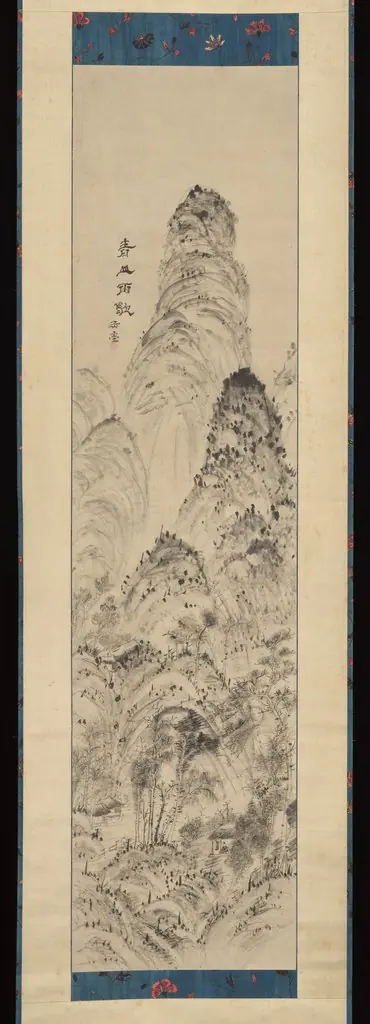 Green Mountains as the Rain Ceases
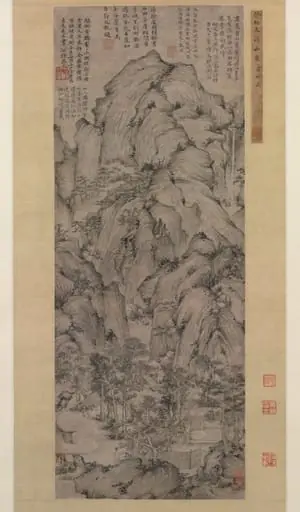 Streams and Mountains
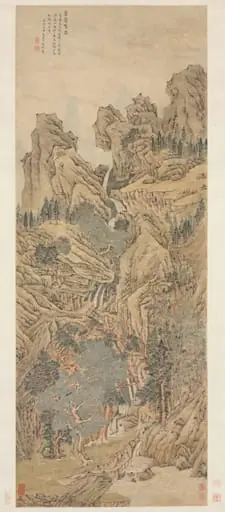 Playing the Qin in a Secluded Valley
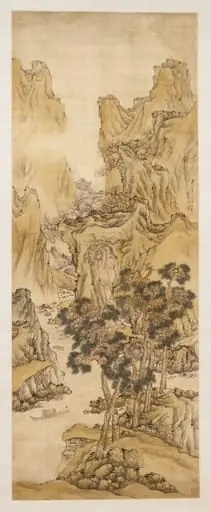 The Peach Blossom Spring
 清 倣髡殘 蒸嵐昏巒圖 軸|Wooded Mountains at Dusk
 같은 해에 태어난 관리들의 친목 모임 조선|同庚契會圖 朝鮮|Gathering of government officials
 Travellers amongst the Streams and Mountain Passes
 Untitled