Artwork
Dream Journey among Rivers and Mountains, Number 150
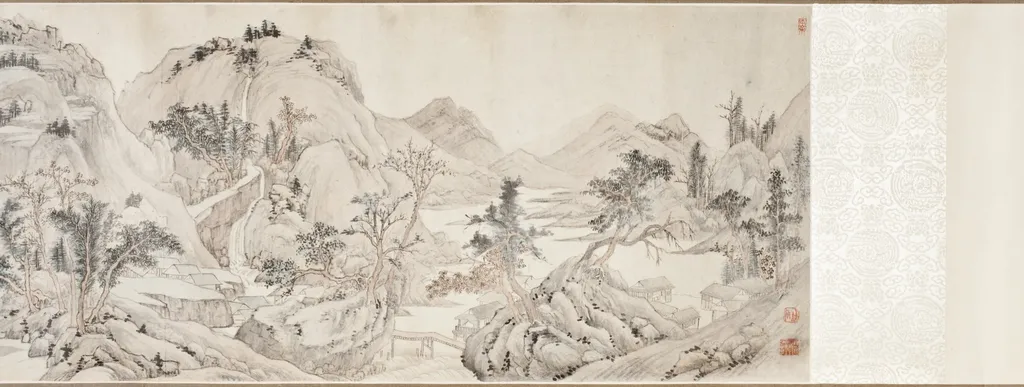
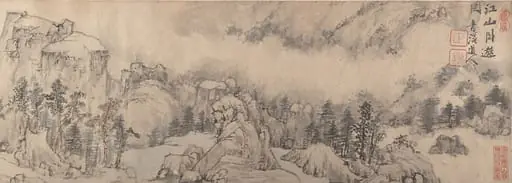
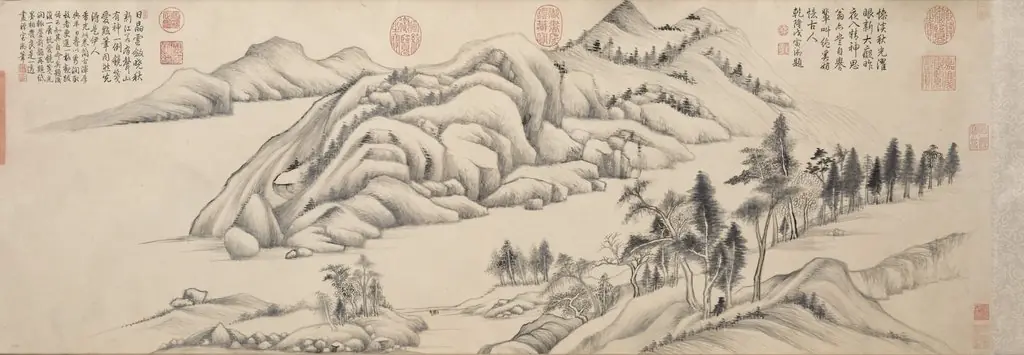
Dream Journey among Rivers and Mountains, Number 150 is an unspecified painting by the Ming dynasty painting artist Cheng Zhengkui. It dates from 1662 and is held in the collection of the Los Angeles County Museum of Art. Painted in 1662 by Chen Zhengkui, this work is part of a series of landscape compositions reflecting his meditative approach to nature.
About this work
Overview
The piece is now in the collection of the Los Angeles County Museum of Art, where it stands as a quiet example of literati landscape painting from the period.
Painted in 1662 by Chen Zhengkui, this work is part of a series of landscape compositions reflecting his meditative approach to nature. As a painter and poet of the early Qing Dynasty, Chen synthesized classical traditions with personal expression. The piece is now in the collection of the Los Angeles County Museum of Art, where it stands as a quiet example of literati landscape painting from the period.
Subject & Meaning
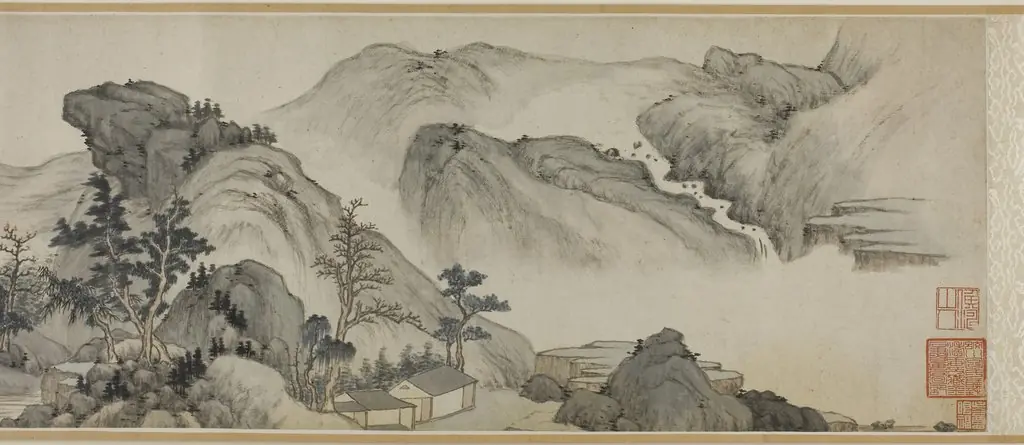
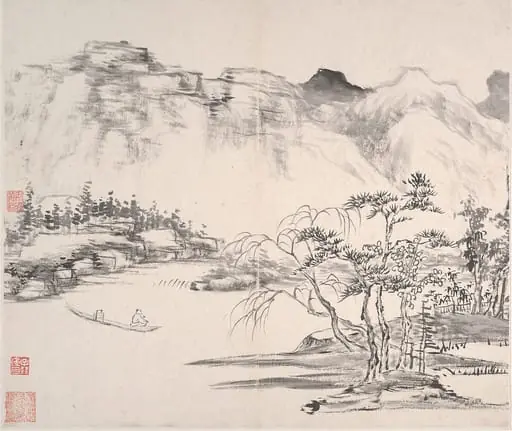
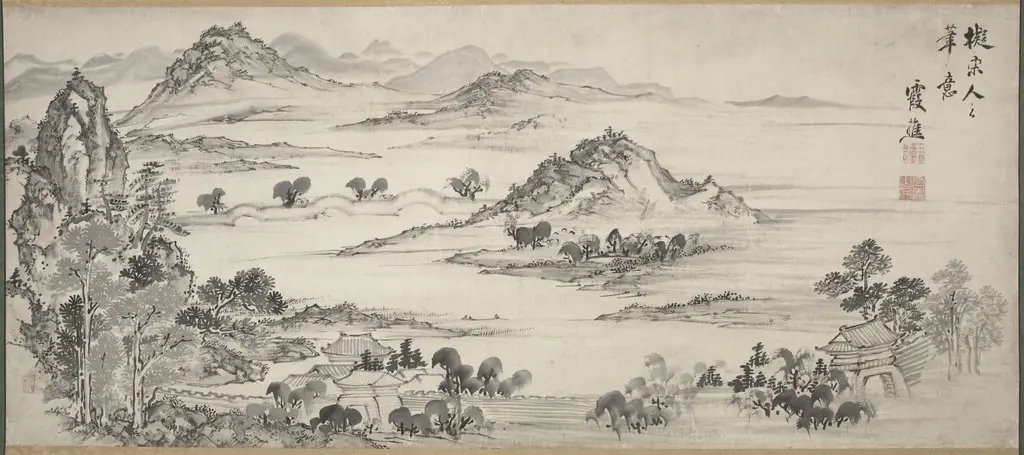
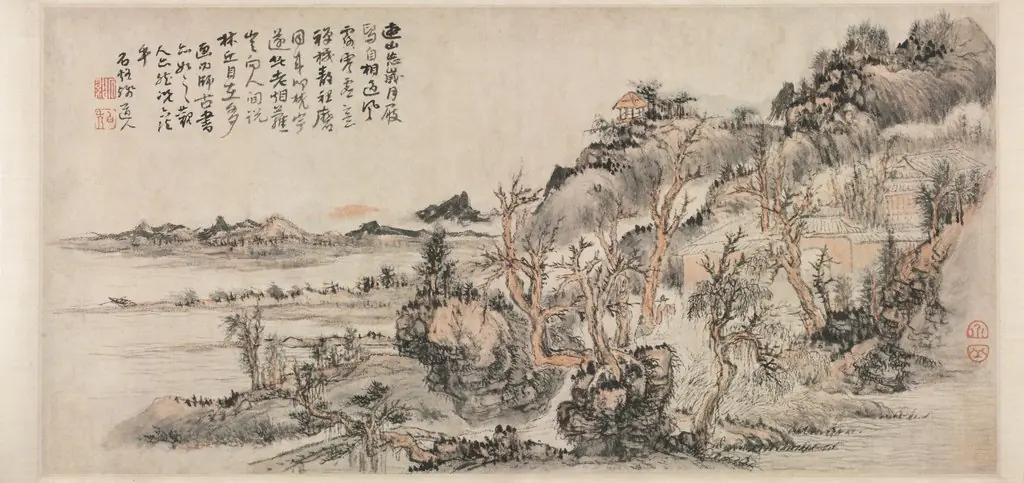
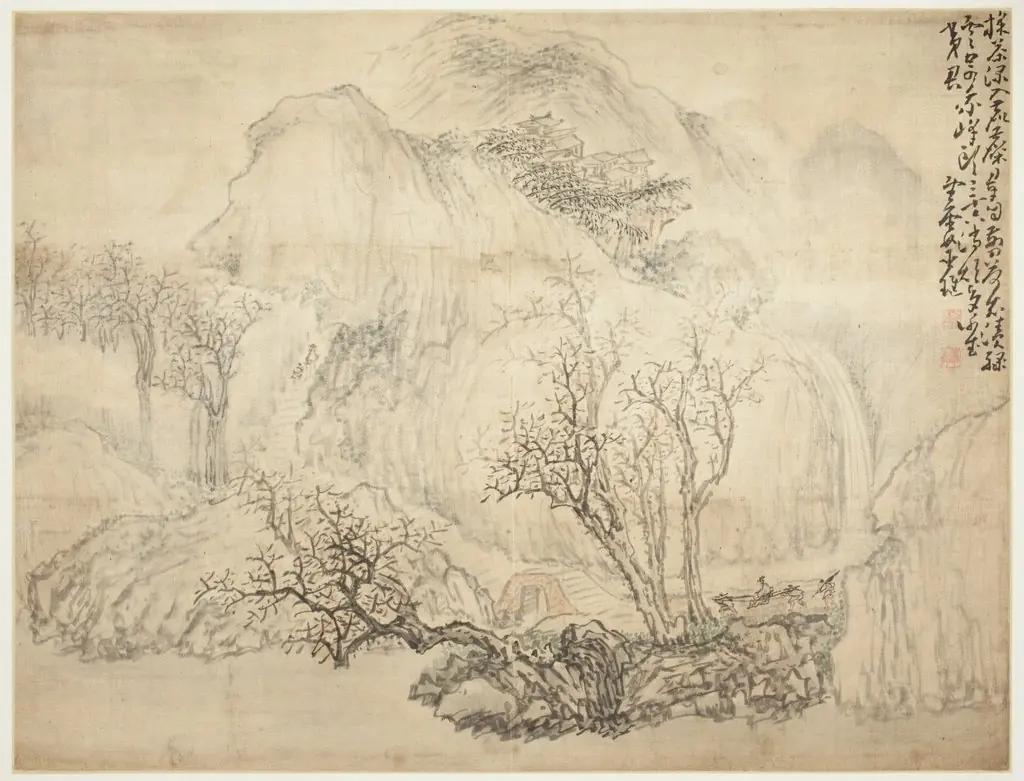
The scene portrays a tranquil riverside valley, with winding waterways, distant peaks, and a modest village nestled among trees. Bridges and dwellings suggest human habitation without dominating the natural order. The composition invites contemplation rather than narrative, aligning with Daoist and Confucian ideals of harmony between humanity and the landscape, where presence is subtle and reverent.
Technique & Style
Chen employed a dry-brush technique, favoring sparse, textured strokes to suggest rock formations and foliage. His palette is restrained, using muted greens, browns, and grays to build depth through tonal variation rather than bold color. The rendering of trees and mountains emphasizes structure and rhythm, with careful attention to brush pressure and ink density, reflecting his training under Dong Qichang.
History & Provenance
Chen Zhengkui, born circa 1604 in Xiaogan, Hubei, trained in the scholarly painting tradition and collaborated with contemporaries like Kun Can. This painting, dated to 1662, likely emerged during his mature period, when his style had fully developed. It entered the LACMA collection in the 20th century, though its earlier ownership history remains undocumented.
Context
Created during the early Qing Dynasty, the work reflects a cultural shift as Ming loyalist artists turned inward, valuing personal expression over courtly grandeur. Chen’s landscapes, though rooted in Song and Yuan precedents, distill nature into distilled, almost abstract forms. His approach resonated with scholar-officials seeking solace in art amid political upheaval.
Legacy
Chen’s dry-brush method influenced later literati painters who prioritized emotional restraint and technical precision. While not widely known outside scholarly circles, his works are recognized for their quiet intensity and fidelity to ink-wash traditions. This painting exemplifies how individual vision could sustain classical forms without overt innovation.
Artist & collection
Artist
Chéng Zhèngkuí (Ch'eng Cheng-k'ui, traditional: 程正揆, simplified: 程正揆); ca. 1604-1670 was a Chinese landscape painter and poet during the Qing Dynasty (1644–1912). Cheng was born in Xiaogan in the Hubei province. His…