Artwork
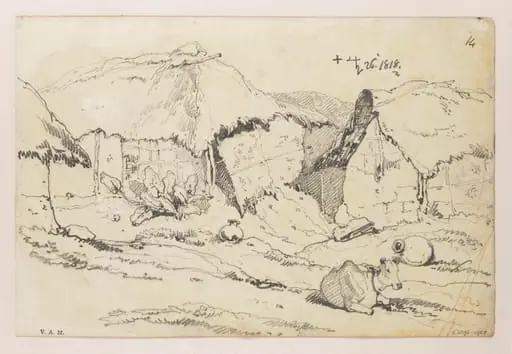
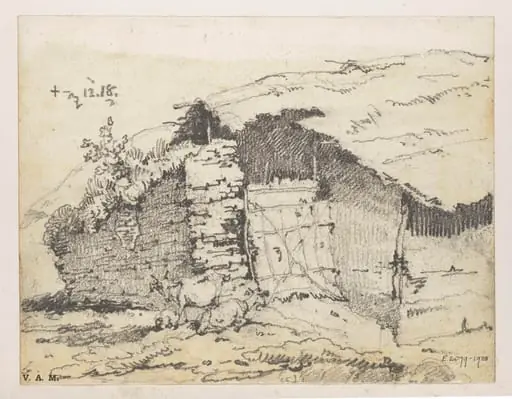
A hillside with ruined masonry
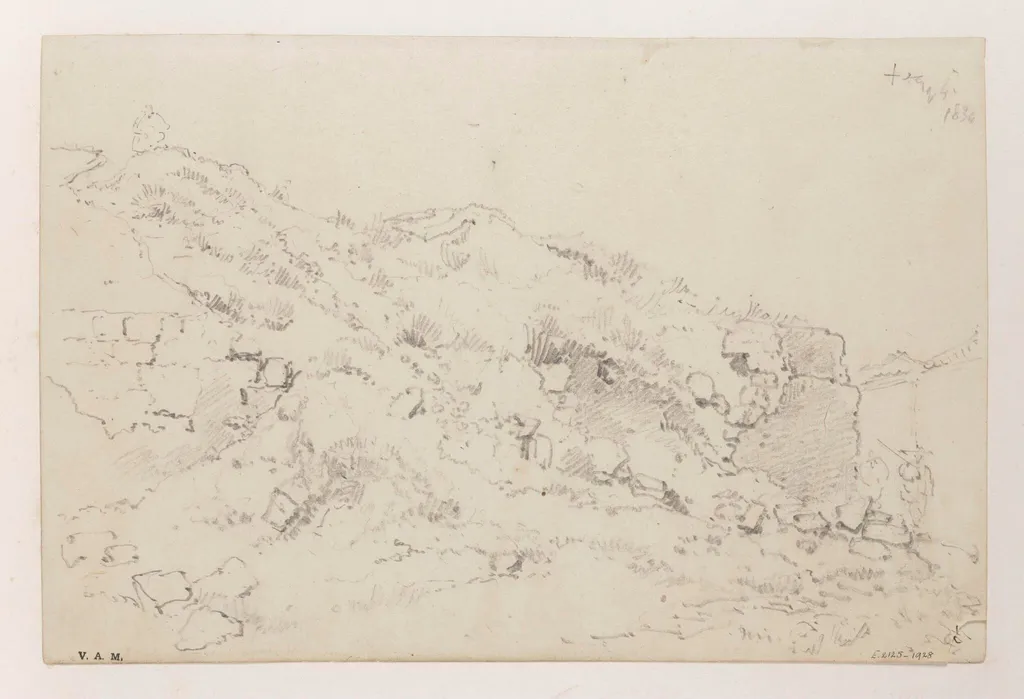
A hillside with ruined masonry is a drawing by the Romanticist artist George Chinnery. It dates from 7 and is held in the collection of the Victoria and Albert Museum.
About this work
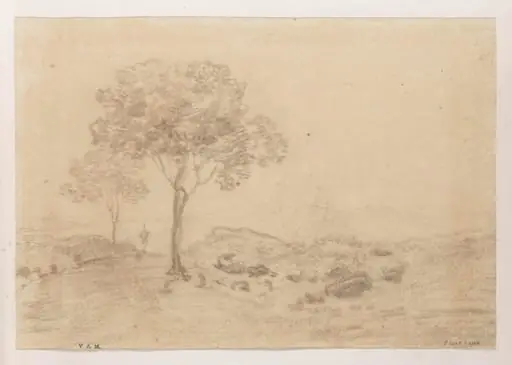
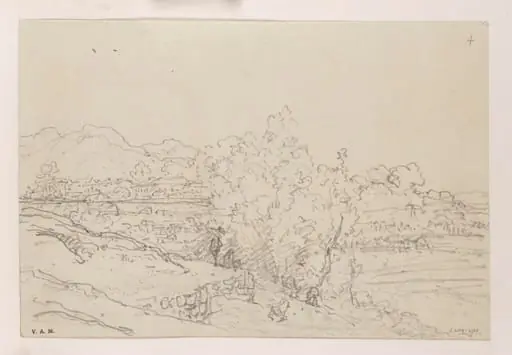
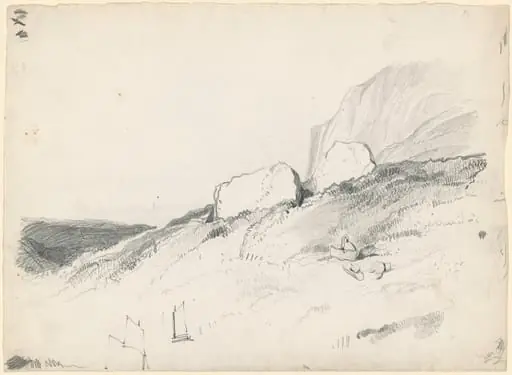
This drawing shows a quiet hillside covered in grass and dotted with old stone ruins. The scattered blocks and crumbling walls feel soft under the Romantic eye. George Chinnery made it in 1834, all in simple pencil lines.
It’s one of the few finished drawings he left from that decade.
Look for more of Chinnery’s work at the Victoria and Albert Museum.
Overview
The work is a pencil drawing dated 1834 that depicts a gently sloping grassy hillside punctuated by the remnants of stone walls and isolated blocks of masonry. The composition balances natural vegetation with the decay of human-made structures, presenting a tranquil, somewhat melancholic landscape.
Subject & Meaning
The scene captures a quiet rural environment where nature reclaims the ruins of former walls. The juxtaposition of verdant grass against weathered stone suggests themes of impermanence and the passage of time, resonating with Romantic interests in the sublime and the transitory.
Technique & Style
Executed in simple pencil lines, the drawing relies on delicate shading to convey the texture of grass and the roughness of stone. The artist employs a restrained palette, focusing on line work and tonal variation to render depth and atmosphere without the use of color.
History & Provenance
Created by George Chinnery in 1834, the drawing is among the few completed works he produced during that decade. It is part of the collection held by the Victoria and Albert Museum, where it contributes to the representation of Chinnery’s early landscape practice.
Own this work as a print
Artist & collection
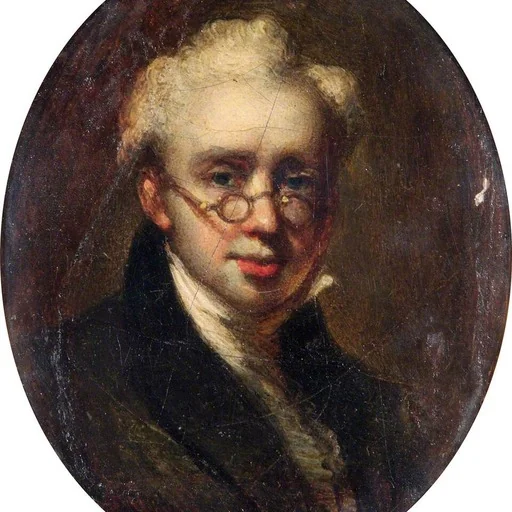
Artist
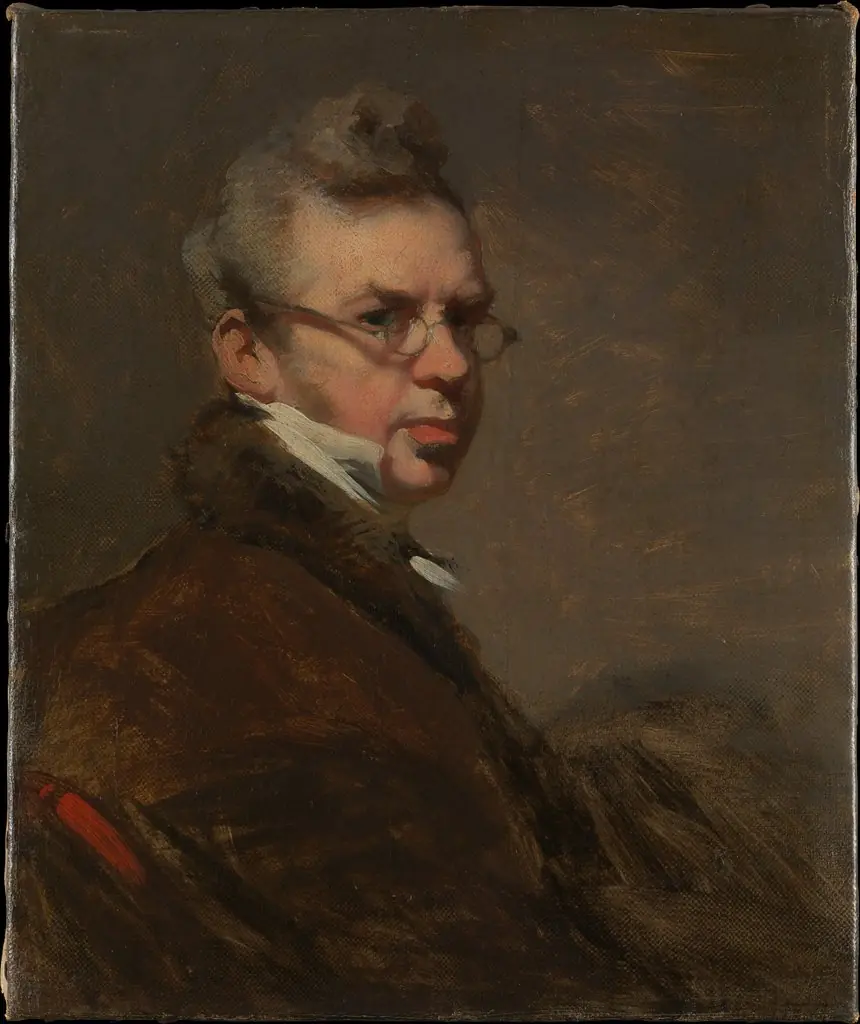
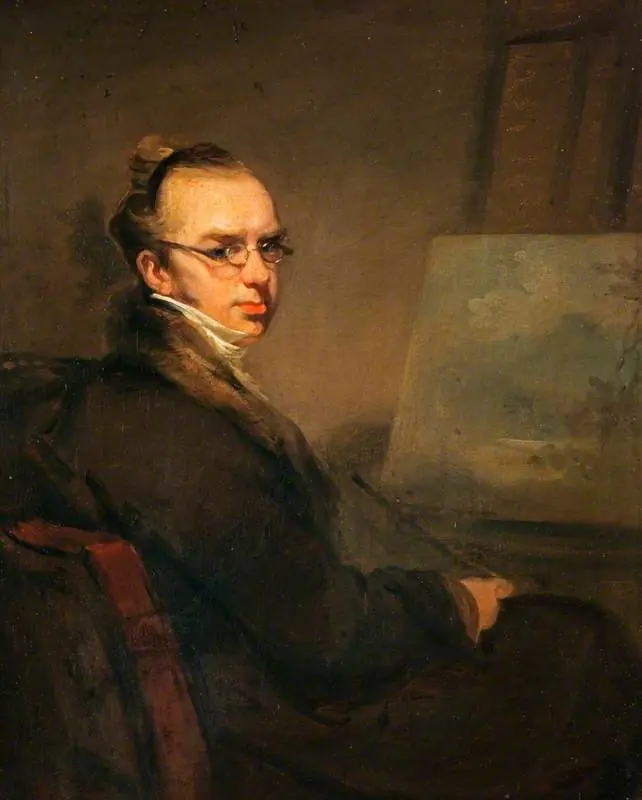
George Chinnery (Chinese: 錢納利; 5 January 1774 – 30 May 1852) was an English painter who spent most of his life in Asia, especially India and southern China.