Artwork
Drawings of a man carrying two pails, and a doorway in a wall
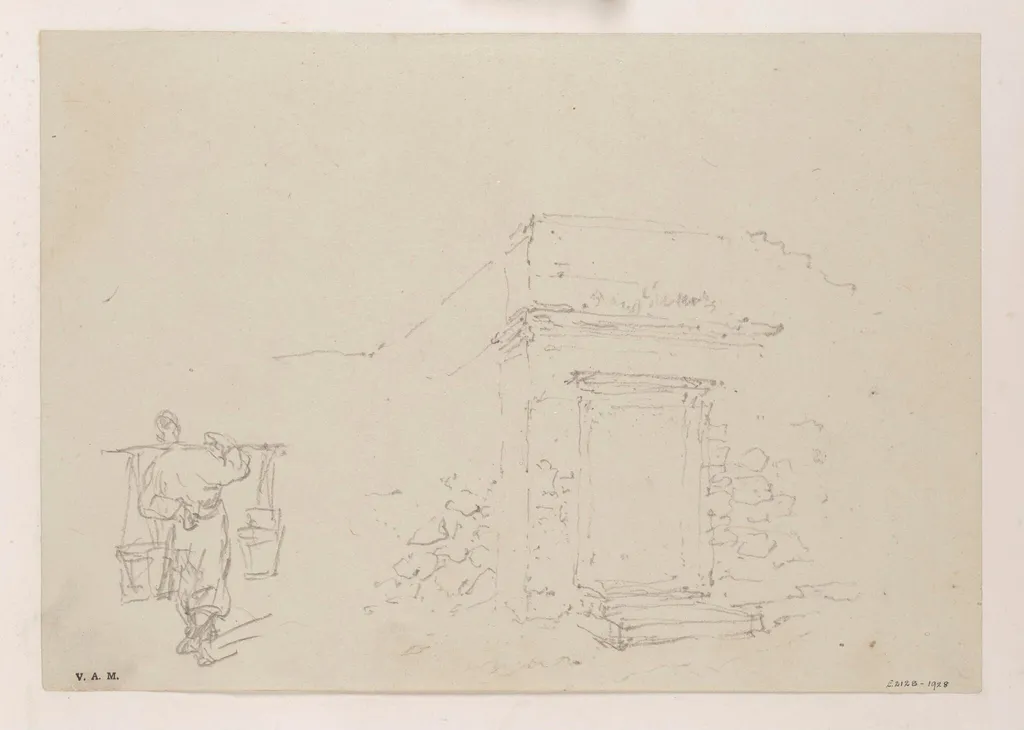
Drawings of a man carrying two pails, and a doorway in a wall is a drawing by the Romanticist artist George Chinnery. It dates from 19 and is held in the collection of the Victoria and Albert Museum. The drawing depicts a solitary figure walking beside a simple doorway cut into the corner of a rough stone wall.
About this work
Overview
The drawing depicts a solitary figure walking beside a simple doorway cut into the corner of a rough stone wall. The man balances a pole across his shoulder, from which two wooden pails hang, their motion suggested by the line work. The composition is restrained, presenting a moment of everyday activity without narrative embellishment.
Subject & Meaning
The scene captures a routine task—transporting water or other liquid—in a rural or semi‑urban Indian setting. By focusing on an anonymous laborer and an unadorned architectural element, the work emphasizes the continuity of daily labor and the modest spaces that structure communal life.
Technique & Style
Executed in swift, incisive lines, the drawing reflects Chinnery’s characteristic approach to on‑the‑spot observation. The economy of stroke conveys both the texture of the masonry and the implied swing of the pails, while the minimal shading maintains a clear, almost diagrammatic quality that foregrounds form over surface detail.
Context
Created during George Chinnery’s extended stay in India, the piece belongs to a broader series of sketches documenting local customs and environments. Chinnery, a British expatriate artist, frequently recorded scenes of ordinary Indian life, providing a visual record that complements written accounts of the period’s social landscape.
Artist & collection
Artist
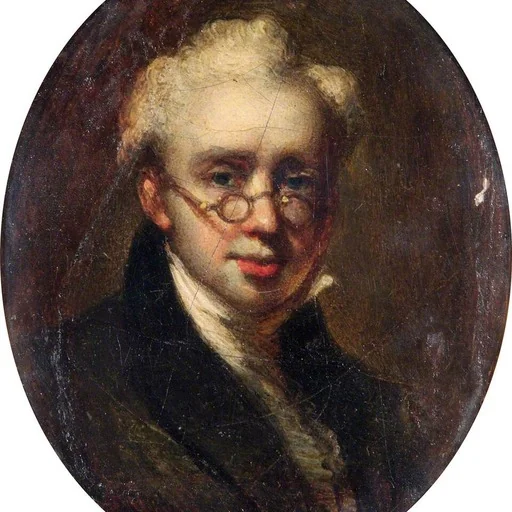
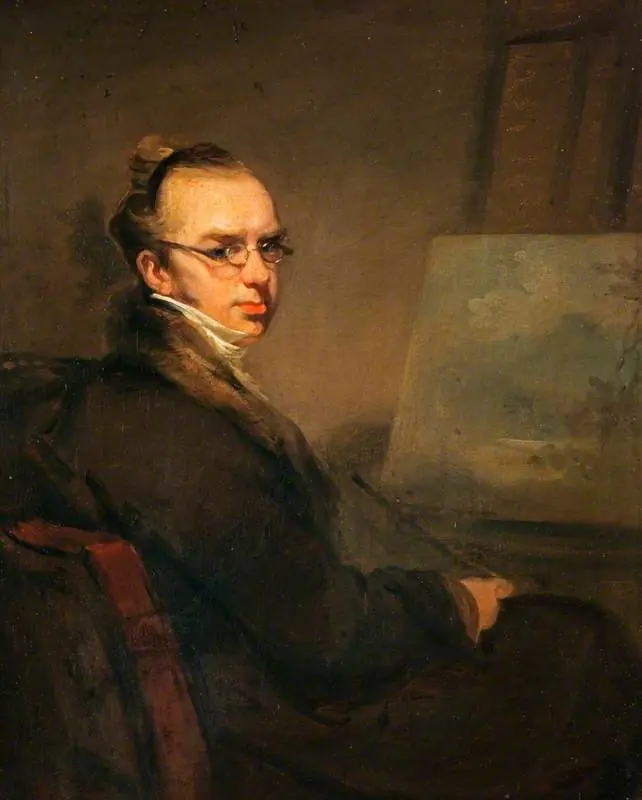
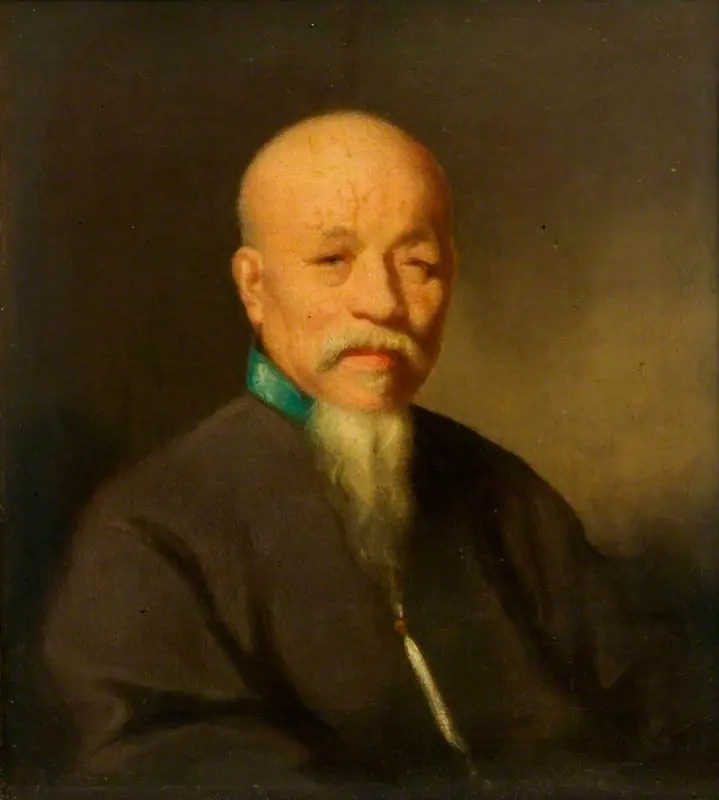
George Chinnery (Chinese: 錢納利; 5 January 1774 – 30 May 1852) was an English painter who spent most of his life in Asia, especially India and southern China.

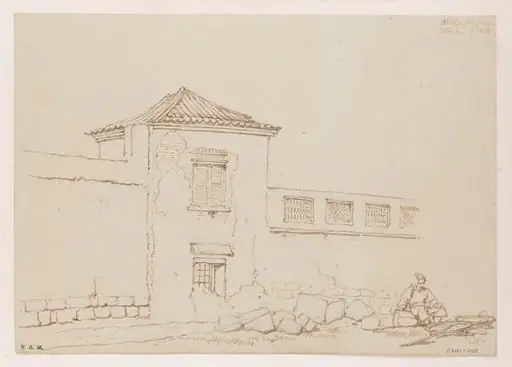 A building in Macau
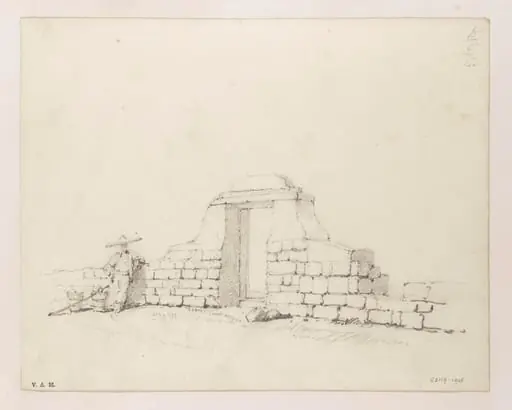 A Chinese figure by a doorway in a stone wall
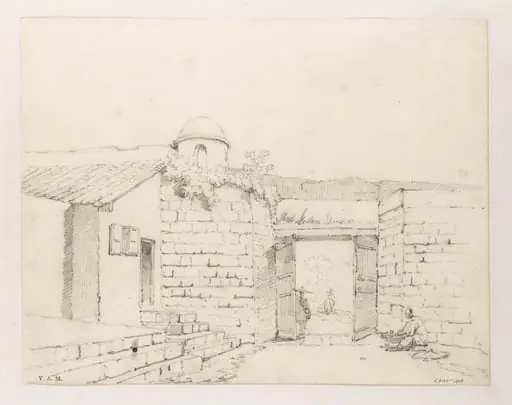 A gateway with a domed turret, Macau
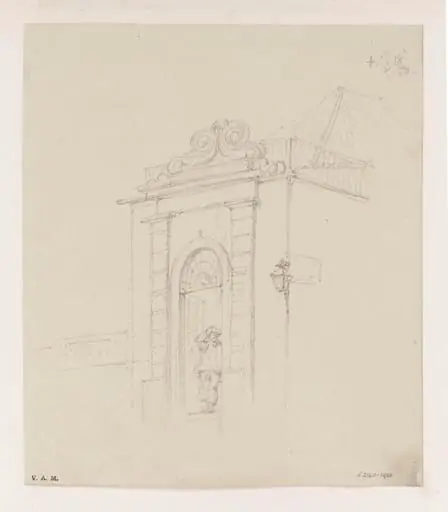 A figure in a doorway, Macau
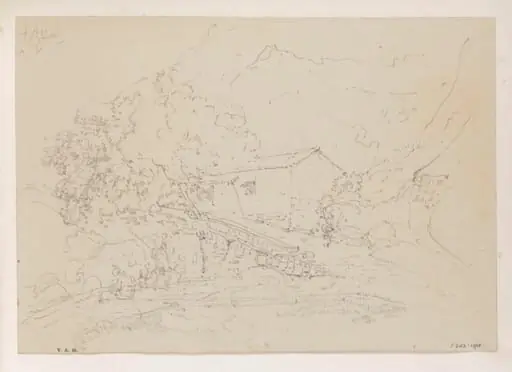 A small building and trees on a hillside, Macau
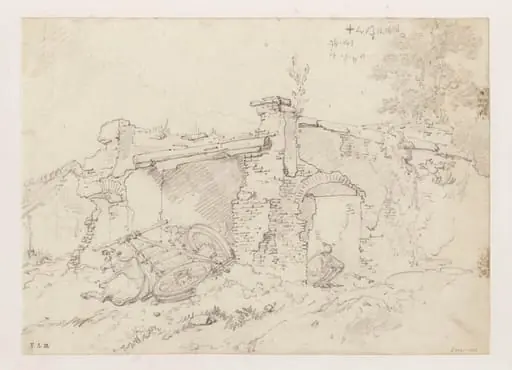 A ruined building in Bengal, with a figure and an ox and cart
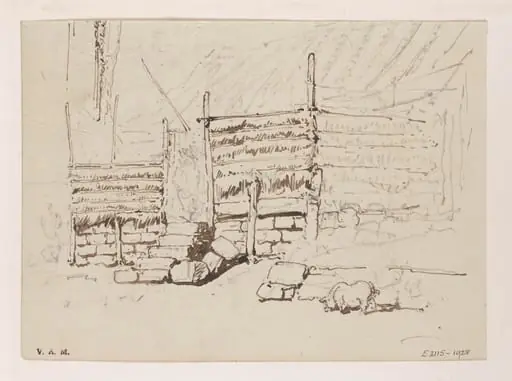 An enclosure, Macau
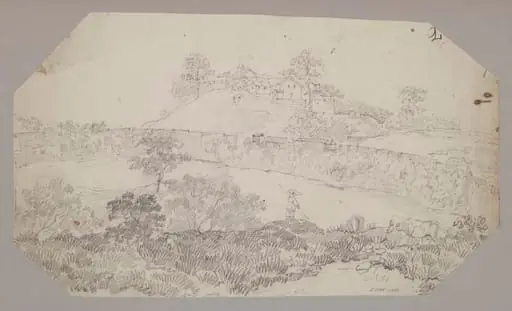 Landscape with a fortified wall and a hilltop village
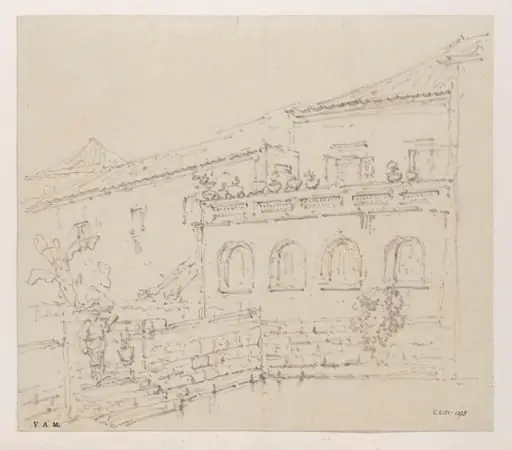 Adjacent houses, Macau