Artwork
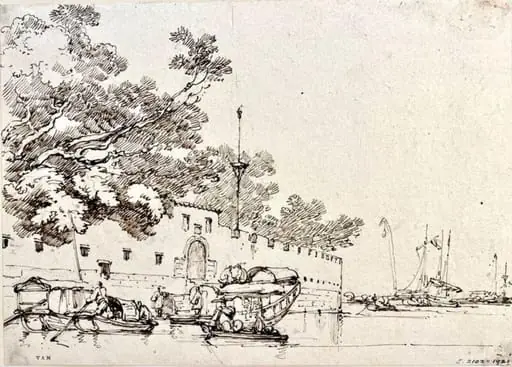
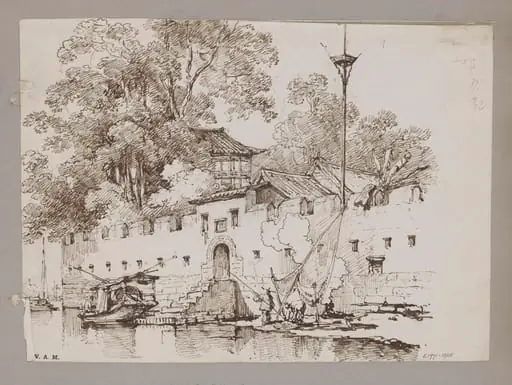
The 'Dutch folly fort', Canton (Guangzhou)
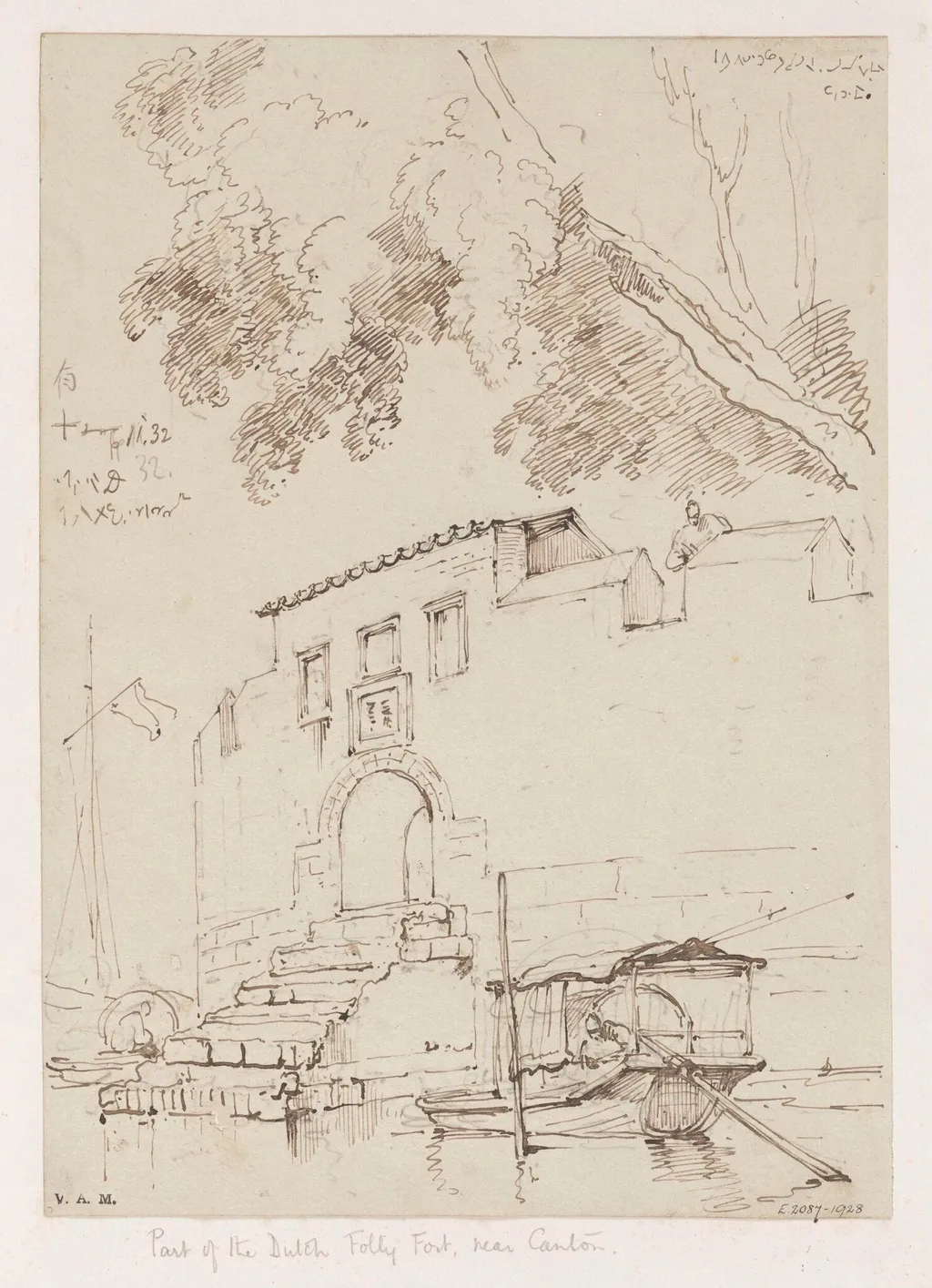
The 'Dutch folly fort', Canton (Guangzhou) is a drawing by the Romanticist artist George Chinnery. It dates from 10 and is held in the collection of the Victoria and Albert Museum.
About this work
Overview
This drawing depicts the 'Dutch folly fort' situated on Haizhu Island in the Pearl River, Canton (Guangzhou), with a Tanka boat positioned near the fort's entrance.
Subject & Meaning
The subject highlights a European presence in 19th-century Canton, reflecting the era's Western trade activities in the region. The 'Dutch folly fort' name suggests a perceived eccentricity or unexpectedness of the Dutch structure from a Western observer's viewpoint.
Technique & Style
While specific artistic techniques are not detailed here, the work is attributed to the style of George Chinnery, known for his detailed, observational drawings of Canton's life, implying a realistic and potentially nuanced representation.
History & Provenance
Created during a period of increased Western interaction with Canton, the drawing's exact date and ownership history are not provided, though it aligns with Chinnery's body of work from his time in the region.
Context
The drawing captures a moment in Sino-European relations, where Canton was a key trading hub. The presence of a Tanka boat, commonly used by Cantonese, alongside the 'Dutch folly fort', illustrates the cultural and economic interchange of the time.
Legacy
As part of Chinnery's oeuvre, the drawing contributes to the historical visual record of 19th-century Canton, offering insights into the city's architecture, maritime activities, and cross-cultural dynamics during that era.
Artist & collection
Artist
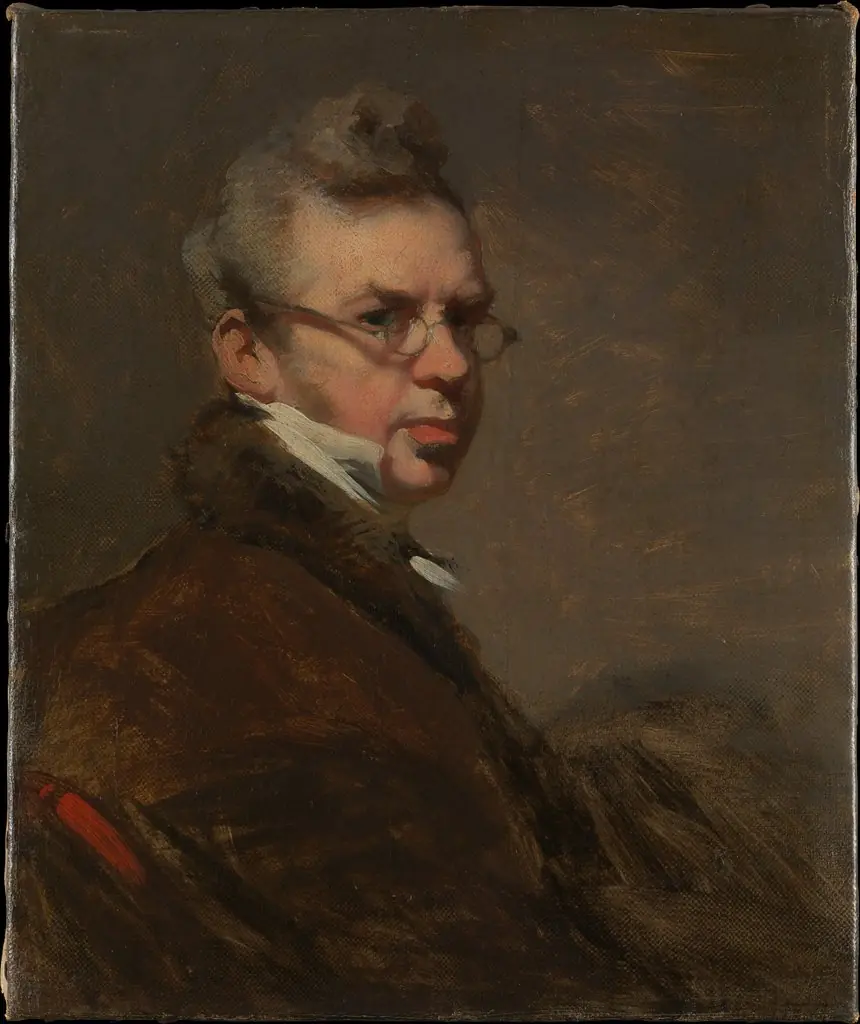
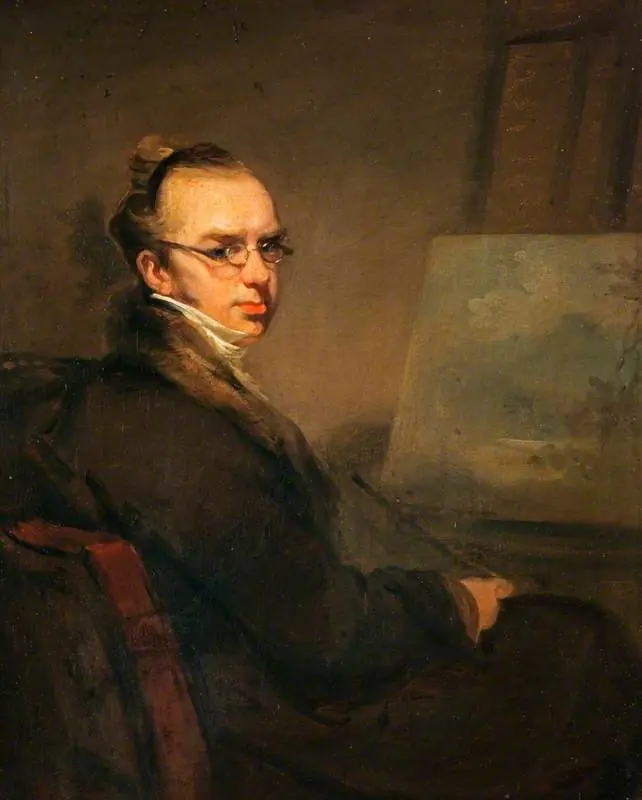
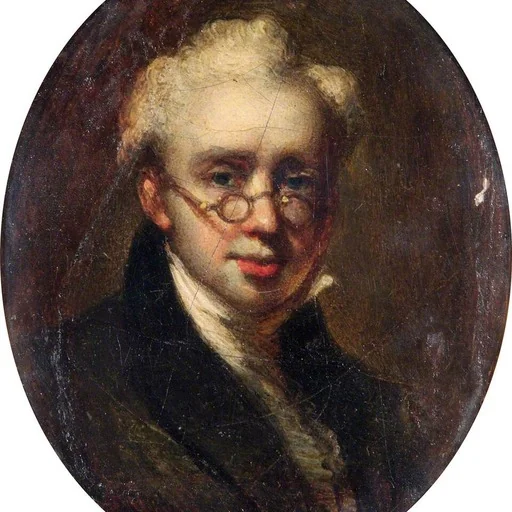
George Chinnery (Chinese: 錢納利; 5 January 1774 – 30 May 1852) was an English painter who spent most of his life in Asia, especially India and southern China.