Artwork
Natură moartă
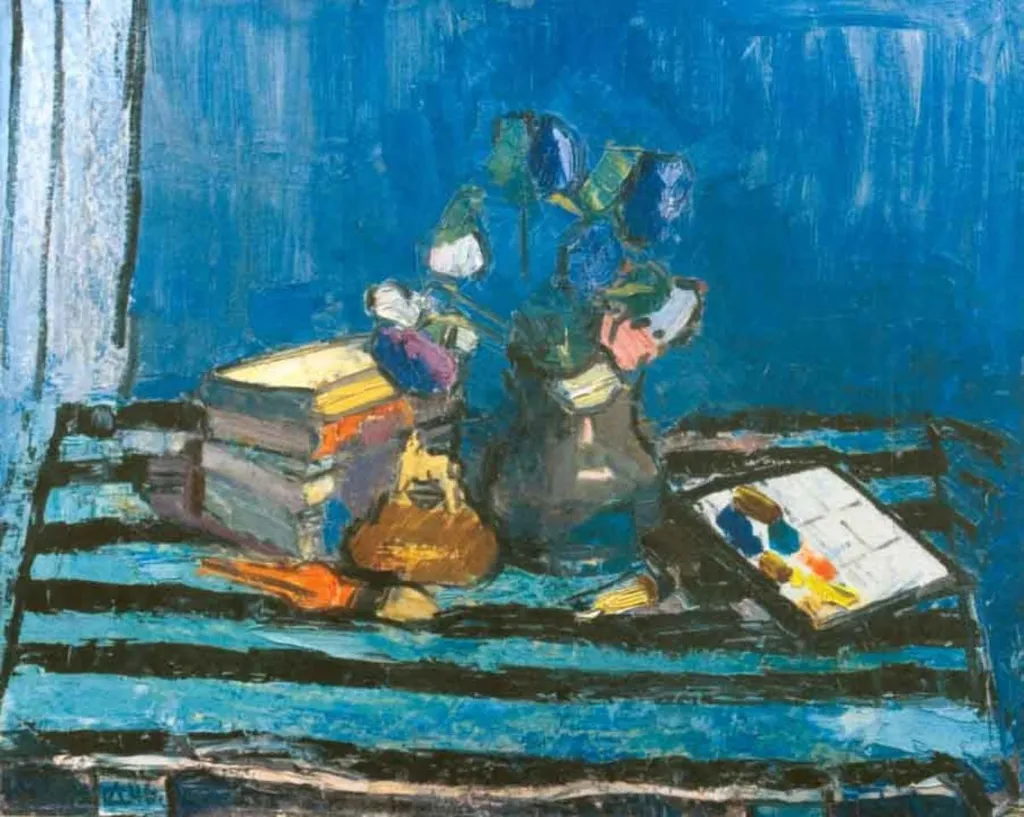
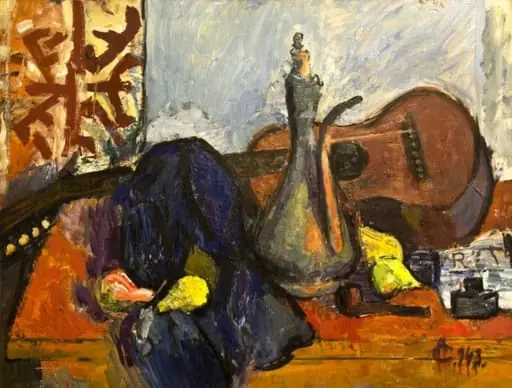
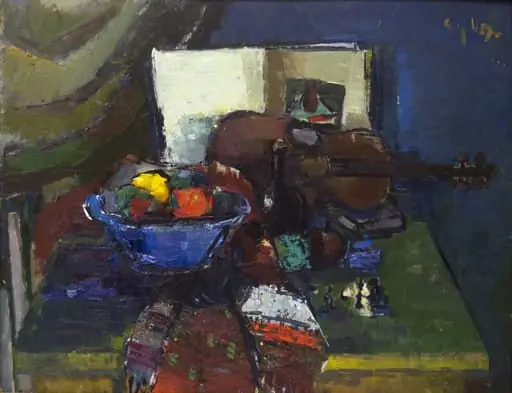
Natură moartă is an unspecified painting by the Realist artist Alexandru Ciucurencu. It dates from 1946 and is held in the collection of the National Museum of Art of Romania.
About this work
Overview
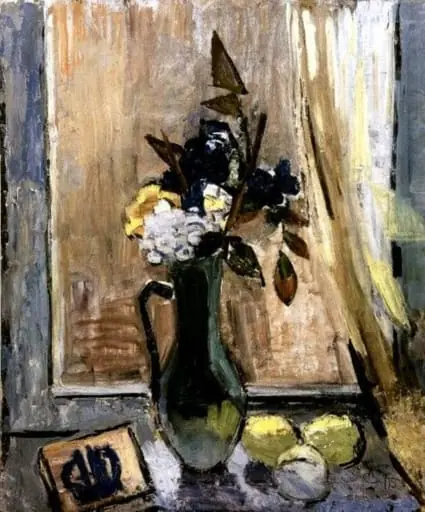
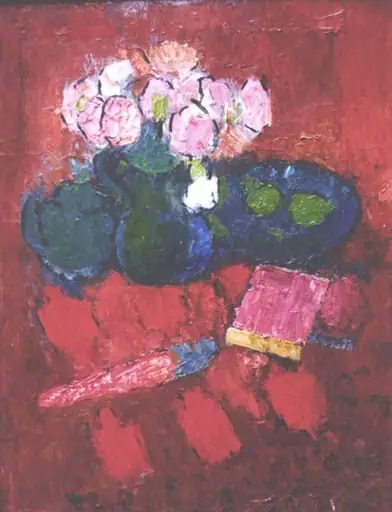
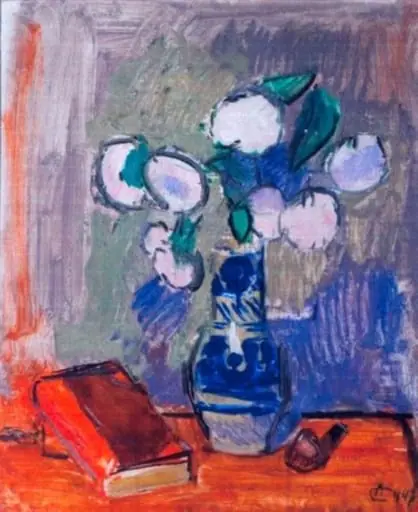
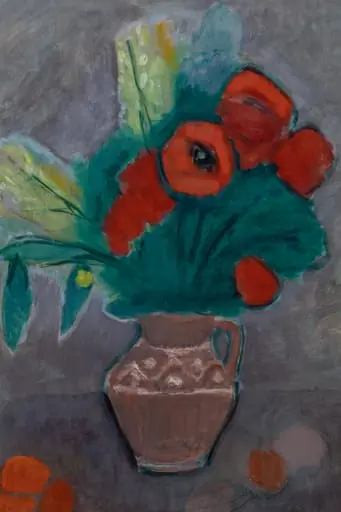
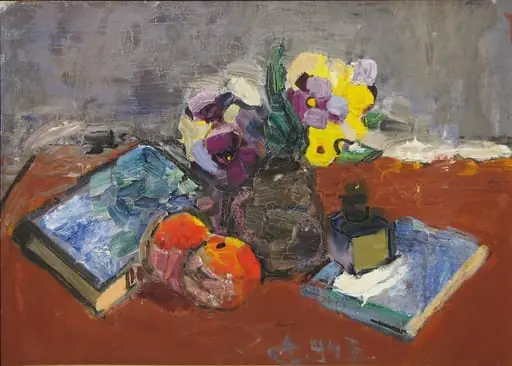
Natură moartă, created in 1946 by Romanian Post-Impressionist Alexandru Ciucurencu, is a still life painting characterized by its everyday subject matter and expressive brushwork.
Subject & Meaning
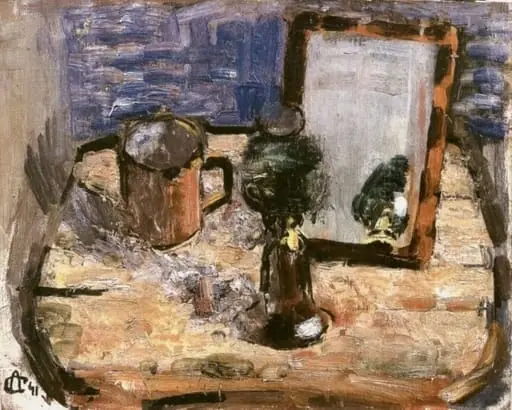
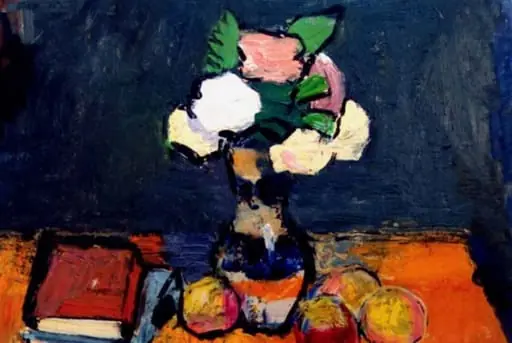
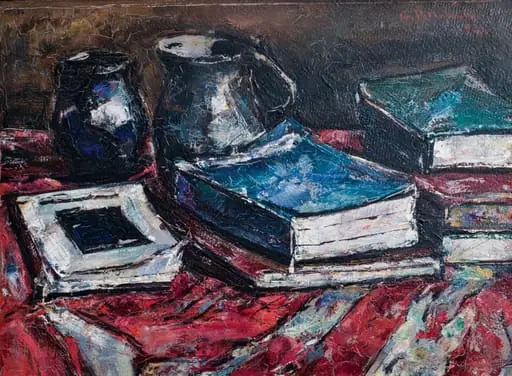
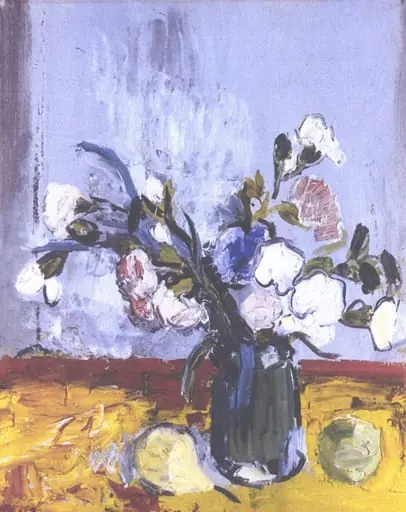
The painting depicts a humble arrangement of common objects on a table, including books, a vase with wilted flowers, a guitar, and an open notebook. The composition conveys a sense of quiet, everyday life.
Technique & Style
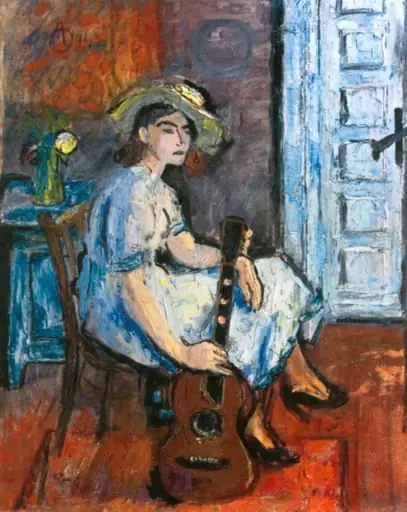
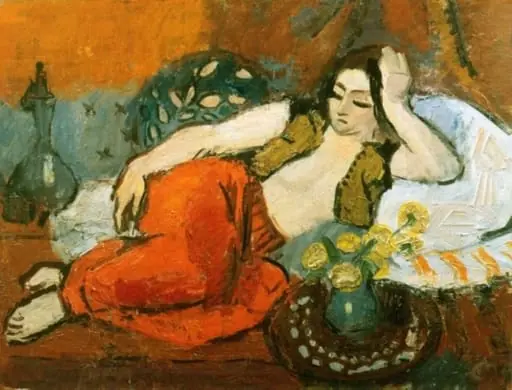
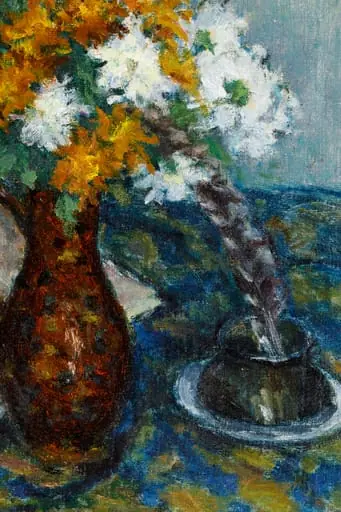
Ciucurencu employed thick, rough brushstrokes and predominantly blues and greens to create a vibrant, dynamic atmosphere. The impasto technique adds tactile depth, while the mixed, muted colors of the flowers suggest the passage of time.
History & Provenance
Alexandru Ciucurencu, born in 1903 in Tulcea, trained at the National School of Fine Arts in Bucharest and the Académie Julian in Paris. *Natură moartă* reflects his Post-Impressionist training, blending realism with expressive technique.
Context
As a Post-Impressionist work from 1946, *Natură moartă* sits at the intersection of traditional representation and the emerging expressive tendencies of the mid-20th century, distinct from the prevailing socialist realism in Eastern Europe at the time.
Legacy
While specific legacy details of *Natură moartă* are not provided, Ciucurencu’s contributions as a corresponding member of the Romanian Academy and his training in Paris influenced subsequent Romanian artistic movements, blending European modernism with local themes.
Artist & collection
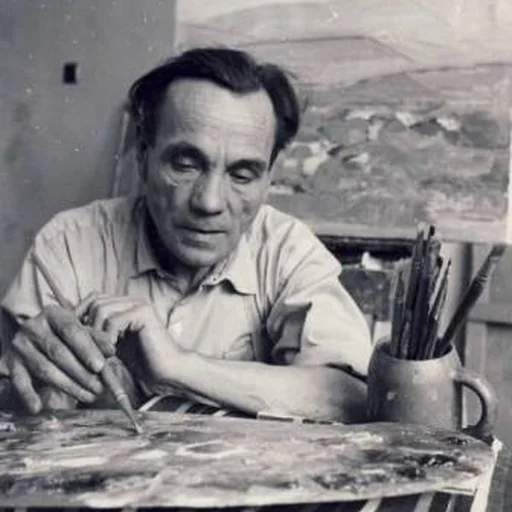
Artist
Alexandru Ciucurencu (Romanian pronunciation: ; 27 September 1903 – 27 December 1977) was a Romanian Post-Impressionist painter, and a corresponding member of the Romanian Academy.