Artwork
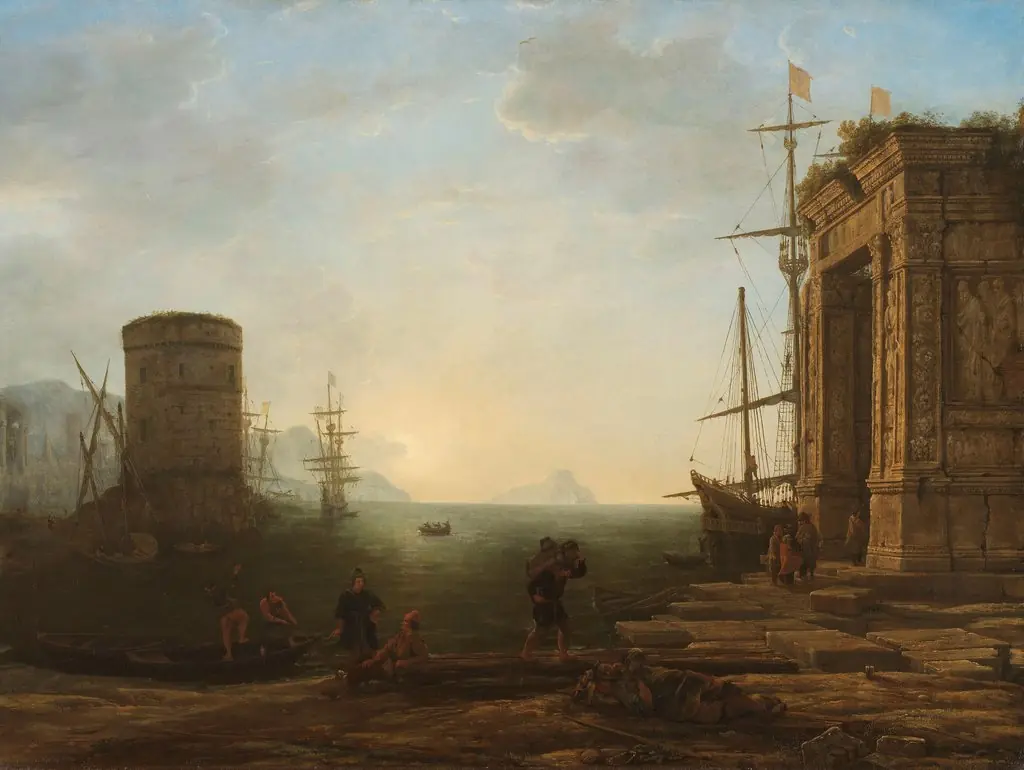
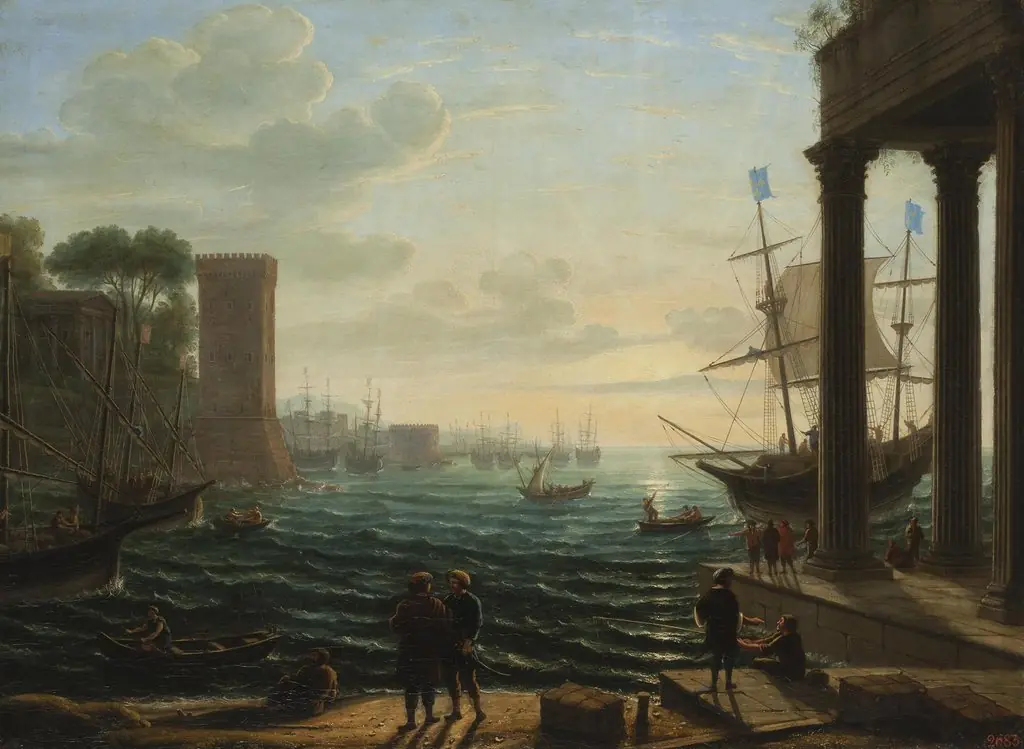
A Seaport at Sunset
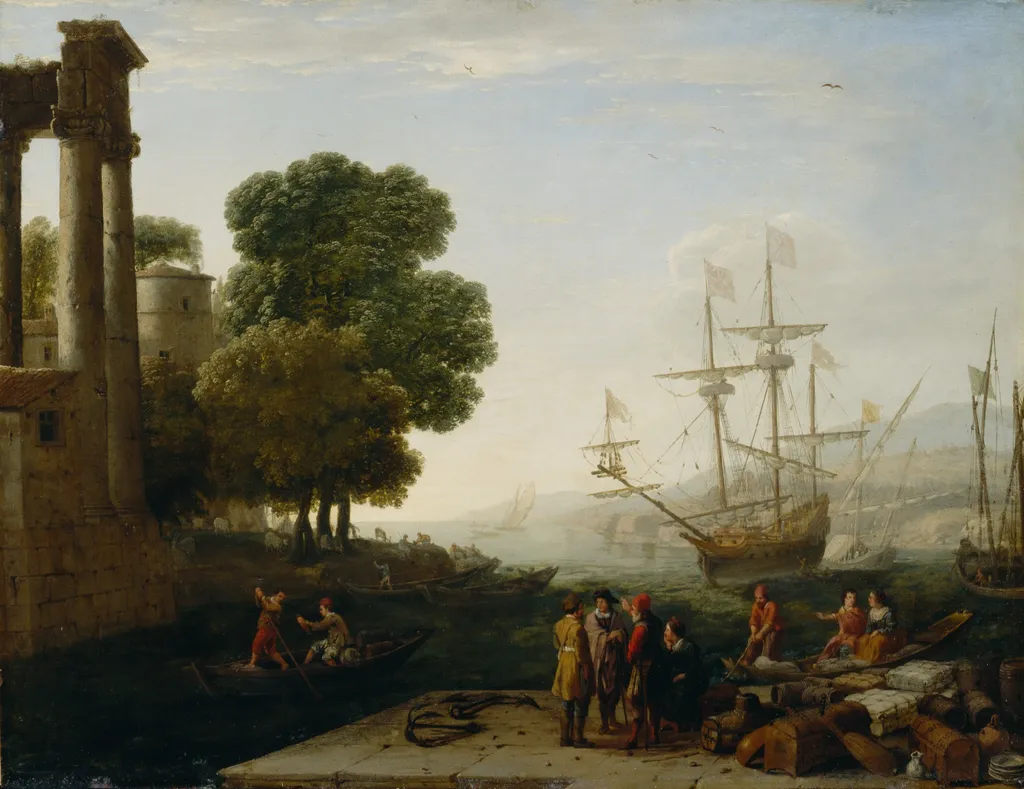
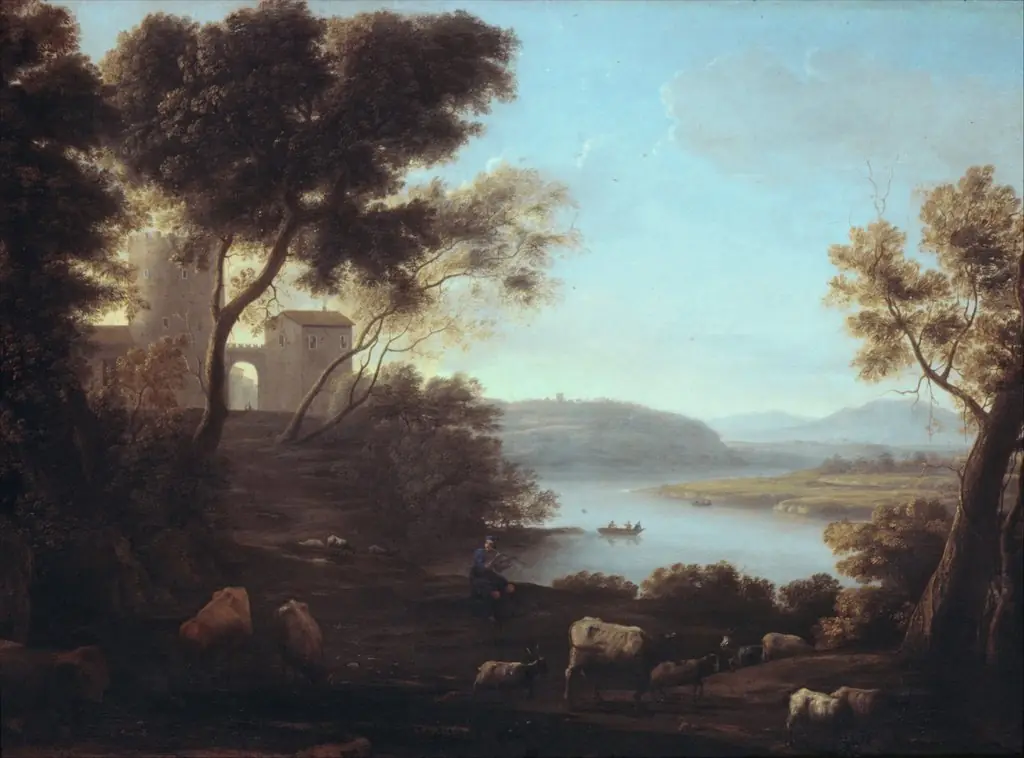
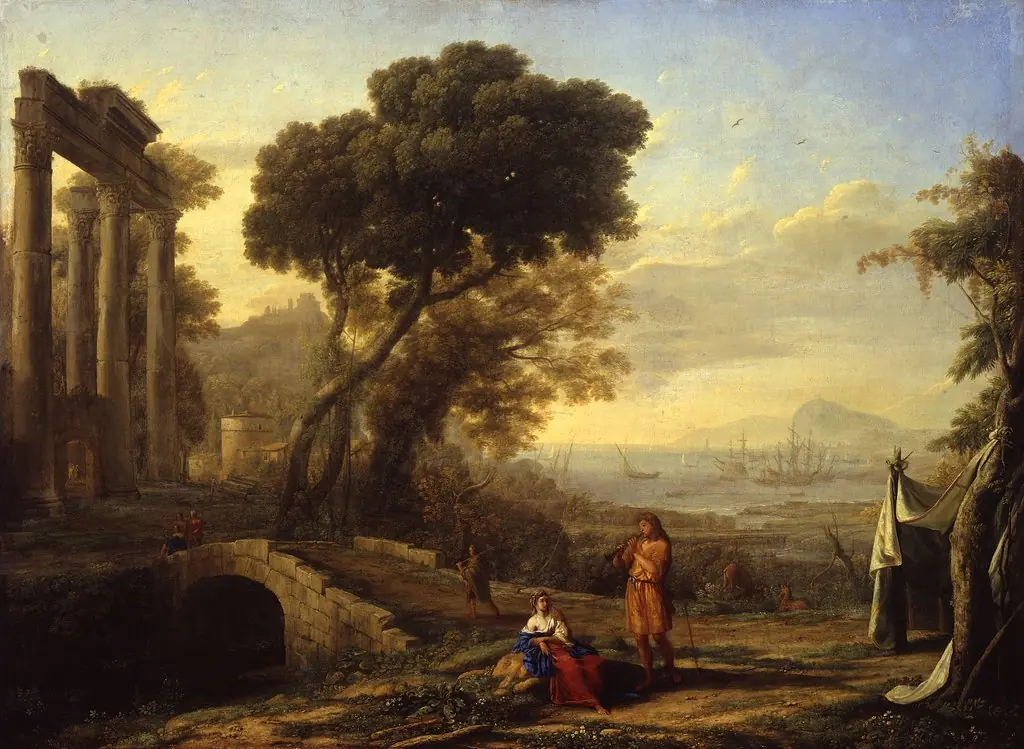
A Seaport at Sunset is an unspecified painting by the French Classical Baroque artist Claude Lorrain. It dates from 1643 and is held in the collection of the Detroit Institute of Arts.
About this work
Overview
Painted in 1643 by Claude Lorrain, this work presents a calm Mediterranean harbor at dusk. The composition balances architectural elements with natural light, characteristic of the artist’s mature style. Though rooted in observed reality, the scene is carefully ordered to suggest harmony and timelessness, aligning with classical ideals of landscape painting prevalent in 17th-century Italy.
Subject & Meaning
A group of figures gathers near the water’s edge, their activities subtly hinting at daily life rather than overt narrative.
A group of figures gathers near the water’s edge, their activities subtly hinting at daily life rather than overt narrative. The large stone structure on the left may reference ancient ruins, evoking a sense of historical continuity. The quiet atmosphere invites contemplation, not storytelling; the scene suggests an idealized moment of repose, where human presence is integrated into nature without disruption.
Technique & Style
Lorrain employed thin, layered glazes to achieve luminous atmospheric effects, particularly in the sky and water. Light is carefully modulated to guide the viewer’s eye from foreground to distant horizon. Figures are rendered with minimal detail, serving as compositional anchors rather than focal points. His method merges precise observation with idealized structure, defining the French Classical Baroque approach to landscape.
History & Provenance
The painting entered the collection of the Detroit Institute of Arts in the 20th century, following earlier ownership by European collectors. Its documented history traces back to the 17th century, consistent with Lorrain’s active period in Rome. The work’s preservation and consistent attribution reflect its recognized status among his surviving oeuvre, though it was never among his most publicly exhibited pieces in earlier centuries.
Context
Created during Lorrain’s time in Rome, the painting reflects the influence of classical antiquity and the growing taste for idealized landscapes among Italian and French patrons. Artists of this era sought to elevate landscape beyond mere backdrop, infusing it with moral or poetic resonance. Lorrain’s scenes, though devoid of dramatic action, offered a serene alternative to the theatricality of contemporaneous history painting.
Legacy
Lorrain’s approach to light and spatial depth influenced generations of landscape painters, including English Romantics and later French Impressionists. His ability to unify naturalism with compositional order became a benchmark for landscape aesthetics. While not widely known to the public today, his technical innovations remain studied in art historical circles for their precision and quiet authority.
Own this work as a print
Artist & collection
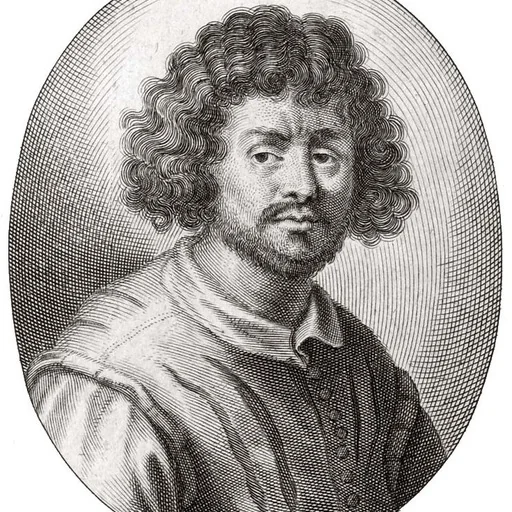
Artist
Claude Lorrain (French: ; born Claude Gellée , called le Lorrain in French; traditionally just Claude in English; c.