Artwork
Bordighera
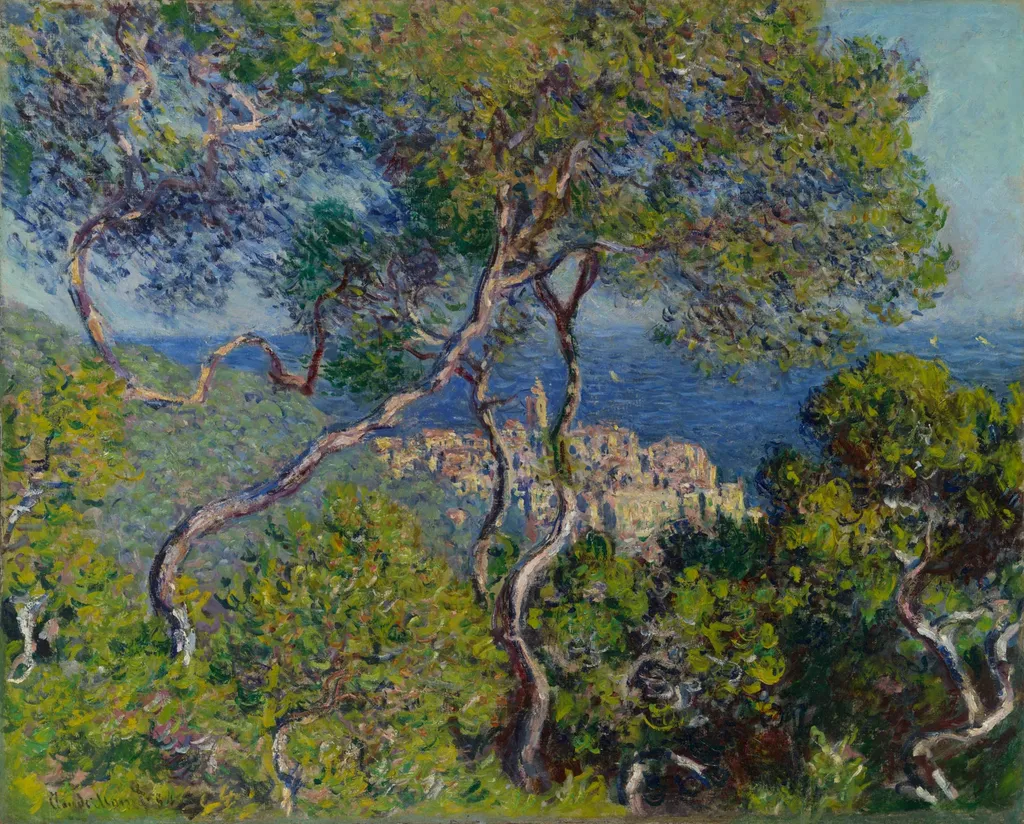
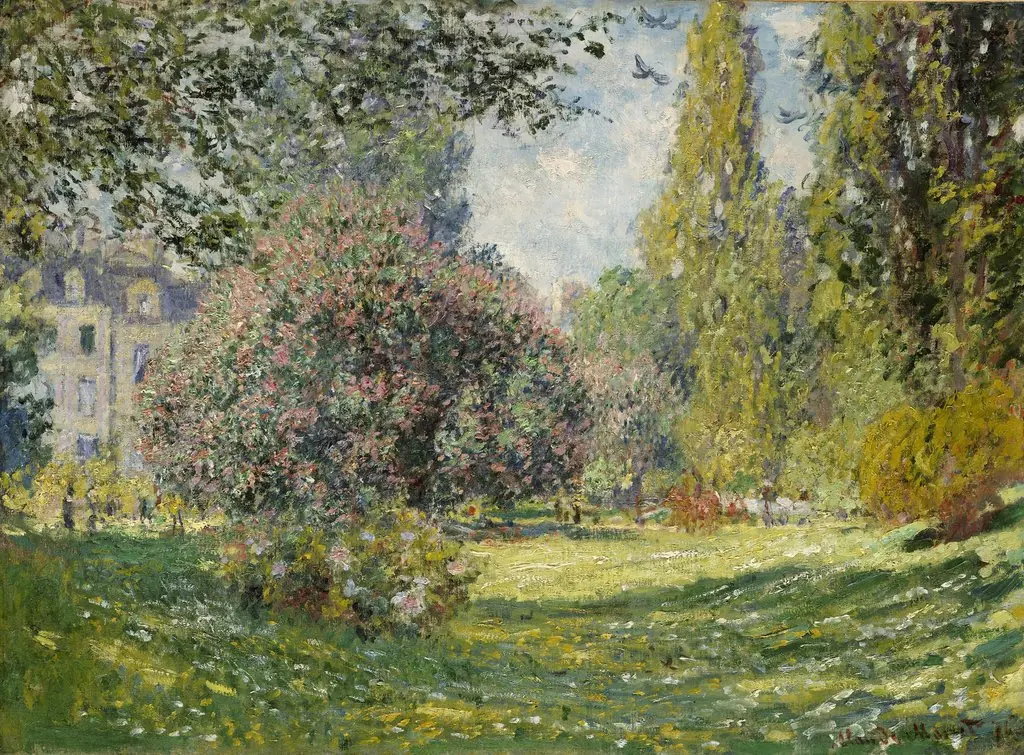
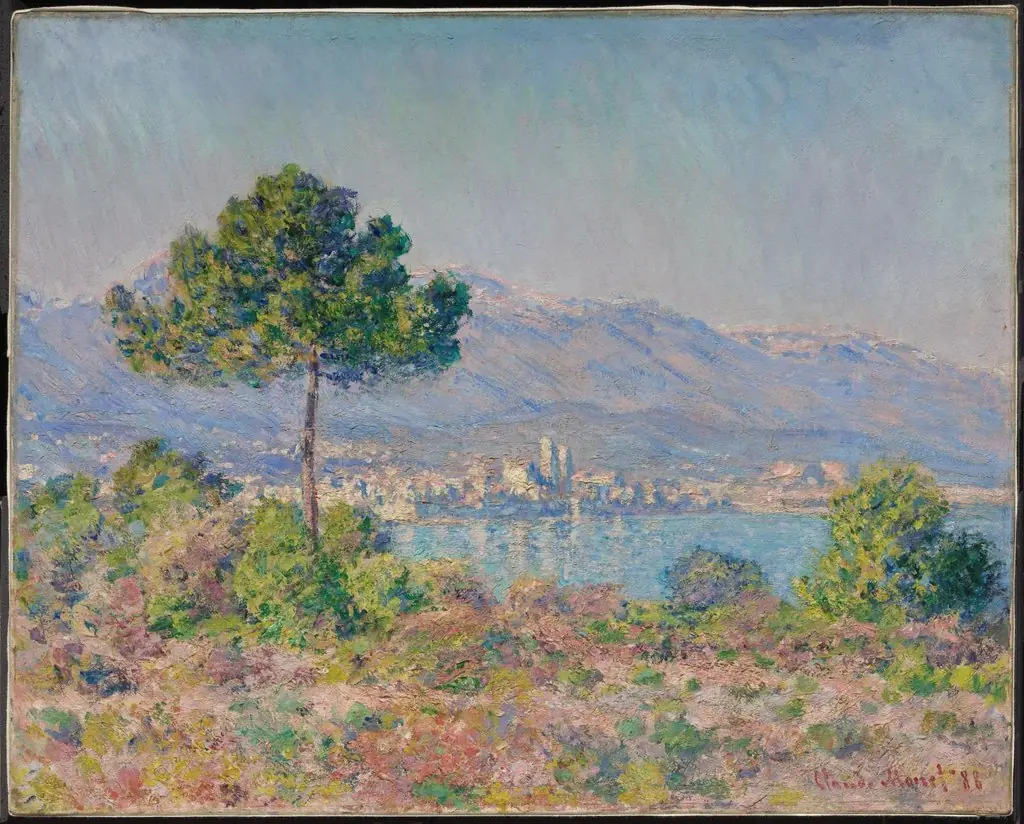
Bordighera is an oil painting by the Impressionist artist Claude Monet. It dates from 1884 and is held in the collection of the Art Institute of Chicago.
About this work
Overview
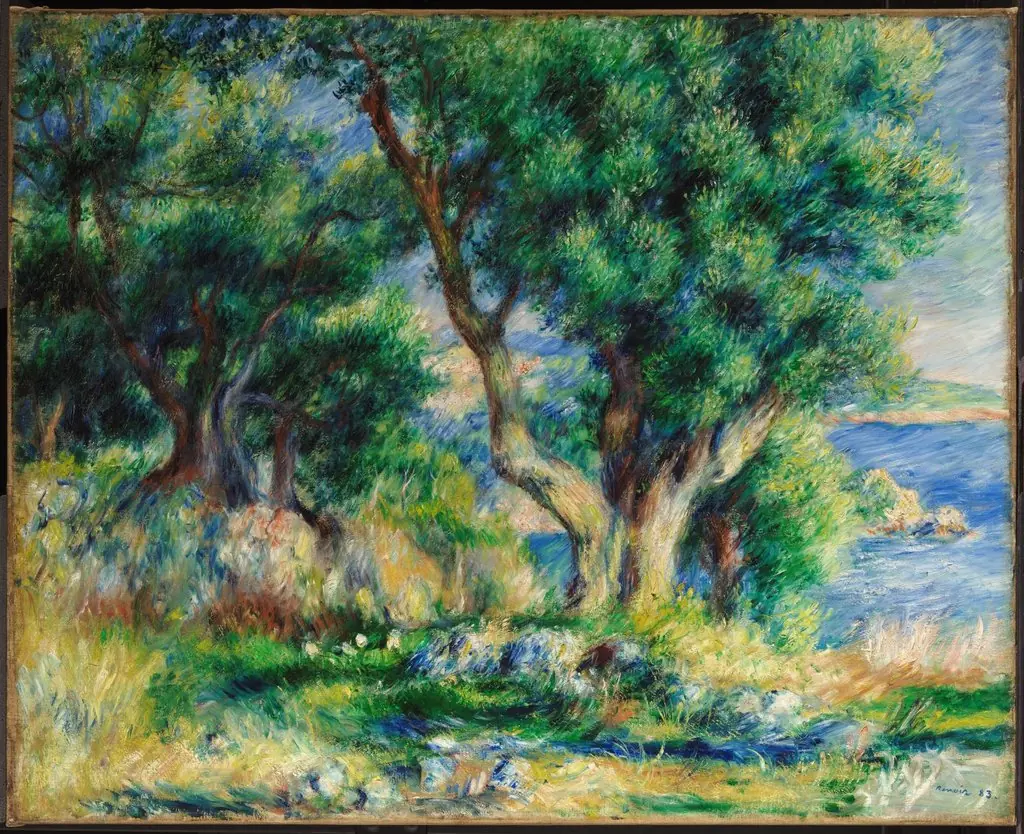
This particular work, painted from an elevated position, captures the town nestled among towering pines, with the sea obscured by the forest’s vertical forms.
In early 1884, Claude Monet arrived in Bordighera, a coastal town on the Italian Riviera, intending a brief stay that extended into nearly three months. He produced a series of landscapes during this period, responding to the intense Mediterranean light and dense local flora. This particular work, painted from an elevated position, captures the town nestled among towering pines, with the sea obscured by the forest’s vertical forms.
Subject & Meaning
The painting presents Bordighera not as a picturesque postcard but as a filtered, almost abstracted view through thick pine trunks. The town becomes a quiet cluster of forms beneath a luminous sky, emphasizing atmosphere over detail. Monet’s focus was less on the settlement itself than on the interplay of light, foliage, and spatial compression, reflecting his interest in perception over topography.
Technique & Style
Monet applied oil paint in rapid, broken strokes to convey the flicker of sunlight filtering through dense needles and branches. The palette favors warm ochres, pale greens, and soft blues, with minimal contrast to preserve the overwhelming glare of midday. The composition’s vertical structure, dictated by the pines, directs the eye upward, reinforcing the dominance of light over solid form.
History & Provenance
Monet painted this work during an extended stay in Bordighera, documented in letters to contemporaries like Auguste Rodin. He described the challenge of painting under such intense illumination, calling it a physical struggle against the sun. The painting remained in his possession until his death, later entering a private collection before being acquired by its current institution.
Context
Monet’s time in Bordighera followed his earlier experiments with light in Normandy and the French coast. The Italian Riviera’s arid vegetation and unfiltered sunlight presented new optical challenges, distinct from the misty atmospheres of his earlier works. This period marked a shift toward more structured compositions, where nature’s density became a framing device rather than a distraction.
Legacy
The Bordighera series expanded Monet’s exploration of how vegetation could structure a landscape, influencing later treatments of natural barriers in his water lily and haystack series. Though less celebrated than his Normandy or Venice works, these paintings reveal his persistent engagement with the physical act of seeing under extreme conditions, reinforcing his commitment to optical truth.
Own this work as a print
Artist & collection
Artist
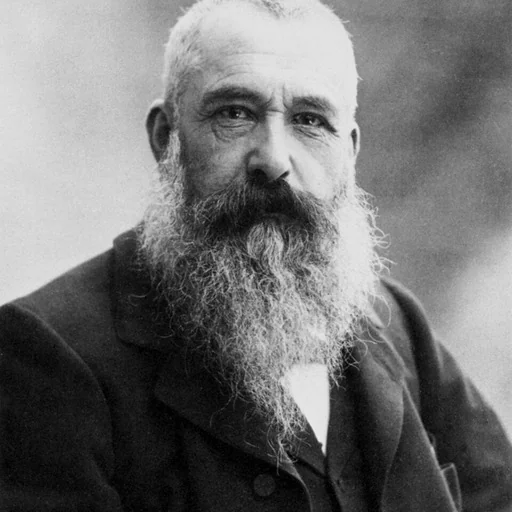
Oscar-Claude Monet was born in Paris on November 14, 1840, and raised from the age of five in Le Havre, where he began selling charcoal caricatures as a teenager.