Artwork
Gardener's House at Antibes
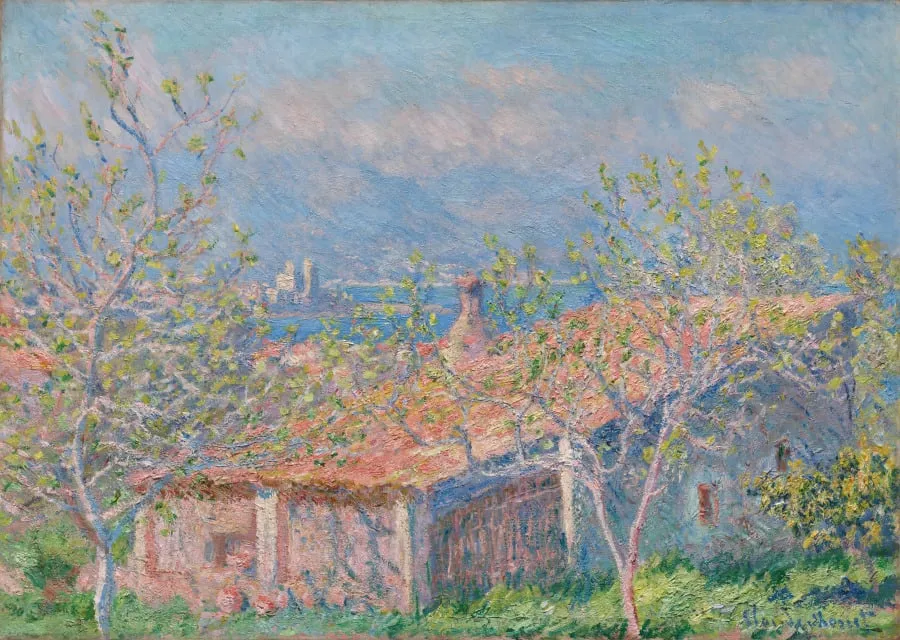
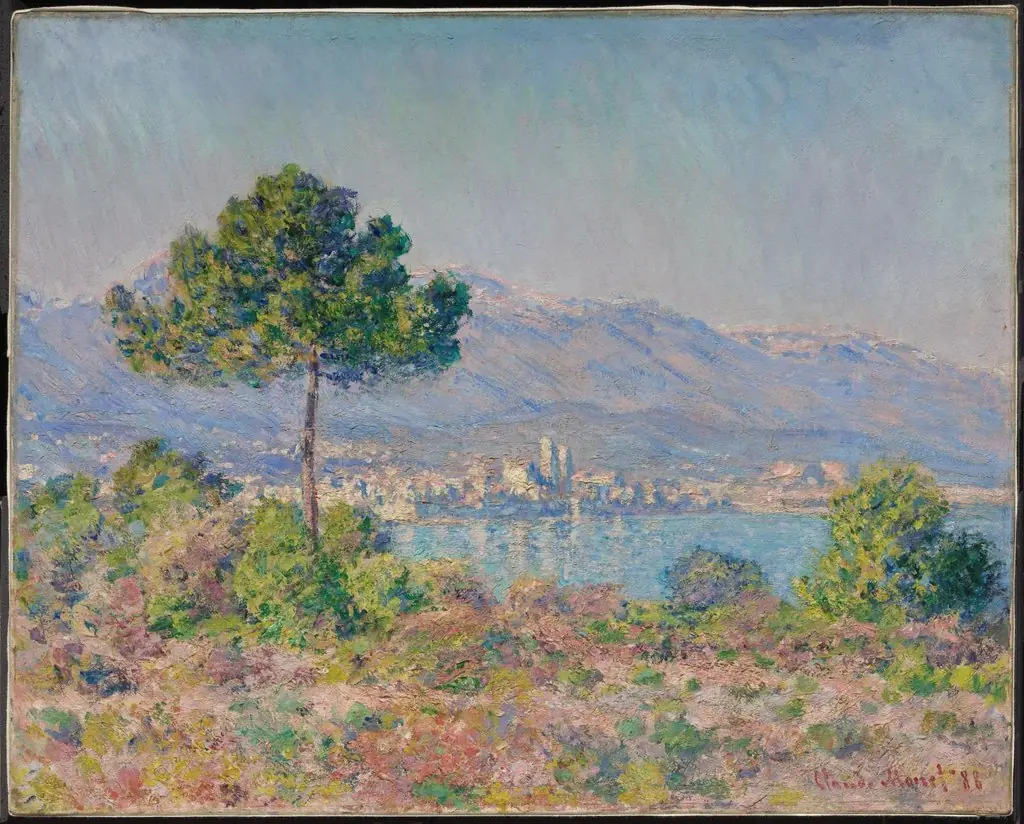
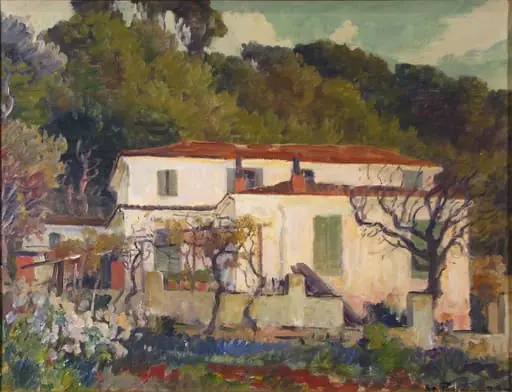
Gardener's House at Antibes is an unspecified painting by the Impressionist artist Claude Monet. It dates from 1888 and is held in the collection of the Cleveland Museum of Art.
About this work
Overview
In 1888, Claude Monet spent four months in Antibes, a coastal town on France’s Mediterranean shore, producing nearly forty paintings during his stay.
In 1888, Claude Monet spent four months in Antibes, a coastal town on France’s Mediterranean shore, producing nearly forty paintings during his stay. Despite persistent strong winds that disrupted his outdoor work, he persisted, capturing the region’s luminous atmosphere. This particular work depicts a modest gardener’s house nestled between vegetation and sea, rendered with a focus on the intensity of midday sunlight and the tactile quality of pigment applied in dense layers.
Subject & Meaning
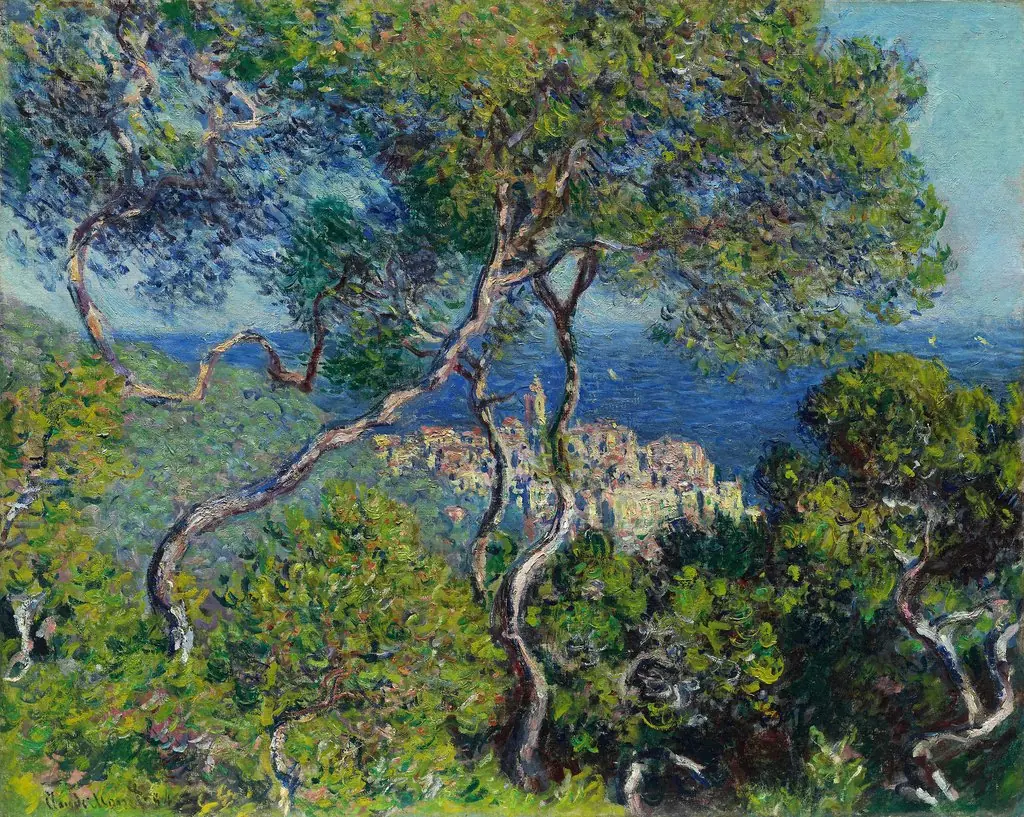
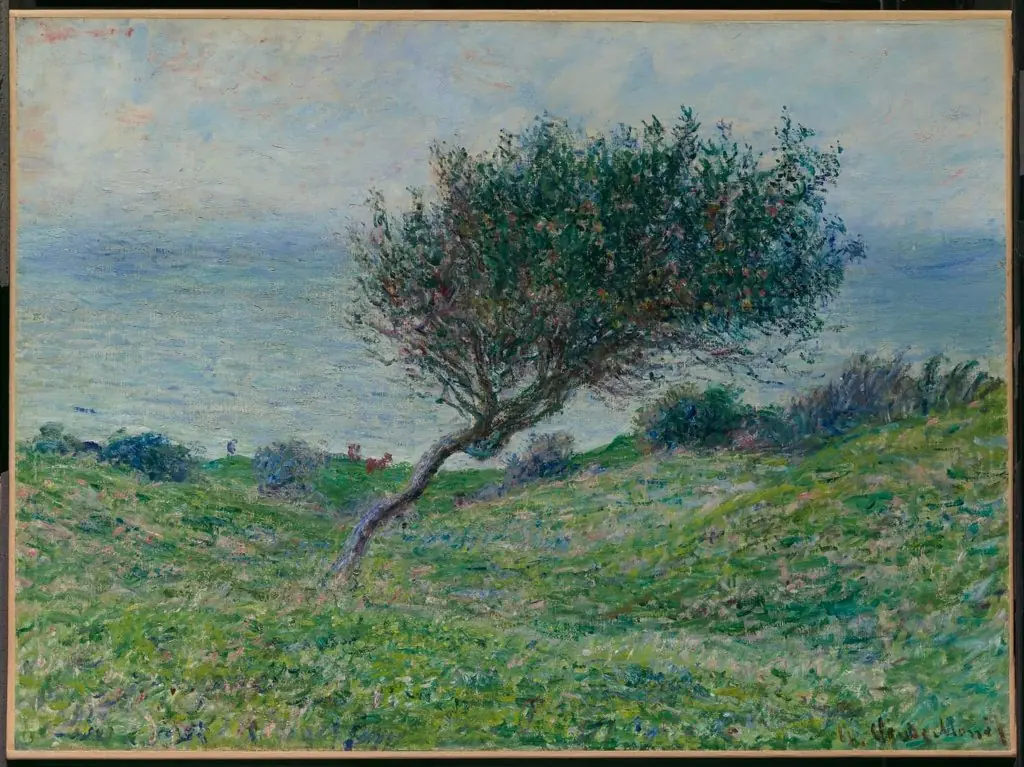
The painting centers on a small, white-walled house with a red-tiled roof, positioned between slender trees and the shimmering expanse of the Mediterranean. Distant mountain ranges hint at the Alps, grounding the scene in its geographic context. Rather than emphasizing narrative, Monet conveys the quiet harmony between human habitation and natural elements, using architecture as a quiet anchor amid the radiant environment.
Technique & Style
Monet employed thick, textured brushwork—impasto—to build the surface of the canvas, creating ridges of paint that catch light and enhance the sense of solar intensity. His palette features saturated hues of blue, white, and green, applied in rapid, deliberate strokes. Small dabs of green on the trees suggest early spring, while the sky, nearly bleached by sunlight, is rendered with minimal detail, emphasizing the overwhelming brightness of the scene.
History & Provenance
Monet arrived in Antibes in late 1888, drawn by the clarity of southern light and the contrast of sea, sky, and vegetation. He worked outdoors daily, often securing his easel against gusts that threatened to topple it. The resulting body of work from this period was exhibited shortly after his return to France, contributing to his growing reputation for capturing transient atmospheric conditions with unprecedented physicality in paint.
Context
Monet’s time in Antibes occurred during a phase of intense experimentation with light and color, following his earlier series on haystacks and Rouen Cathedral. The Mediterranean’s clarity offered a new challenge: how to represent light so brilliant it seemed to dissolve form. His approach here diverged from northern French scenes, embracing a more saturated, almost luminous palette shaped by the region’s unique solar conditions.
Legacy
The Antibes paintings, including this one, demonstrated how Impressionism could adapt to extreme environmental conditions without losing its core focus on perception. Monet’s physical engagement with the landscape—fighting wind, working through heat, and layering paint—expanded the expressive potential of the medium. These works influenced later artists seeking to convey not just what light looked like, but how it felt to endure it.
Artist & collection
Artist
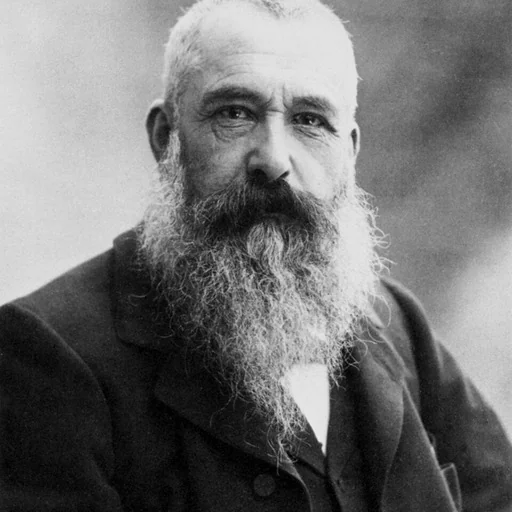
Oscar-Claude Monet was born in Paris on November 14, 1840, and raised from the age of five in Le Havre, where he began selling charcoal caricatures as a teenager.