Artwork
In the Woods at Giverny: Blanche Hoschedé at Her Easel with Suzanne Hoschedé Reading
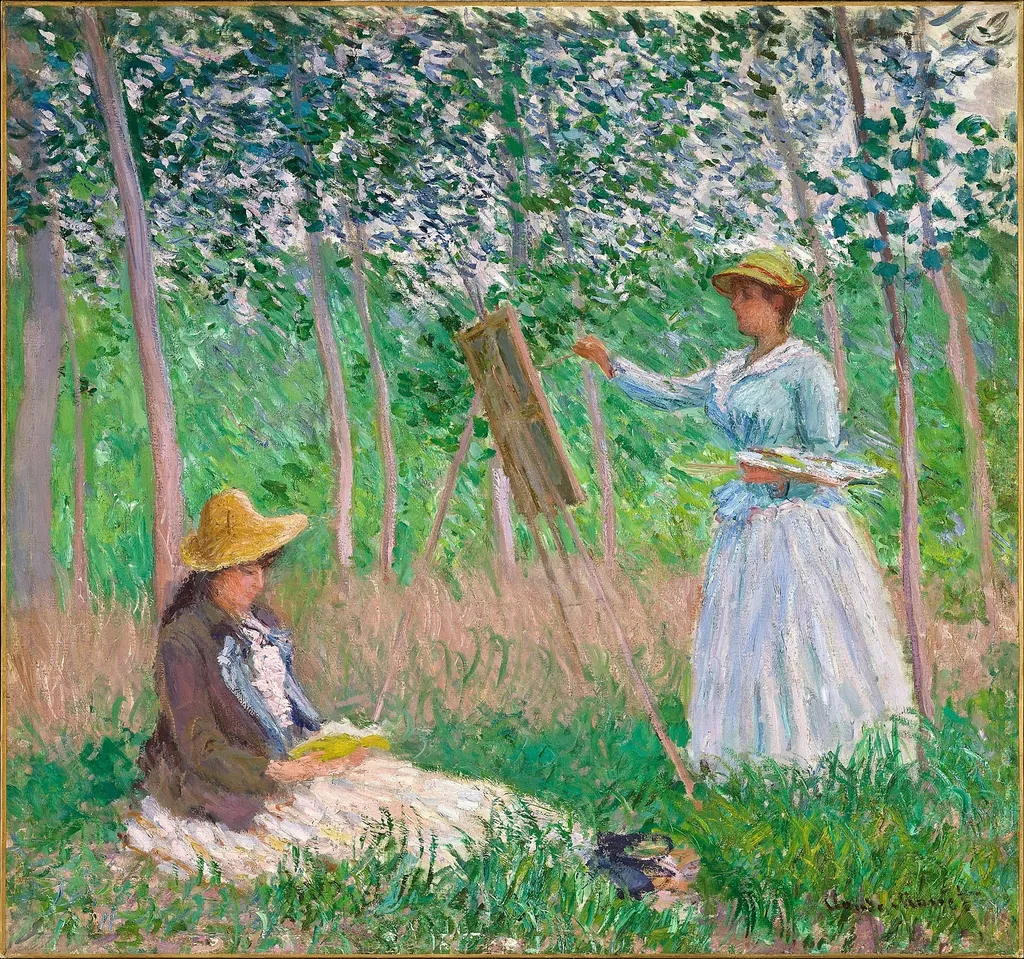
In the Woods at Giverny: Blanche Hoschedé at Her Easel with Suzanne Hoschedé Reading is an oil painting by the Impressionist artist Claude Monet. It dates from 1894 and is held in the collection of the Los Angeles County Museum of Art.
About this work
Overview
The dense foliage and dappled sunlight define the setting, emphasizing the natural environment over narrative detail.
Painted in 1894, this oil work by Claude Monet captures a quiet moment in the woods near his home in Giverny. It portrays two women, Blanche Hoschedé and Suzanne Hoschedé, engaged in separate but related activities—one seated with a book, the other standing with a sketchbook and staff. The dense foliage and dappled sunlight define the setting, emphasizing the natural environment over narrative detail. The painting is part of the Los Angeles County Museum of Art’s collection.
Subject & Meaning
The painting presents two women connected by their shared artistic environment rather than direct interaction. Blanche, seated and absorbed in reading, represents quiet contemplation, while Suzanne, upright and holding a sketchbook, suggests active observation. Their presence reflects the artistic culture of Giverny, where Monet’s family and circle often engaged with nature as both subject and inspiration. No dramatic event occurs; the value lies in the stillness and intimacy of the moment.
Technique & Style
Monet employs loose, textured brushwork to render the foliage and Suzanne’s dress, using thick applications of paint to suggest movement and light. The impasto technique gives the fabric a tactile, almost sculptural quality, contrasting with the softer, blended strokes of the background trees. Color is applied in broken touches, capturing the flickering effect of sunlight through leaves. The composition avoids sharp outlines, favoring atmospheric cohesion over defined form.
History & Provenance
Created during Monet’s residency in Giverny, the painting features members of his household: Blanche, who later married his son Jean, and Suzanne, her sister. It remained within the family until entering the Los Angeles County Museum of Art’s collection. Its provenance reflects Monet’s practice of painting intimate domestic scenes, often involving those closest to him, rather than commissioned or public subjects.
Context
This work belongs to a series of late 19th-century paintings in which Monet explored the interplay of light, color, and human presence within natural settings. Giverny, his garden and woodland retreat, became a recurring subject as he moved away from urban landscapes. The focus on women in quiet, contemplative roles aligns with broader Impressionist interests in private, everyday moments, distinct from historical or mythological themes.
Legacy
The painting exemplifies Monet’s later commitment to capturing transient effects of light and atmosphere, even in intimate, non-monumental scenes. While less widely exhibited than his water lilies, it contributes to understanding how his personal environment shaped his artistic vision. Its preservation in a major museum underscores its role as a document of artistic life in Giverny and the evolving role of women within that circle.
Artist & collection
Artist
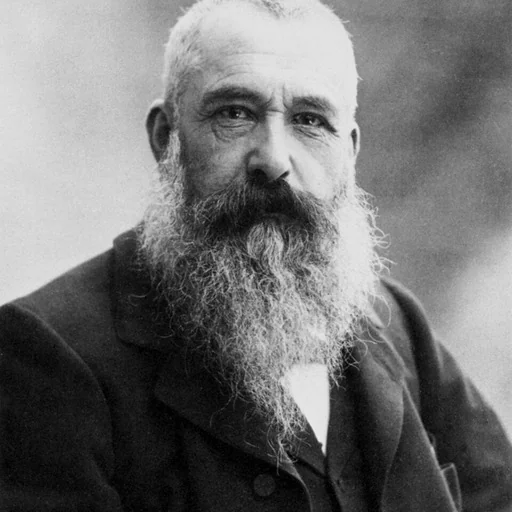
Oscar-Claude Monet was born in Paris on November 14, 1840, and raised from the age of five in Le Havre, where he began selling charcoal caricatures as a teenager.


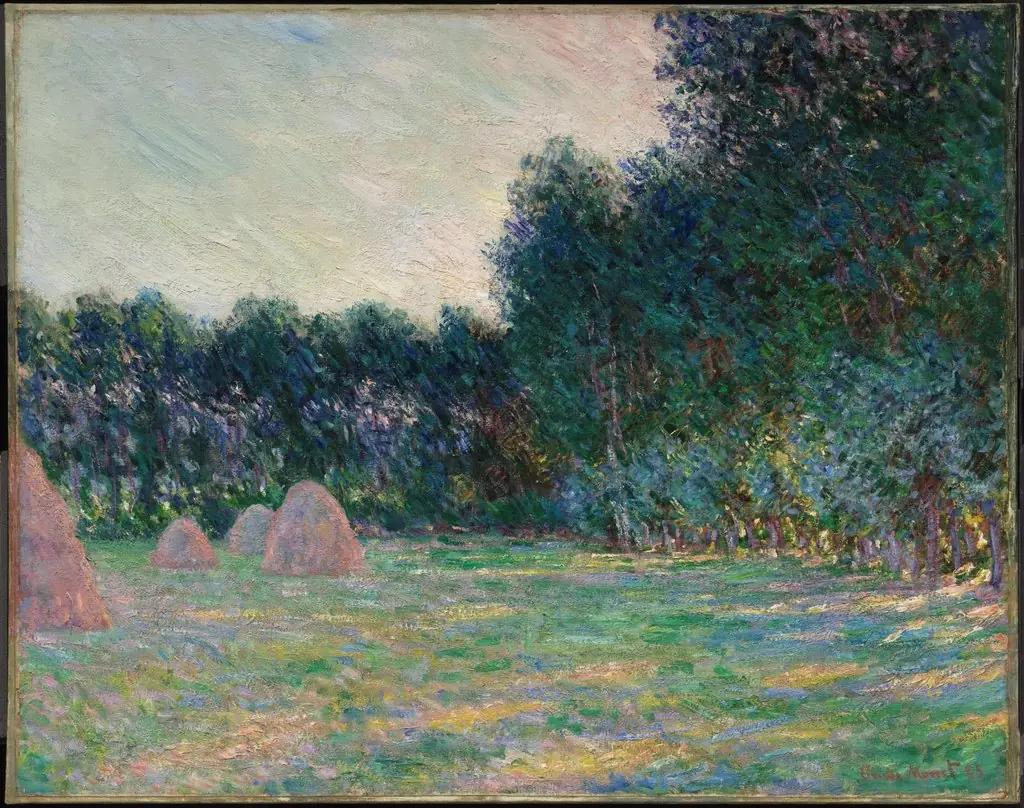 Meadow with Haystacks near Giverny
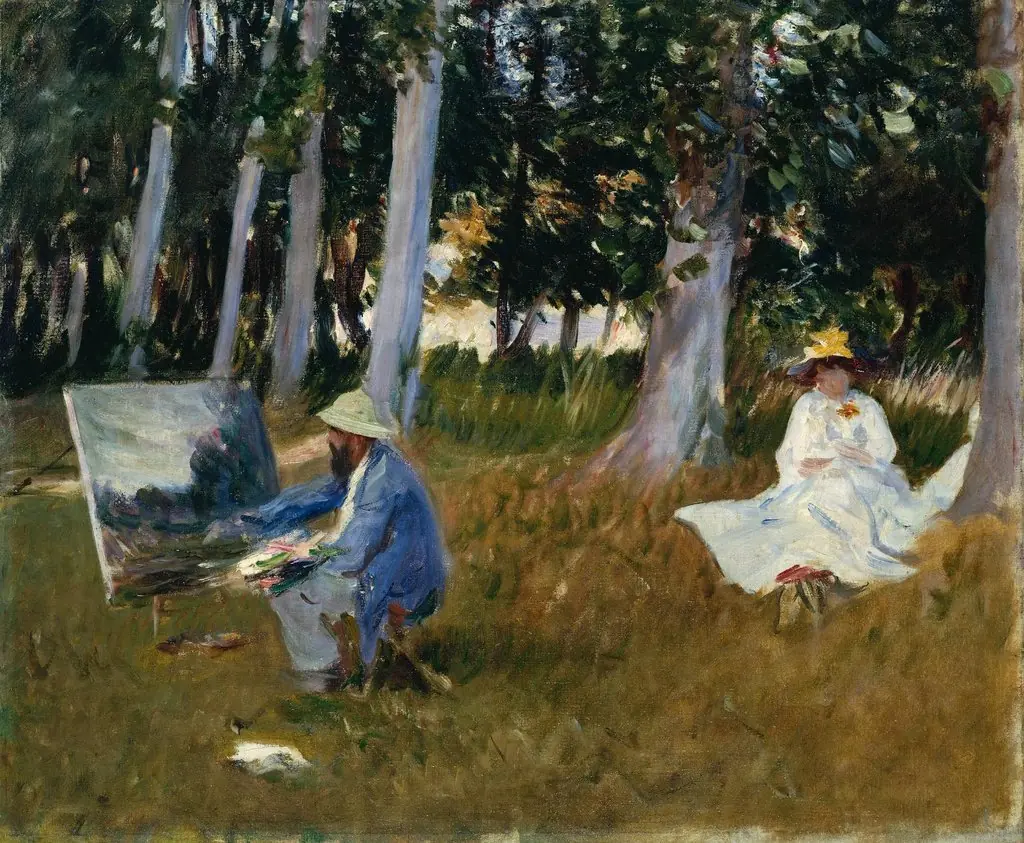 Claude Monet Painting by the Edge of a Wood
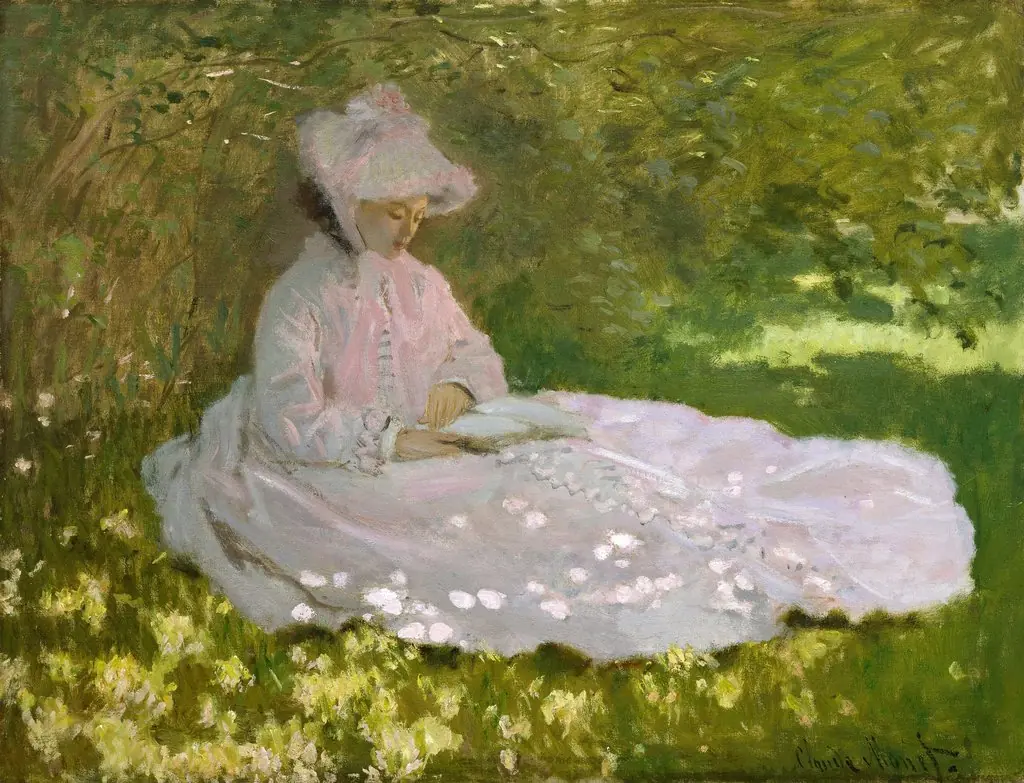 Springtime
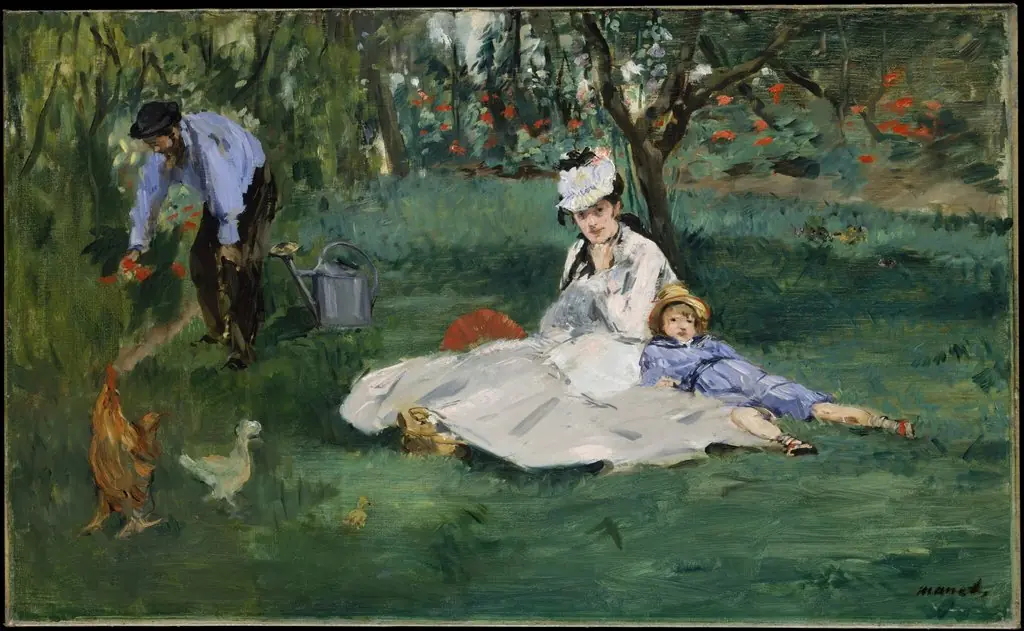 The Monet Family in Their Garden at Argenteuil
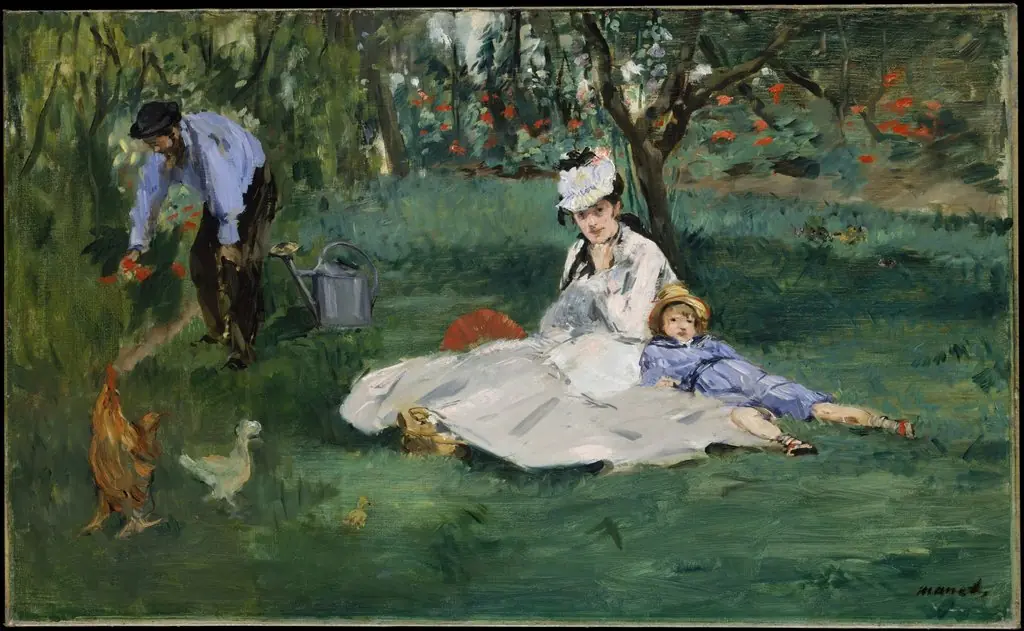 The Monet Family in Their Garden at Argenteuil
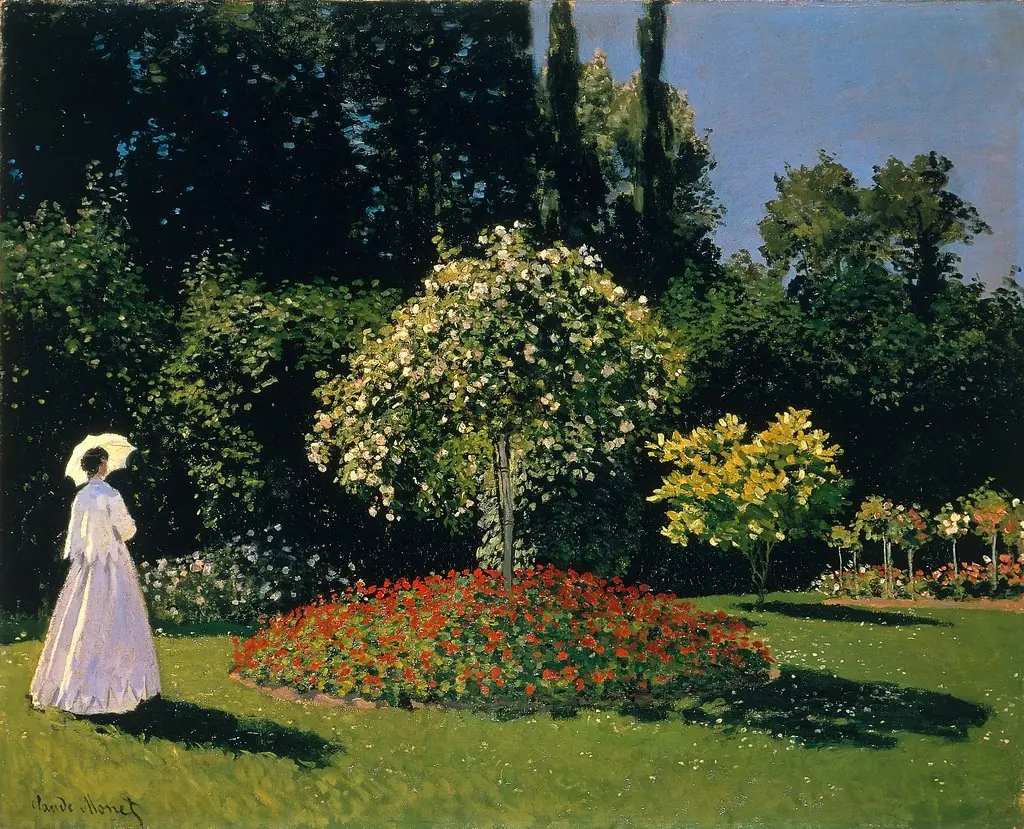 Woman in the Garden
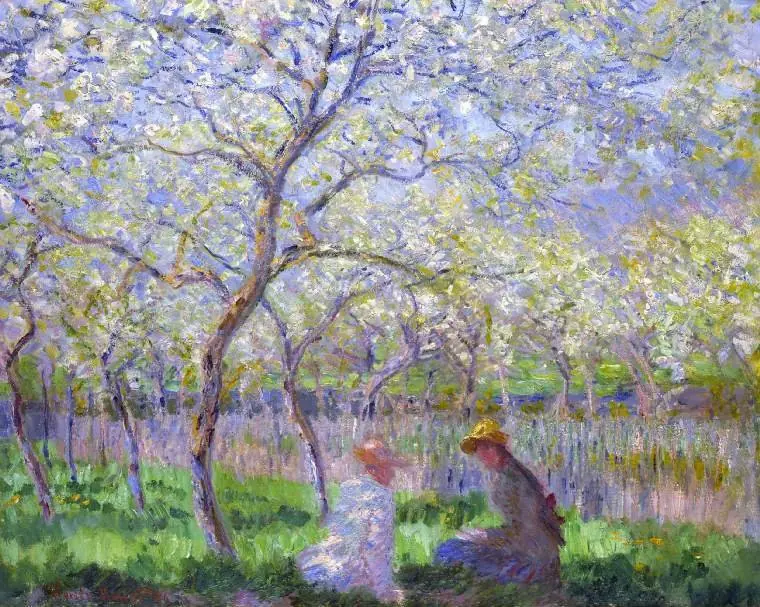 Le Printemps
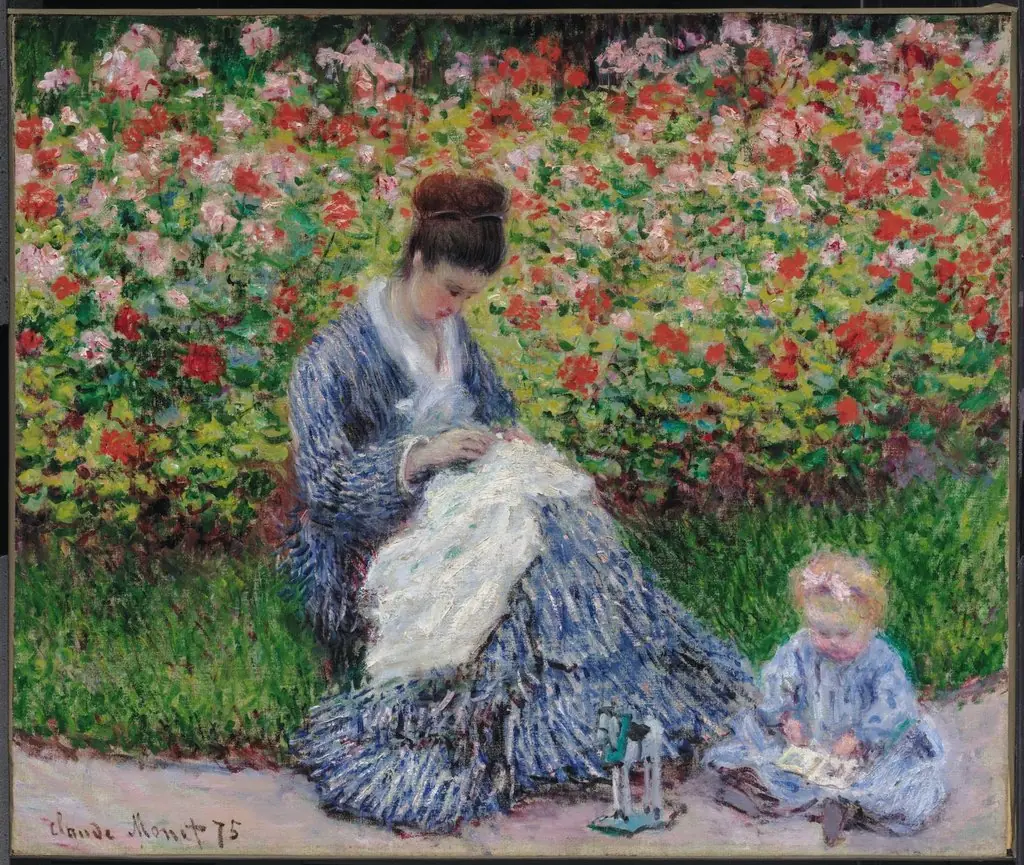 Camille Monet and a Child in the Artist's Garden in Argenteuil
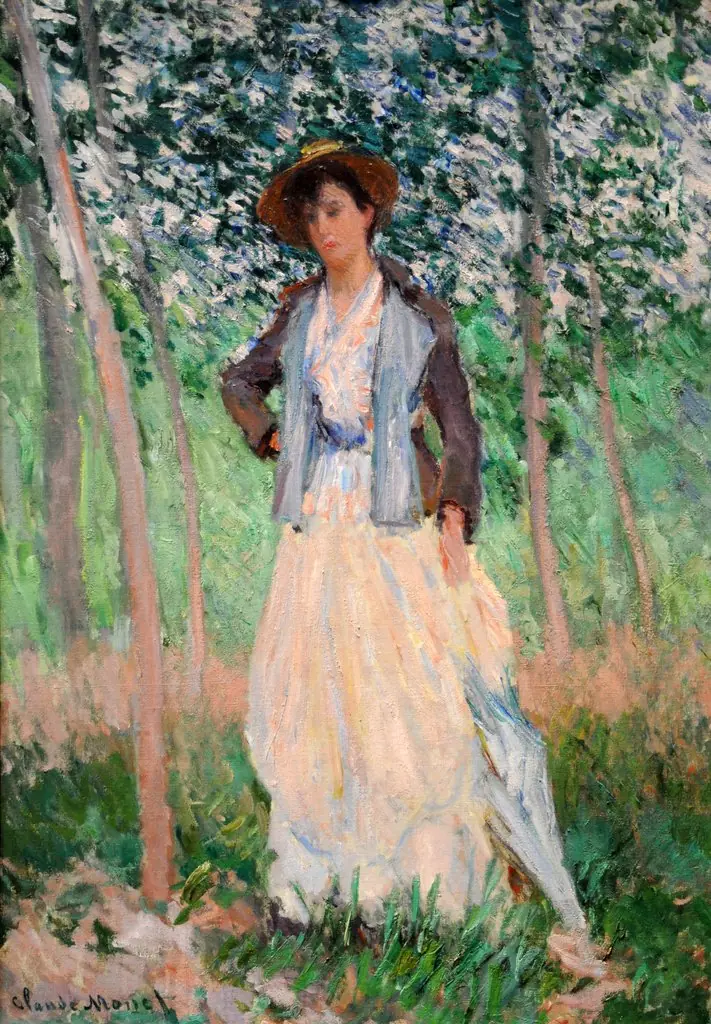 The Stroller (Suzanne Hoschedé, later Mrs. Theodore Earl Butler, 1868–1899)
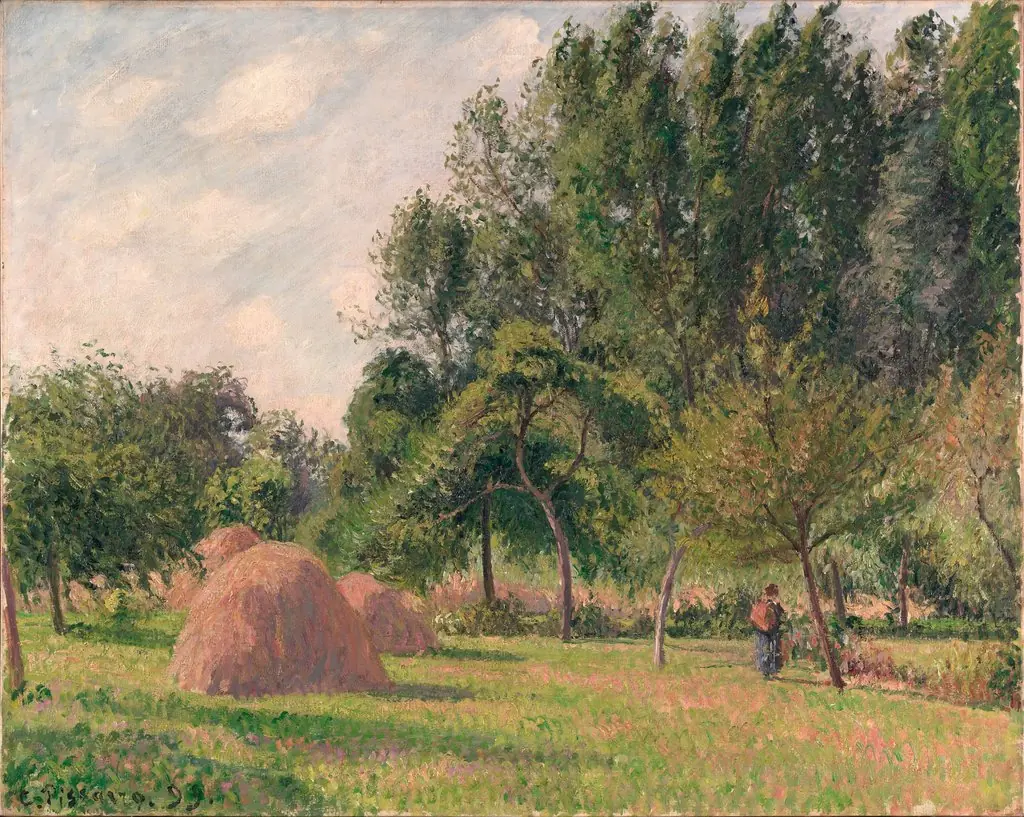 Haystacks, Morning, Éragny
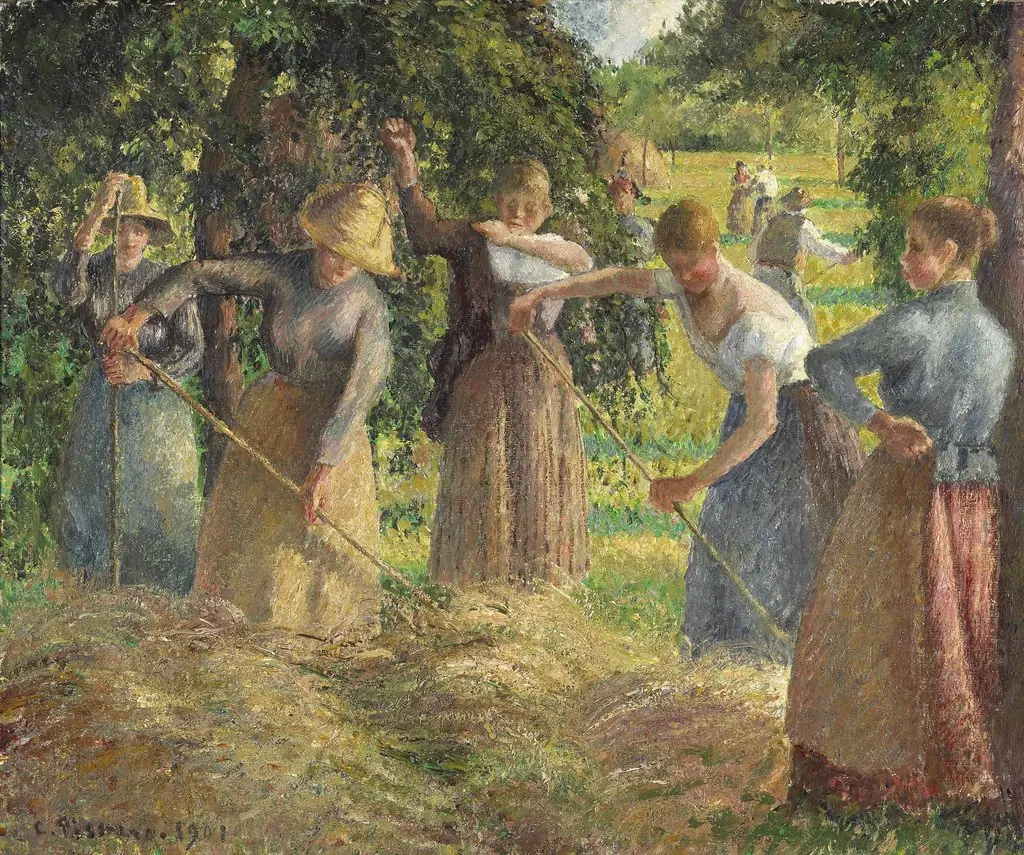 Hay Harvest at Éragny