Artwork
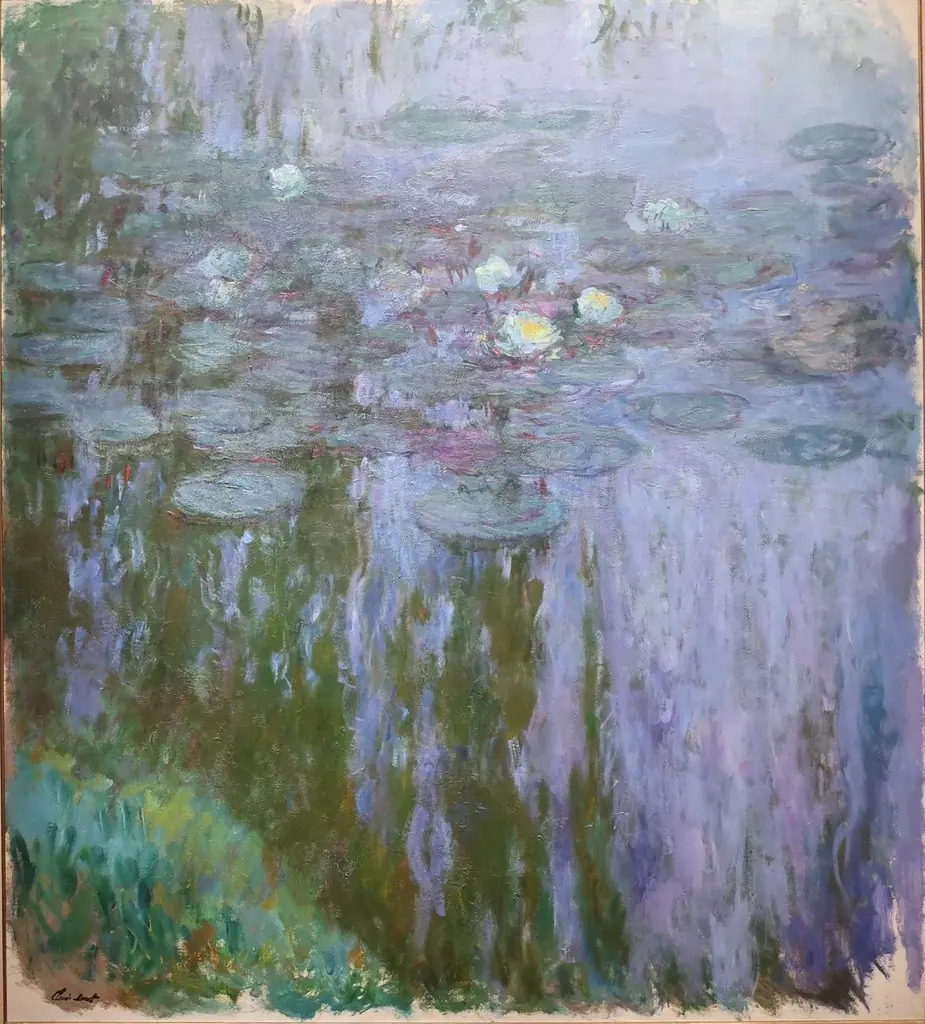
Le Bassin aux nymphéas avec iris
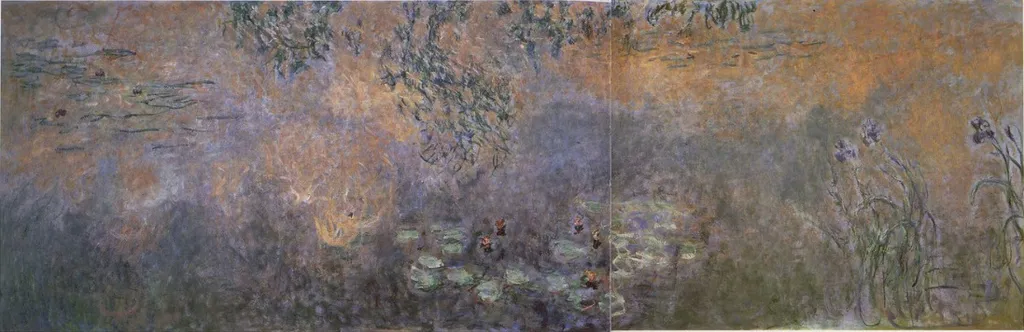
Le Bassin aux nymphéas avec iris is an oil painting by the Impressionist artist Claude Monet. It dates from 1918 and is held in the collection of the Kunsthaus Zürich.
About this work
Overview
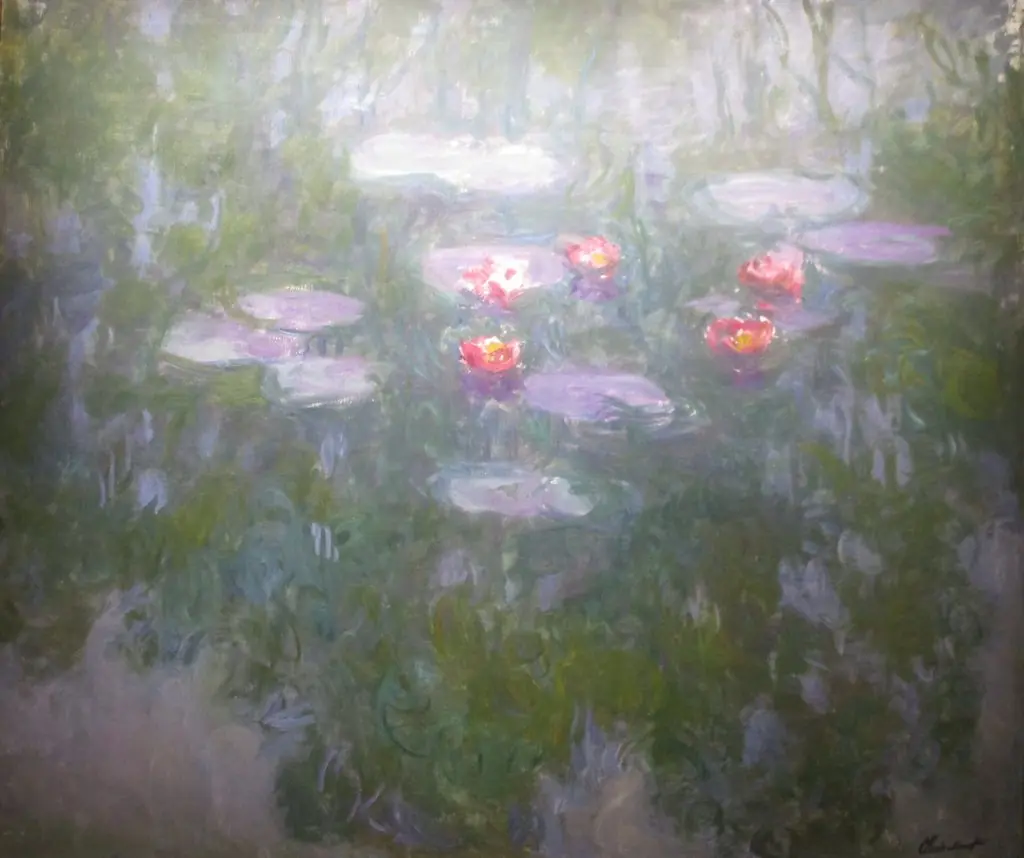
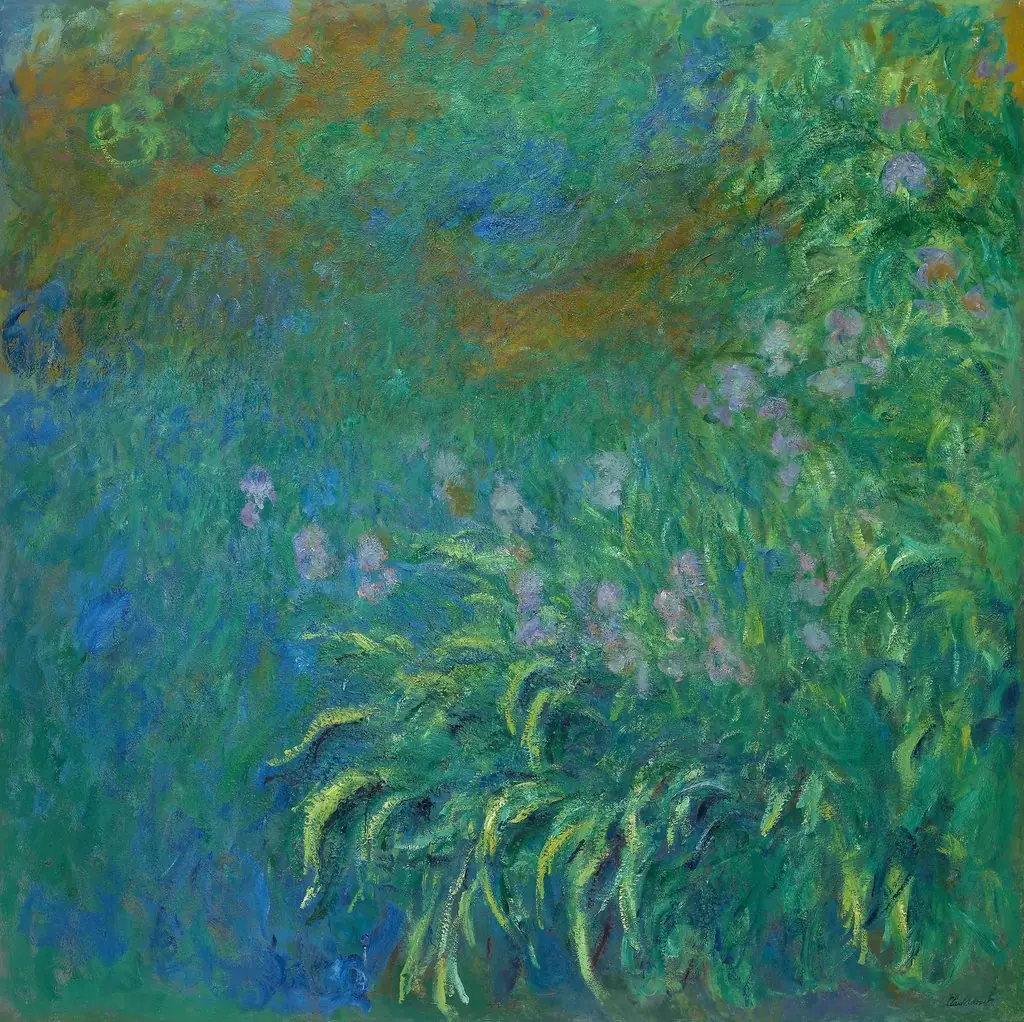
Created in 1918, this oil on canvas by Claude Monet depicts a quiet pond populated by water lilies and iris blossoms. The composition is dominated by subdued tones of green, brown and purple, which convey a calm, natural setting. The work is part of the collection of the Kunsthaus Zürich, where it is displayed among other Impressionist pieces.
Subject & Meaning
The painting presents a tranquil water surface where lilies float amid iris foliage, inviting contemplation of nature’s quiet moments. By emphasizing the reflective quality of the pond and the delicate interplay of plant forms, Monet suggests a fleeting, atmospheric experience rather than a detailed botanical study, encouraging viewers to sense the serenity of the scene.
Technique & Style
Monet employs loose, expressive brushwork that softens edges and creates a hazy, almost dreamlike atmosphere. The palette’s muted greens, browns and purples are layered to suggest depth and the subtle shifts of light on water. This approach aligns with his late Impressionist practice, focusing on the overall impression of light and color over precise delineation.
History & Provenance
Executed toward the end of Monet’s career, the canvas entered the holdings of the Kunsthaus Zürich, where it remains part of the museum’s permanent collection. Its acquisition reflects the institution’s commitment to representing key developments in early twentieth‑century French Impressionism, and it continues to be referenced in studies of Monet’s later pond series.
Artist & collection
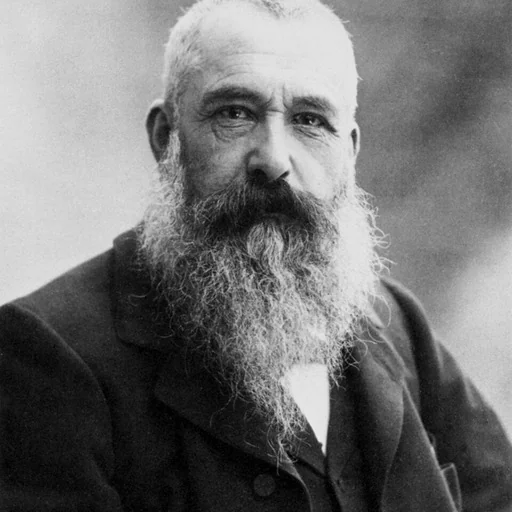
Artist
Oscar-Claude Monet was born in Paris on November 14, 1840, and raised from the age of five in Le Havre, where he began selling charcoal caricatures as a teenager.