Artwork
Poplars
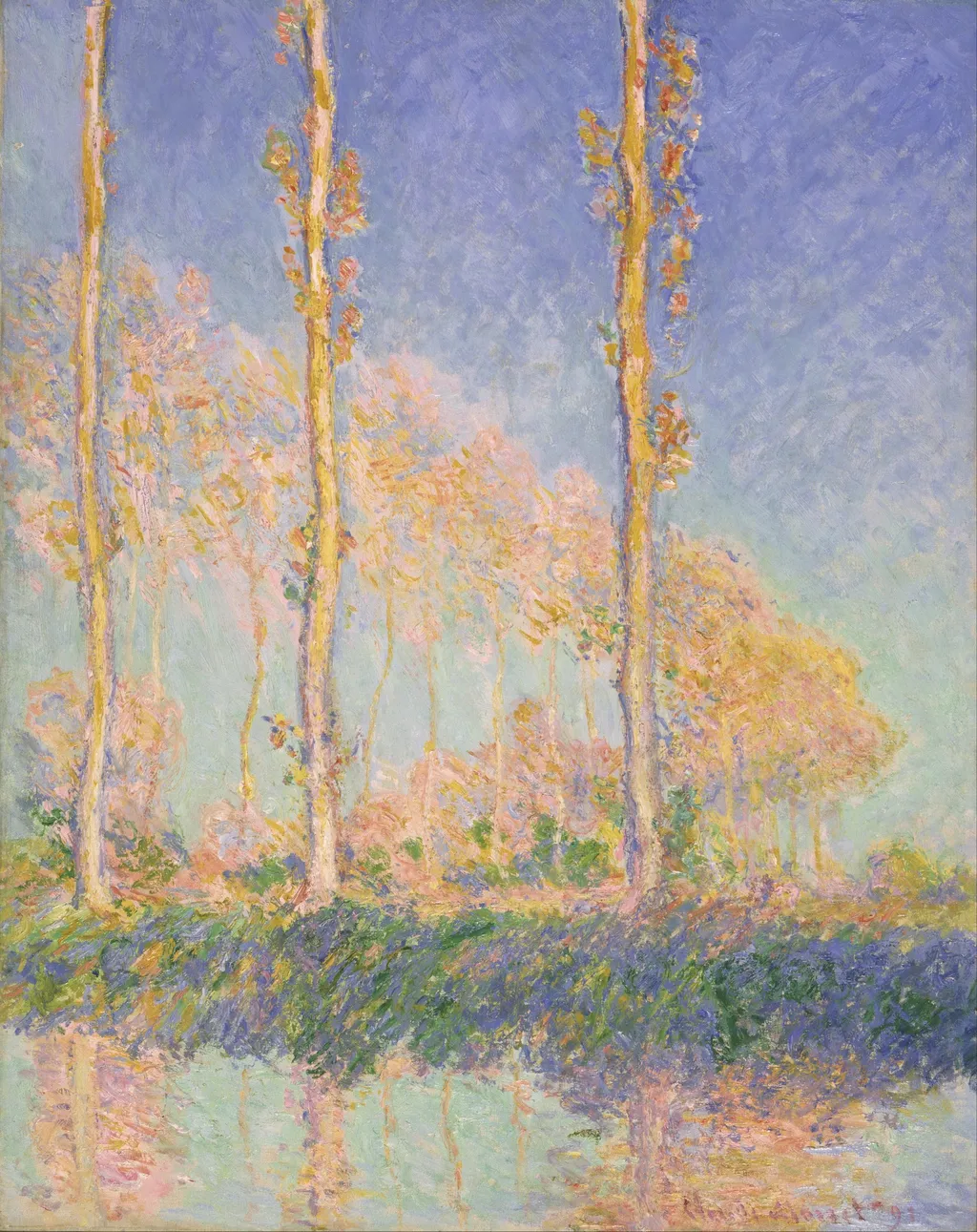
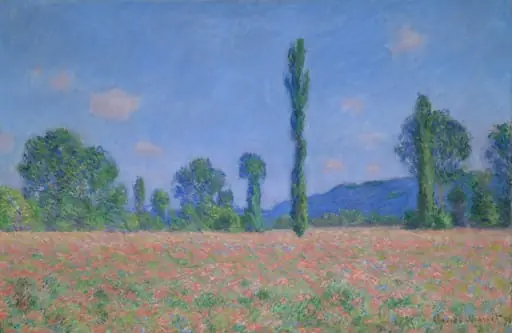
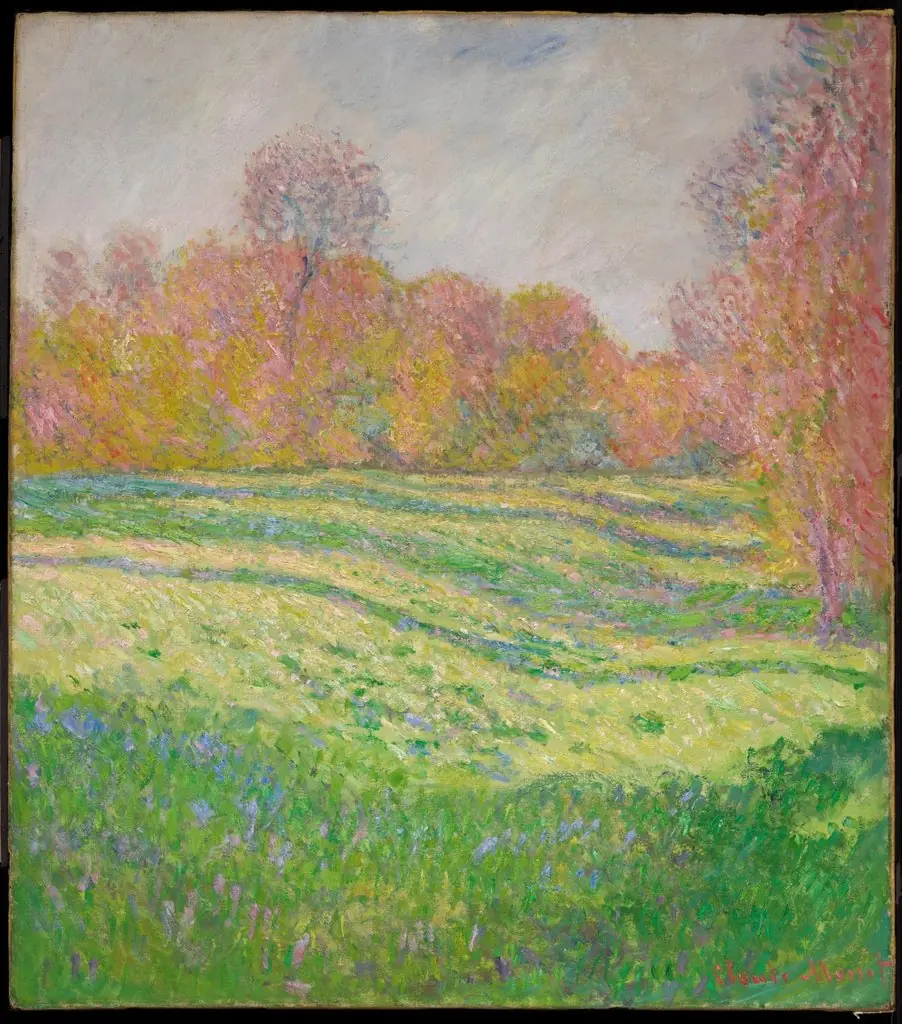
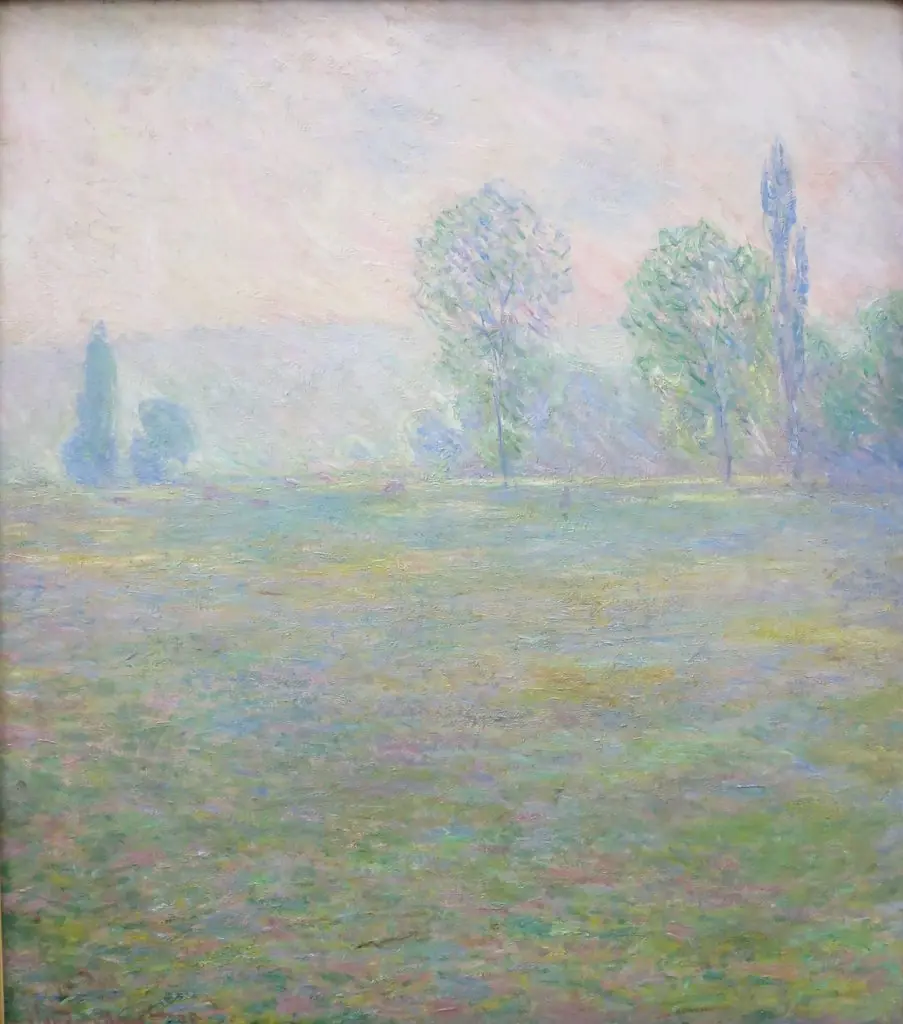
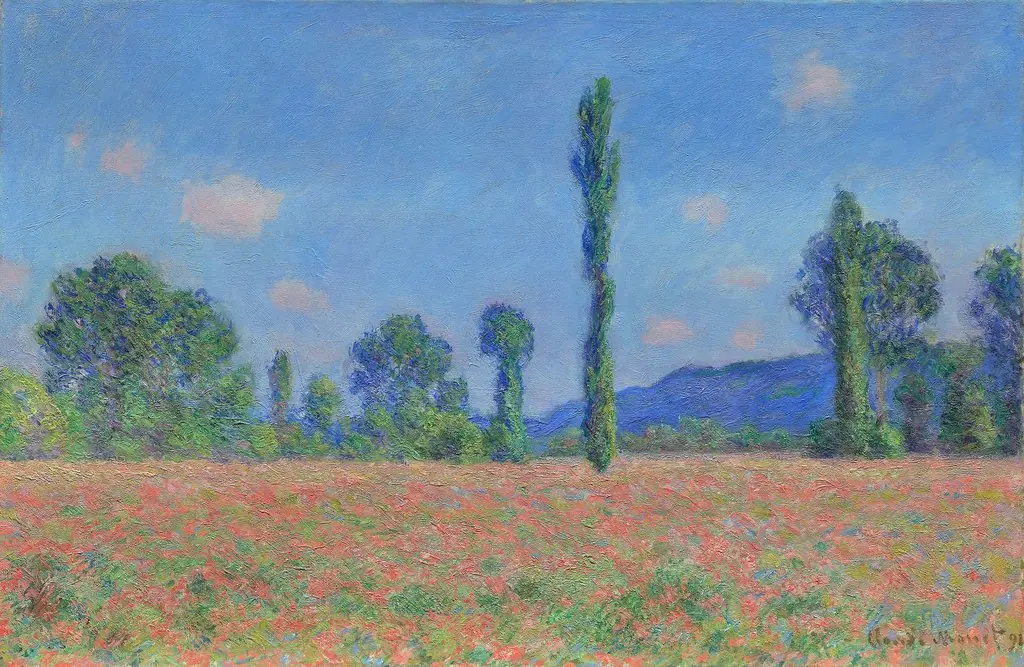
Poplars is an oil painting by the Impressionist artist Claude Monet. It dates from 1896 and is held in the collection of the Philadelphia Museum of Art.
About this work
Overview
Painted in 1896, Poplars is an oil on canvas by Claude Monet that captures a row of slender trees rising from still water. The work belongs to a series Monet produced during a focused period of study along the Epte River. It is now part of the Philadelphia Museum of Art’s collection, where it continues to reflect his interest in natural forms and transient light conditions.
Subject & Meaning
The painting presents a linear arrangement of poplar trees, their trunks and canopies rising vertically from a reflective surface.
The painting presents a linear arrangement of poplar trees, their trunks and canopies rising vertically from a reflective surface. Rather than portraying a specific location with narrative intent, Monet emphasizes the rhythm and structure of the trees against shifting atmospheric conditions. The composition invites contemplation of nature’s quiet persistence and the subtle changes in light across a single day.
Technique & Style
Monet applied thin, layered brushstrokes to convey the delicate interplay of light and color. The trees are rendered in pale yellows, soft pinks, and muted whites, with touches of green at their bases. The water’s surface mirrors these hues with broken, fluid strokes, enhancing spatial depth. Texture is built through visible impasto and directional marks, suggesting movement without defined outlines.
History & Provenance
Monet painted this work during a concentrated effort in 1891–1892, when he produced over twenty canvases of poplars along the Epte River. He worked rapidly to capture varying times of day and seasonal shifts. The painting entered the Philadelphia Museum of Art’s collection in 1955, acquired from a private European collection that had held it since the early 20th century.
Context
This painting emerged during Monet’s mature phase, when he increasingly turned to serial subjects—like haystacks and cathedrals—to explore optical perception. The poplar series coincided with broader European interest in landscape as a site of scientific and aesthetic inquiry. Monet’s approach rejected idealized scenery in favor of direct, sensory observation under changing conditions.
Legacy
The Poplars series influenced later artists pursuing abstraction through color and gesture, demonstrating how natural forms could be deconstructed into light and tone. While not widely exhibited during Monet’s lifetime, these works are now recognized as pivotal in the evolution of modern landscape painting, emphasizing perception over representation.
Own this work as a print
Artist & collection
Artist
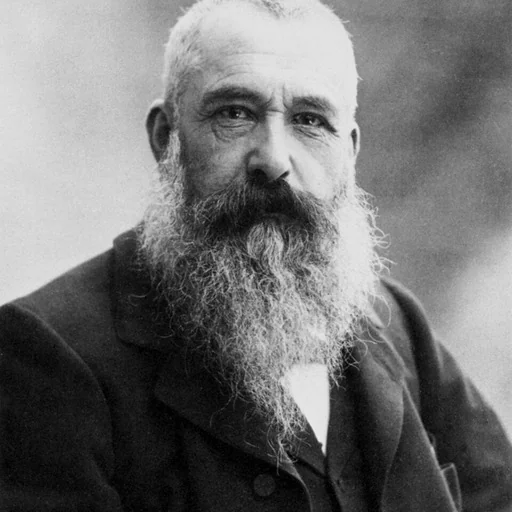
Oscar-Claude Monet was born in Paris on November 14, 1840, and raised from the age of five in Le Havre, where he began selling charcoal caricatures as a teenager.