Artwork
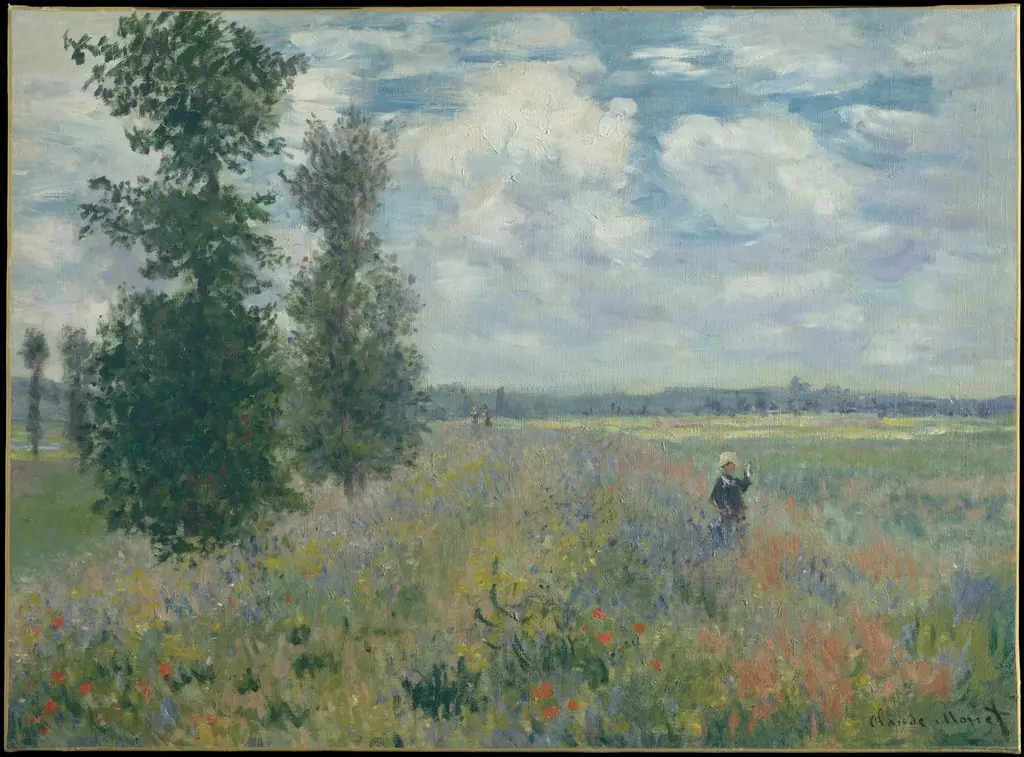
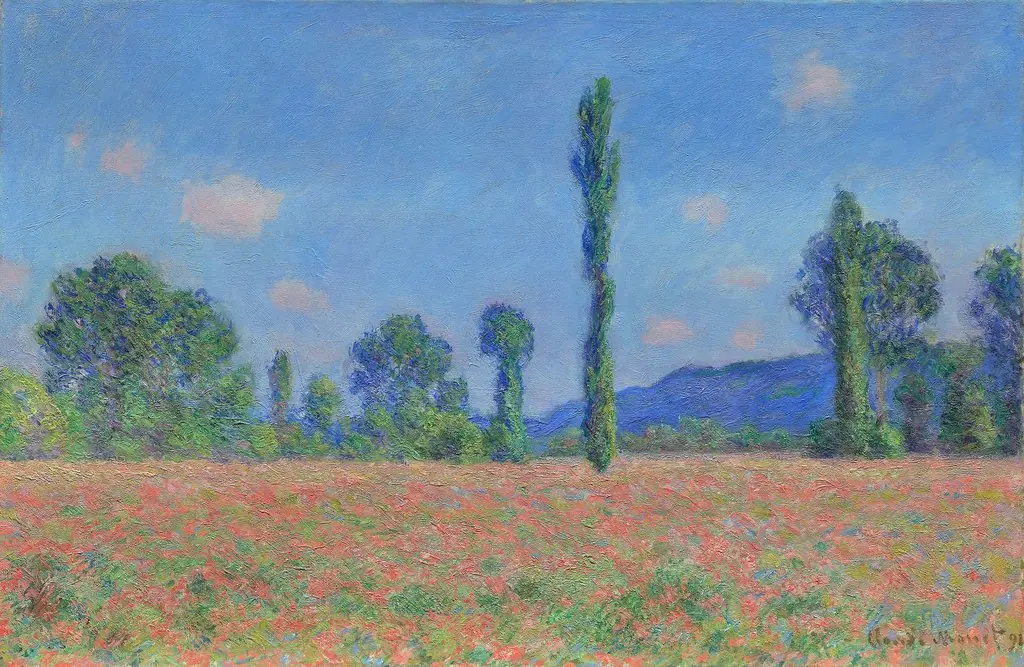
Poppy Field near Vétheuil
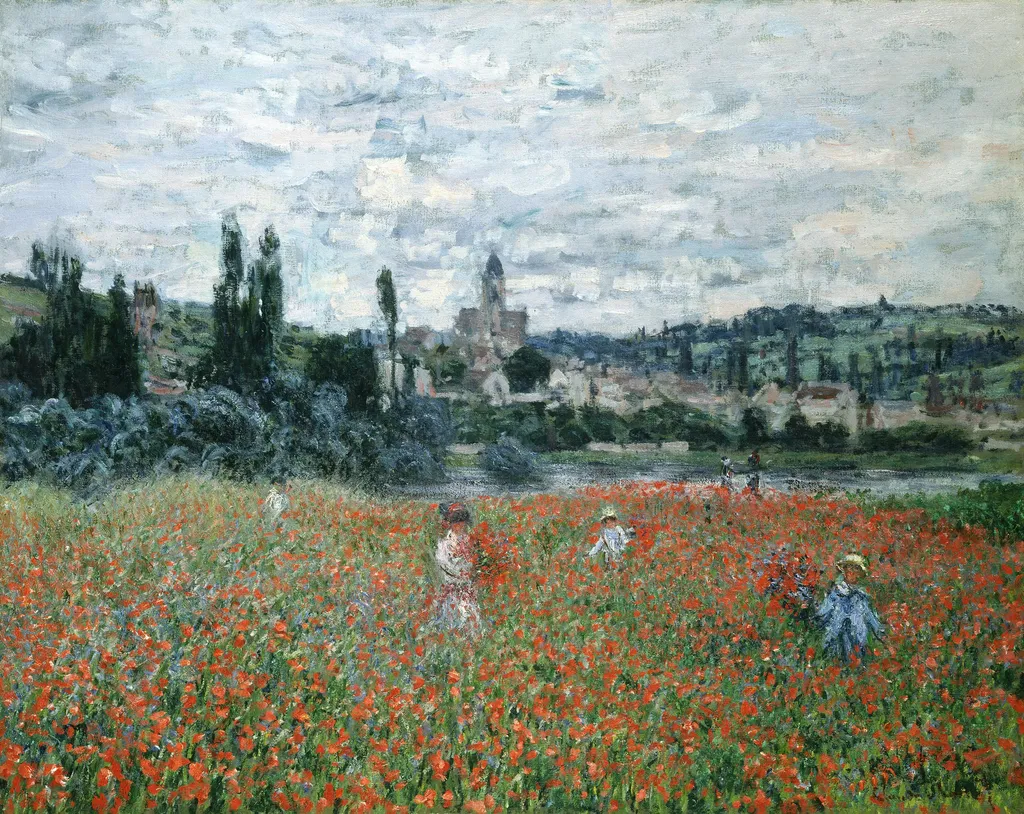
Poppy Field near Vétheuil is an oil painting by the Impressionist artist Claude Monet. It dates from 1890 and is held in the collection of the Collection of Max Emden.
About this work
Overview
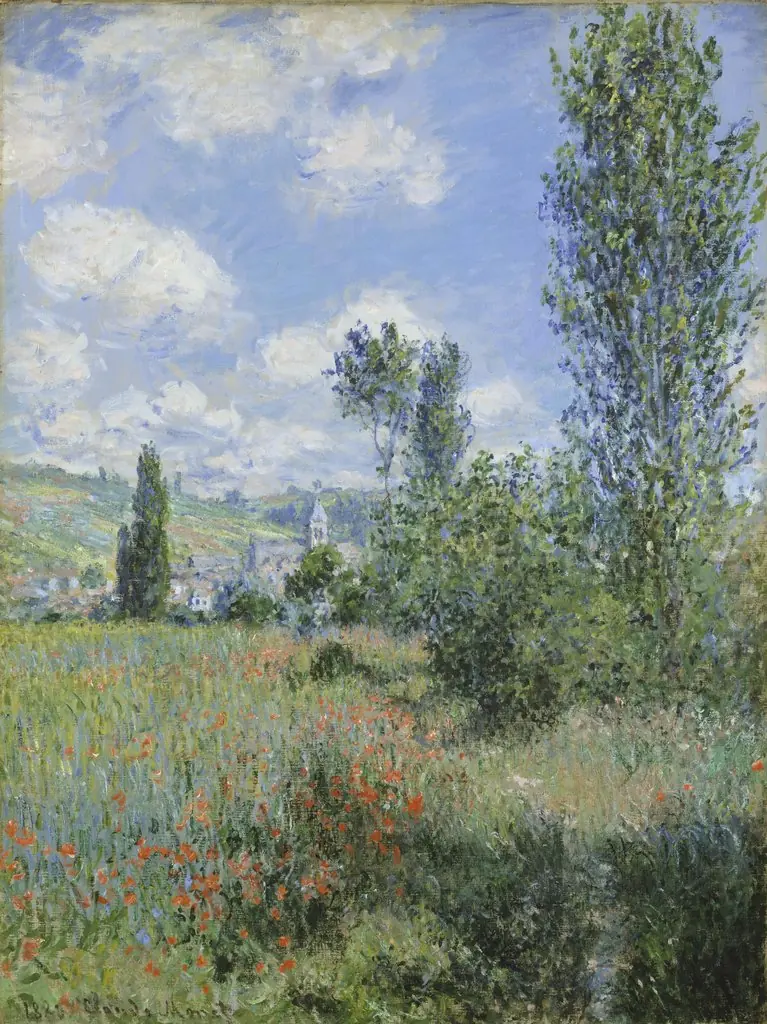
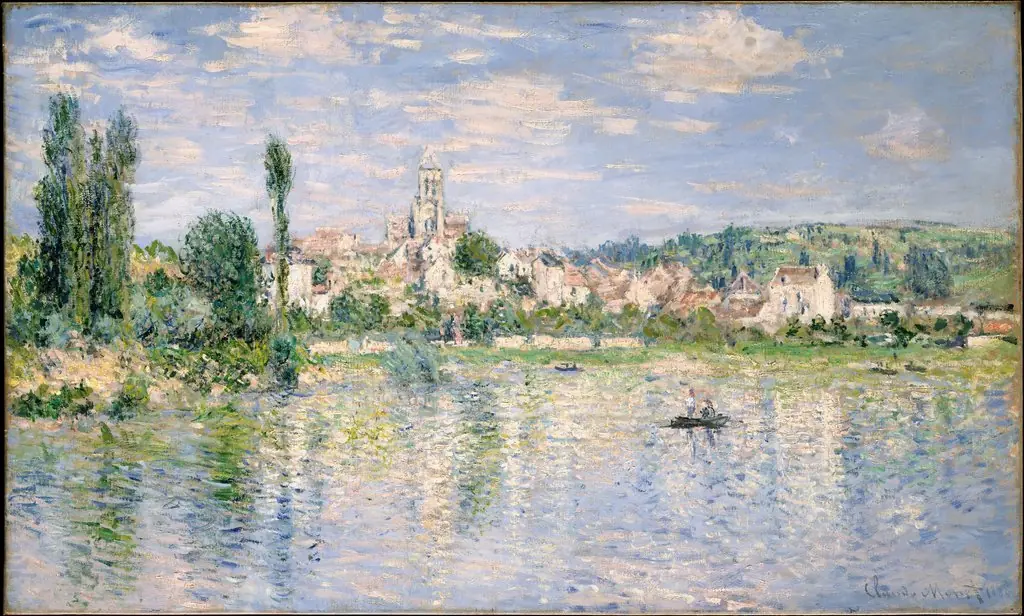
Claude Monet’s 1890 oil painting titled Poppy Field near Vétheuil portrays a summer landscape along the Seine. The canvas is dominated by a vivid expanse of red poppies that occupy the foreground, while a modest village and its church rise beyond the riverbank under a softly clouded sky. The work exemplifies Monet’s late‑period focus on light and colour in the French countryside.
Subject & Meaning
The composition centers on a dense carpet of Papaver rhoeas, whose bright blossoms contrast with the surrounding green foliage and the muted tones of the distant settlement. By juxtaposing the lively floral foreground with the tranquil river and village, Monet suggests a harmonious coexistence of nature’s vitality and human habitation, a recurring theme in his rural scenes.
Technique & Style
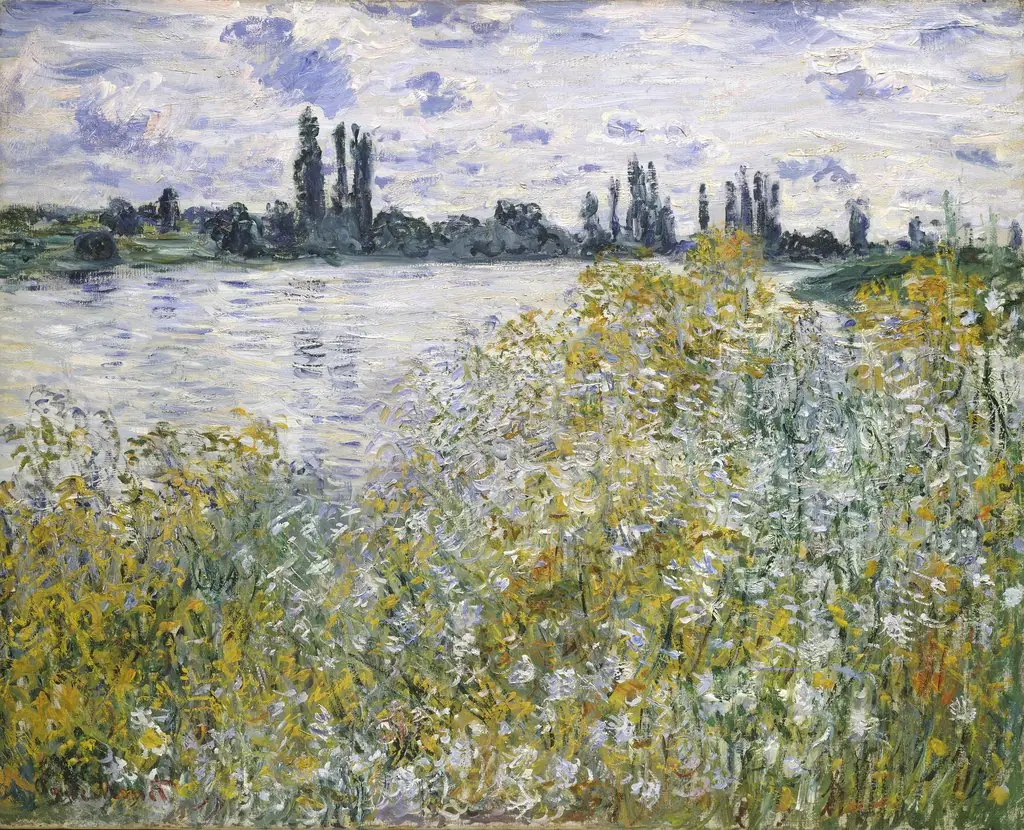
Executed in the loose, rapid brushwork characteristic of Impressionism, the painting employs a light, almost sketch‑like application of pigment. Monet’s handling of paint creates a sense of movement, particularly in the way the poppy heads seem to sway. The surface shows areas of impasto, where thick layers of oil give the flowers a tactile presence against the smoother sky and water.
History & Provenance
Since its creation in 1890, the work has been part of several private collections before entering the holdings of the Kunsthaus Zürich. The museum acquired the piece as part of its effort to represent the development of French Impressionism, and it now forms a key component of their 19th‑century European painting collection.
Own this work as a print
Artist & collection
Artist
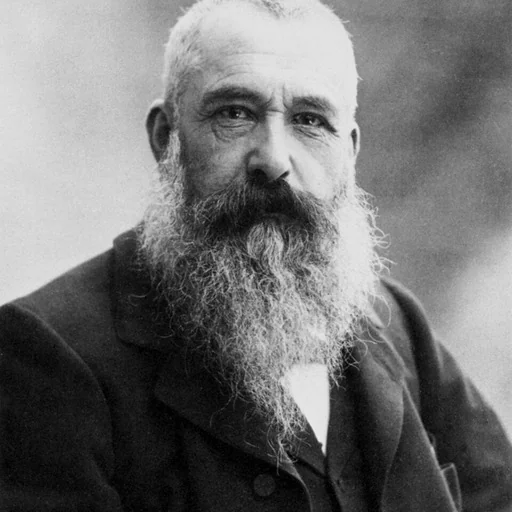
Oscar-Claude Monet was born in Paris on November 14, 1840, and raised from the age of five in Le Havre, where he began selling charcoal caricatures as a teenager.