Artwork
The Departure of the Boats, Étretat
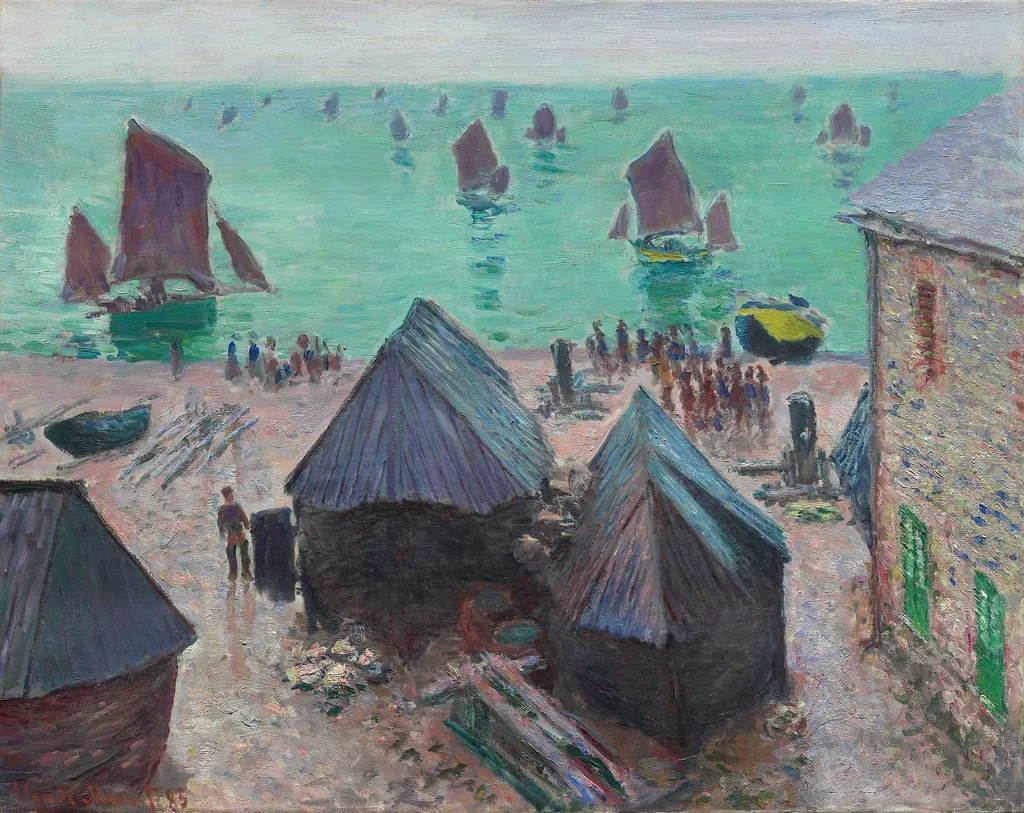
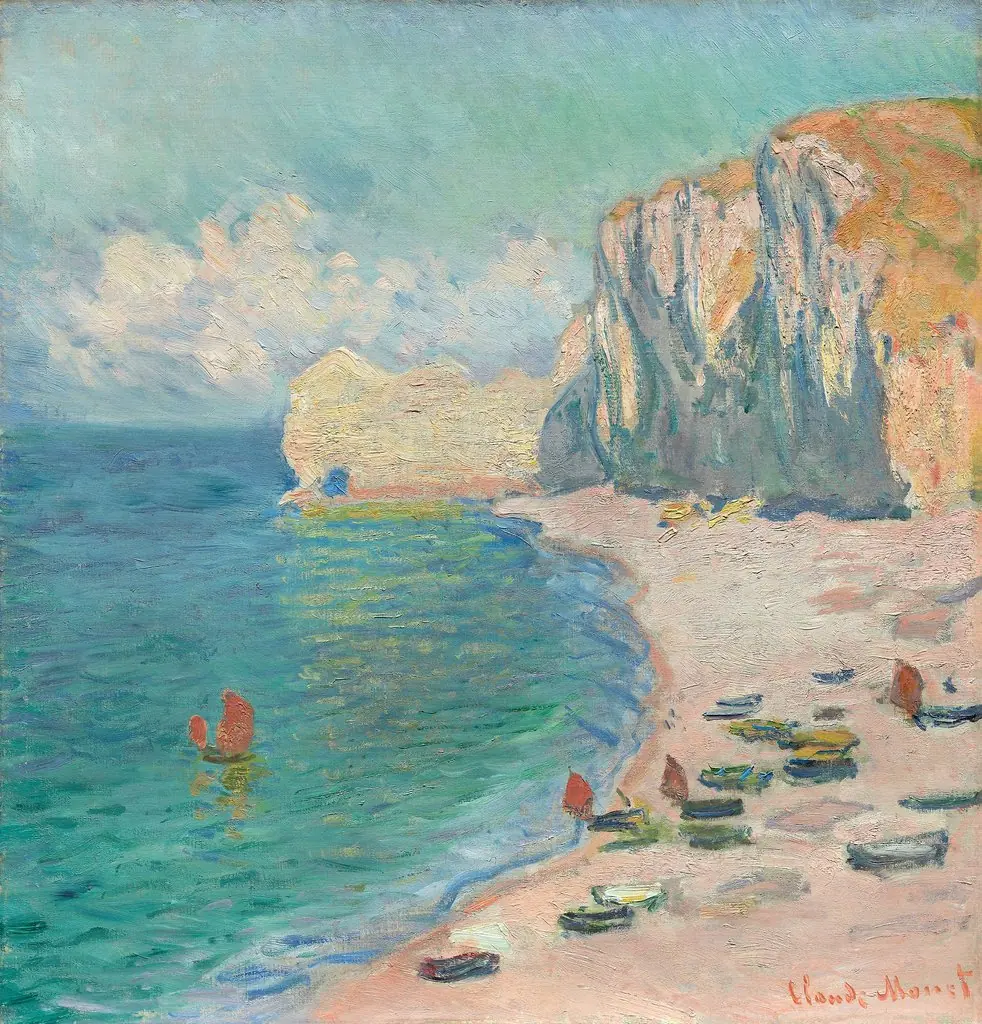
The Departure of the Boats, Étretat is an oil painting by the Impressionist artist Claude Monet. It dates from 1893 and is held in the collection of the Art Institute of Chicago.
About this work
Overview
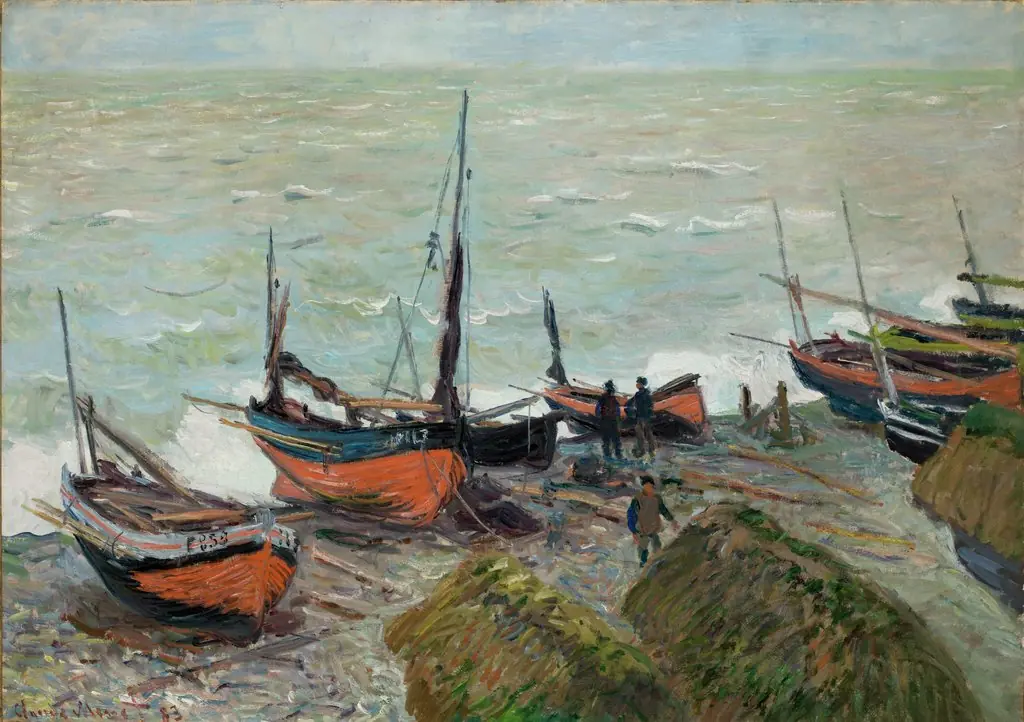
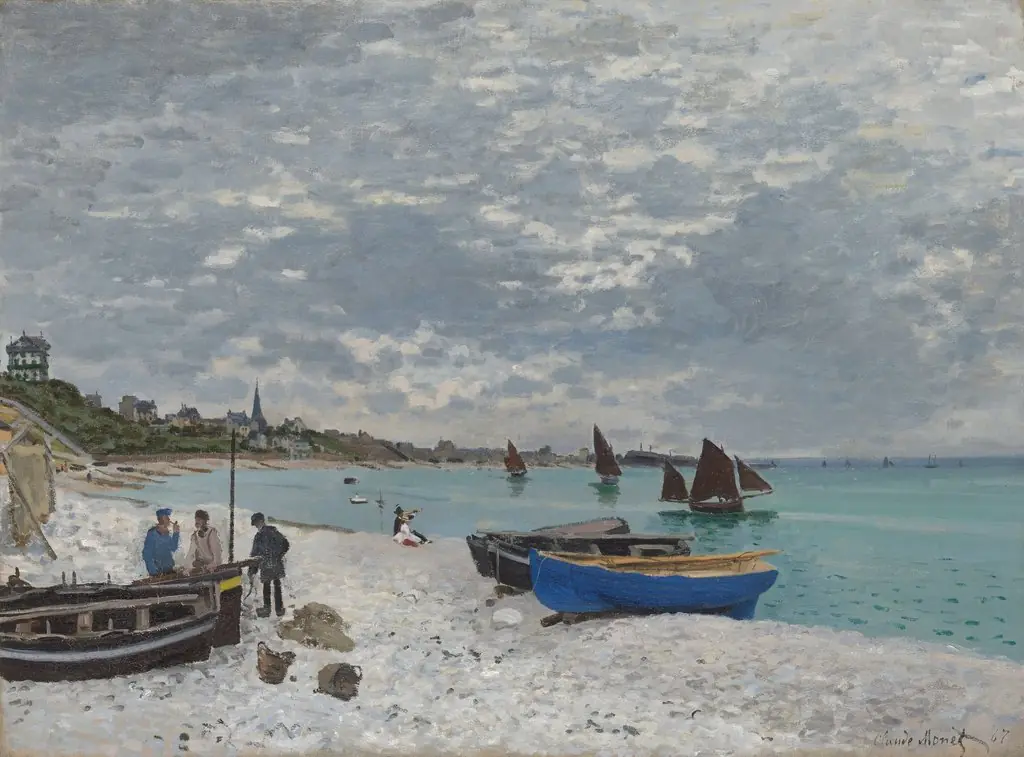
Claude Monet’s 1893 oil painting titled The Departure of the Boats, Étretat captures a lively seaside scene on the Normandy coast. The canvas presents a stretch of beach punctuated by sharply angled tents, a gathering of figures along the water’s edge, and distant vessels bearing vivid red‑purple sails. The work resides in the collection of the Art Institute of Chicago.
Subject & Meaning
The composition records a moment of departure, where local boats set out from the famous Étretat shoreline. The juxtaposition of the bustling crowd with the solitary, sail‑filled horizon suggests a communal anticipation of travel and trade, while the tents and figures anchor the scene in everyday coastal life.
Technique & Style
Monet employs a pronounced impasto technique, laying on thick layers of paint that remain visibly textured across the surface. Brushstrokes are bold and unblended in places, lending a tactile quality to the sky and sea. The palette is bright, with saturated reds and purples on the sails contrasting against the muted tones of sand and stone.
History & Provenance
Executed during Monet’s later period of intensive work along the French coast, the painting entered the United States through acquisition by the Art Institute of Chicago. Its presence in the museum’s collection reflects the institution’s focus on Impressionist marine subjects and provides a reference point for Monet’s evolving treatment of light and atmosphere.
Own this work as a print
Artist & collection
Artist
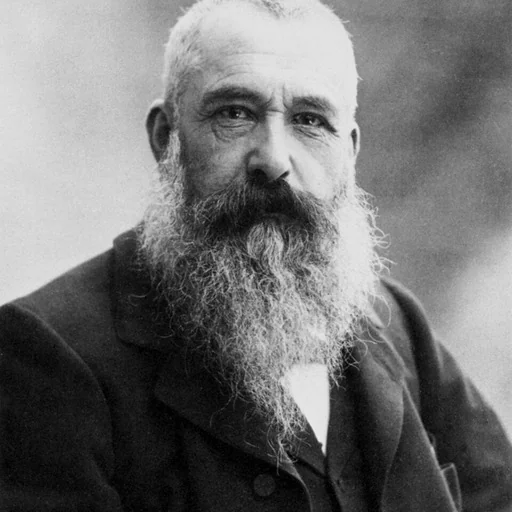
Oscar-Claude Monet was born in Paris on November 14, 1840, and raised from the age of five in Le Havre, where he began selling charcoal caricatures as a teenager.