Artwork
The Departure of the Boats, Étretat
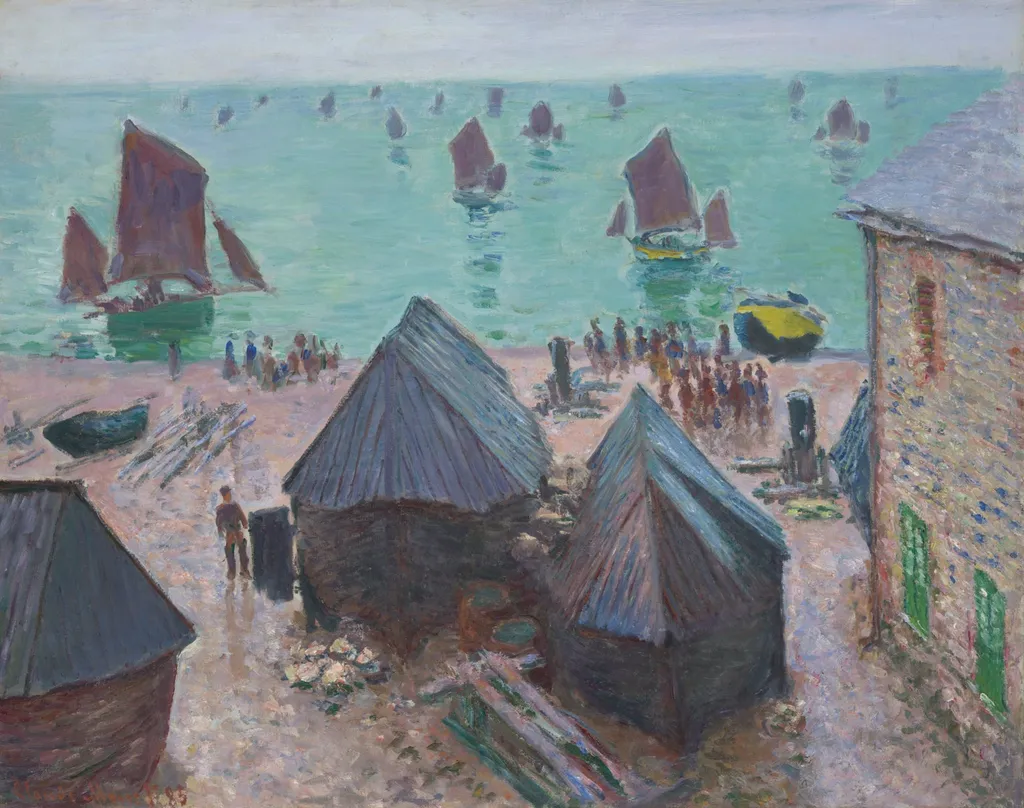
The Departure of the Boats, Étretat is an oil painting by the Impressionist artist Claude Monet. It dates from 1885 and is held in the collection of the Art Institute of Chicago.
About this work
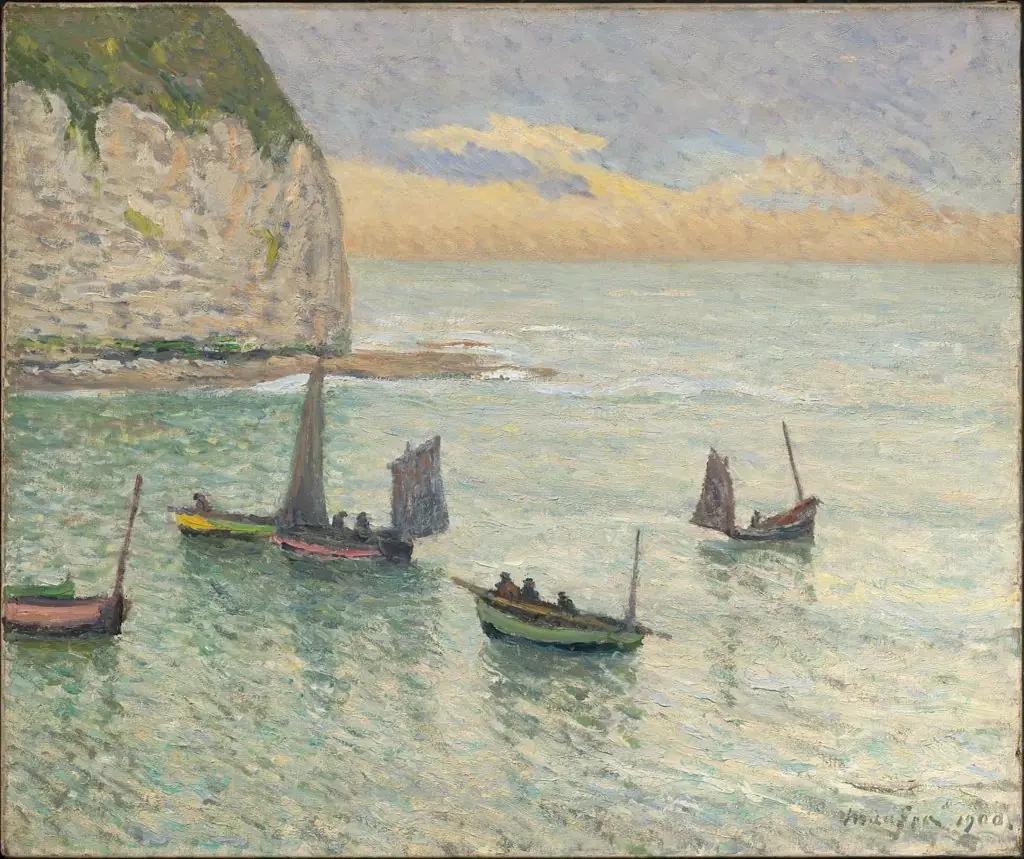
You see boats lined up on a pebbly beach. Waves roll in under a pale sky. The colors are mostly gray, white, and soft blue.
Monet painted this indoors in 1885. Bad weather trapped him in his hotel room. He watched the boats from his window and used quick brushstrokes to show movement.
This work looks ahead to his later water studies. Check the Art Institute of Chicago to see it in person.
Overview
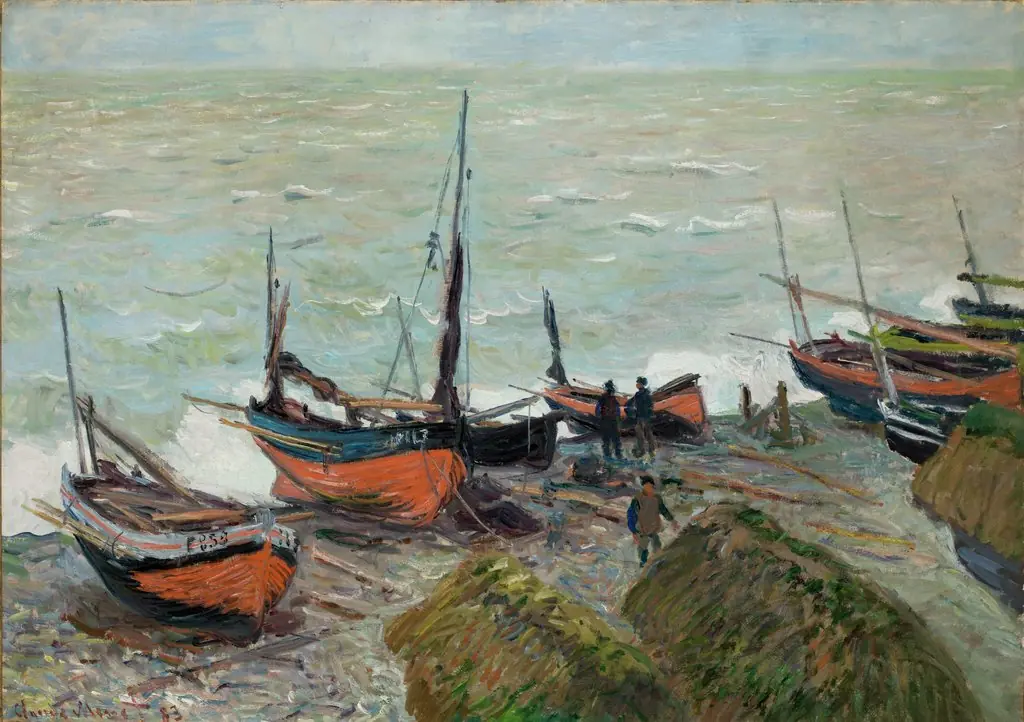
Claude Monet created *The Departure of the Boats, Étretat* in 1885 while confined to his hotel room by autumn rain. Observing the harbor through a window, he rendered a line of fishing vessels poised to leave the pebbly shore under a muted sky. The canvas, oil on canvas, forms a visual pair with a companion work, *Boats on the Beach, Étretat*, sharing viewpoint and colour scheme.
Subject & Meaning
The painting captures a moment of transition as tarred fishing boats, known locally as caloges, prepare to set out. Figures gathered at the water’s edge suggest the presence of both local fishermen and, possibly, well‑dressed visitors, creating a subtle contrast between labor and leisure. Monet’s focus on the vessels emphasizes their role as the central narrative element within the coastal scene.
Technique & Style
Monet employed a palette of pastel blues, pinks, purples and greens to convey the wetness of sky, sea and beach.
Monet employed a palette of pastel blues, pinks, purples and greens to convey the wetness of sky, sea and beach. Rapid, gestural brushstrokes define the water’s movement and the fleeting presence of human figures, while the bright hulls of the boats provide scale against the subdued background. The handling anticipates his later series of water studies, emphasizing atmospheric effects over precise detail.
History & Provenance
Monet wrote to Alice Hoschedé on 24 November 1885, describing his work on the two Étretat canvases from his hotel room at the Hôtel Blanquet. He deliberately arrived after the peak tourist season, a fact that leaves the identity of the elegantly dressed women in the composition uncertain. The painting later entered the collection of the Art Institute of Chicago, where it remains on display.
Own this work as a print
Artist & collection
Artist
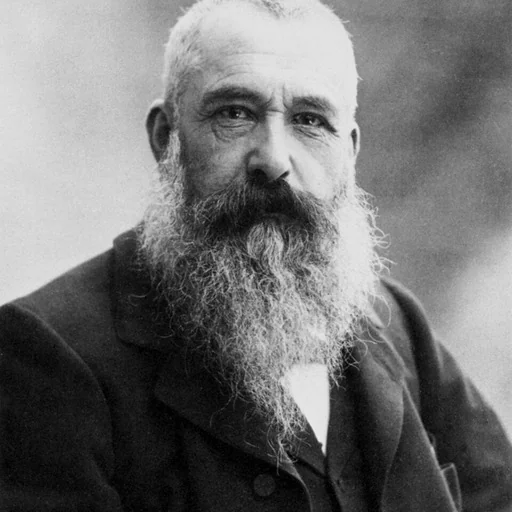
Oscar-Claude Monet was born in Paris on November 14, 1840, and raised from the age of five in Le Havre, where he began selling charcoal caricatures as a teenager.