Artwork
The Doges Palace (Le Palais ducal)
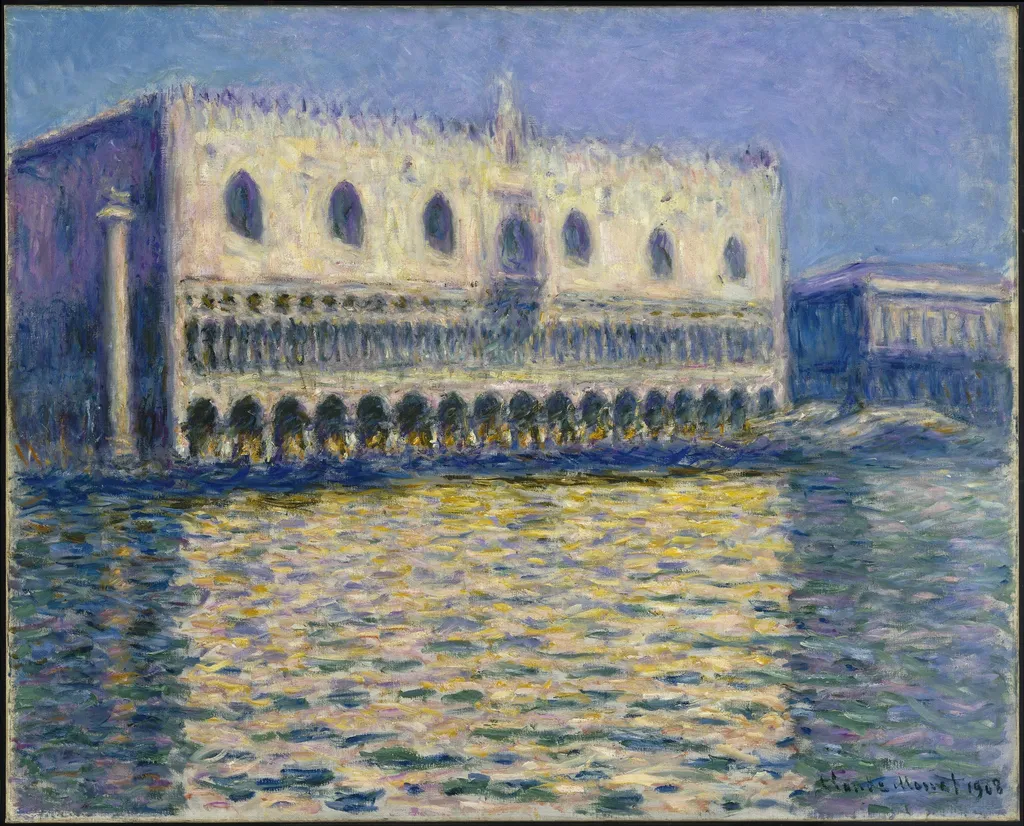
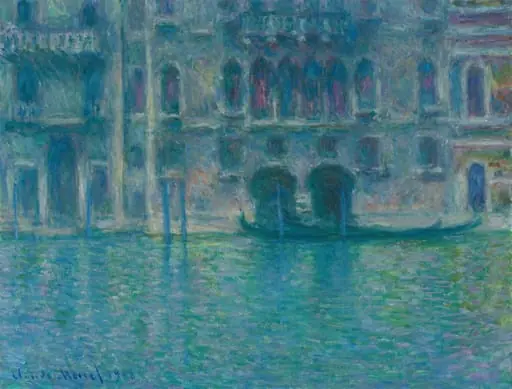
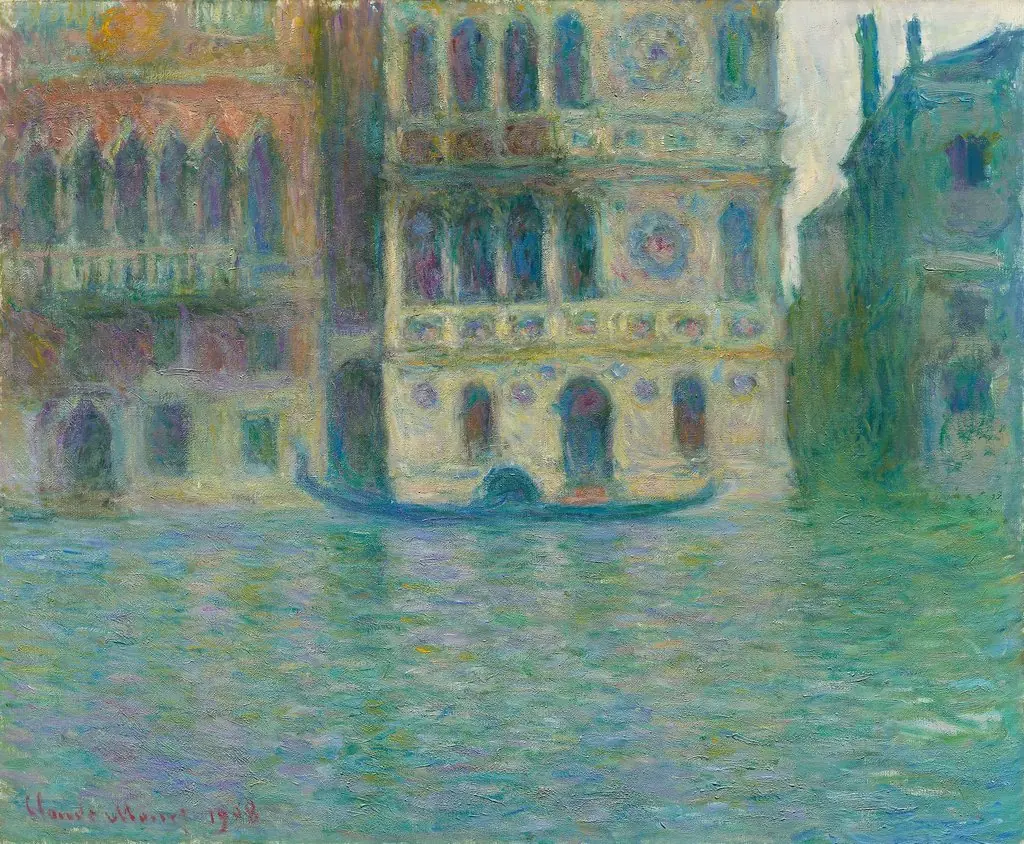
The Doges Palace (Le Palais ducal) is an oil painting by the Impressionist artist Claude Monet. It dates from 1908 and is held in the collection of the Brooklyn Museum.
About this work
Overview
Painted in 1908, this oil on canvas by Claude Monet captures the Doge’s Palace in Venice. The work belongs to a series Monet produced during his travels to Italy, focusing on architectural landmarks under shifting atmospheric conditions. It is now part of the Brooklyn Museum’s collection, where it stands as one of several Venetian views he completed late in his career.
Subject & Meaning
The painting centers on the Gothic facade of the Doge’s Palace, rising above the Grand Canal. Monet avoids detailed representation, instead emphasizing the building’s presence through its reflection in water and the play of ambient light. The scene conveys quiet contemplation, not as a historical document but as an impression of place shaped by time and atmosphere.
Technique & Style
Monet employed loose, fluid brushwork to suggest form rather than define it. The palace’s arches and columns are rendered in soft, blended tones of ochre, lavender, and pale gray, while the water below is a mosaic of broken color. Light is not depicted as a source but as an ambient condition, diffused across surface and reflection, creating a sense of rhythmic movement.
History & Provenance
Monet painted this work during a brief visit to Venice in 1908, where he produced nearly forty canvases of the city’s landmarks. He worked rapidly, often from a gondola, responding to changing light. The painting entered the Brooklyn Museum’s collection in 1927, acquired through a bequest from a New York collector who had purchased it directly from the artist’s dealer.
Context
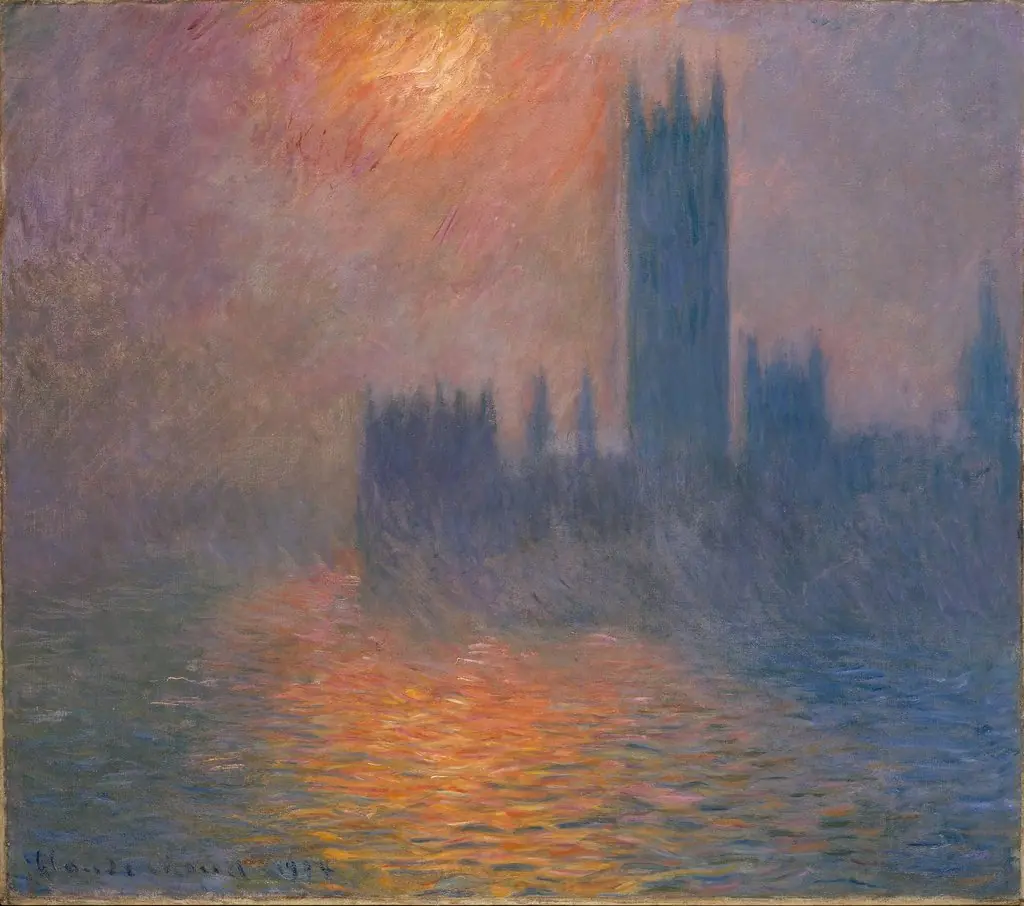
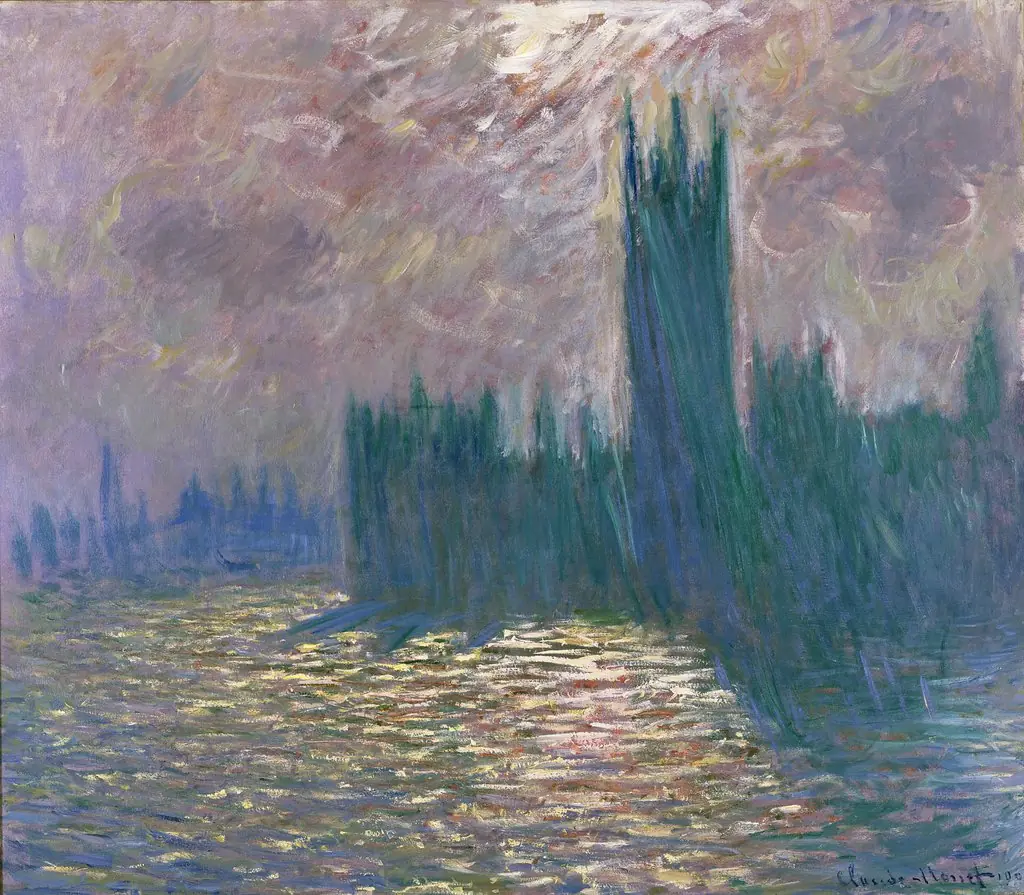
His Venetian series followed earlier explorations of Rouen Cathedral and London’s Parliament, continuing his lifelong interest in transient effects.
This painting emerged during Monet’s mature period, when he increasingly prioritized sensory experience over topographical accuracy. Venice, with its luminous water and historic architecture, offered ideal conditions for his study of light and reflection. His Venetian series followed earlier explorations of Rouen Cathedral and London’s Parliament, continuing his lifelong interest in transient effects.
Legacy
The work exemplifies Monet’s late approach to landscape and architecture, where structure dissolves into atmosphere. It influenced later painters seeking to convey mood through color and gesture rather than detail. Though not widely exhibited, it remains a key example of how modernism redefined the representation of historic sites through personal perception.
Own this work as a print
Artist & collection
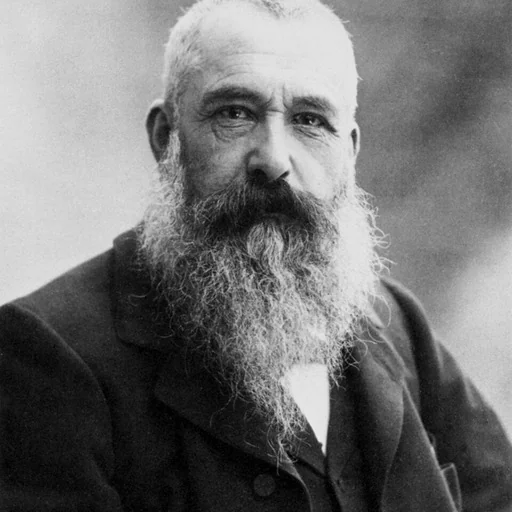
Artist
Oscar-Claude Monet was born in Paris on November 14, 1840, and raised from the age of five in Le Havre, where he began selling charcoal caricatures as a teenager.