Artwork
Vétheuil
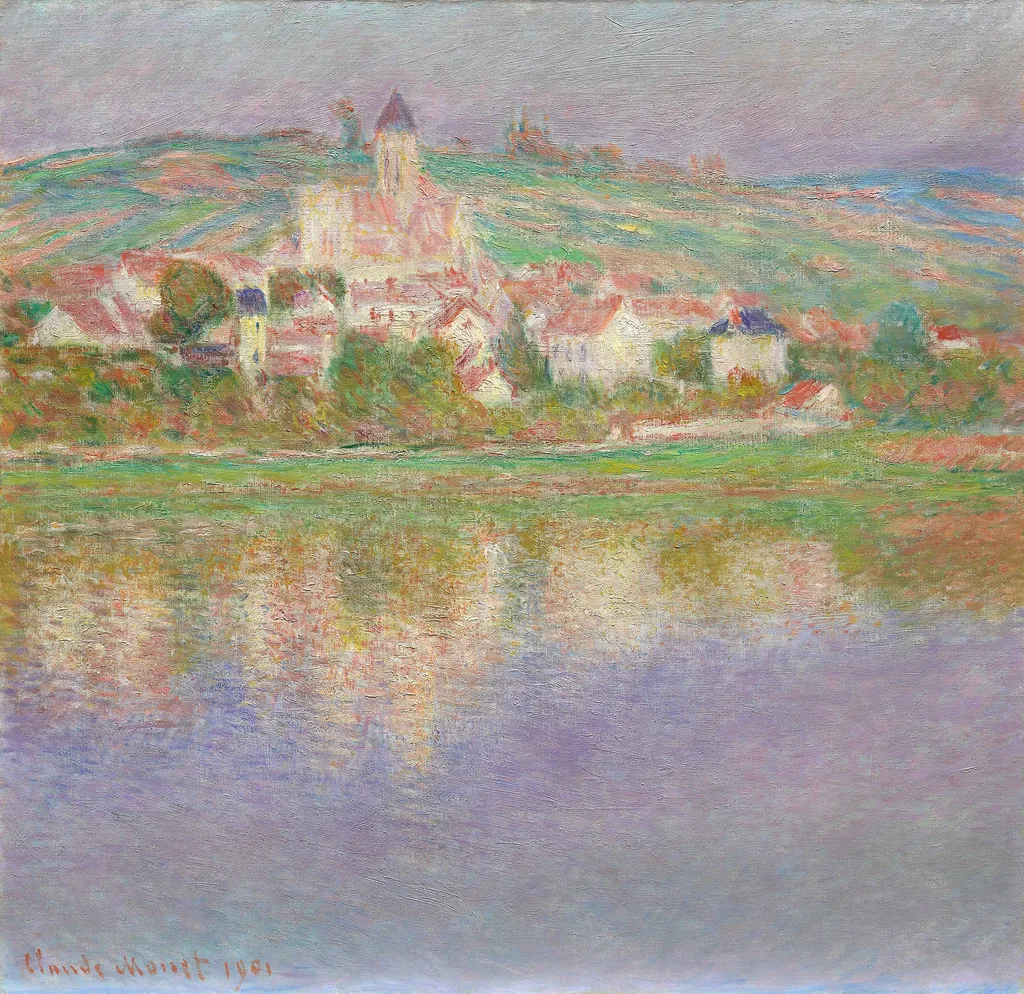
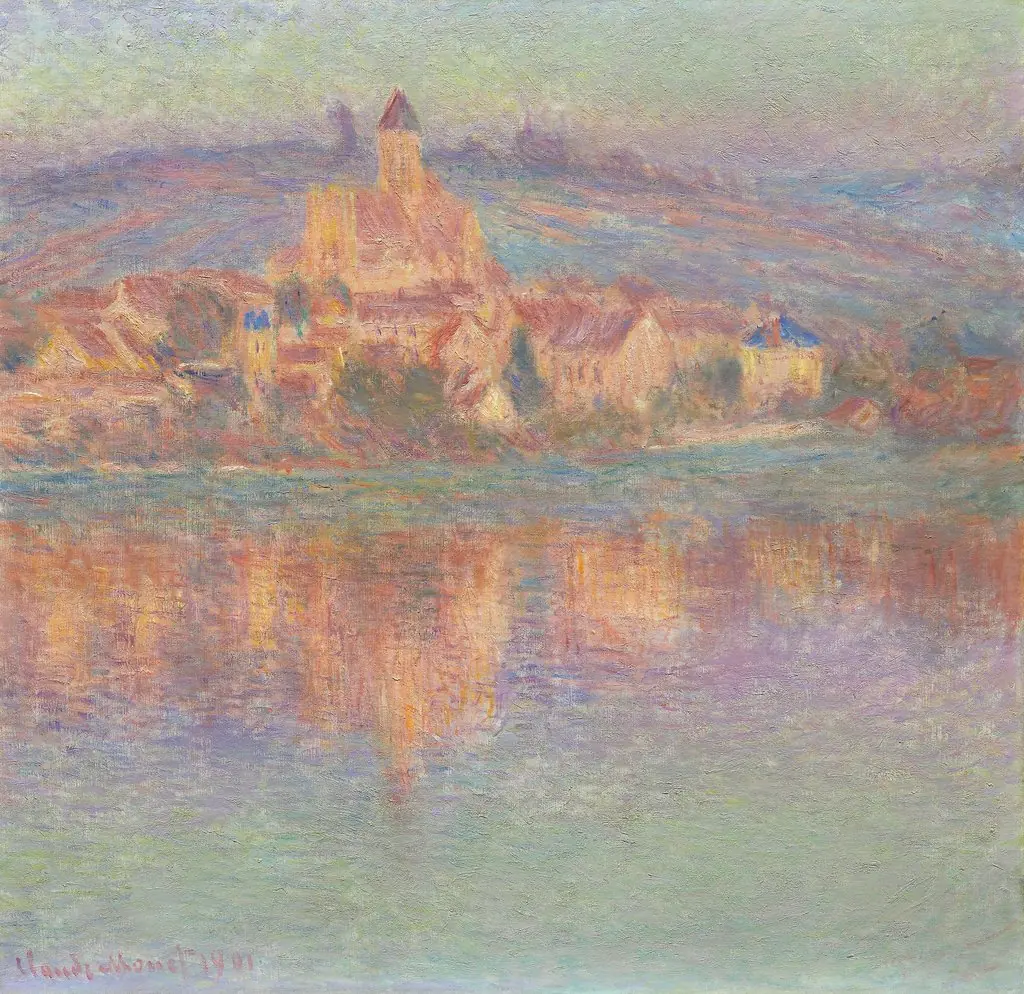
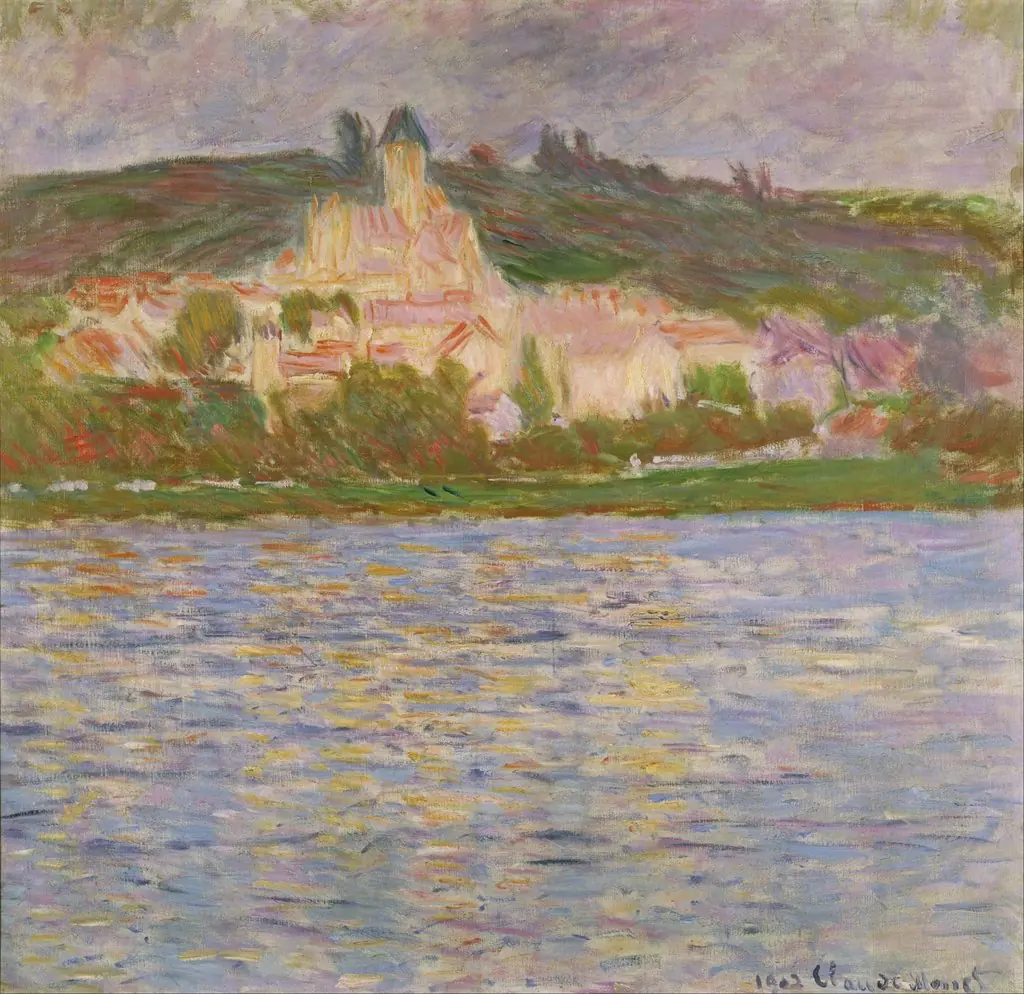
Vétheuil is an oil painting by the Impressionist artist Claude Monet. It dates from 1901 and is held in the collection of the Art Institute of Chicago.
About this work
Overview
Painted in 1901, Vétheuil is an oil on canvas work by Claude Monet, capturing the riverside village of Vétheuil in northern France. The piece belongs to a series Monet produced during his time living near the Seine, reflecting his sustained interest in atmospheric light and seasonal change. It is currently part of the permanent collection at the Art Institute of Chicago.
Subject & Meaning
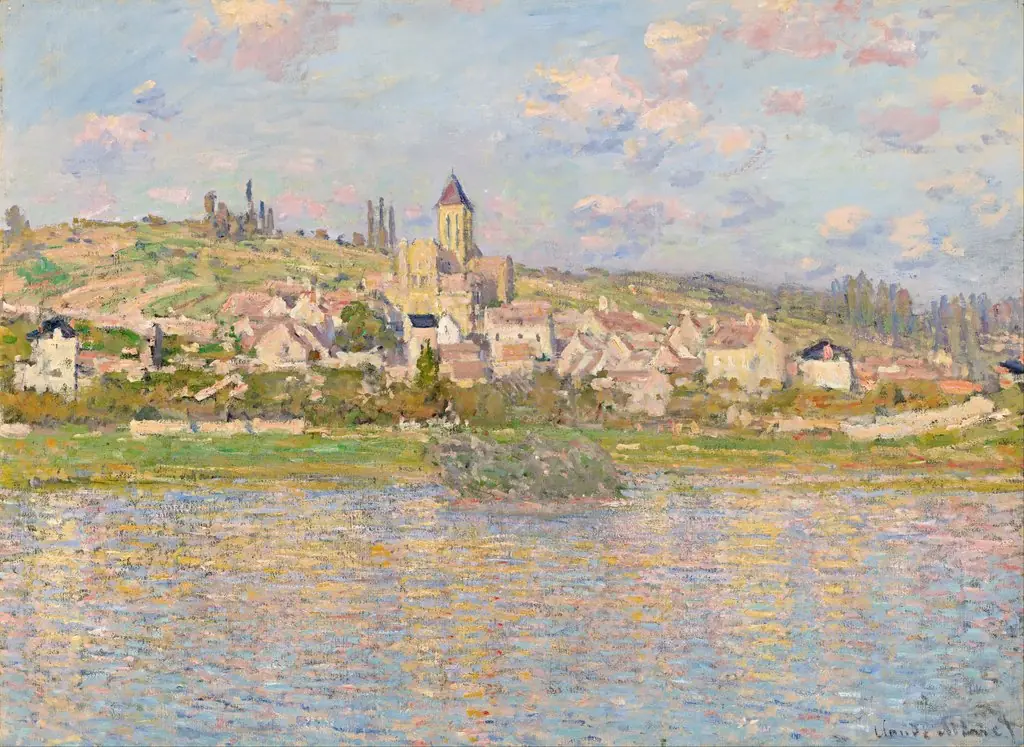
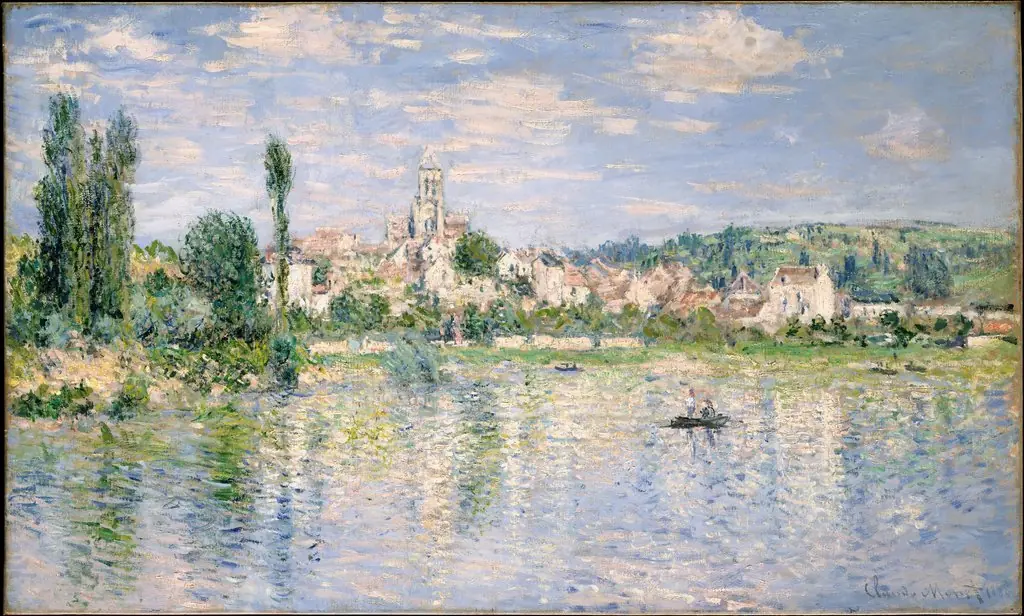
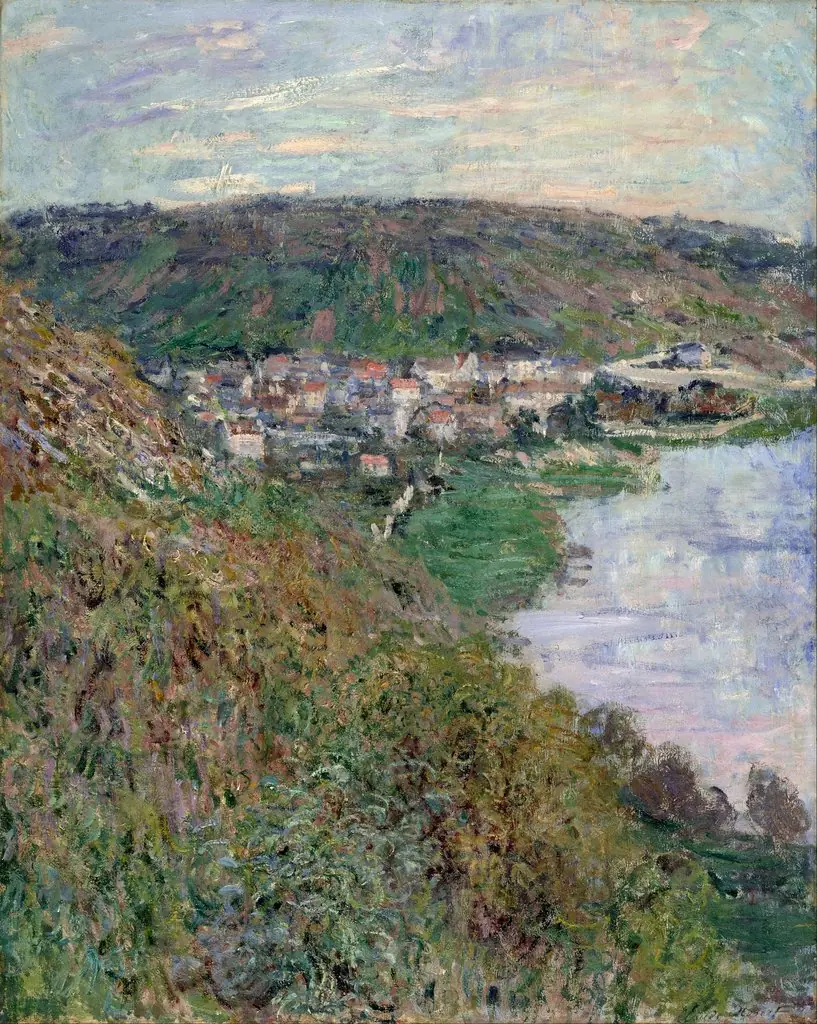
The painting depicts the village of Vétheuil nestled along the Seine, with soft hills, scattered buildings, and water reflecting shifting skies.
The painting depicts the village of Vétheuil nestled along the Seine, with soft hills, scattered buildings, and water reflecting shifting skies. Monet focused less on architectural detail than on the interplay of light, color, and weather, conveying a quiet, contemplative mood. The scene reflects his emotional connection to the place, where he lived during a period of personal loss and artistic evolution.
Technique & Style
Monet applied paint in loose, broken brushstrokes, layering hues to suggest shifting light and atmosphere. Colors are muted yet nuanced, with cool grays, blues, and pale greens dominating the composition. The surface is textured but not overly detailed, emphasizing the transient effects of daylight and air rather than fixed forms, consistent with his mature Impressionist approach.
History & Provenance
Monet painted Vétheuil during his residence in the village between 1878 and 1881, though this specific work dates to 1901, likely painted from memory or sketches. It remained in his possession until his death, then passed through private hands before being acquired by the Art Institute of Chicago in 1922, where it has remained since.
Context
Vétheuil was one of several villages Monet inhabited along the Seine, each influencing his exploration of landscape under varying conditions. In 1901, he was nearing the end of his career, having already developed his signature style. This work reflects continuity in his practice, even as he began preparing for the large-scale water lily compositions that would follow.
Legacy
Vétheuil exemplifies Monet’s lifelong commitment to observing nature through direct, repeated study. Though less widely known than his later water lily series, it contributes to the understanding of his evolving technique and emotional engagement with place. The painting remains a quiet testament to his ability to transform ordinary scenery into a meditation on perception and time.
Own this work as a print
Artist & collection
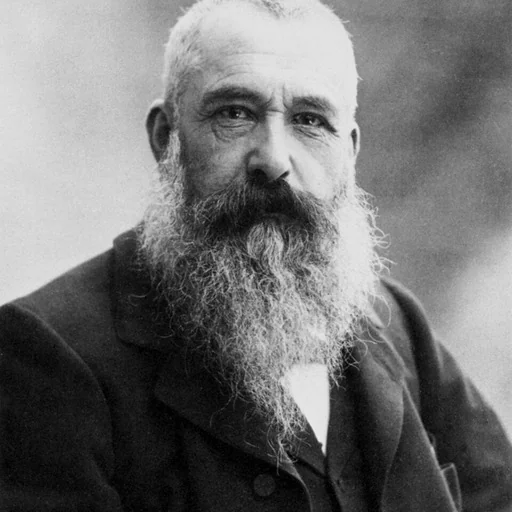
Artist
Oscar-Claude Monet was born in Paris on November 14, 1840, and raised from the age of five in Le Havre, where he began selling charcoal caricatures as a teenager.