Artwork
Still Life with Fruit
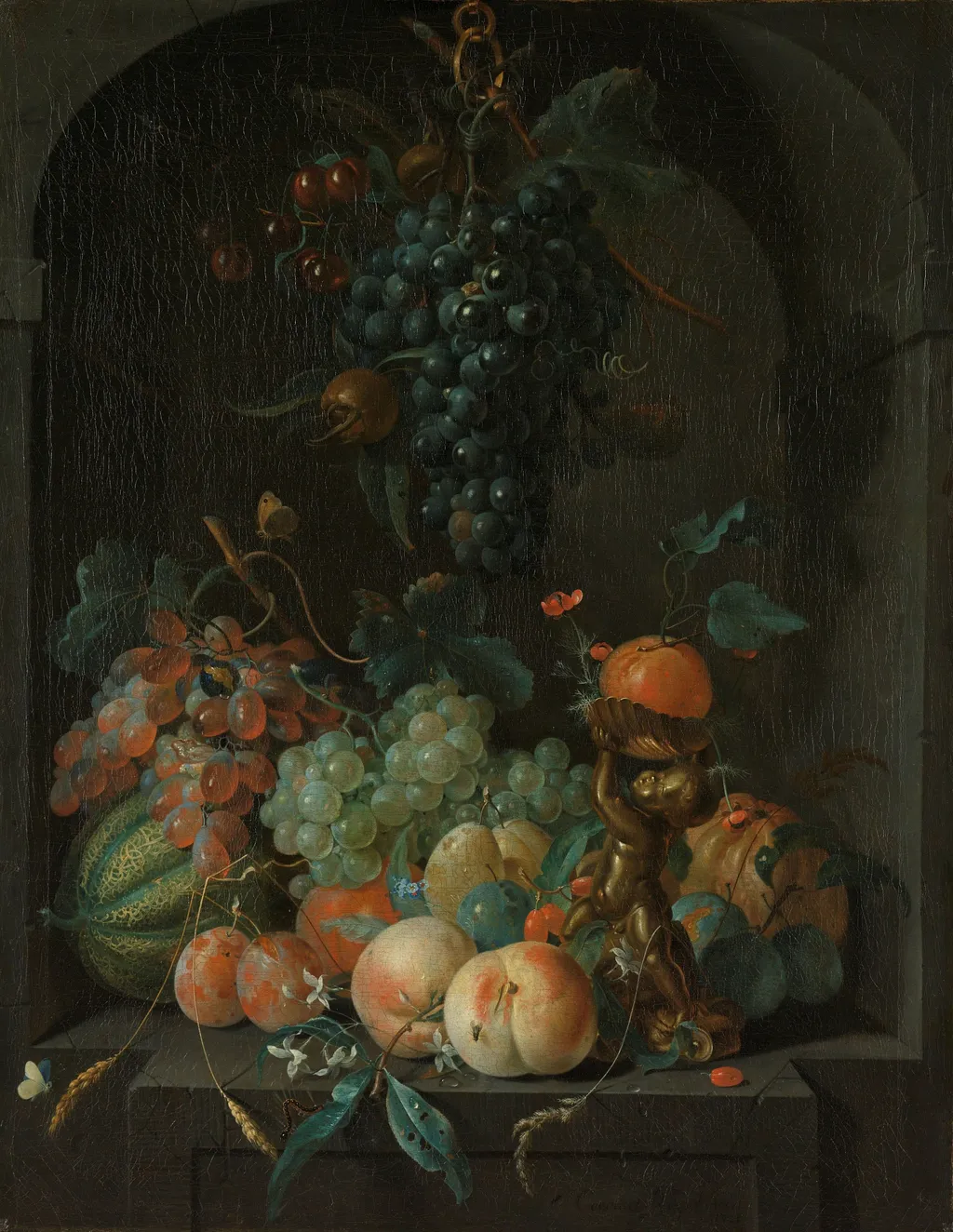
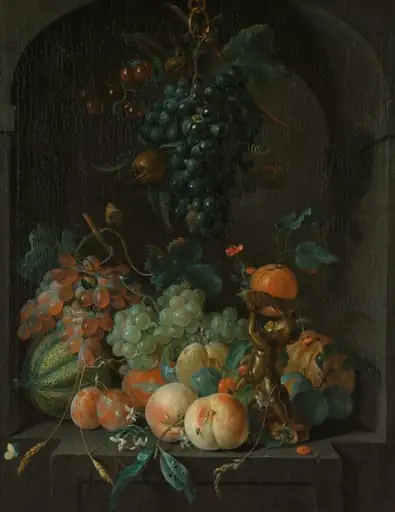
Still Life with Fruit is an oil painting by Coenraet Roepel. It dates from 1721 and is held in the collection of the Rijksmuseum.
About this work
Overview
Coenraet Roepel's Still Life with Fruit, executed in 1721, exemplifies the Dutch tradition of illusionistic still life painting.
Coenraet Roepel's Still Life with Fruit, executed in 1721, exemplifies the Dutch tradition of illusionistic still life painting. The composition centers on a sculpted niche containing a cherubic figure holding a bowl, around which an abundant assortment of fruit, including grapes, peaches, and a melon, is artfully arranged. Roepel renders the organic forms with meticulous attention to texture and light, capturing the translucency of grape skins and the fuzzy surface of the peaches against the smooth, cool tones of the stone architecture. The palette features rich, naturalistic hues of green, yellow, and red, creating a vibrant contrast with the neutral background. This work reflects Roepel's established reputation as a specialist in fruit and flower still lifes during the early eighteenth century, a period when such paintings continued to be valued for their technical virtuosity and symbolic resonance. The integration of sculpture and natural elements demonstrates the artist's skill in manipulating perspective and material differentiation to create a cohesive, visually engaging scene.
Subject & Meaning
The composition features an array of ripe fruits, including grapes, peaches, and a melon, meticulously arranged within a stone niche. A sculpted cherub, centrally placed and holding a bowl brimming with fruit, further emphasizes the theme of plenty. The overall impression conveyed is one of overflowing bounty, suggesting prosperity and the richness of nature's harvest.
Technique & Style
Executed in oil paint, the artwork employs a dark background to enhance the vibrant hues of the fruit, which range from deep greens to warm yellows and reds. The artist's use of chiaroscuro creates dramatic contrasts between light and shadow, lending significant depth and three-dimensionality to each element. This technique makes the fruit appear remarkably lifelike and tangible.
History & Provenance
Painted by the Dutch artist Coenraet Roepel in 1721, this still life contributes to the rich tradition of Dutch art from the period. While specific details of its early history are not provided, the work is now part of the esteemed collection at the Rijksmuseum, where it represents Roepel's contribution to the genre.
Artist & collection