Artwork
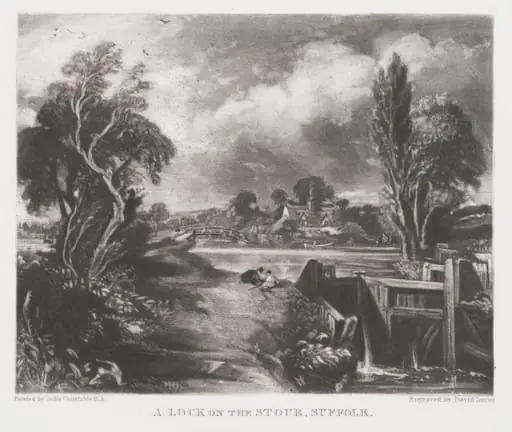
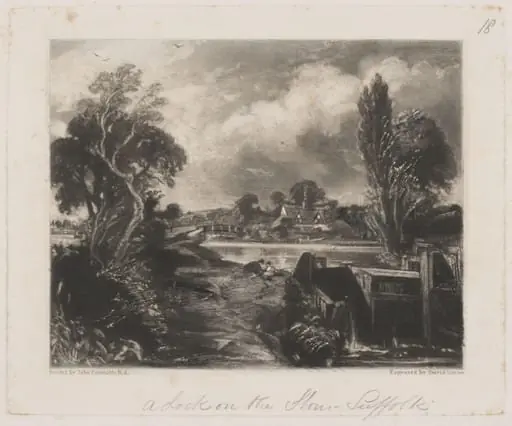
A LOCK ON THE STOUR CO: OF SUFFOLK
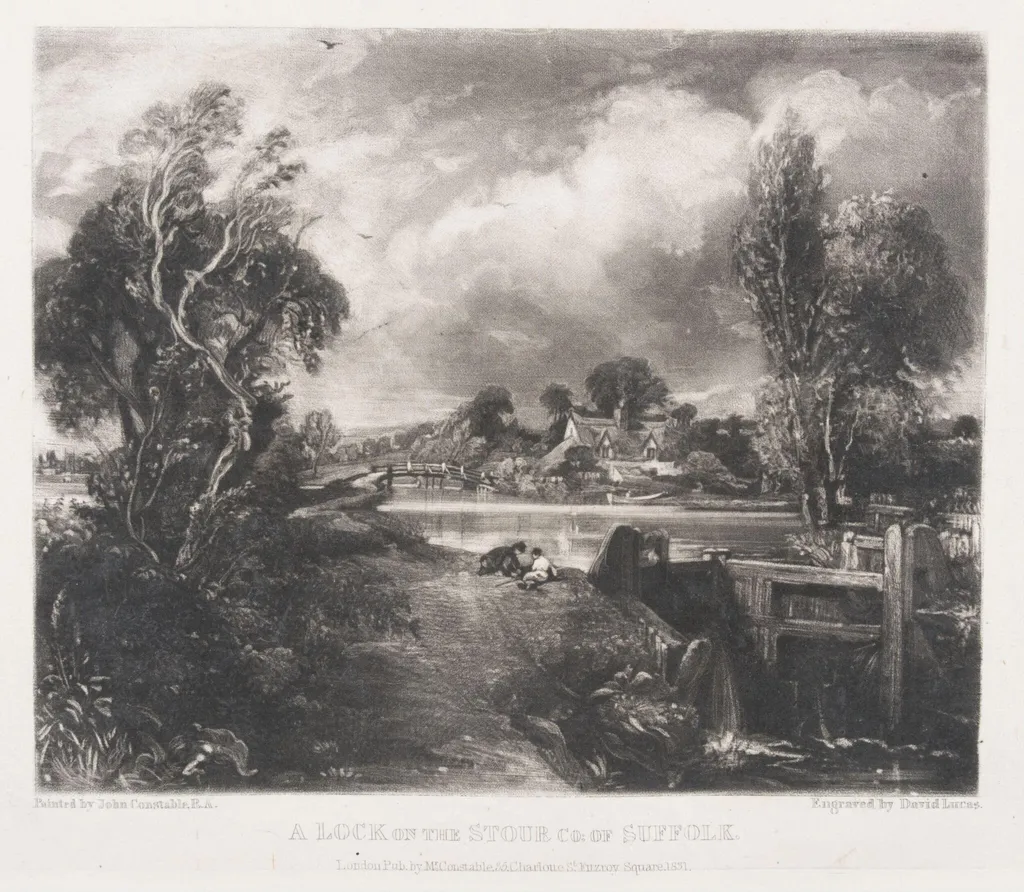
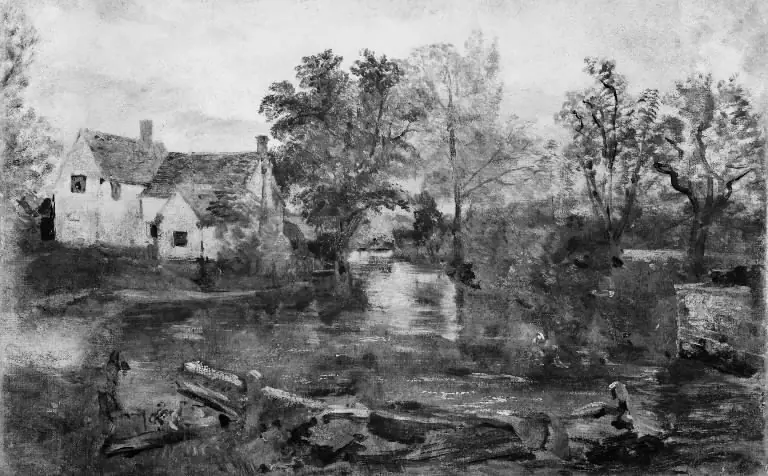
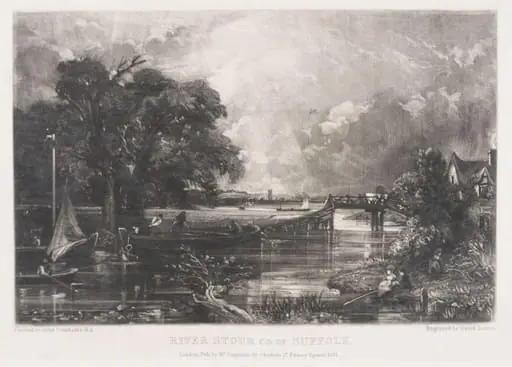
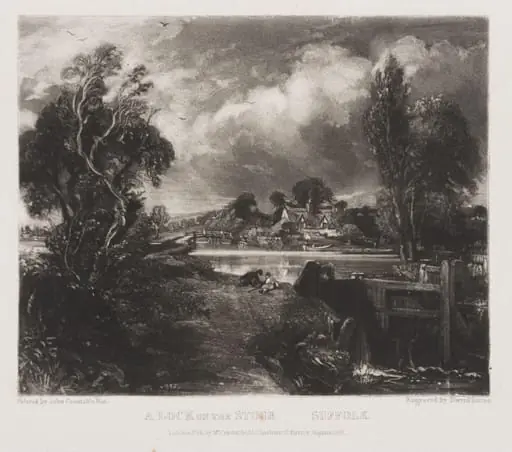
A LOCK ON THE STOUR CO: OF SUFFOLK is a print by the Romanticist artist John Constable. It dates from 1831 and is held in the collection of the Victoria and Albert Museum.
About this work
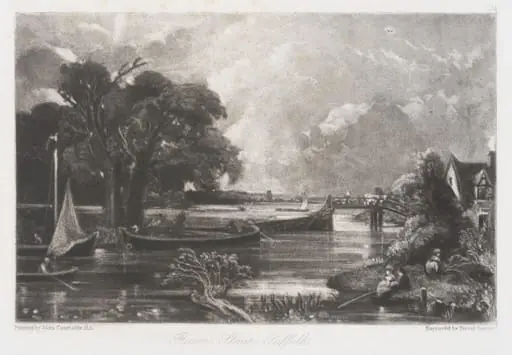
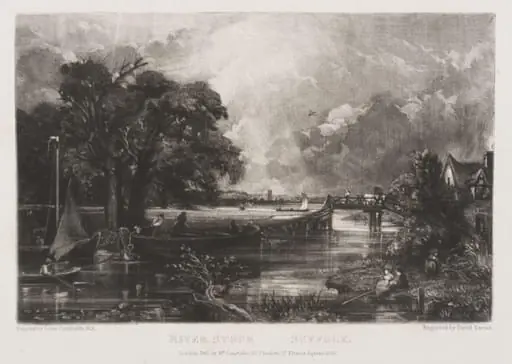
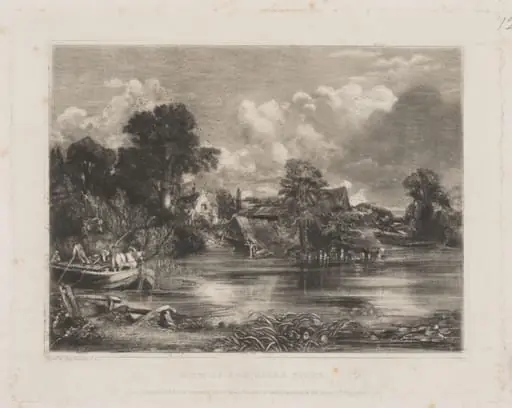
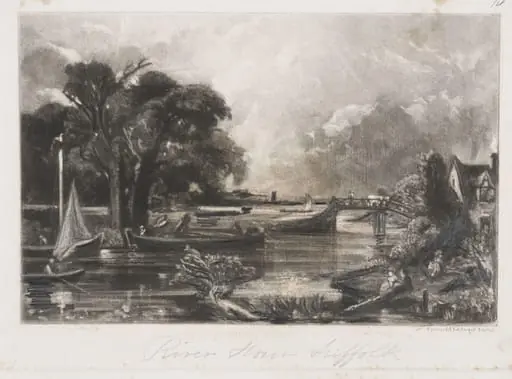
This is a print by John Constable from 1831. It’s part of a famous series called *English Landscape* that he helped publish late in his career.
The prints were made using mezzotint, a tricky technique that creates soft, rich tones. Constable didn’t just paint these scenes—he guided the process to make sure they looked right.
Look up the Victoria and Albert Museum.
Overview
This 1831 print is one of twenty-two mezzotints in the series English Landscape, produced under John Constable’s direct supervision near the end of his life.
This 1831 print is one of twenty-two mezzotints in the series English Landscape, produced under John Constable’s direct supervision near the end of his life. Published between 1830 and 1832, the series was a deliberate effort to translate his landscape vision into print form. Constable collaborated closely with mezzotinter David Lucas, refining each plate to match the tonal nuances of his original works. The project was not merely reproductive but interpretive, aiming to convey the emotional weight of English scenery through the medium of print.
Subject & Meaning
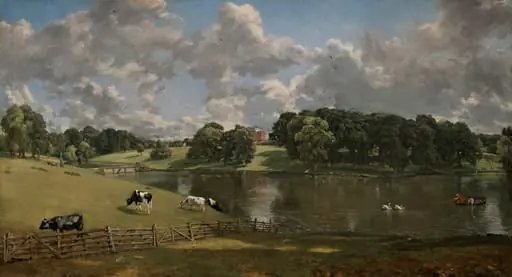
The print depicts a quiet stretch of the River Stour in Suffolk, a region central to Constable’s artistic identity. Rather than idealizing the landscape, he focused on ordinary, working rural scenes—farms, watermills, and overcast skies—infused with subtle shifts of light and atmosphere. These views were chosen not for grandeur but for their personal resonance and their embodiment of nature’s quiet rhythms. Constable saw such scenes as expressions of a deeper, almost spiritual order governed by chiaroscuro.
Technique & Style
Mezzotint, a labor-intensive intaglio process, allowed for rich gradations of tone, ideal for capturing the diffuse light and atmospheric depth Constable favored. Lucas, working under Constable’s precise direction, used rocker tools to create velvety blacks and delicate mid-tones, avoiding sharp lines in favor of soft transitions. The result mimicked the brushwork and mood of Constable’s oil sketches, translating their immediacy into a printed format that emphasized texture and luminosity over detail.
History & Provenance
The series was issued in six installments between 1830 and 1832, with a revised edition appearing in 1833. Constable oversaw every stage, from selection of subjects to proofing impressions. After his death in 1837, Lucas continued to print from the original plates and added new ones, extending the series beyond Constable’s lifetime. Many early impressions were hand-colored, and surviving copies are now held in major institutions, including the Victoria and Albert Museum.
Context
In the 1830s, landscape painting was still undervalued in Britain compared to historical or portrait subjects. Constable, often dismissed as too provincial, used English Landscape to assert the legitimacy of native scenery as worthy of serious artistic attention. He drew inspiration from Claude Lorrain’s compositional harmony and Turner’s atmospheric effects, yet sought to ground his vision in the specific light and topography of his native Suffolk, resisting academic conventions.
Legacy
Though commercially unsuccessful in his lifetime, the English Landscape series became a foundational reference for later generations of printmakers and landscape artists. Its emphasis on tonal harmony, naturalism, and the emotional potential of everyday scenery influenced the Pre-Raphaelites and the British tonalist tradition. The collaboration between Constable and Lucas also elevated mezzotint from a reproductive tool to a medium capable of conveying artistic intent with subtlety and depth.
Artist & collection
Artist
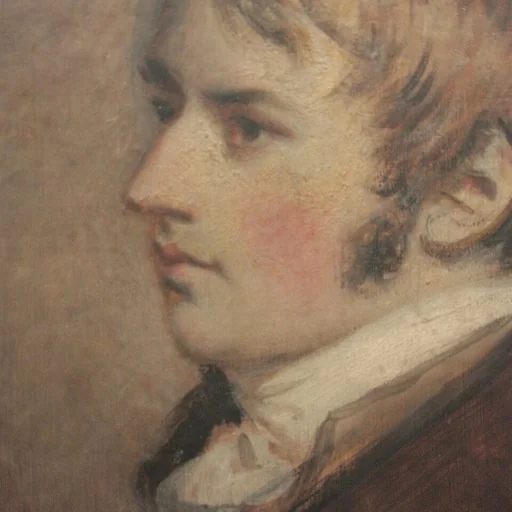
John Constable (; 11 June 1776 – 31 March 1837) was an English landscape painter in the Romantic tradition.