Artwork
Flatford Mill
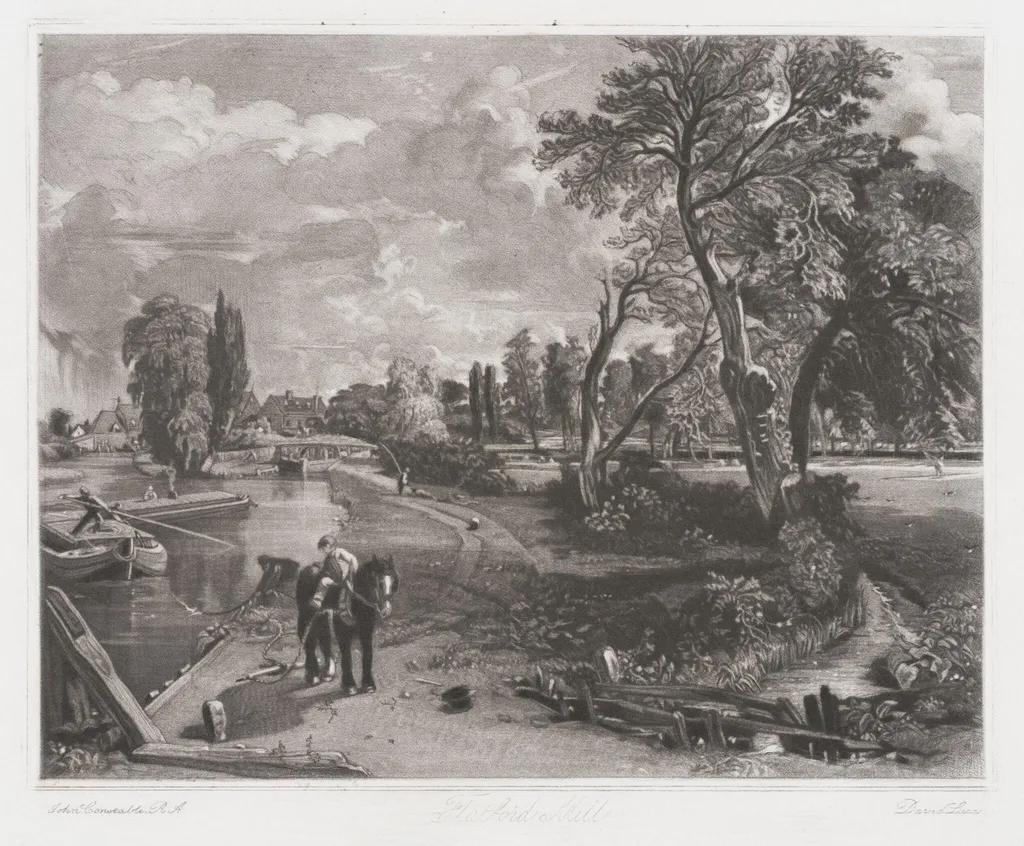
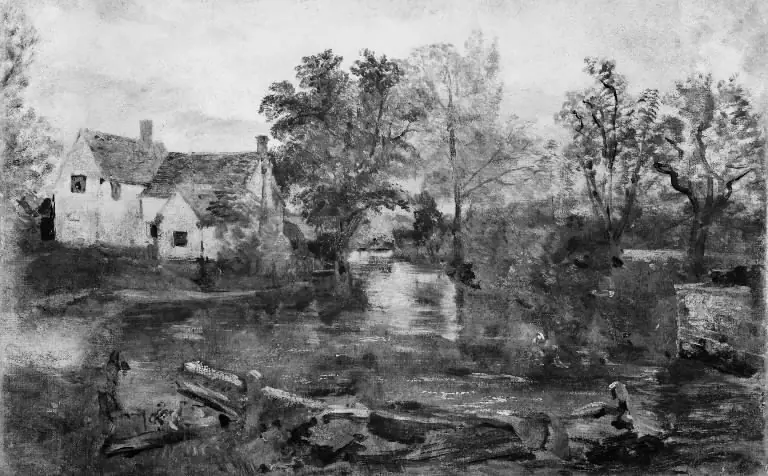
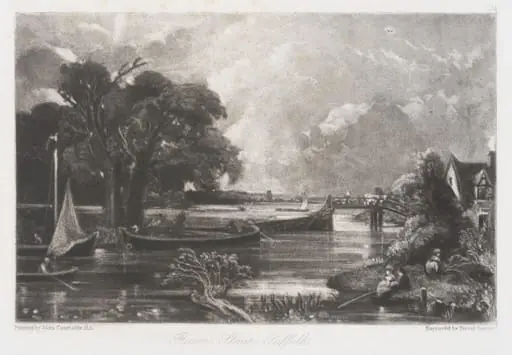
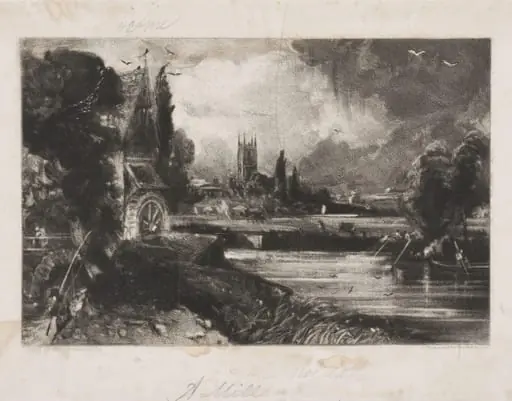
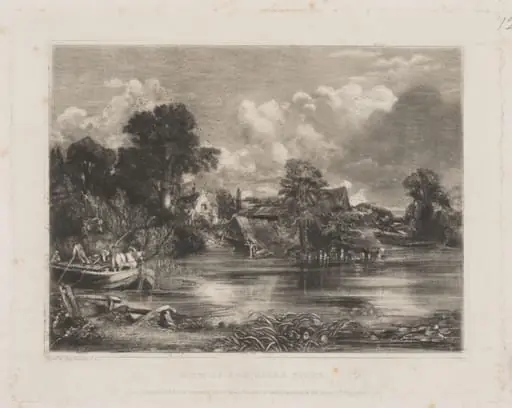
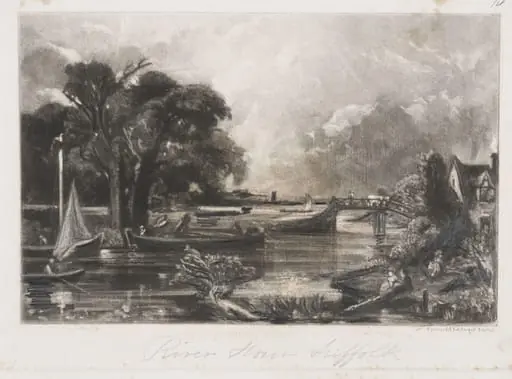
Flatford Mill is a print by the Impressionist artist John Constable. It is held in the collection of the Victoria and Albert Museum.
About this work
Then David Lucas turned them into prints using mezzotint, a tricky method that lets artists carve tones right into metal plates.
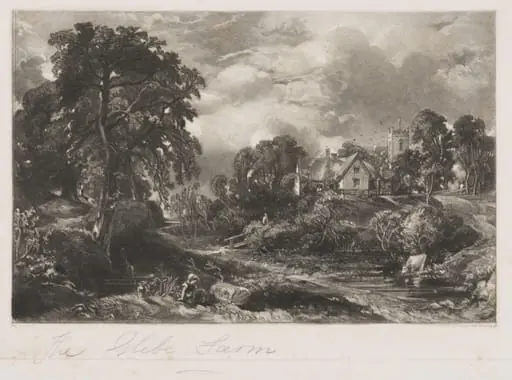
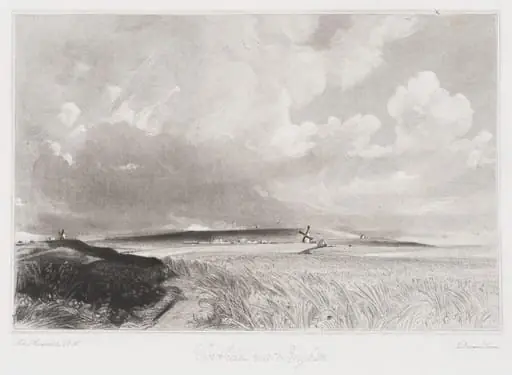
Constable made a print called *Flatford Mill* in 1855. It’s a mezzotint, a print style known for rich darks and soft light. This one comes from a big series of 22 landscape prints Constable planned himself.
He picked these views from his own oil sketches and paintings. Then David Lucas turned them into prints using mezzotint, a tricky method that lets artists carve tones right into metal plates.
Check out the Victoria and Albert Museum to see it in person.
Overview
Flatford Mill is a mezzotint print produced in 1855 as part of John Constable’s larger project, English Landscape. Though Constable died in 1837, this impression was issued posthumously from plates he approved during his lifetime. The print belongs to a series of 22 landscapes, conceived by Constable to convey his vision of English rural scenery through the tonal richness of mezzotint, a technique requiring precise manipulation of metal plates to achieve gradations of light and shadow.
Subject & Meaning
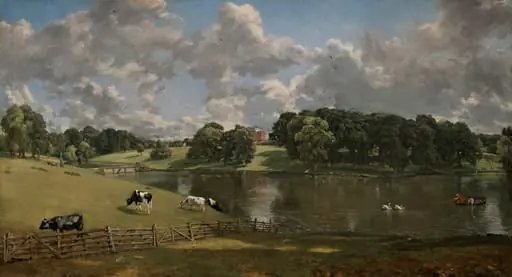
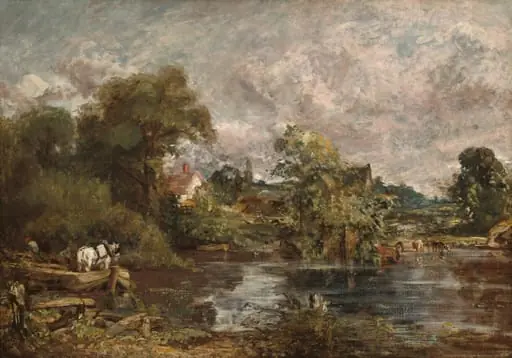
Flatford Mill depicts a familiar scene from Constable’s childhood in Suffolk, capturing the quiet industry of the mill on the River Stour. By selecting such personal locales, Constable sought to elevate everyday English landscapes as worthy of artistic contemplation. The composition emphasizes the interplay of light and atmosphere, reflecting his belief that nature’s emotional resonance lay in its shifting chiaroscuro, not in idealized grandeur.
Technique & Style
The print was executed in mezzotint by David Lucas, using a method that involves roughening a copper plate to hold ink, then smoothing areas to create light tones. This allowed for subtle transitions between deep shadows and hazy highlights, closely mimicking the atmospheric effects Constable achieved in oil. Lucas’s skill translated Constable’s sketches into a printed medium that preserved the softness and depth of his original brushwork.
History & Provenance
Constable initiated the English Landscape series in 1830, overseeing its publication until his death. Though the first edition was completed in 1832, additional prints were issued later, including this 1855 impression, made from original plates still in use. Lucas continued to print and occasionally refine the plates after Constable’s passing, ensuring the series remained available to the public through subsequent reissues.
Context
In an era dominated by Romantic grandeur and classical ideals, Constable turned to intimate, local scenes as subjects of serious art. Drawing from the tonal traditions of Claude Lorrain and the atmospheric experiments of Turner, he used mezzotint not for reproduction, but as a medium of interpretation. His series was a deliberate act of cultural affirmation, positioning English countryside as worthy of the same reverence once reserved for Italianate landscapes.
Legacy
The English Landscape series, including Flatford Mill, established mezzotint as a legitimate vehicle for artistic expression beyond mere reproduction. Though initially underappreciated, Constable’s prints later influenced generations of printmakers and landscape artists. The series remains a key document of his artistic philosophy, demonstrating how technical precision could serve a deeply personal vision of nature.
Artist & collection
Artist
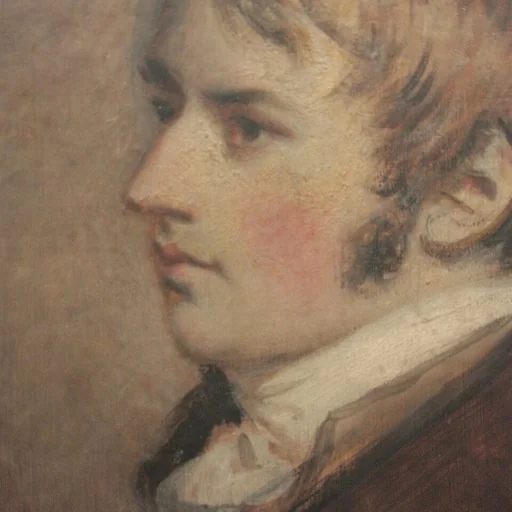
John Constable (; 11 June 1776 – 31 March 1837) was an English landscape painter in the Romantic tradition.