Artwork
OPENING OF WATERLOO BRIDGE. JUNE.18.1817
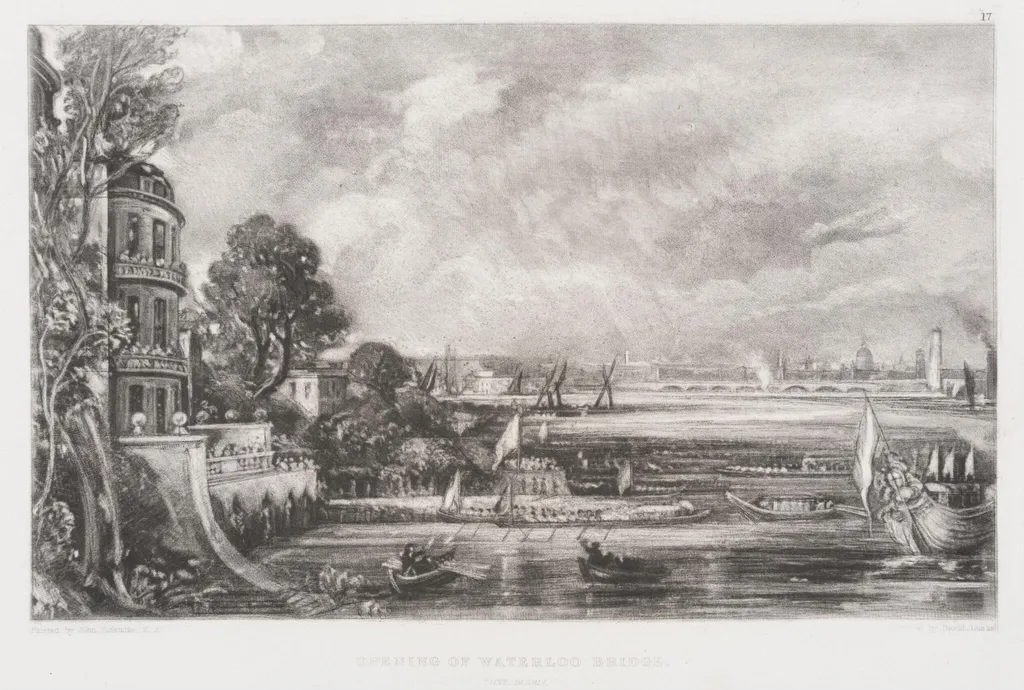
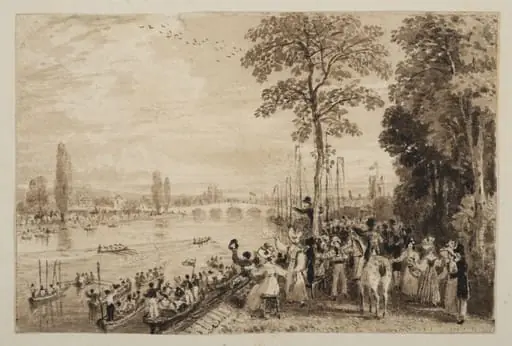
OPENING OF WATERLOO BRIDGE. JUNE.18.1817 is a print by the Impressionist artist John Constable. It is held in the collection of the Victoria and Albert Museum.
About this work
This print is called OPENING OF WATERLOO BRIDGE. JUNE.18.1817.
It was created by John Constable in 1855, but based on earlier work.
The print is part of a series that Constable supervised, and it's held at the Victoria and Albert Museum.
The series was executed in mezzotint by David Lucas and published in parts.
Check out the movement Impressionism for similar works.
Overview
Though printed in 1855, the composition originates from Constable’s initial studies made decades earlier, reflecting his enduring engagement with the subject.
This print is part of the series English Landscape, a collection of mezzotints supervised by John Constable and executed by David Lucas. Published between 1830 and 1832, the series compiled landscapes drawn from Constable’s earlier oil sketches and paintings. The specific image depicts the opening of Waterloo Bridge on June 18, 1817, reworked in print form years later. Though printed in 1855, the composition originates from Constable’s initial studies made decades earlier, reflecting his enduring engagement with the subject.
Subject & Meaning
The scene captures the ceremonial opening of Waterloo Bridge, a major public infrastructure project in London. Constable selected this event not merely as a record of civic progress but as an opportunity to explore the interplay of light, atmosphere, and human activity within the natural environment. The composition emphasizes the transient effects of weather and sunlight, aligning with his belief that nature’s emotional power resided in its shifting tonal relationships rather than in grand narrative.
Technique & Style
Executed in mezzotint by David Lucas under Constable’s close direction, the print translates the painterly qualities of his oil sketches into tonal gradations of black and white. The technique allowed for rich, velvety shadows and delicate transitions of light, mirroring Constable’s interest in chiaroscuro. Lucas’s meticulous rendering preserved the spontaneity of Constable’s brushwork, transforming sketches into nuanced prints that retained the vitality of the original observations.
History & Provenance
The print was produced as part of the second edition of English Landscape, issued after Constable’s death in 1837. Although the original sketch dates to 1817, the mezzotint plate was completed and printed in 1855, reflecting ongoing posthumous efforts to finalize the series. The Victoria and Albert Museum holds one of the surviving impressions. Lucas, initially unknown, became the primary engraver for Constable’s project, working closely with him until the artist’s death.
Context
Constable created the series during a period when landscape painting was still undervalued in academic circles. Drawing inspiration from Claude Lorrain and Turner, he sought to elevate the genre by emphasizing its emotional and optical truths. English Landscape was his attempt to define his artistic legacy, positioning English scenery not as mere topography but as a subject worthy of serious contemplation through the language of light and atmosphere.
Legacy
Though largely overlooked in his lifetime, Constable’s mezzotint series influenced later generations of artists interested in atmospheric effects and naturalistic representation. The technical collaboration with Lucas demonstrated how printmaking could extend the reach of painterly ideas. The series remains a key reference for understanding 19th-century British landscape aesthetics and the transition toward more subjective, light-based approaches later seen in Impressionism.
Artist & collection
Artist
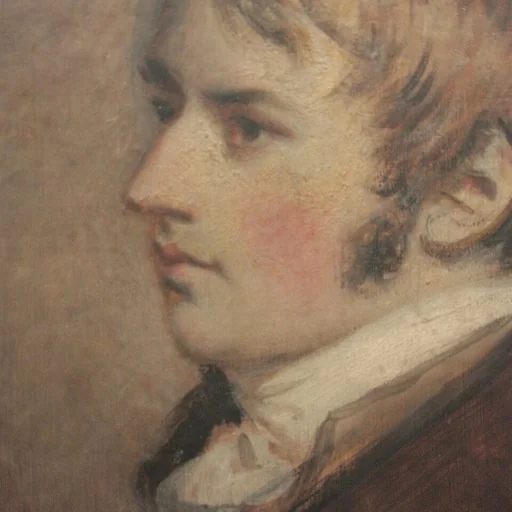
John Constable (; 11 June 1776 – 31 March 1837) was an English landscape painter in the Romantic tradition.