Artwork
Stoke by Nayland, Suffolk
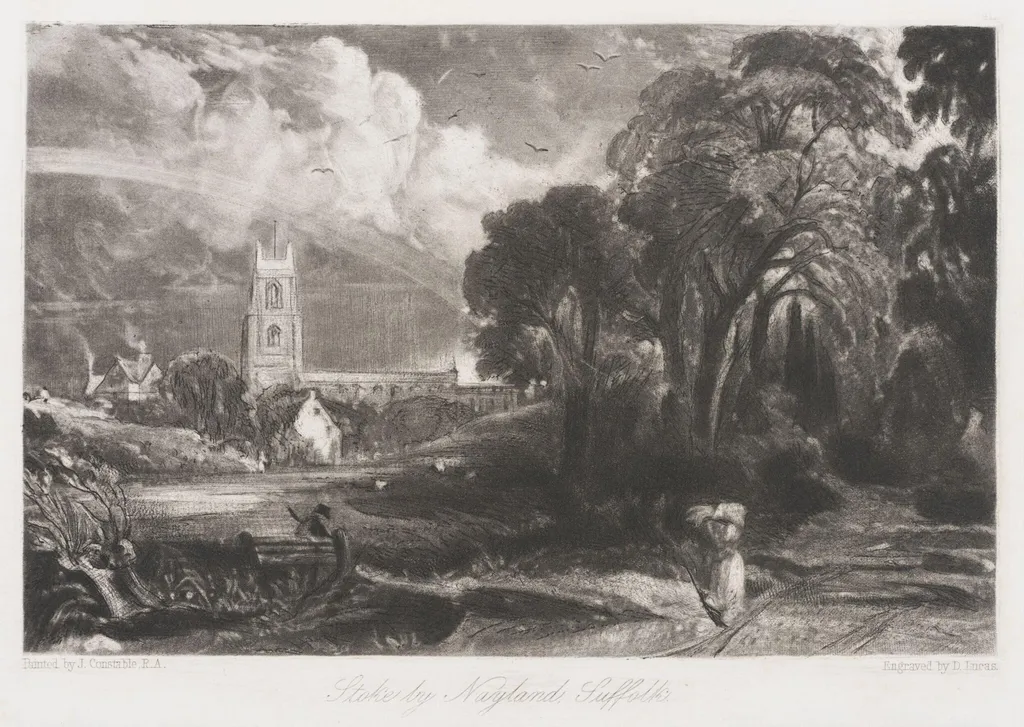
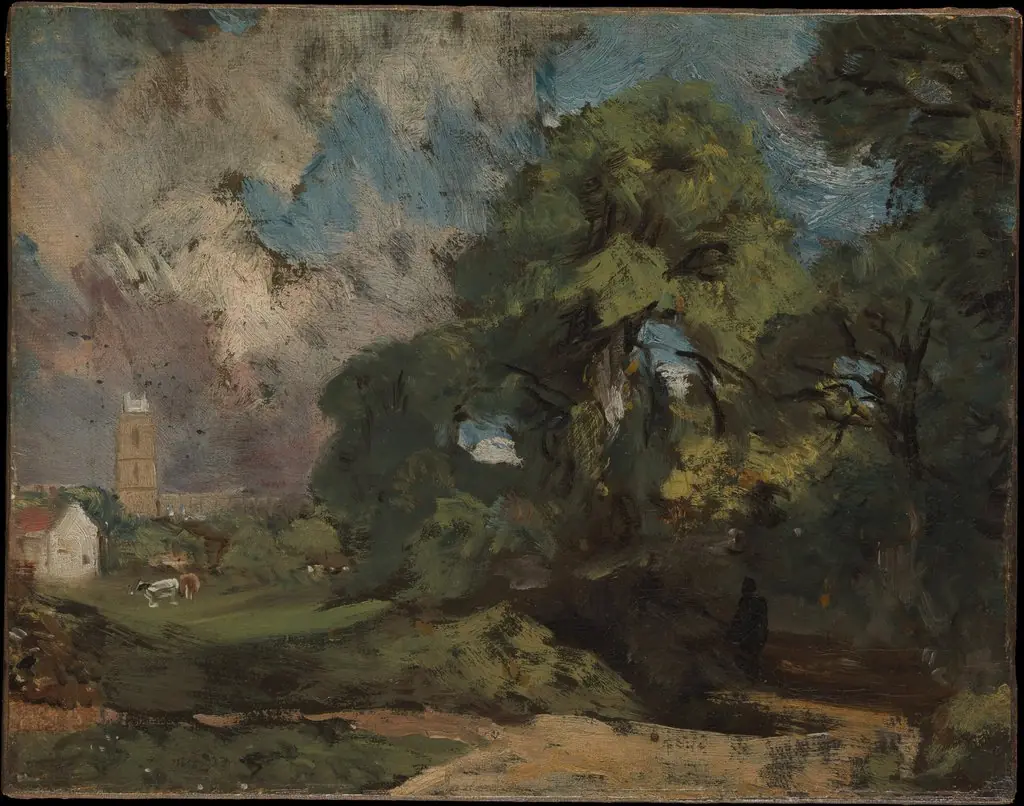
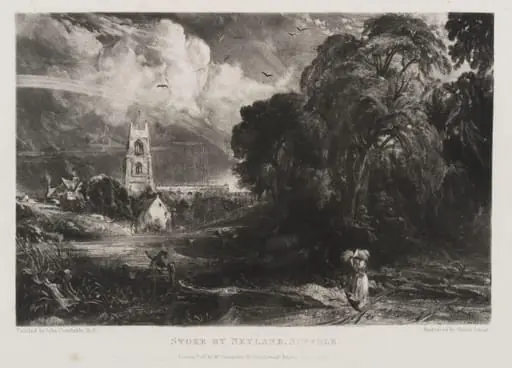
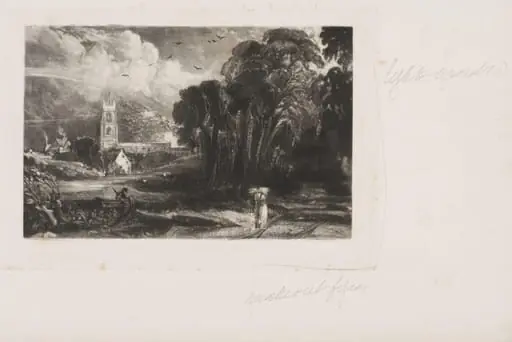
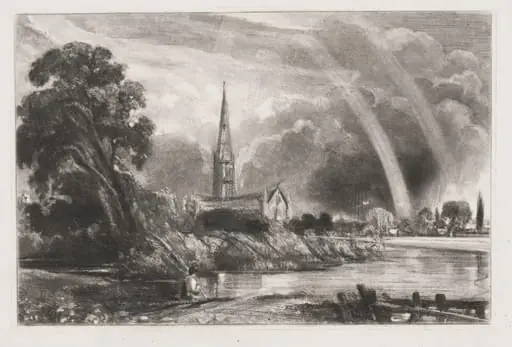
Stoke by Nayland, Suffolk is a print by the Impressionist artist John Constable. It is held in the collection of the Victoria and Albert Museum.
About this work
Overview
Published in six installments, the series was conceived as a printed record of his most significant landscape studies.
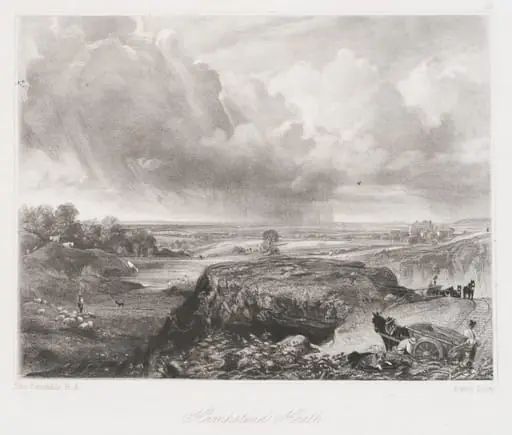
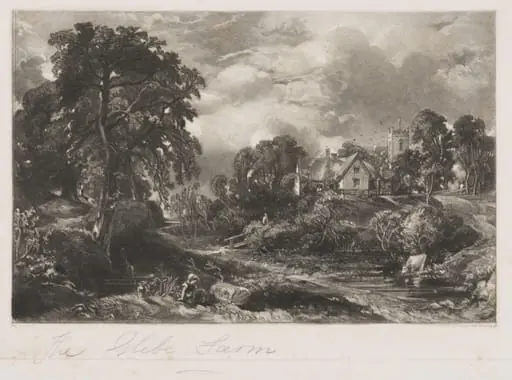
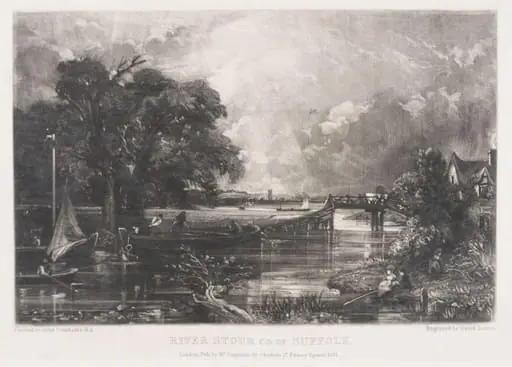
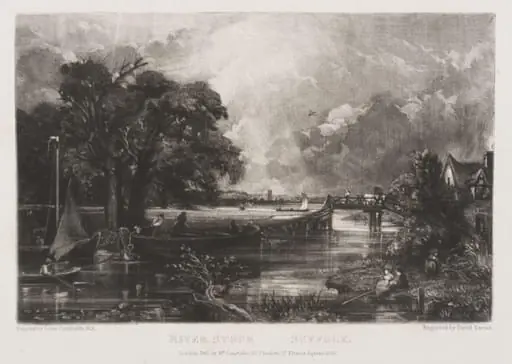
Stoke by Nayland, Suffolk is one of twenty-two mezzotints in the series English Landscape, produced under John Constable’s direct supervision between 1830 and 1832. Published in six installments, the series was conceived as a printed record of his most significant landscape studies. Though Constable was primarily known as a painter, this project represented his most deliberate effort to disseminate his vision of the English countryside through printmaking, with David Lucas translating his compositions into tonal etchings.
Subject & Meaning
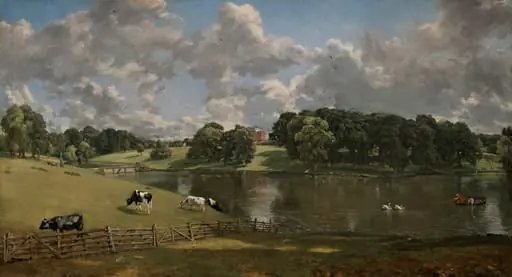
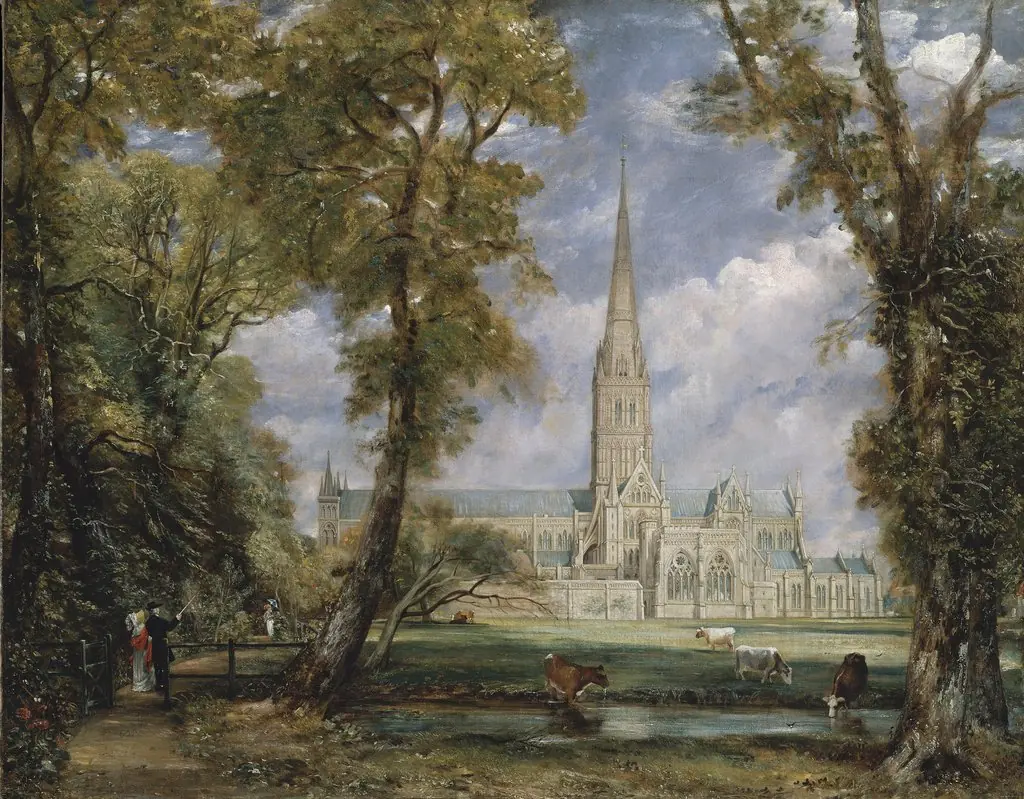
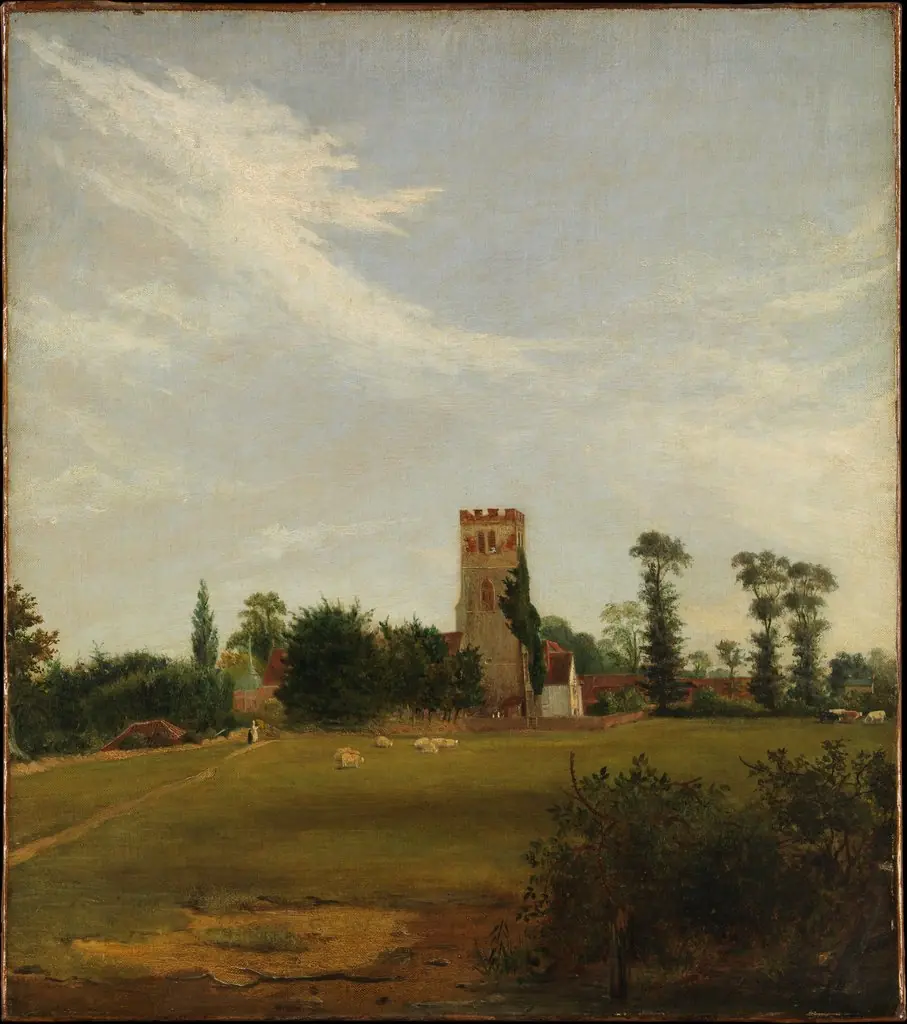
The view depicts a quiet stretch of the River Stour near the village of Stoke by Nayland in Suffolk, a place Constable knew intimately from childhood. Rather than idealizing the scene, he emphasized its ordinary, working character—fields, trees, and sky arranged to reveal the subtle interplay of light and atmosphere. The image functions as both personal memory and a quiet manifesto, asserting the dignity of native landscapes over imported classical motifs.
Technique & Style
Executed in mezzotint, a labor-intensive intaglio process that renders tonal gradations through textured plate surfaces, the print captures the soft transitions of light and shadow Constable prized in his paintings. David Lucas, guided closely by Constable, used fine rocker marks to achieve velvety blacks and hazy midtones, mimicking the atmospheric effects of oil sketches. The result is a print that feels painterly, not merely reproductive, with a focus on mood over detail.
History & Provenance
The series was first issued in 1830–32, revised in 1833, and reprinted after Constable’s death in 1837. Lucas continued to produce additional plates from Constable’s preparatory drawings, expanding the original set. Original impressions are rare; many later printings were made from worn plates or altered states. Stoke by Nayland appears in both the first and second editions, with subtle differences in tone and detail reflecting Constable’s evolving intentions.
Context
At a time when landscape painting was still undervalued in academic circles, Constable turned to print to assert the legitimacy of his approach. Drawing from Claude Lorrain’s compositional harmony and Turner’s luminous effects, he rejected grand historical narratives in favor of observed, local scenes. The series was a response to critics who dismissed his work as too mundane; here, he framed nature itself as the subject worthy of sustained attention.
Legacy
English Landscape established mezzotint as a medium capable of conveying the emotional depth of landscape art, influencing later printmakers and photographers alike. Though commercially unsuccessful in its time, the series became a touchstone for 19th-century British artists seeking to elevate everyday scenery. Constable’s collaboration with Lucas demonstrated how print could serve as a vehicle for artistic intent, not just reproduction, reshaping perceptions of the medium’s potential.
Artist & collection
Artist
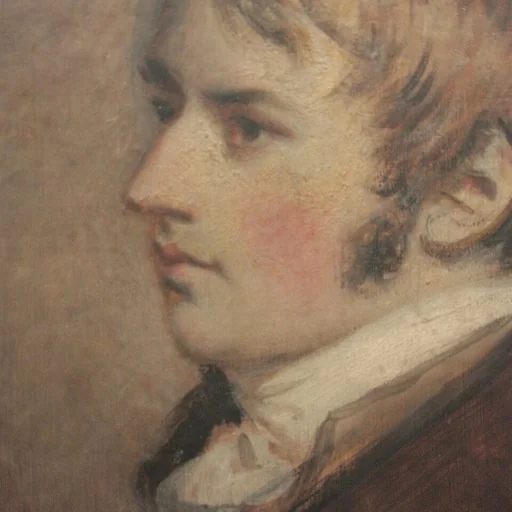
John Constable (; 11 June 1776 – 31 March 1837) was an English landscape painter in the Romantic tradition.