Artwork
Hillside with Rocky Outcrops
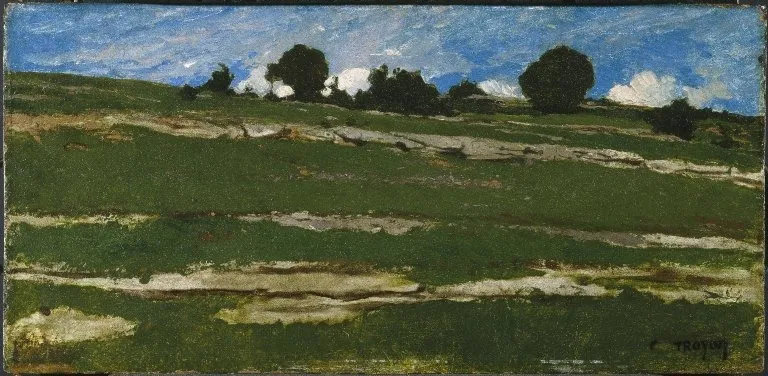
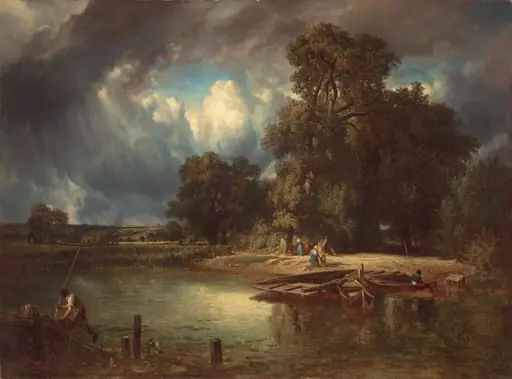
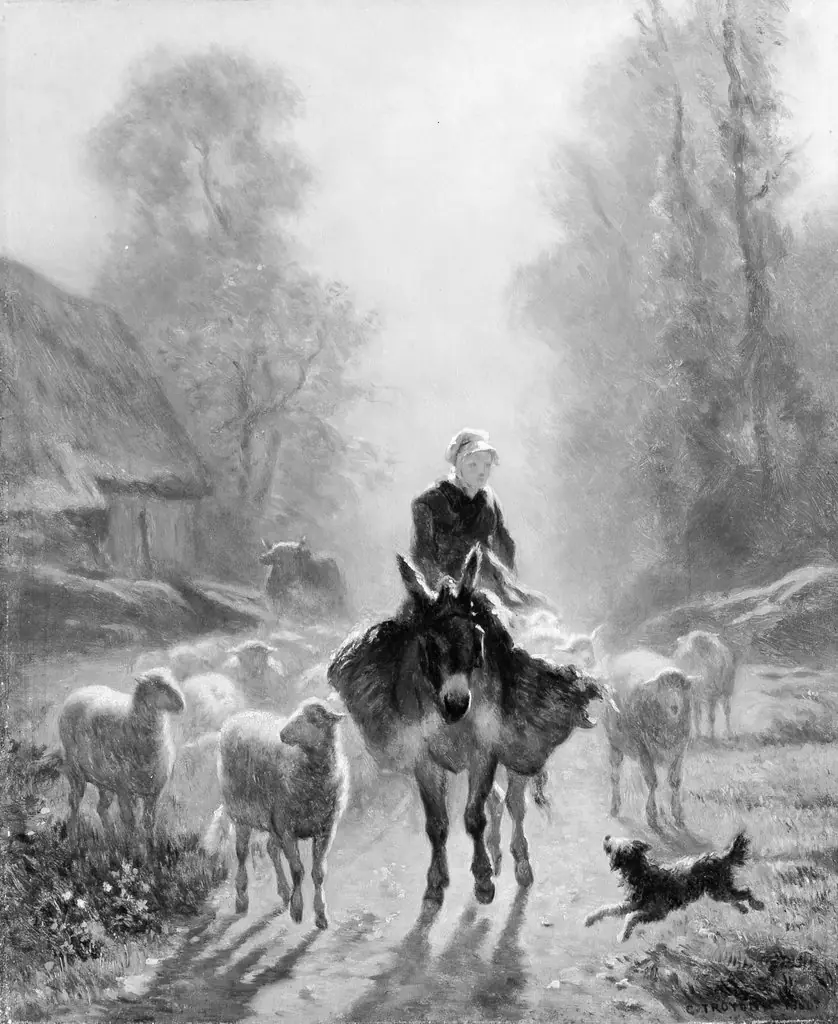
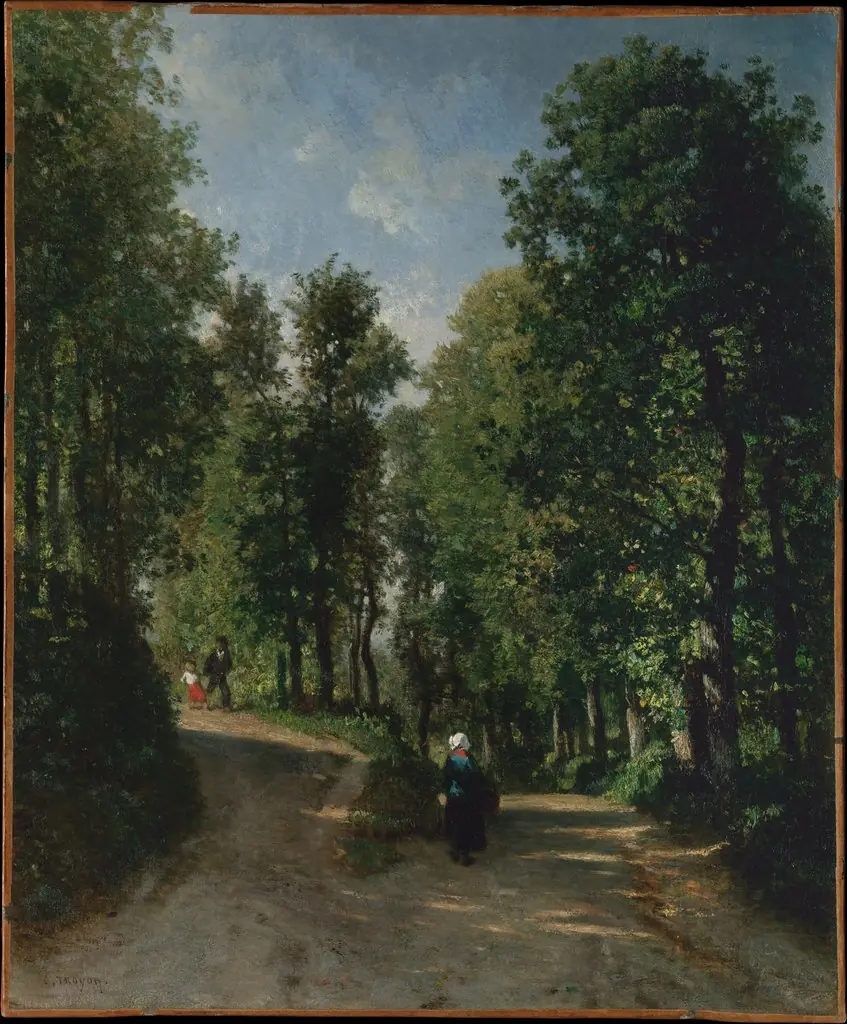
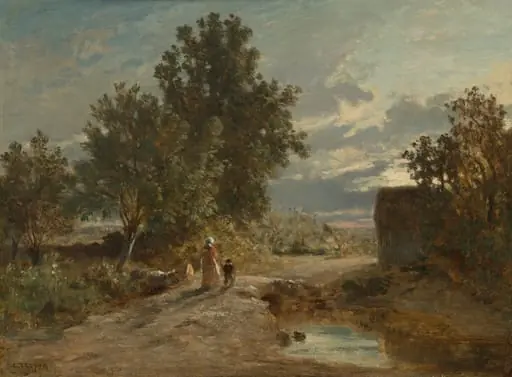
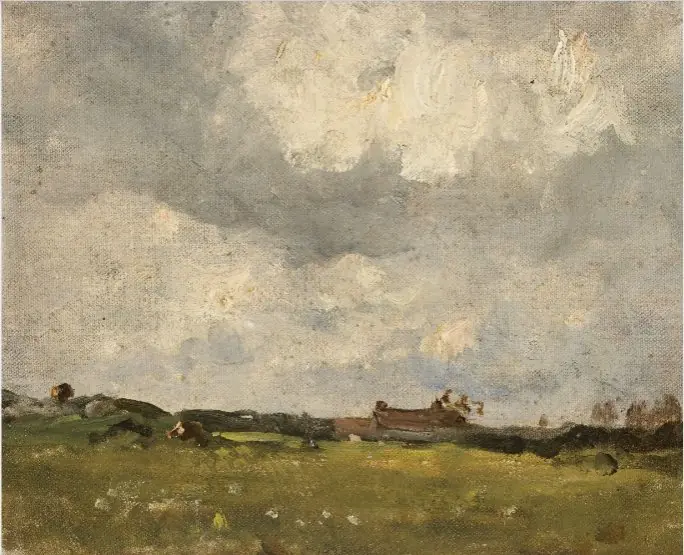
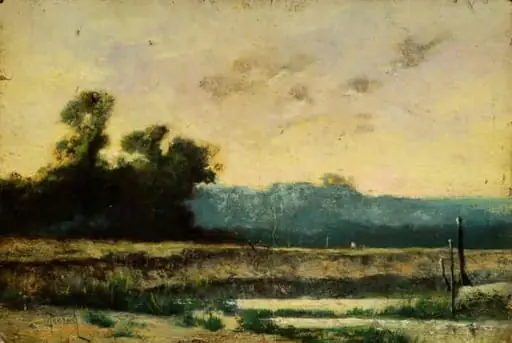
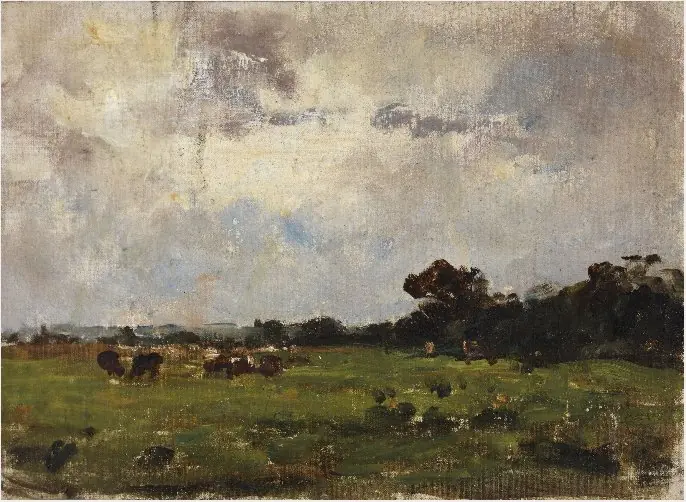
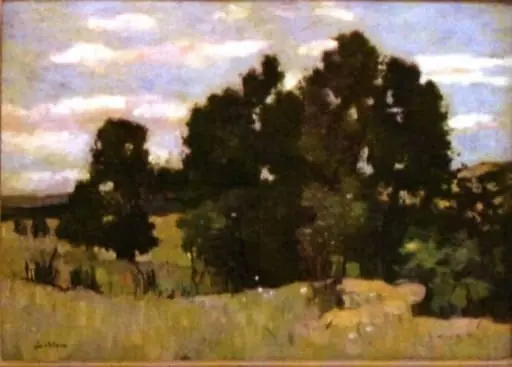
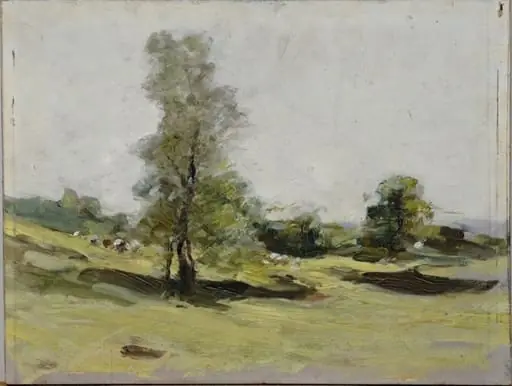
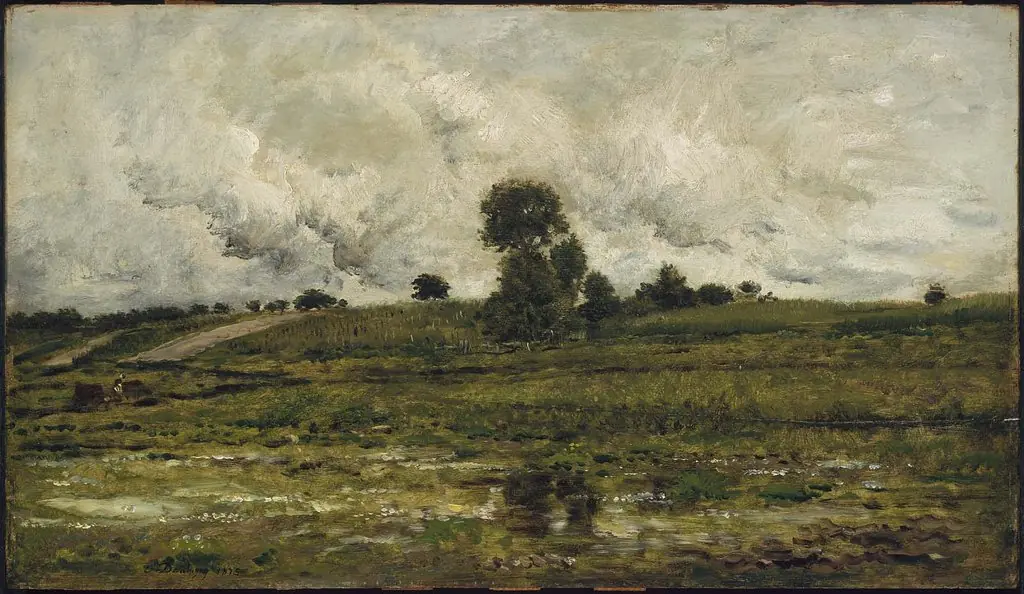
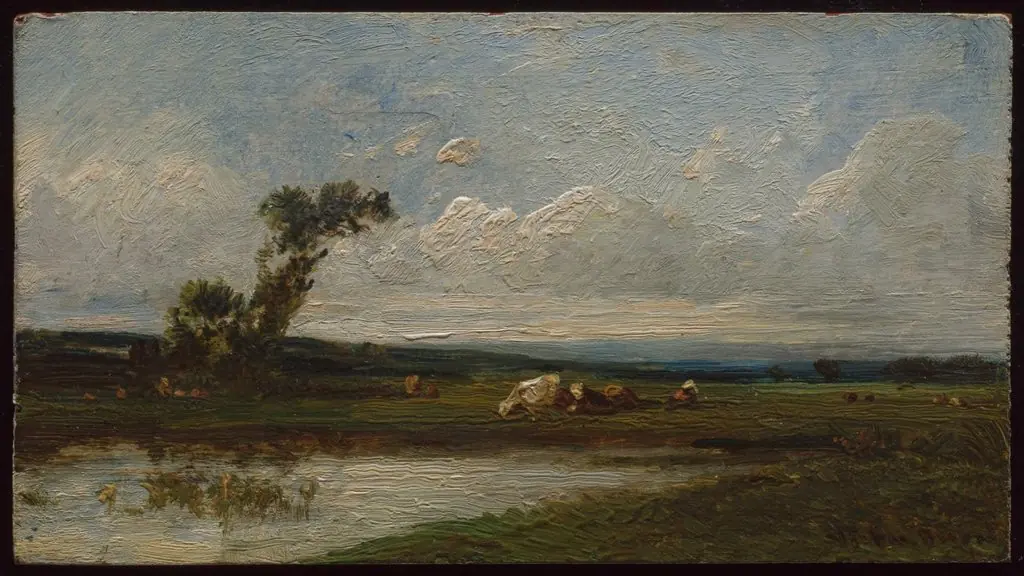
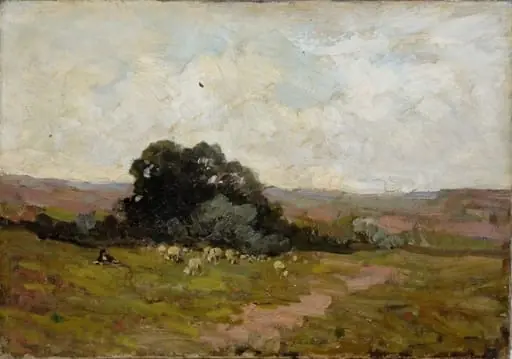
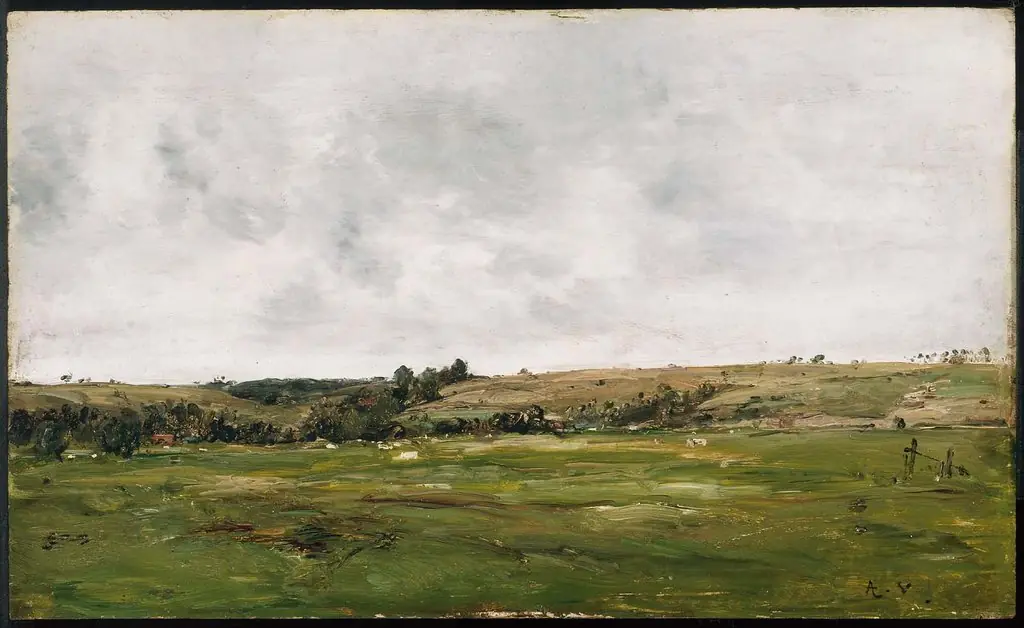
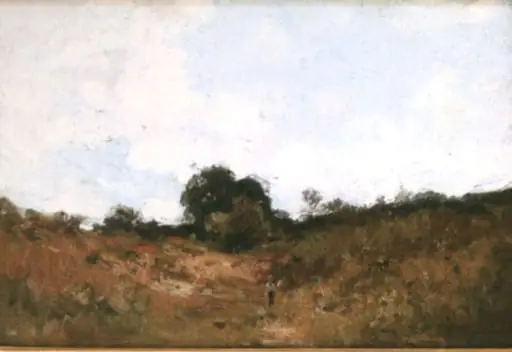
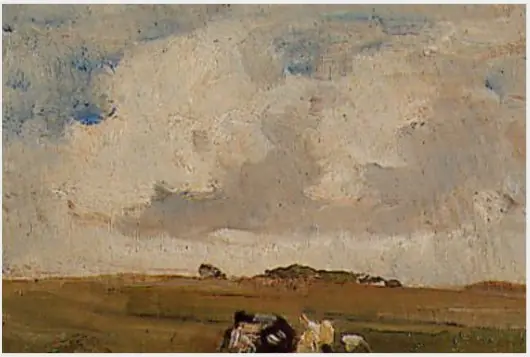
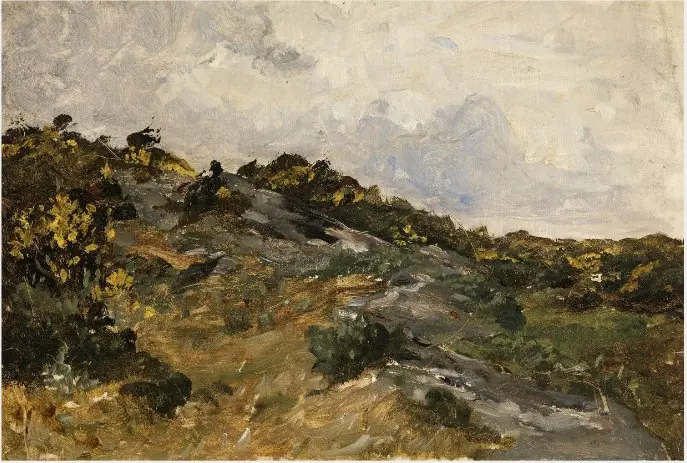
Hillside with Rocky Outcrops is an oil painting by the Barbizon school artist Constant Troyon. It dates from 1850 and is held in the collection of the Brooklyn Museum.
About this work
Overview
Its subdued palette and textured brushwork reflect Troyon’s alignment with the Barbizon school’s focus on observed landscape rather than idealized composition.
Hillside with Rocky Outcrops is an oil painting dated around 1850 by the French artist Constant Troyon. It resides in the collection of the Brooklyn Museum. The work presents a quiet rural scene, emphasizing natural terrain over human activity. Its subdued palette and textured brushwork reflect Troyon’s alignment with the Barbizon school’s focus on observed landscape rather than idealized composition.
Subject & Meaning
The painting portrays a gentle hillside dotted with weathered rocks and patches of grass, extending toward a line of distant trees. No figures or structures interrupt the solitude of the terrain. The absence of human presence suggests an appreciation for nature’s quiet persistence, aligning with mid-19th century French artistic values that favored authenticity over romanticized pastoralism.
Technique & Style
Troyon applied oil paint with loose, deliberate strokes that build form through texture rather than fine detail. The surface reveals visible impasto in the grassy slopes and rocky surfaces, while the sky is rendered with softer, blended washes. Colors remain restrained—olive greens, earthy browns, and pale blues—creating a harmonious, understated atmosphere that prioritizes mood over spectacle.
History & Provenance
The painting entered the Brooklyn Museum’s collection in the early 20th century, likely through a private acquisition or donation. Its provenance prior to that is not well documented, though it aligns with Troyon’s output during his mature period in the 1840s–1860s, when he frequently exhibited landscapes at the Paris Salon and gained recognition among collectors of naturalistic art.
Context
Created during the height of the Barbizon movement, the work reflects a broader shift in French art toward direct observation of rural environments. Artists like Troyon rejected academic idealism, instead seeking truth in unadorned nature. This painting shares affinities with the works of Corot and Daubigny, who also emphasized atmospheric tone and the dignity of ordinary landscapes.
Legacy
Though less widely known today than some of his contemporaries, Troyon’s landscapes contributed to the legitimization of rural scenes as serious artistic subjects. Hillside with Rocky Outcrops exemplifies his quiet, persistent approach to nature, influencing later generations of landscape painters who valued sincerity over grandeur.
Artist & collection

Artist
Constant Troyon (French pronunciation: ; August 28, 1810 – February 21, 1865) was a French painter of the Barbizon school.