Artwork
Apollo and Pythia
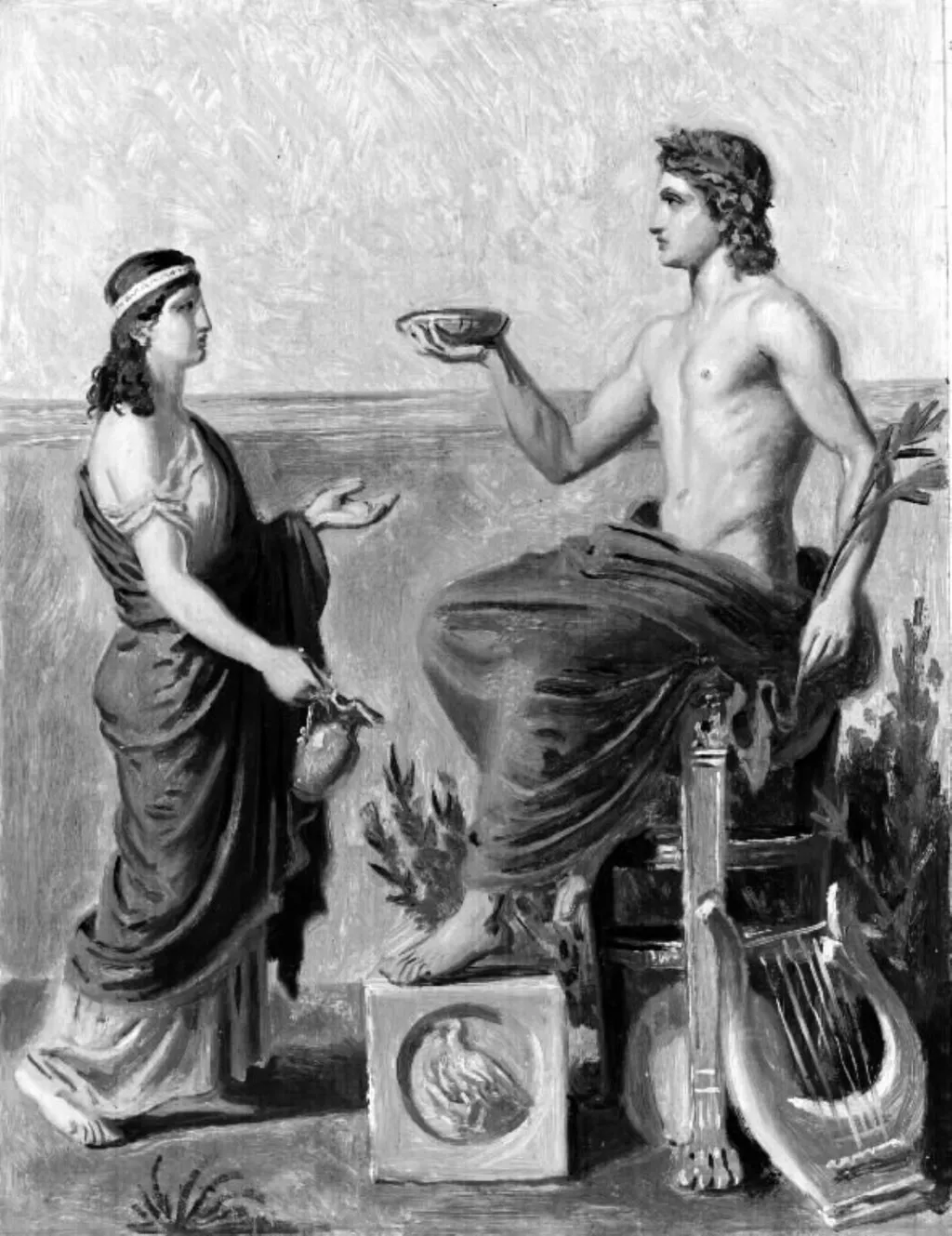
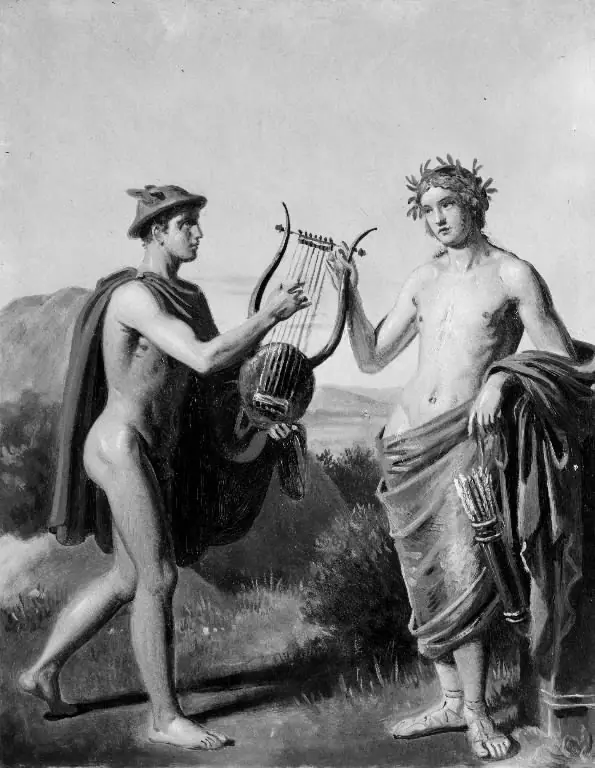
Apollo and Pythia is an unspecified painting by the Realist artist Constantin Hansen. It dates from 1849 and is held in the collection of the Statens Museum for Kunst.
About this work
Overview
In 1849, Danish painter Constantin Hansen produced *Apollo and Pythia*, a canvas that merges mythological narrative with the realist sensibility of his era. The work is part of the Statens Museum for Kunst’s collection and exemplifies Hansen’s engagement with classical subjects during Denmark’s Golden Age of Painting.
Subject & Meaning
The composition presents the Greek god Apollo seated beside a lyre, offering a bowl, while the priestess of Delphi, the Pythia, stands opposite him holding a small vessel. The encounter alludes to the ancient ritual of divination, suggesting a moment of communication between deity and oracle.
Technique & Style
Rendered with a restrained palette, the painting employs a soft, muted background that allows the richer hues of the figures’ robes to dominate. Hansen’s handling of light and shadow hints at chiaroscuro, while the formal arrangement of the figures reflects a classical approach to composition.
History & Provenance
A pupil of art historian Niels Laurits Høyen, Hansen was encouraged to revive national historic painting, though this piece reaches beyond Danish themes to universal myth. Since its creation, the canvas has remained in Denmark, entering the holdings of the National Gallery of Denmark (Statens Museum for Kunst).
Artist & collection
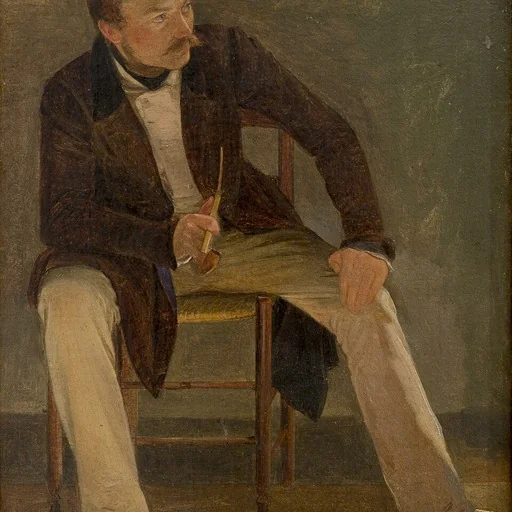
Artist
Carl Christian Constantin Hansen (Constantin Hansen) (3 November 1804 – 29 March 1880) was one of the painters associated with the Golden Age of Danish Painting.