Artwork
Brighton Sands
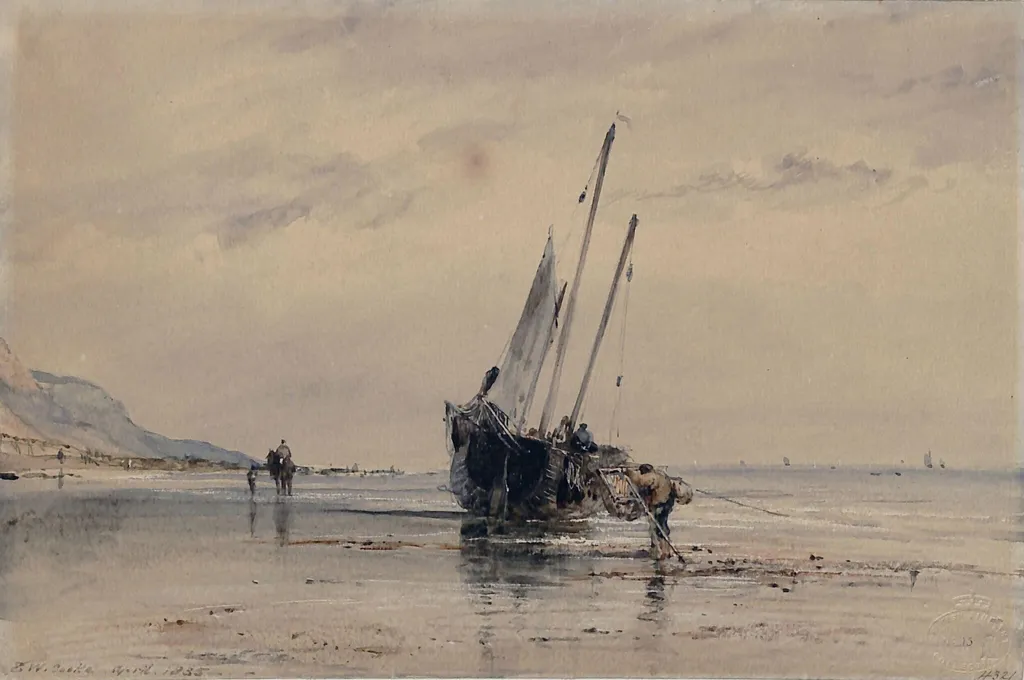
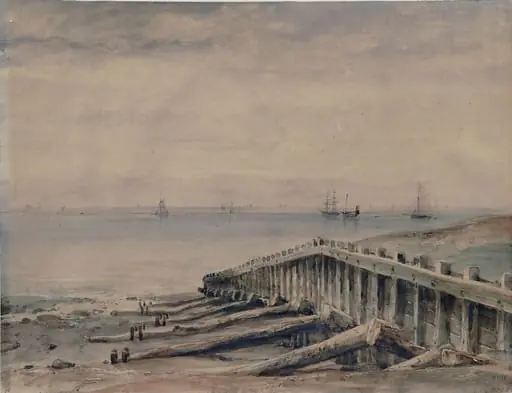
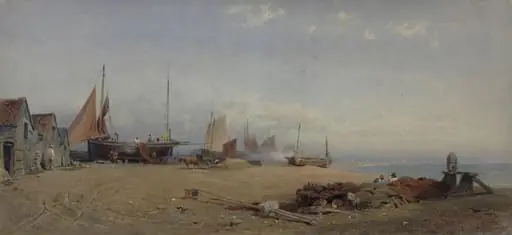
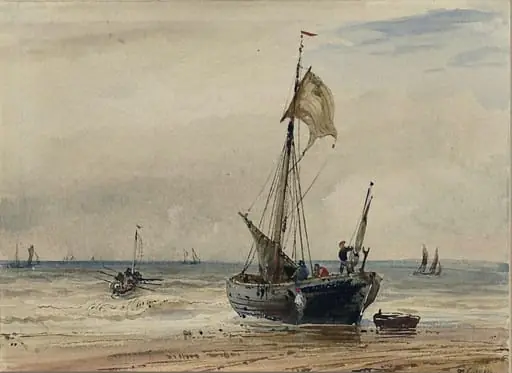
Brighton Sands is a watercolor work on paper by Edward William RA FRS FSA Cooke. It dates from 1850 and is held in the collection of the Victoria and Albert Museum. Edward William Cooke created this watercolor around 1850, capturing a quiet coastal scene at Brighton.
About this work
Overview
The piece reflects the 19th-century British tradition of observational watercolor painting, valued for its immediacy and sensitivity to natural light.
Edward William Cooke created this watercolor around 1850, capturing a quiet coastal scene at Brighton. The work is executed in transparent washes, emphasizing atmosphere over detail. It resides in the Victoria and Albert Museum’s collection, where it represents the artist’s interest in marine and landscape subjects. The piece reflects the 19th-century British tradition of observational watercolor painting, valued for its immediacy and sensitivity to natural light.
Subject & Meaning
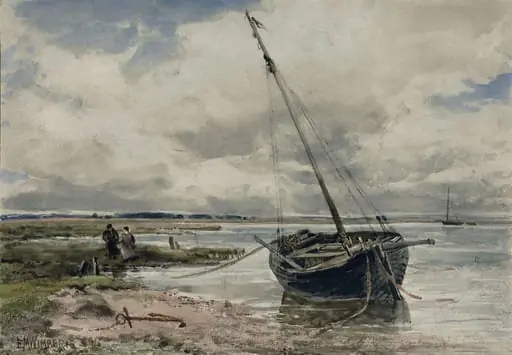
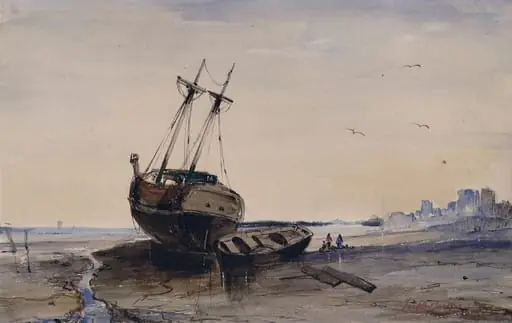
The painting depicts a beached boat on a damp shore, its sails lowered and lines slack, suggesting a pause in activity. Two figures, one accompanied by a horse, move along the distant shoreline. The stillness of the scene conveys a sense of solitude and temporal suspension. No dramatic event is portrayed; instead, the focus lies in the quiet rhythm of coastal life, observed with restrained empathy.
Technique & Style
Cooke employed loose, fluid brushwork and diluted pigments to suggest the play of light across wet sand and water. The sky and hills are rendered with soft, blurred edges, enhancing the hazy quality of the atmosphere. Delicate washes define the boat’s form without rigid outlines, while the absence of sharp detail invites the viewer to perceive the scene as a fleeting impression rather than a fixed record.
History & Provenance
The painting entered the Victoria and Albert Museum’s collection in the 19th century, likely through acquisition or donation. Cooke, a respected Royal Academician and marine artist, produced numerous watercolors of coastal scenes during this period. While the exact provenance prior to museum acquisition is not documented, its presence in the collection aligns with the institution’s broader commitment to preserving British watercolor traditions.
Context
Created during a period when watercolor was gaining recognition as a serious medium, Cooke’s work reflects the influence of the Norwich School and the broader British watercolor movement. Artists of this era favored direct observation of nature, often working en plein air. Brighton, as a popular seaside resort, offered accessible subjects for artists seeking to capture the interplay of light, sea, and land.
Legacy
Cooke’s watercolors, including this one, contributed to the elevation of landscape and marine subjects in British art. His technical precision and sensitivity to atmospheric conditions influenced later generations of watercolorists. Though not widely exhibited today, the work remains a representative example of mid-19th-century observational painting, preserved as part of the V&A’s historical collection.
Own this work as a print
Artist & collection
Artist
Edward William RA FRS FSA Cooke
This watercolor artist worked in 19th-century Britain, painting coastal scenes and everyday details.