Artwork
Adam Babcock
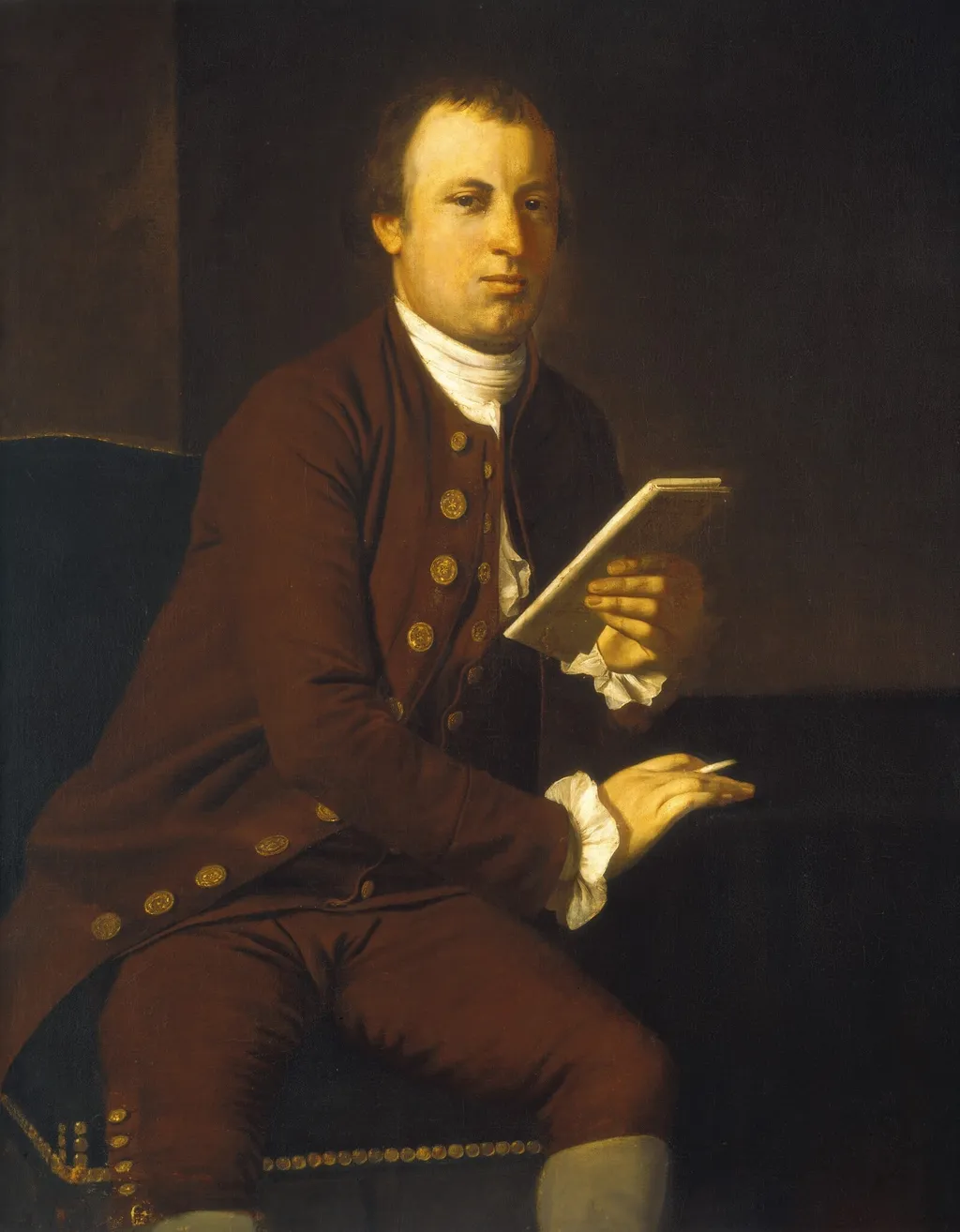
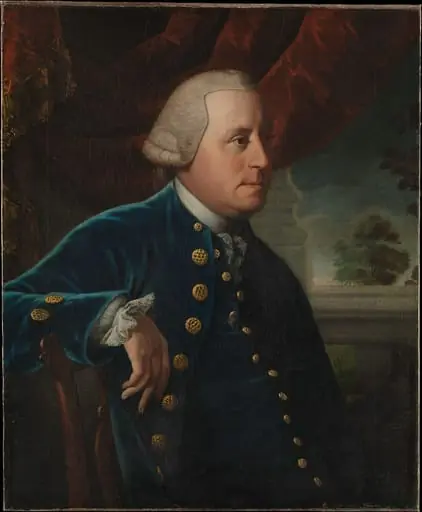
Adam Babcock is an oil painting by the Rococo painting artist John Singleton Copley. It dates from 1774 and is held in the collection of the National Gallery of Art.
About this work
Overview
The composition utilizes a dark, neutral background to isolate the figure and emphasize the textures of the fabric and the subject's thoughtful expression.
Painted in 1774 by John Singleton Copley, 'Adam Babcock' is a half-length portrait of the New Haven merchant and lawyer seated in an armchair. The subject is depicted in a moment of intellectual engagement, holding a book in his right hand and a quill pen in his left, signaling his profession and literacy. Copley renders Babcock in contemporary 18th-century attire, consisting of a brown coat with gold buttons, a white shirt, and brown breeches. The composition utilizes a dark, neutral background to isolate the figure and emphasize the textures of the fabric and the subject's thoughtful expression. Created shortly before Copley's permanent departure for Europe, this work exemplifies the artist's mature colonial style, characterized by precise realism and a psychological depth that elevates the American merchant class. The painting stands as a significant example of Copley's portraiture from the eve of the American Revolution, capturing the dignity and status of his sitter through meticulous attention to detail and lighting.
Subject & Meaning
Babcock is shown holding a book in his right hand and a quill in his left, suggesting scholarly or literary activity. His serious expression and poised posture convey a mood of thoughtful concentration, typical of portraiture intended to reflect personal virtue and intellectual engagement.
Technique & Style
Copley employs chiaroscuro, contrasting bright illumination on the figure with a deep, shadowed background. This use of light models the textures of the brown coat with gold buttons, the white shirt, and the surrounding drapery, giving the painting a three‑dimensional quality and emphasizing the sitter’s features.
History & Provenance
Created in the mid‑1770s, the work is an example of Copley’s mature portraiture during his American period before his relocation to England. The painting’s provenance traces through private collections, eventually entering a museum holding of colonial American art.
Context
The portrait reflects the 18th‑century American emphasis on education and civic virtue, aligning with contemporary ideals of the Enlightenment. Copley’s attention to detail in costume and accessories situates Babcock within the social milieu of a prosperous, literate class.
Own this work as a print
Artist & collection

Artist
John Singleton Copley (July 3, 1738 – September 9, 1815) was an American-born British painter active in both the Thirteen Colonies and England.