Artwork
Elizabeth Gray Otis (Mrs. Samuel Alleyne Otis)
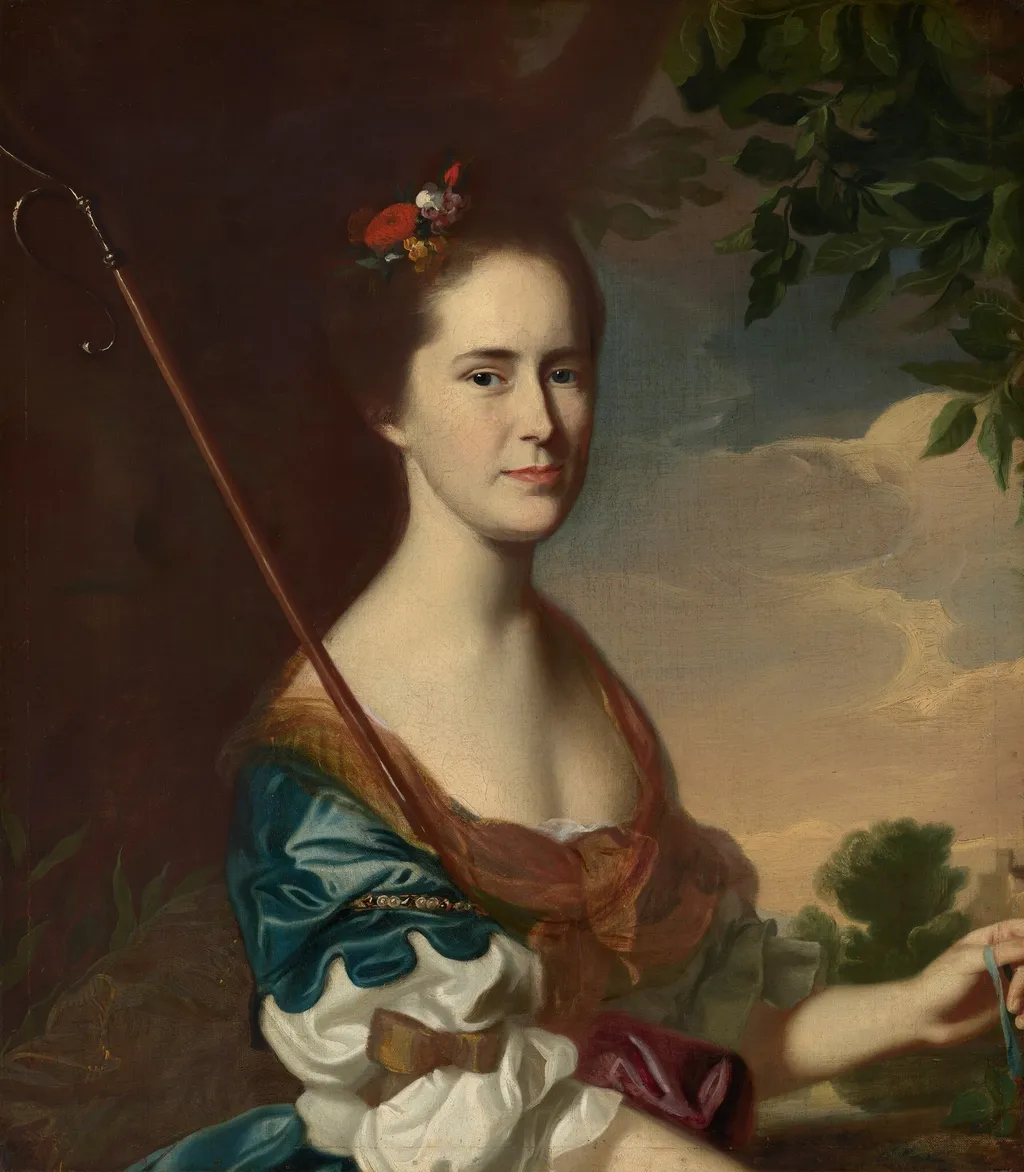
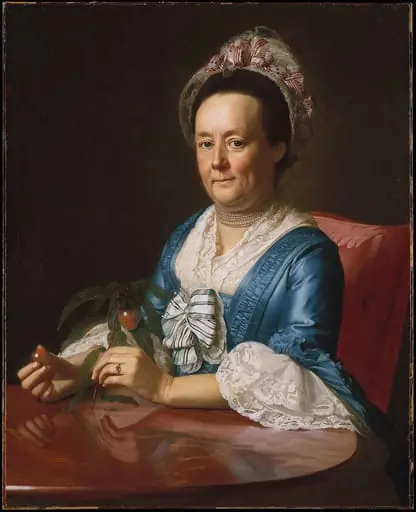
Elizabeth Gray Otis (Mrs. Samuel Alleyne Otis) is an oil painting by the Rococo painting artist John Singleton Copley. It dates from 1764 and is held in the collection of the National Gallery of Art.
About this work
Overview
The work exemplifies Copley's mature colonial style, characterized by precise realism and a sophisticated handling of light and texture.
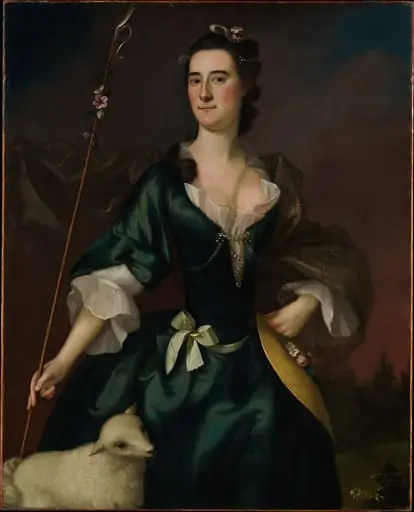
Painted in 1764 by John Singleton Copley, this oil on canvas portrait depicts Elizabeth Gray Otis, the wife of Samuel Alleyne Otis. The work exemplifies Copley's mature colonial style, characterized by precise realism and a sophisticated handling of light and texture. The sitter is presented in a three-quarter length format, seated outdoors against a soft, atmospheric landscape that suggests a natural setting rather than a formal interior. She wears an elegant blue and white gown with a contrasting brown bodice, accessorized with a red flower arrangement in her hair. A distinctive feature of the composition is the long cane or stick resting against her shoulder, a prop that adds a sense of casual ease and aristocratic leisure to the pose. Created during the height of Copley's career in Boston before his departure for Europe, the painting reflects the aspirations of the colonial merchant class, blending English portraiture traditions with a distinct American directness. The work remains a significant example of mid-18th-century American portraiture, capturing both the individual likeness of the sitter and the cultural milieu of pre-Revolutionary Boston.
Subject & Meaning
The painting focuses on Elizabeth Gray Otis, portrayed seated with a cane resting on her shoulder. Her attire—a blue and white gown with a brown bodice—along with a red floral arrangement in her hair, conveys a sense of refined domestic elegance, reflecting the social status and genteel identity of a colonial woman.
Technique & Style
Copley employs a delicate handling of oil to render the textures of fabric and foliage, achieving a subtle interplay of light and shadow. The naturalistic rendering of the dress’s folds and the nuanced coloration of the background demonstrate his early mastery of portraiture and his attention to material detail.
History & Provenance
Created in the early 1760s, the portrait likely originated as a private commission for the Otis family. It has remained within the context of American colonial portraiture, passing through various collections before being identified as a work by Copley, a leading figure in pre‑Revolutionary American art.
Context
The work belongs to a period when Copley was establishing his reputation in Boston, producing portraits for the colonial elite. The inclusion of outdoor elements and the sitter’s relaxed pose mark a departure from the more formal, indoor settings typical of earlier colonial portraiture.
Legacy
As an early example of Copley’s portraiture, the painting contributes to understanding the development of American artistic identity. It illustrates the blending of European portrait conventions with emerging colonial sensibilities, offering insight into the visual culture of the era.
Own this work as a print
Artist & collection

Artist
John Singleton Copley (July 3, 1738 – September 9, 1815) was an American-born British painter active in both the Thirteen Colonies and England.