Artwork
Jane Browne
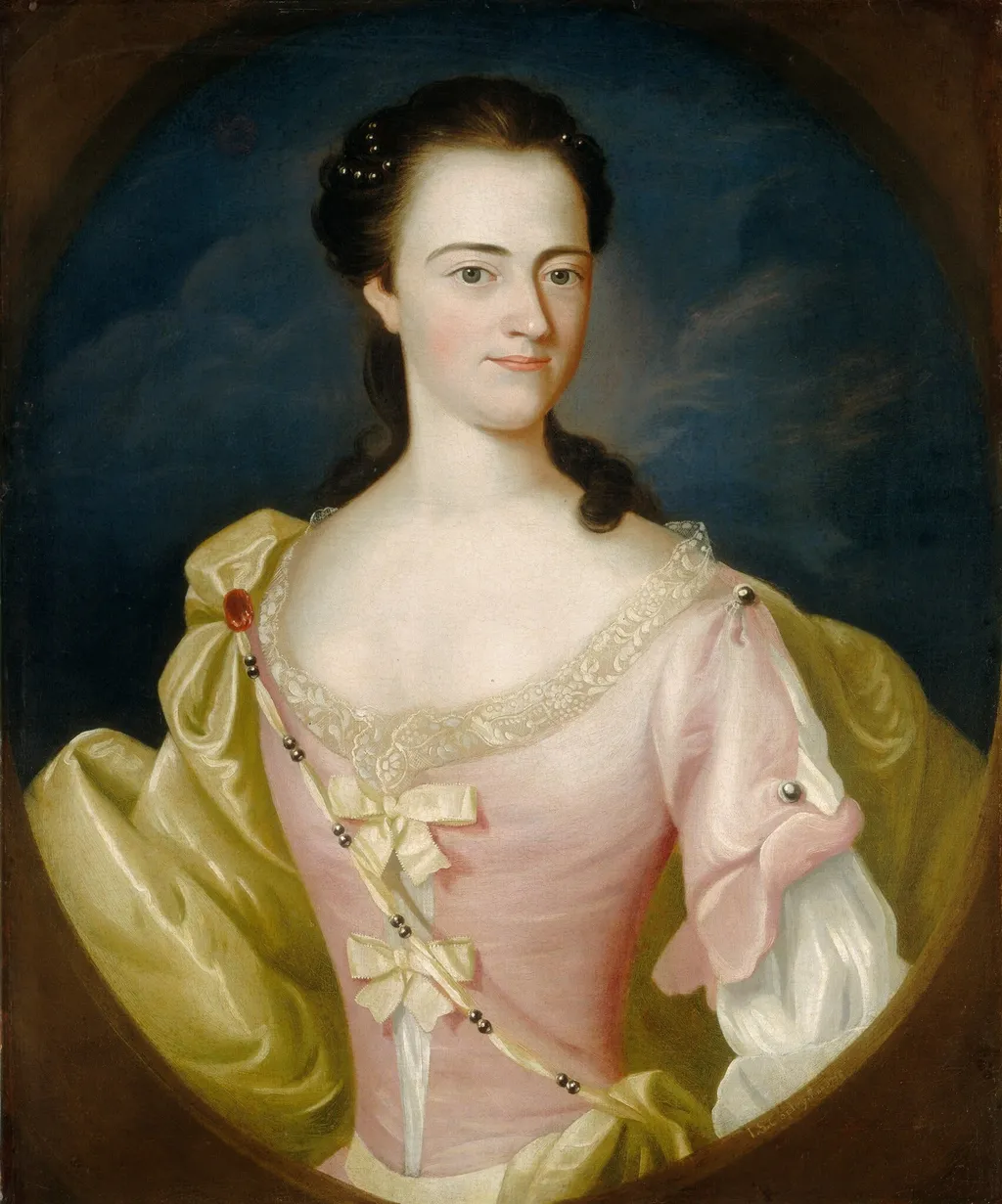
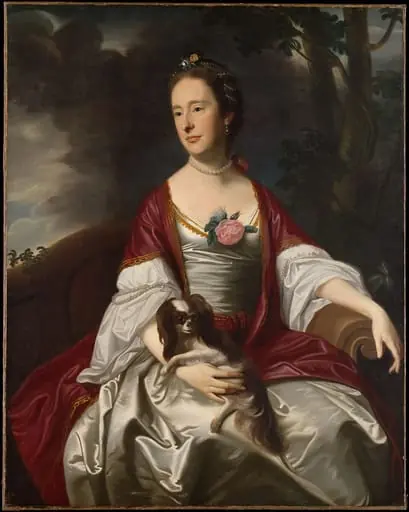
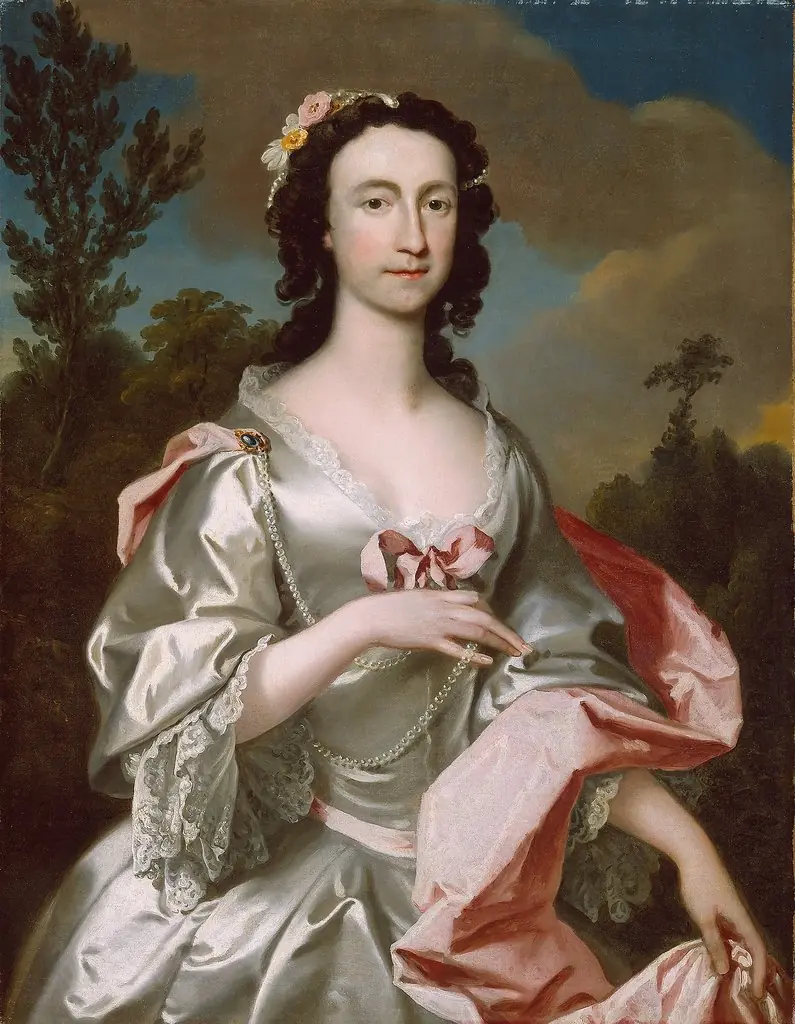
Jane Browne is an oil painting by the Rococo painting artist John Singleton Copley. It dates from 1756 and is held in the collection of the National Gallery of Art.
About this work
Overview
The subject, identified as Jane Browne, is depicted with dark hair and wears a pink dress featuring a low neckline and voluminous, puffy sleeves.
John Singleton Copley's 'Jane Browne,' painted in 1756, is a half-length portrait of a young woman seated against a dark, neutral background. The subject, identified as Jane Browne, is depicted with dark hair and wears a pink dress featuring a low neckline and voluminous, puffy sleeves. A yellow shawl or cape is draped over her shoulders, providing a warm contrast to the pink fabric. A decorative sash crosses her torso diagonally, tied in a bow at the waist, accentuating her figure. Executed in oil on canvas, the work demonstrates Copley's early mastery of texture and light, particularly in the rendering of the silk dress and the soft folds of the shawl. Created when the artist was only eighteen, this portrait belongs to a formative period in his Boston career, preceding his departure for Europe. It exemplifies the colonial American style of portraiture, balancing formal dignity with a naturalistic approach to the sitter's presence. The painting stands as a significant example of Copley's ability to capture the status and character of his patrons through precise detail and subtle psychological engagement.
Subject & Meaning
The work records Jane Browne, later known as Livermore, a woman of the New England gentry. Her attire—a low‑cut gown with puffed sleeves, a decorative sash tied with a bow, and a contrasting shawl—signals both her social standing and contemporary fashions.
Technique & Style
Copley employs a smooth, luminous oil technique, rendering flesh tones with subtle chiaroscuro. The brushwork is refined, especially in the delicate folds of the dress and the sheen of the shawl, while the background remains muted to focus attention on the sitter.
History & Provenance
Executed in 1756, the portrait was likely commissioned by the Browne family. It has remained in private collections before entering a museum context, where it serves as an example of Copley’s early American portraiture.
Context
Created during Copley’s Boston period, the painting reflects the colonial elite’s desire for European‑style portraiture. The composition follows conventions of the time, with the sitter positioned centrally, hands concealed, and clothing used to convey status.
Own this work as a print
Artist & collection

Artist
John Singleton Copley (July 3, 1738 – September 9, 1815) was an American-born British painter active in both the Thirteen Colonies and England.