Artwork
Hügellandschaft mit Hirtenidyll
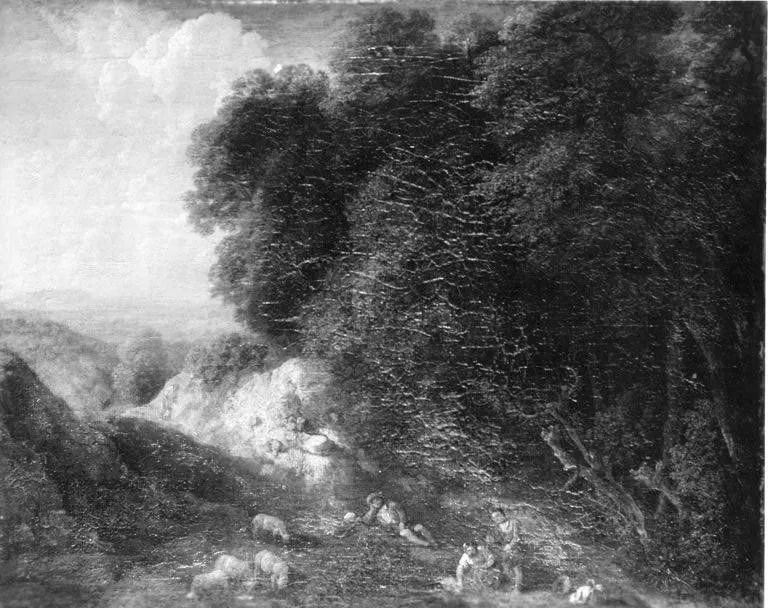
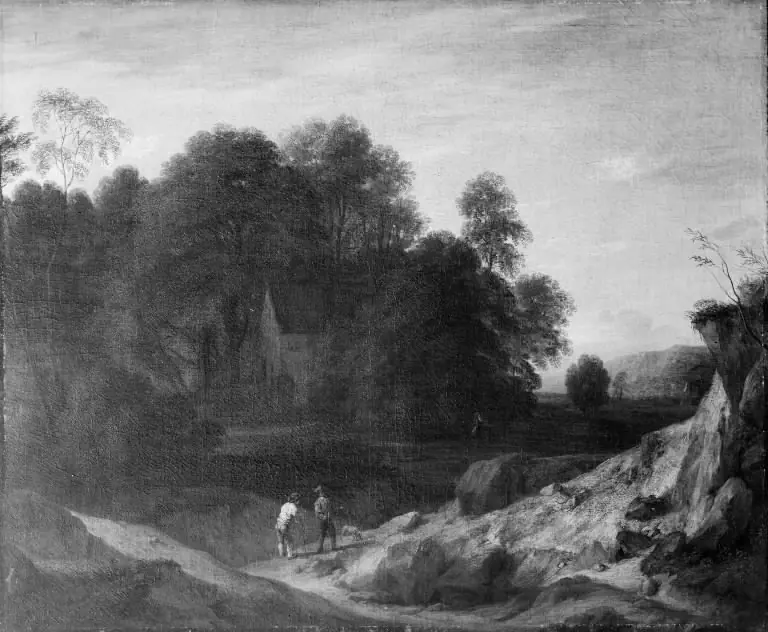
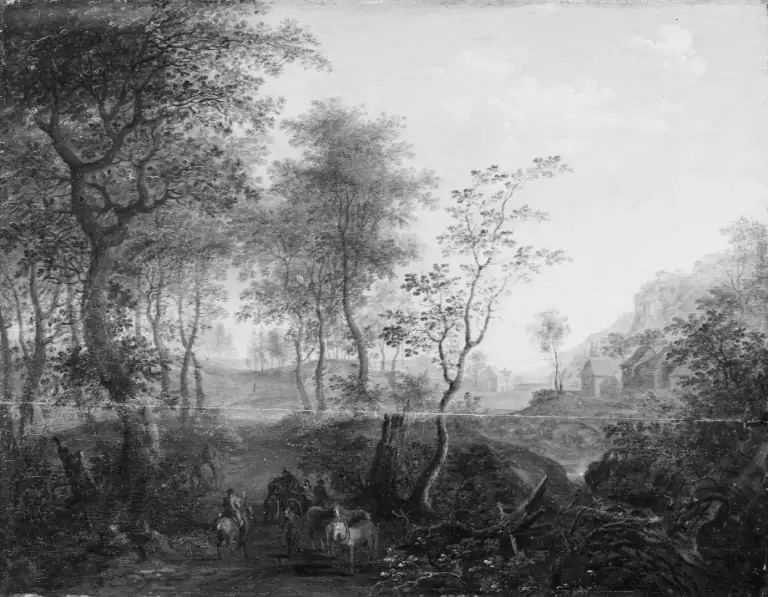
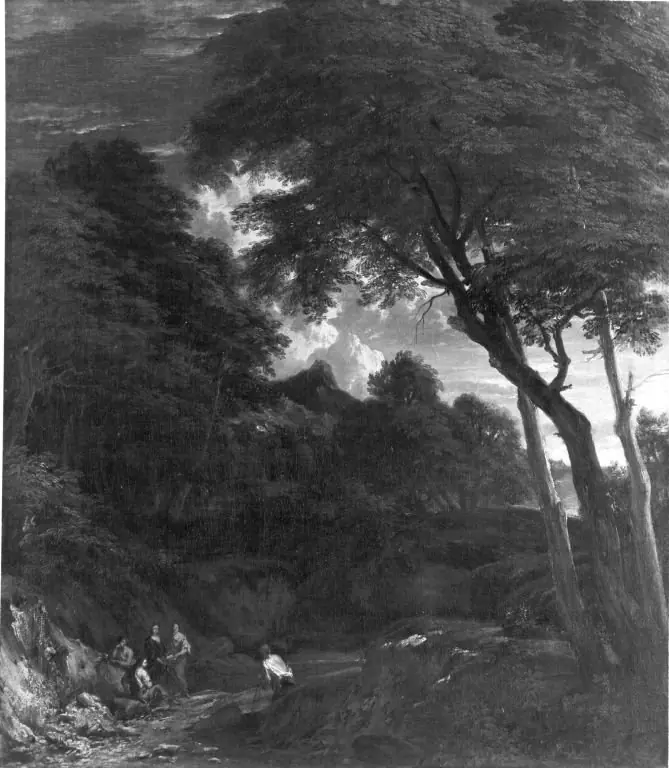
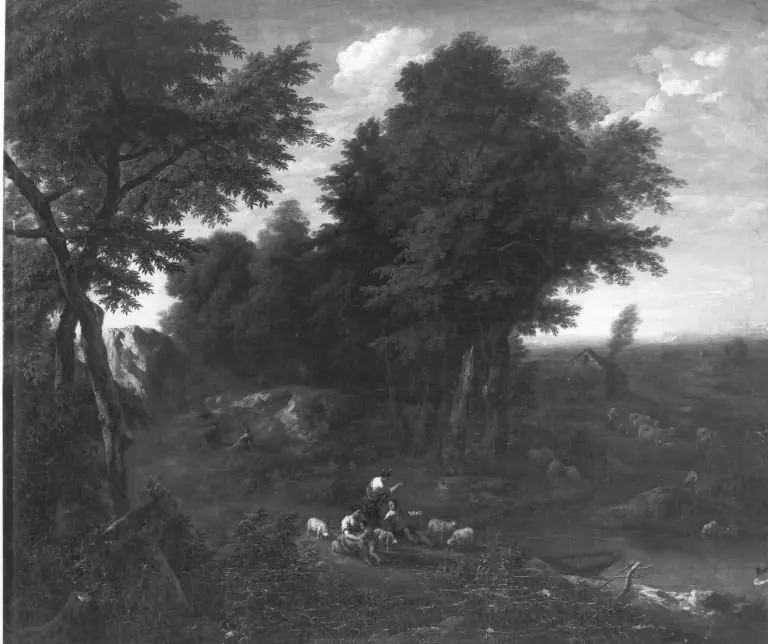
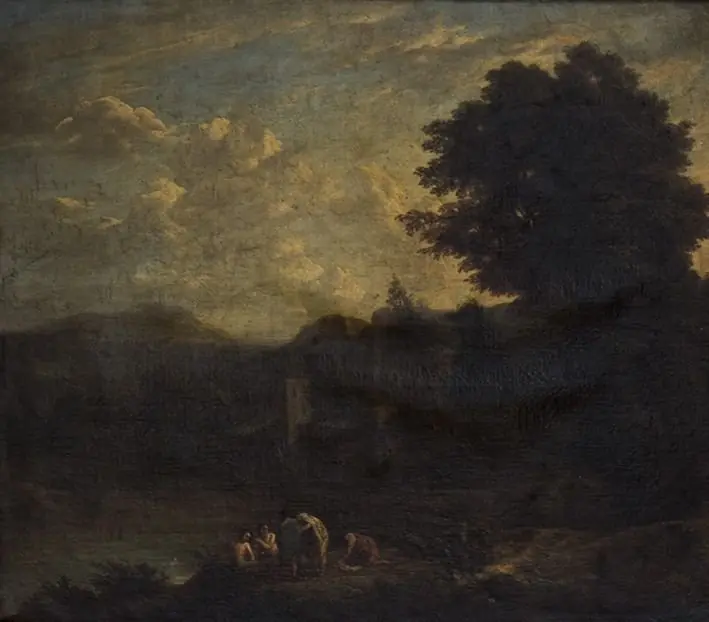
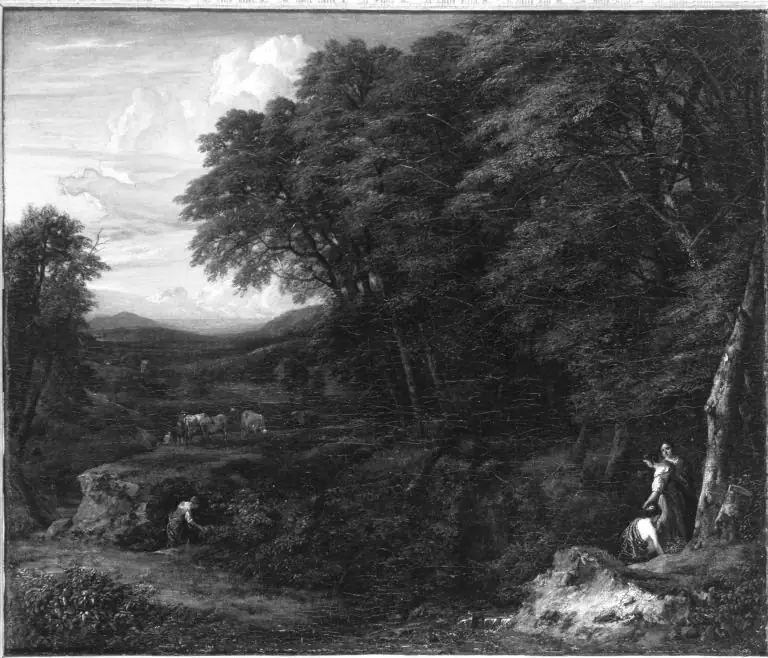
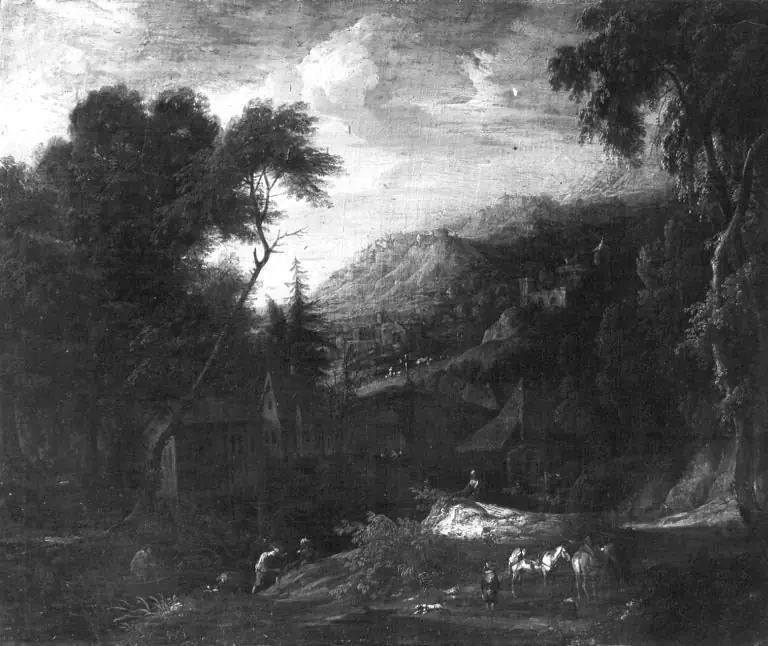
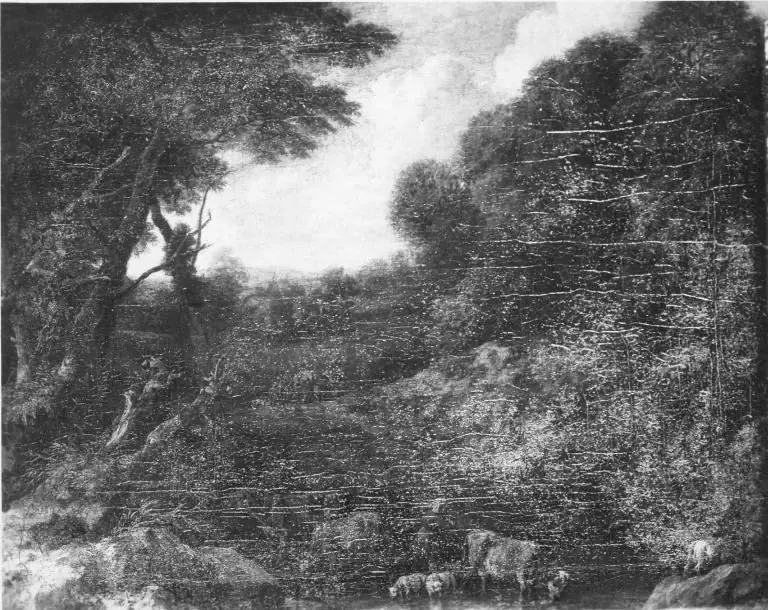
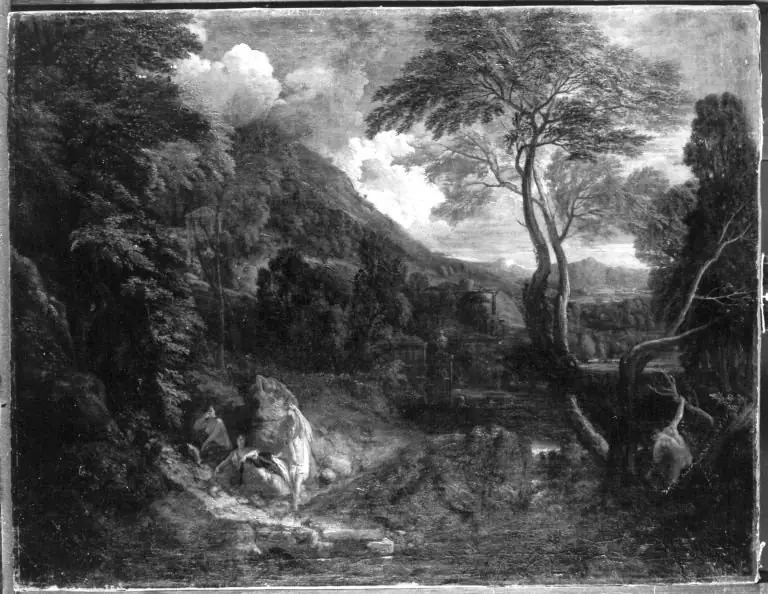
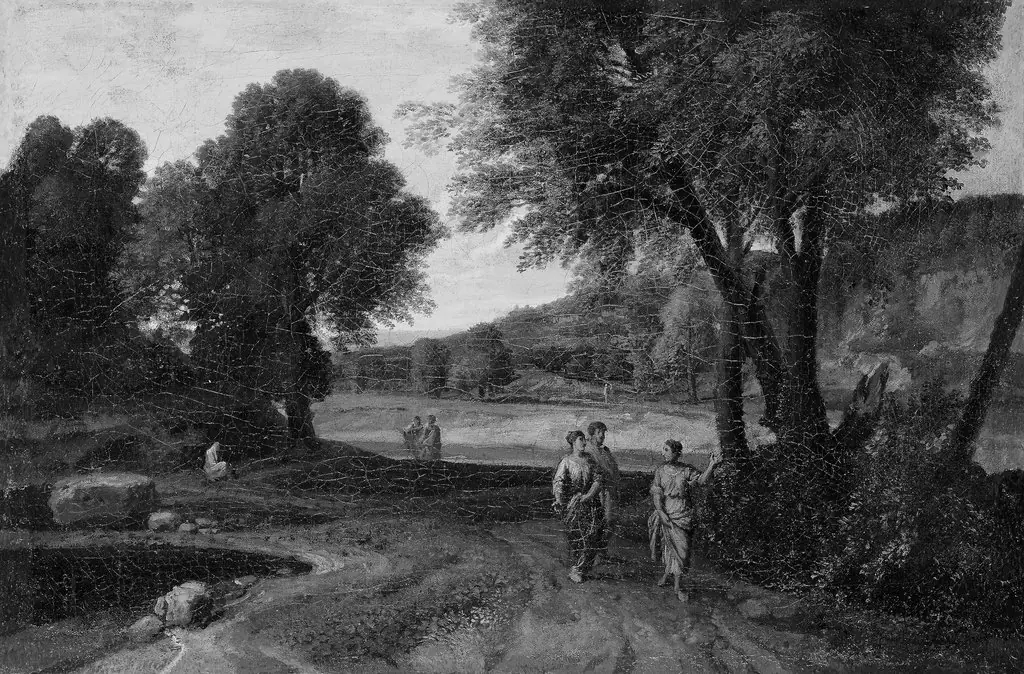
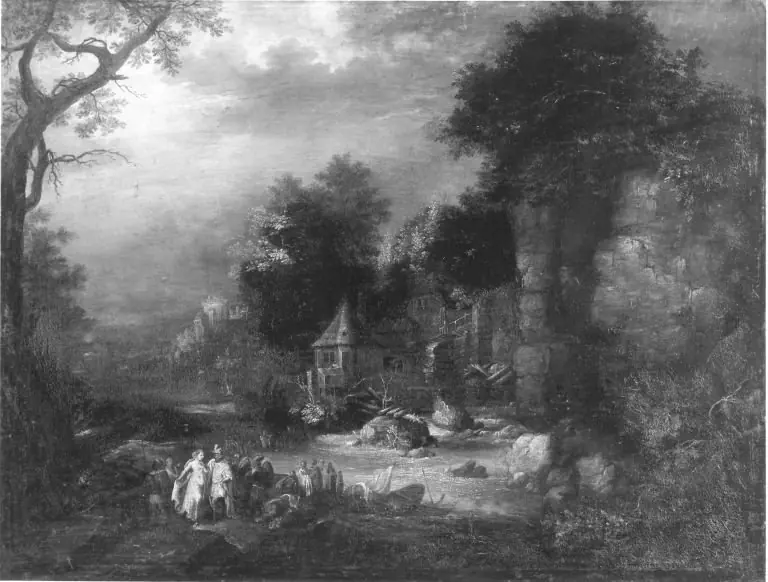
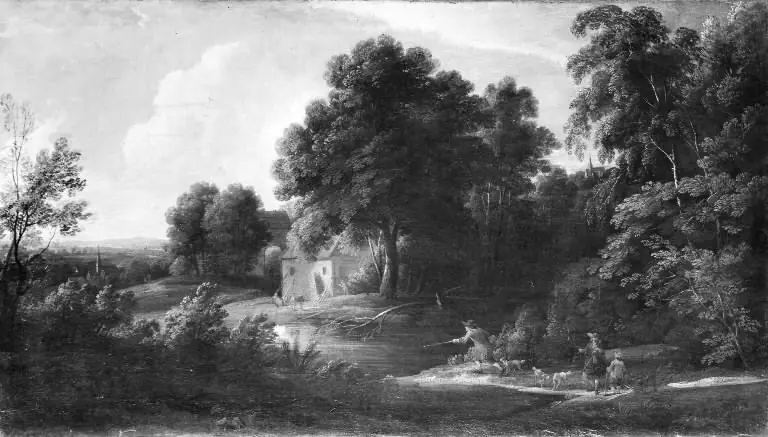
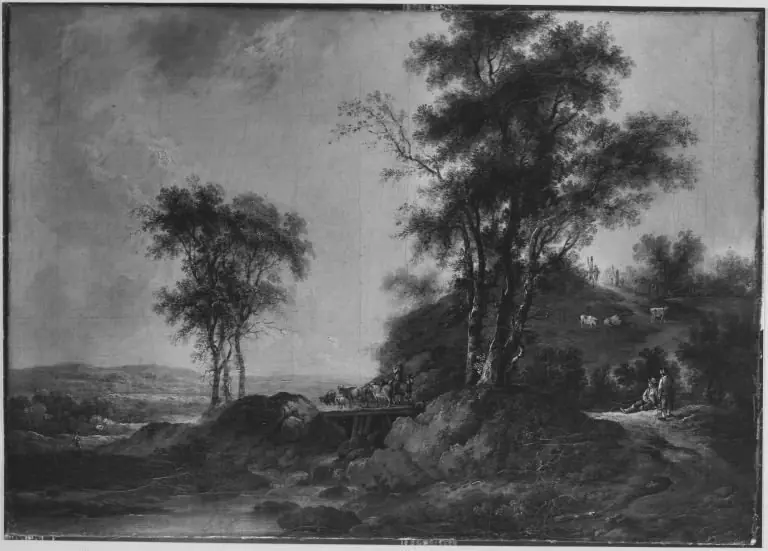
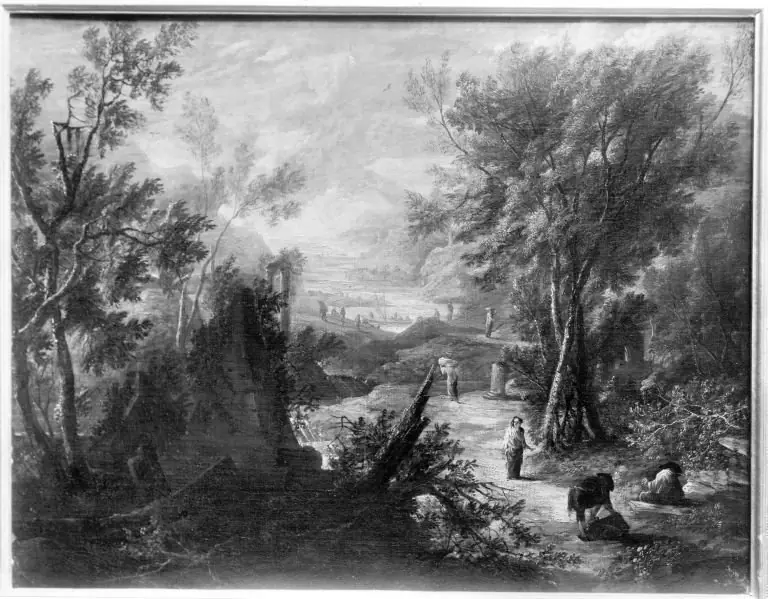
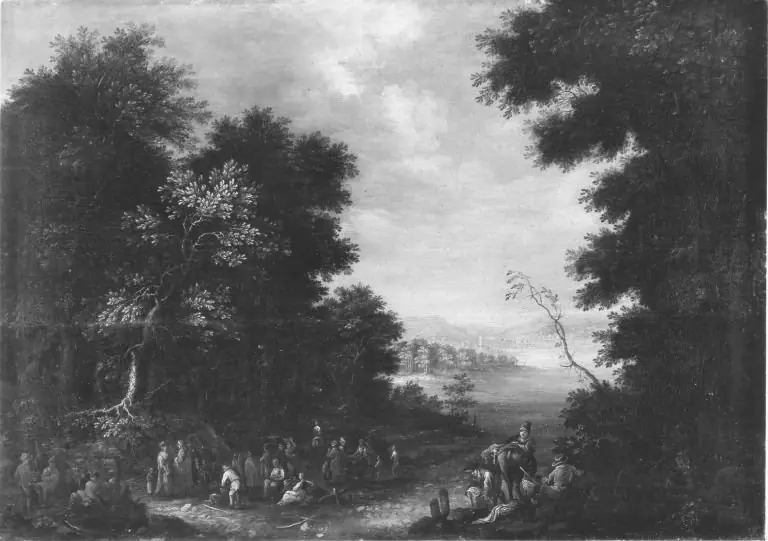
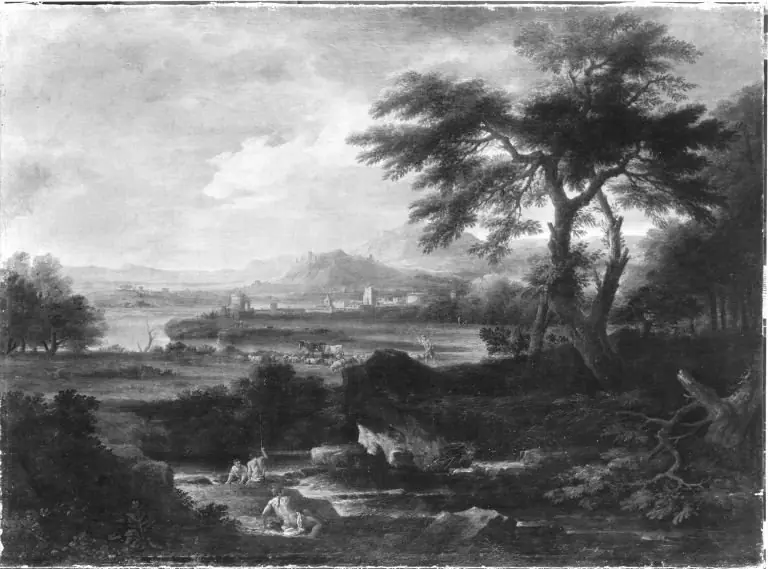
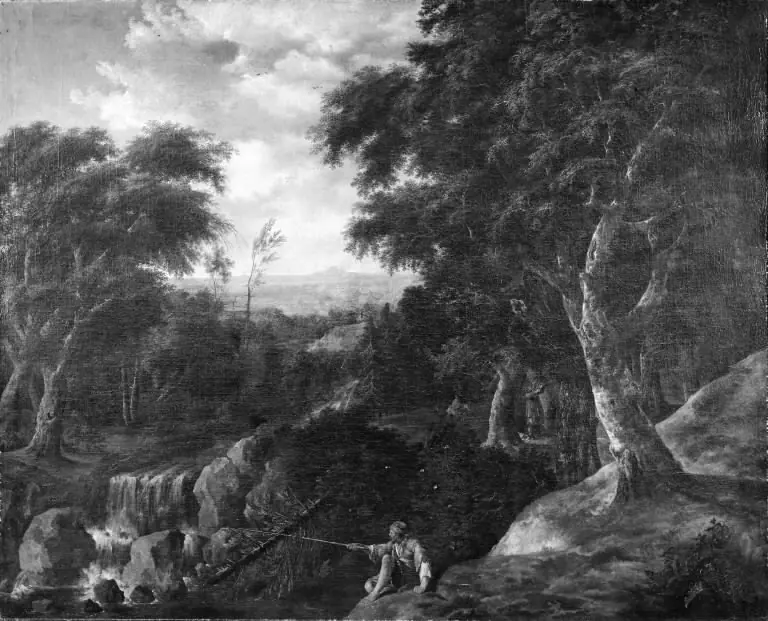
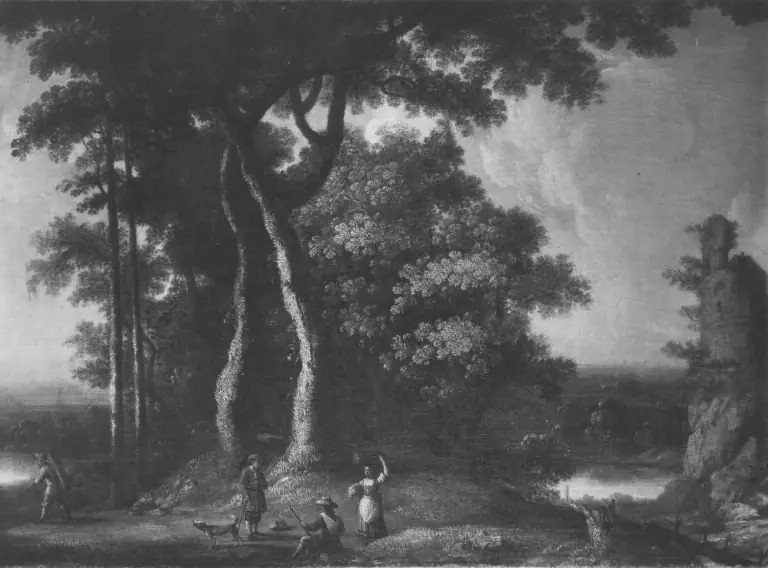
Hügellandschaft mit Hirtenidyll is an unspecified painting by the Dutch Golden Age artist Cornelis Huysmans. It dates from 1694 and is held in the collection of the Bavarian State Painting Collections.
About this work
Overview
Painted in 1694 by the Flemish artist Cornelis Huysmans, this landscape depicts a tranquil rural scene set against a distant mountain range.
Painted in 1694 by the Flemish artist Cornelis Huysmans, this landscape depicts a tranquil rural scene set against a distant mountain range. Though Flemish by origin, Huysmans adopted the Italianate style popular among Northern painters of the period, blending idealized natural forms with quiet human activity. The work is part of the Dutch Golden Age tradition, characterized by its attention to atmosphere and subtle tonal harmony, and is currently held in the Alte Pinakothek in Munich.
Subject & Meaning
The painting presents a pastoral idyll: shepherds and their animals rest in a wooded valley, engaged in unremarkable daily tasks. There is no narrative drama, only a sense of quiet continuity. The figures are small within the expansive landscape, suggesting harmony between human life and nature. This reflects a broader 17th-century ideal of the countryside as a place of peace and moral simplicity, influenced by classical pastoral poetry and the aesthetic of French and Flemish predecessors.
Technique & Style
Huysmans employed layered glazes and soft transitions between tones to evoke depth and atmospheric perspective. The sky is rendered in muted grays, gradually yielding to greens and browns in the foreground vegetation. Distant hills are painted with cooler, lighter hues to suggest recession, while the foreground retains richer detail and warmer tones. His brushwork is precise yet unobtrusive, favoring subtle modulation over dramatic contrast, a hallmark of his indebtedness to Poussin and d'Arthois.
History & Provenance
Created in 1694, the painting entered the collection of the Alte Pinakothek in Munich at an early date, likely through royal or aristocratic acquisition during the 18th century. Huysmans was active in Antwerp and Brussels, and his works were sought after by collectors interested in Italianate landscapes. While few records detail its immediate ownership, its presence in a major German collection by the 1800s confirms its recognized status among Northern European landscape traditions of the period.
Context
In the late 17th century, Flemish and Dutch painters increasingly turned to idealized landscapes that combined observed nature with classical composition. Huysmans’ work fits within this trend, responding to the popularity of Italianate scenery among Northern elites. Unlike Dutch realist landscapes, his scenes are not topographically specific but constructed as harmonious visions, reflecting contemporary tastes for order, serenity, and the pastoral ideal as a counterpoint to urban life.
Legacy
Huysmans’ landscapes, including this one, represent a transitional phase in Northern European painting—bridging the detailed realism of the Dutch Golden Age and the more stylized, romanticized views that would emerge in the 18th century. While not widely celebrated today, his works remain important for understanding how Italianate conventions were adapted in the Low Countries. The painting continues to serve as a reference for the evolution of landscape aesthetics in early modern Europe.
Artist & collection
Artist
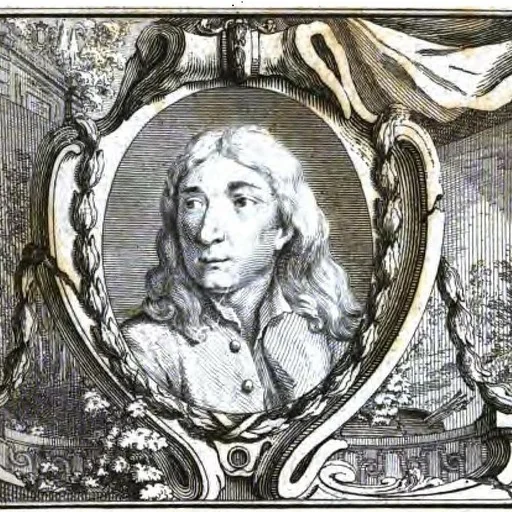
Cornelis Huysmans (baptized 2 April 1648 in Antwerp; died 1 June 1727 in Mechelen) was a Flemish landscape painter who was active in Antwerp, Brussels and Mechelen.