Artwork
The Poultry Seller
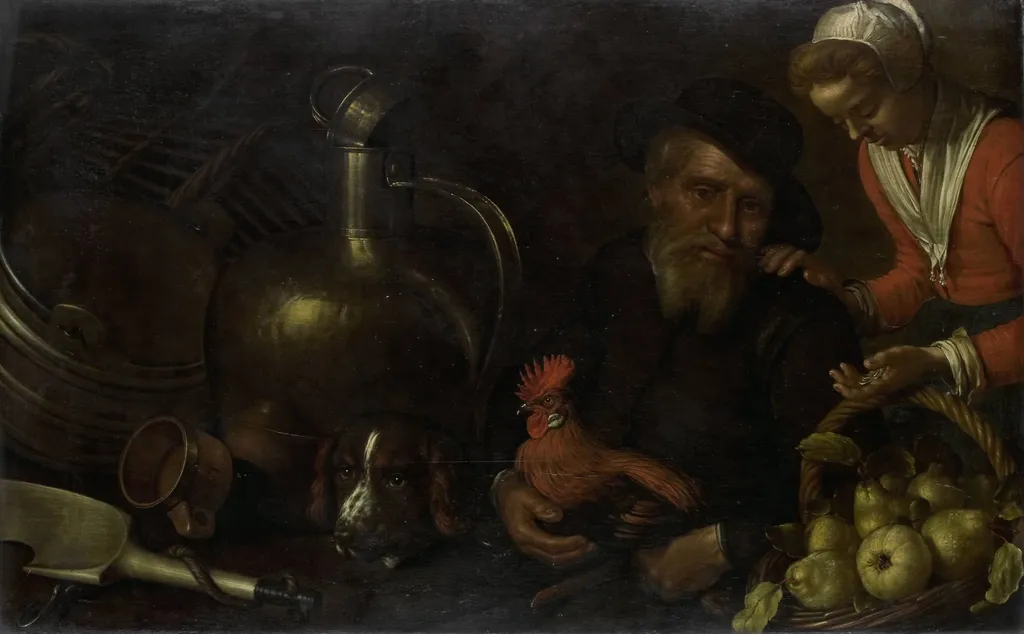
The Poultry Seller is an unspecified painting by the Dutch Golden Age artist Cornelis Jacobsz. Delff. It dates from 1632 and is held in the collection of the Rijksmuseum.
About this work
Overview
The work, titled The Poultry Seller, depicts a domestic market scene in which an elderly man cradles a chicken while a young woman extends a handful of coins toward him. A dog lies at the man’s feet, and surrounding objects include a copper milk pail, a wooden yoke, several baskets, and a bucket, with a basket of pears placed on the right side of the composition.
Subject & Meaning
The painting captures a moment of everyday commerce, emphasizing the interaction between seller and buyer. The juxtaposition of the aged vendor and the youthful purchaser may suggest a generational exchange, while the presence of domestic items such as the milk pail and yoke underscores the household context of the transaction.
Technique & Style
Rendered in the detailed realism characteristic of 17th‑century Dutch genre painting, the artist employs careful observation of texture: the sheen of copper, the feathered plumage of the chicken, and the wrinkles on the old man’s hands are all rendered with precise brushwork. The composition is organized around a central axis, with objects arranged to guide the viewer’s eye across the scene.
History & Provenance
The creator of The Poultry Seller remains unidentified, and the painting’s exact origins are not documented. Stylistic analysis places it within the Dutch Golden Age of the early 1600s, a period when genre scenes of market life were popular among artists and patrons.
Context
During the 17th century, Dutch society placed great value on depictions of ordinary life, reflecting both economic prosperity and a cultural interest in moralizing everyday activities. This work aligns with that tradition, offering a visual record of market practices, domestic tools, and the social roles of men and women in a bustling town environment.
Legacy
Although the artist’s name is lost, the painting contributes to the broader understanding of Dutch genre painting and its focus on realistic, narrative scenes. It continues to be cited as an example of how ordinary market interactions were elevated to subjects worthy of fine art in the early modern period.
Own this work as a print
Artist & collection