Artwork
Two young men preparing to go horseback riding
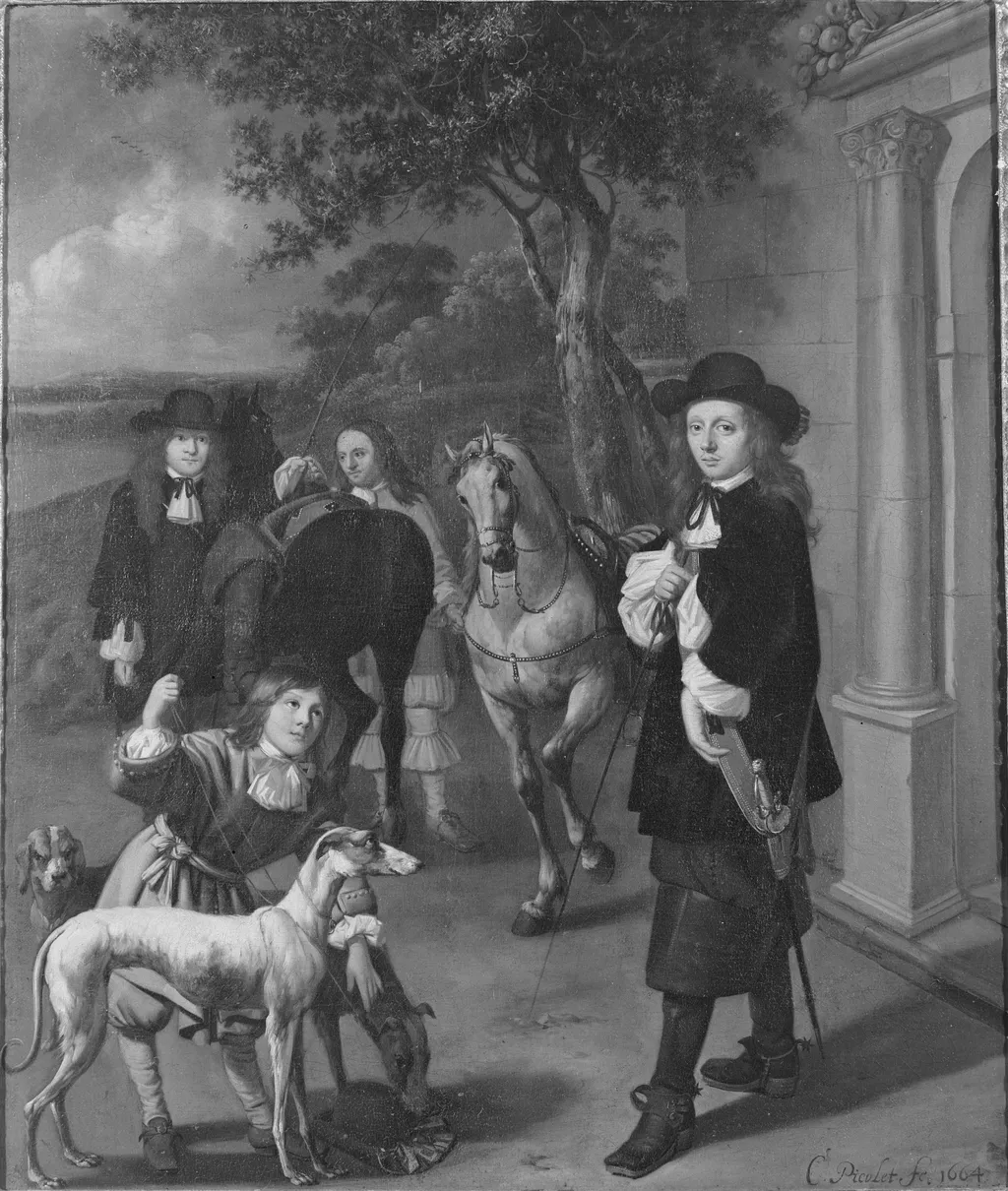
Two young men preparing to go horseback riding is an oil painting by the Dutch Golden Age artist Cornelis Picolet. It dates from 1664 and is held in the collection of the Rijksmuseum.
About this work
This painting depicts two young men preparing to go horseback riding, set against a backdrop of a landscape with a tree and a building.
This painting depicts two young men preparing to go horseback riding, set against a backdrop of a landscape with a tree and a building. The men are dressed in 17th-century attire, with one holding a sword and the other a horse's reins. A dog is also present in the scene.
The artist has used oil paint to create this work, which is held at the Rijksmuseum. The painting is dated 1664 and is attributed to Cornelis Picolet.
If you're interested in learning more about the artist behind this painting, you can look up Cornelis Picolet.
Overview
Cornelis Picolet’s 1664 oil painting, titled Two Young Men Preparing to Go Horseback Riding, presents a quiet moment before a ride. The work measures a modest size and is part of the Rijksmuseum’s collection, where it remains on display as an example of mid‑seventeenth‑century Dutch portraiture.
Subject & Meaning
The composition shows two youths in contemporary dress, one gripping a sword and the other a set of reins, poised for a ride. A small dog stands nearby, while a distant landscape with a solitary tree and a building frames the scene, suggesting a leisurely, perhaps aristocratic, preparation for equestrian activity.
Technique & Style
Executed in oil on canvas, Picolet employs a restrained palette of muted earth tones, allowing the figures’ clothing and accessories to stand out against the softer background. The brushwork is careful yet fluid, rendering textures such as fabric folds and the animal’s fur with subtle realism characteristic of Dutch genre painting.
History & Provenance
Signed and dated 1664, the painting has been documented in the Rijksmuseum’s inventory since the 19th century. Its attribution to Picolet is supported by stylistic comparison with his other works, and the piece has remained in Dutch public collections, reflecting its regional significance.
Artist & collection
