Artwork
The Zuiderhavendijk, Enkhuizen
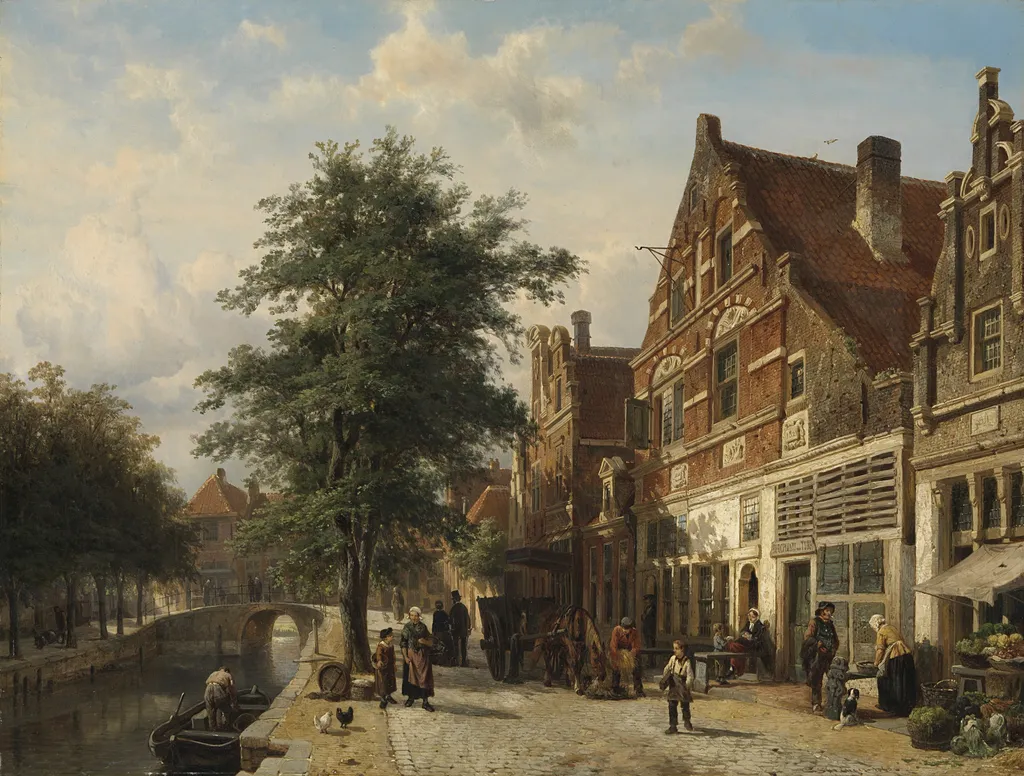
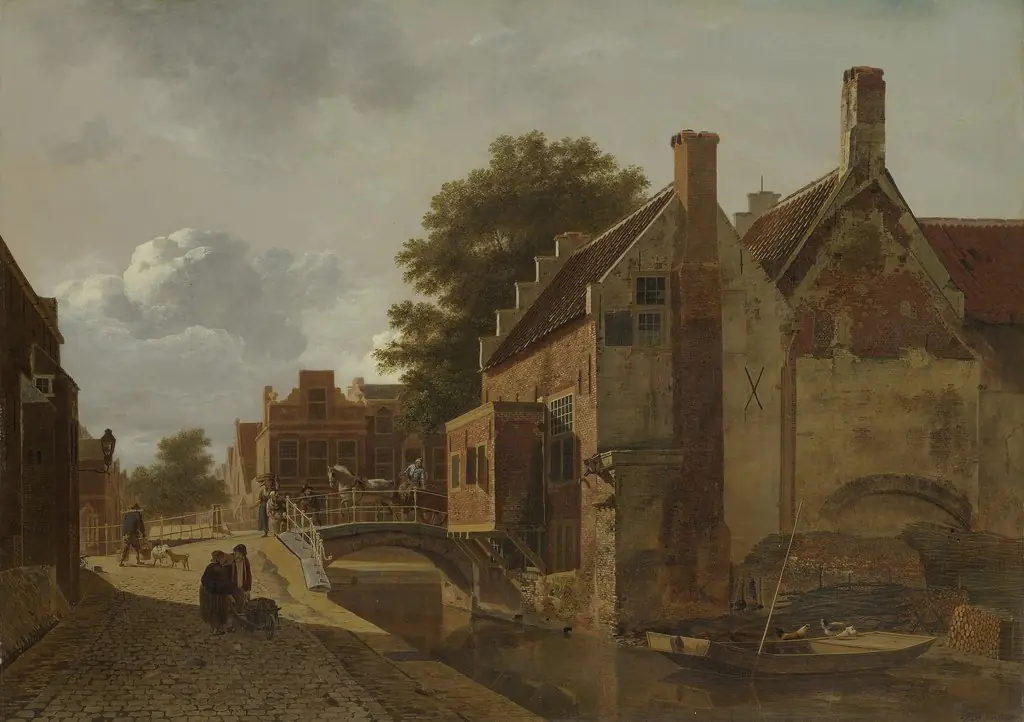
The Zuiderhavendijk, Enkhuizen is an oil painting by Cornelis Springer. It dates from 1868 and is held in the collection of the Rijksmuseum.
About this work
Overview
The work reflects the mid-19th-century interest in documenting Dutch urban heritage and the interplay of light on water and brick.
Cornelis Springer's 'The Zuiderhavendijk, Enkhuizen,' painted in 1868, is a definitive example of the artist's mature cityscape style, capturing a specific view of the harbor dike in the Dutch town of Enkhuizen. The composition is structured around a wide canal that recedes into the distance, flanked on the right by a continuous row of historic merchant houses featuring brick and stone facades topped with characteristic red-tiled gables. On the left, a stone bridge spans the water, leading the eye toward the open harbor and the sky. Springer employs a precise, topographical approach typical of the Hague School, rendering architectural details with clarity while integrating human figures engaged in daily activities along the quay and in the foreground. The work reflects the mid-19th-century interest in documenting Dutch urban heritage and the interplay of light on water and brick. Created during a period when Springer was highly regarded for his accurate yet atmospheric depictions of Dutch towns, this oil painting stands as a significant record of Enkhuizen's maritime architecture and 19th-century civic life.
Subject & Meaning
The canvas captures everyday life along the Zuiderhavendijk, showing townspeople strolling, pausing, or leaning against the quay. The tranquil atmosphere, reinforced by the gentle play of light on water and brick façades, suggests a moment of calm in a working harbor, emphasizing the harmonious relationship between architecture, nature, and community.
Technique & Style
Springer employs a restrained palette, juxtaposing warm, earthy tones of the buildings with cool blues of sky and canal to convey depth. Fine brushwork renders the brickwork and stone details, while broader strokes suggest water movement and sky. The balanced perspective and careful rendering of light are characteristic of mid‑nineteenth‑century Dutch cityscape painting.
History & Provenance
Created in 1868, the painting entered the Rijksmuseum’s holdings as part of its effort to document Dutch urban environments. It has remained in the museum’s permanent collection, where it is displayed as an example of Springer's prolific output of realistic city views that documented the Netherlands during a period of rapid change.
Own this work as a print
Artist & collection