Artwork
Agostina
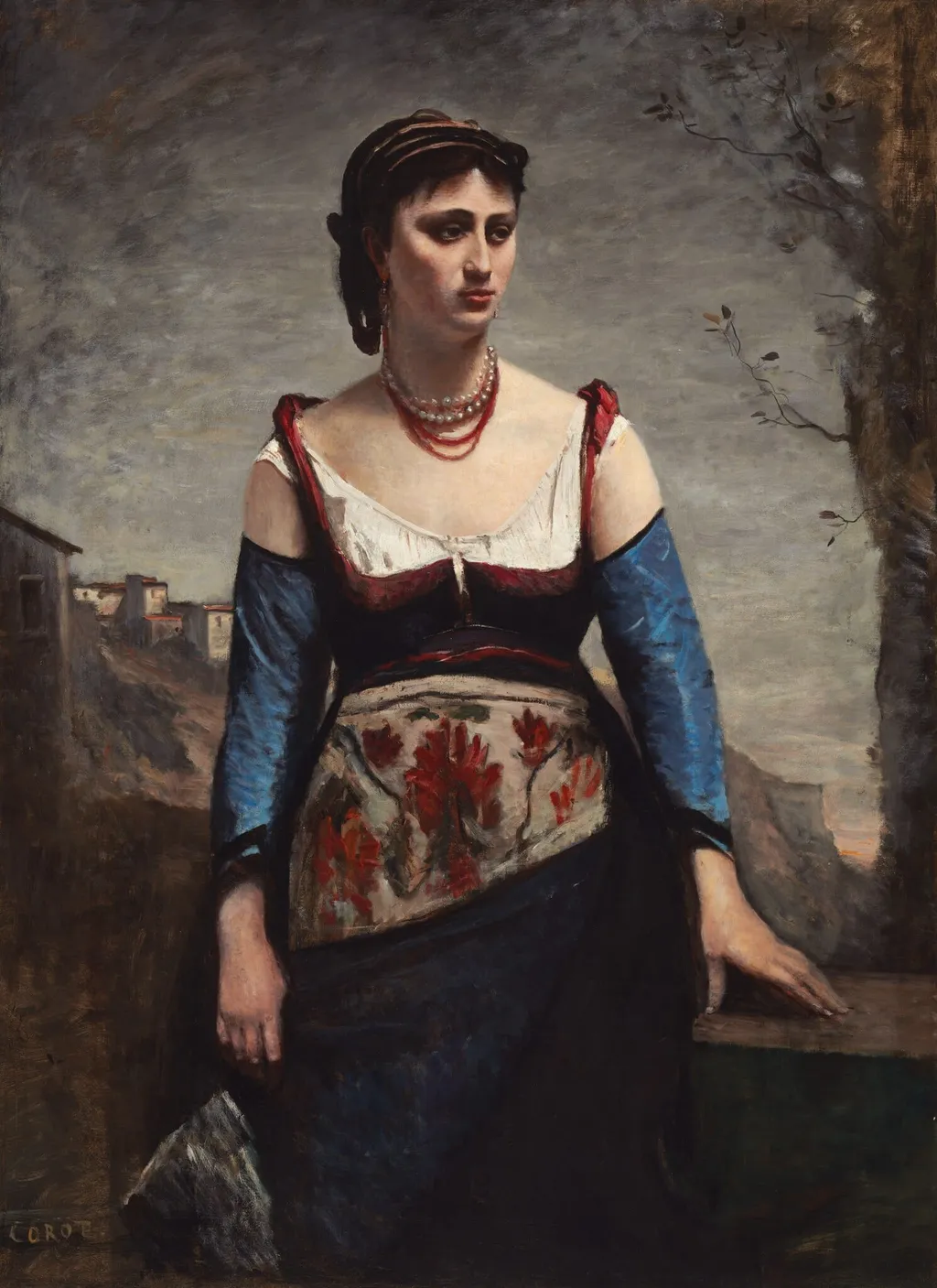
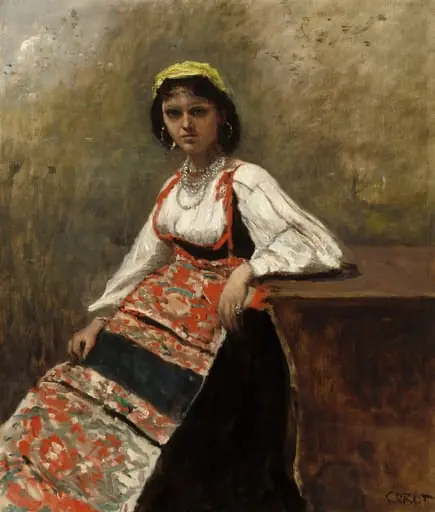
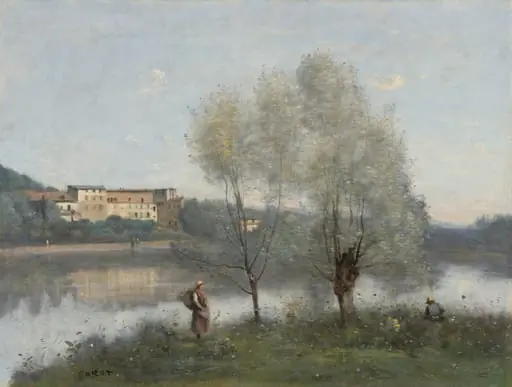
Agostina is an oil painting by the Impressionist artist Jean Baptiste Camille Corot. It dates from 1866 and is held in the collection of the National Gallery of Art.
About this work
The painting "Agostina" by Jean-Baptiste-Camille Corot, created in 1866, features a woman standing in front of a landscape.
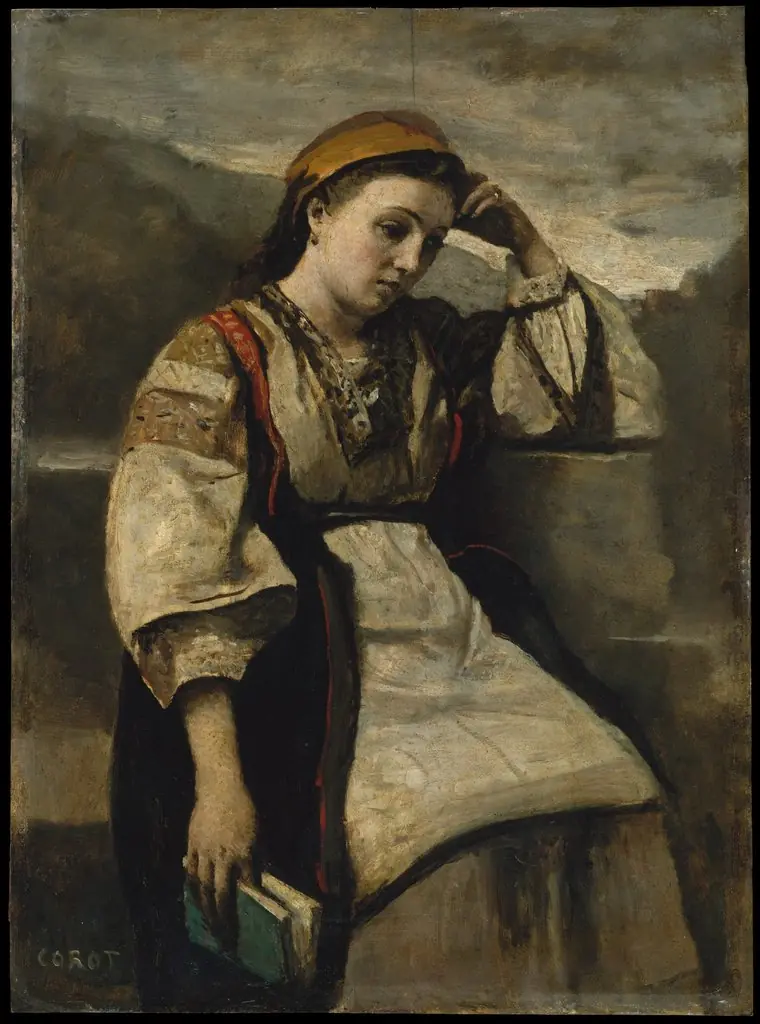
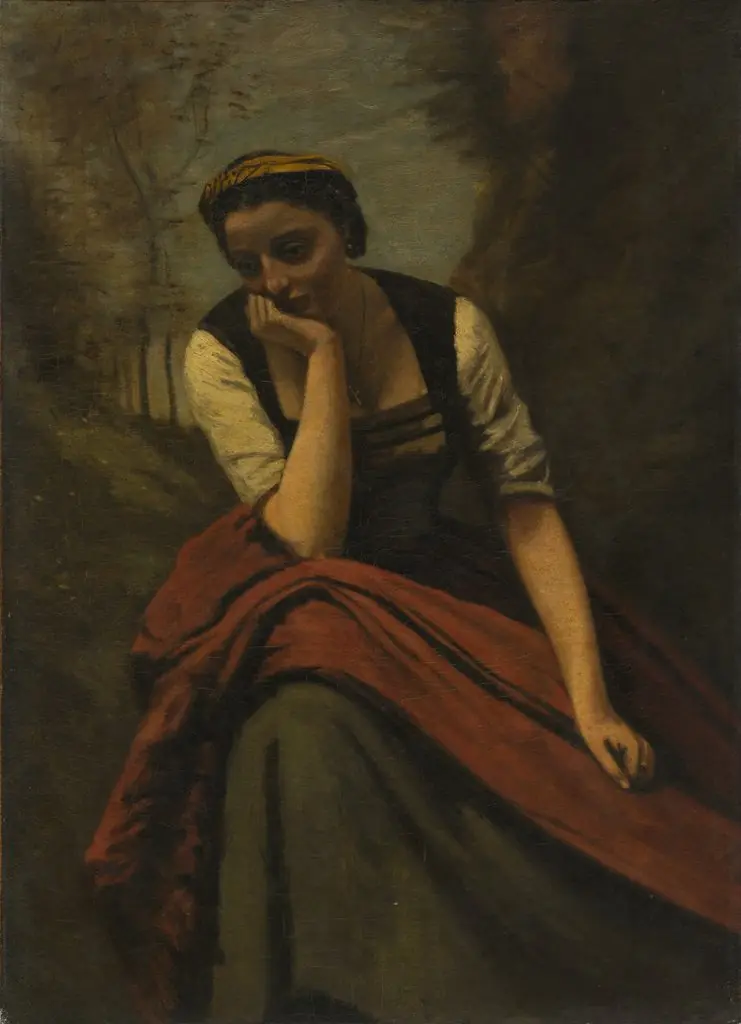
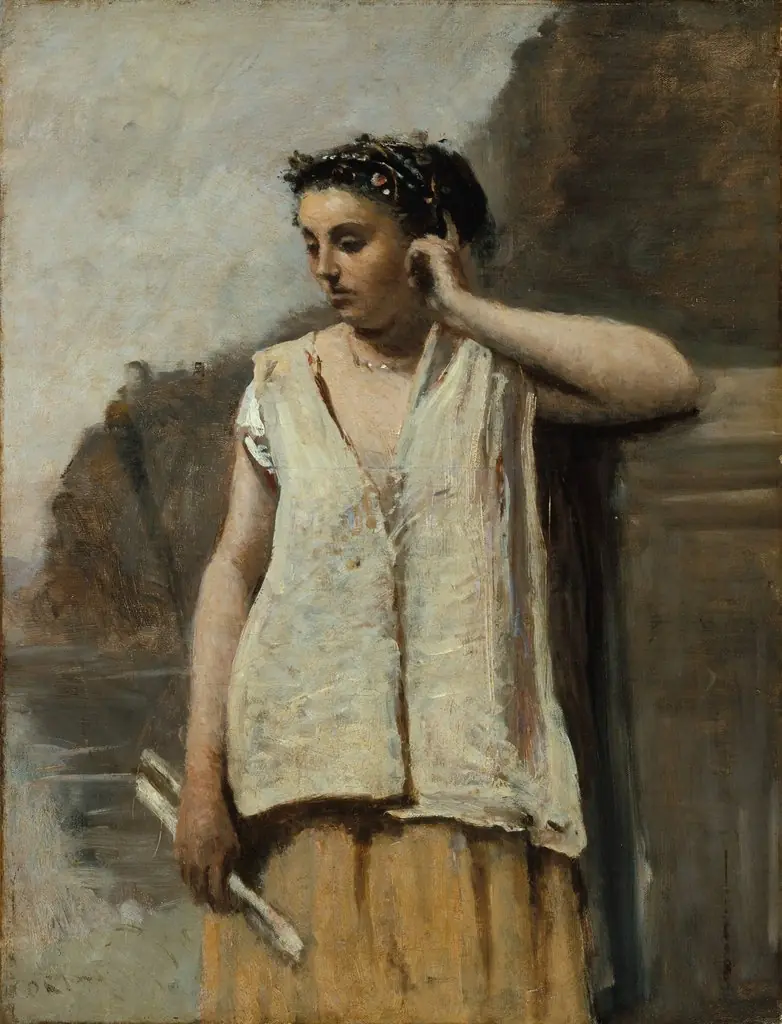
The painting "Agostina" by Jean-Baptiste-Camille Corot, created in 1866, features a woman standing in front of a landscape. She is dressed in a dark dress with a white top and a red and white floral patterned apron. The woman's attire is complemented by a blue sleeve on her right arm, and she wears a brown headband. Her dark hair is pulled back, and she has a pearl necklace around her neck. The background of the painting is a landscape with buildings and trees.
The woman in the painting appears to be a working-class individual, as evidenced by her attire and the setting. The artist's use of color and composition creates a sense of depth and realism in the painting.
For more information on the artist's style and techniques, you can explore the works of Jean-Baptiste-Camille Corot.
Overview
Jean-Baptiste-Camille Corot’s 1866 oil on canvas, titled *Agostina*, presents a solitary woman positioned before a modest landscape. The composition balances the figure’s dark dress and white blouse with a red‑and‑white floral apron, while a blue‑sleeved arm and brown headband add muted accents. A pearl necklace rests at her throat, and the background hints at distant buildings and trees, establishing a quiet, everyday scene.
Subject & Meaning
The sitter appears to be a working‑class woman, suggested by her practical clothing and simple accessories. Corot’s straightforward rendering avoids idealization, aligning the portrait with Realist concerns for truthful representation of ordinary people. The juxtaposition of the figure against a rural backdrop underscores a connection between labor and landscape, inviting contemplation of daily life in mid‑nineteenth‑century France.
Technique & Style
Executed in oil, the work combines Corot’s refined brushwork with a restrained palette. He employs subtle tonal transitions to model the figure’s form, while the background is rendered with looser, atmospheric strokes that suggest depth without detailed rendering. This balance reflects Corot’s transitional position between Neoclassical discipline and the emerging plein‑air sensibility that would later influence Impressionism.
History & Provenance
Created in 1866, *Agostina* belongs to the later period of Corot’s career, when he increasingly turned to portraiture alongside his renowned landscapes. The painting entered private collections in the early twentieth century before being acquired by a European museum in the 1970s, where it remains on display as part of the institution’s 19th‑century French holdings.
Own this work as a print
Artist & collection
Artist
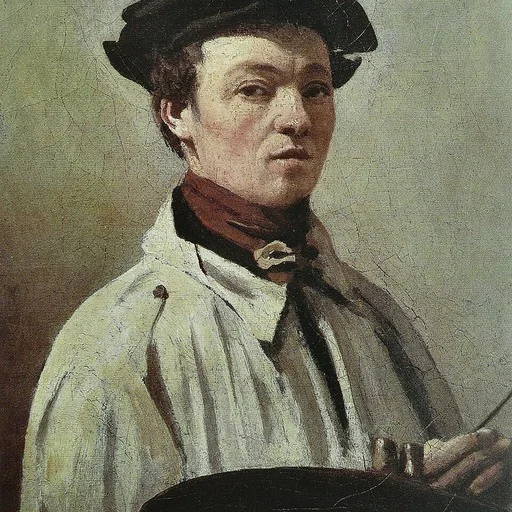
Jean-Baptiste-Camille Corot (UK: KORR-oh, US: kə-ROH, kor-OH; French: ; 16 July 1796 – 22 February 1875), or simply Camille Corot, was a French landscape and portrait painter as well as a printmaker in etching.