Artwork
Boatman (Le Batelier)
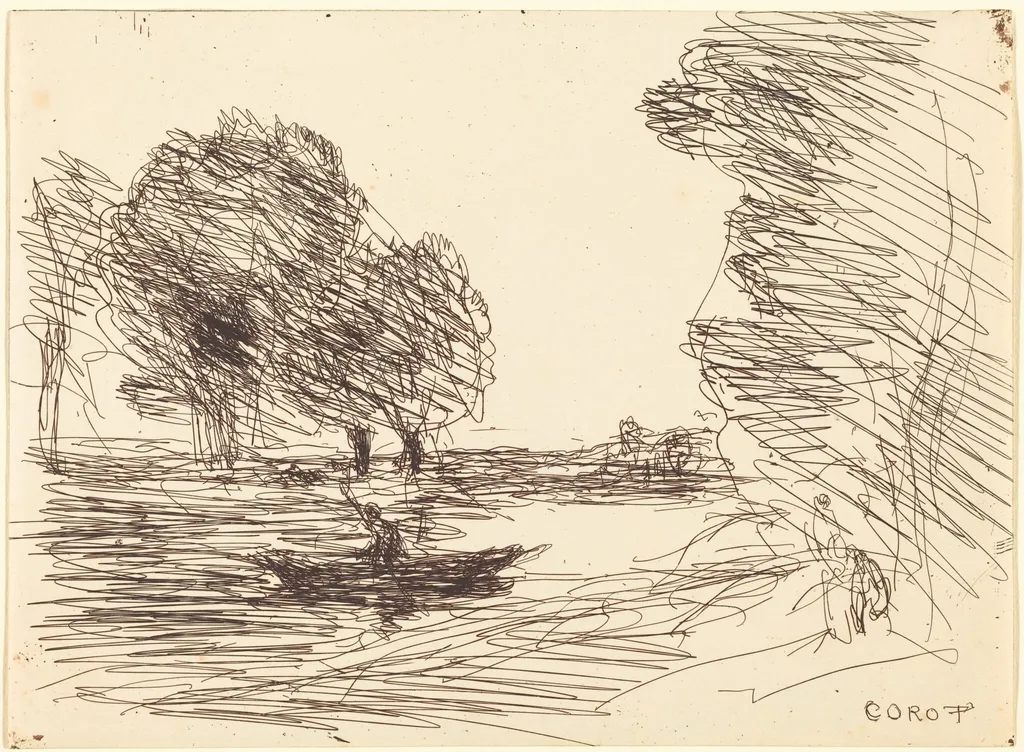
Boatman (Le Batelier) is a print by the Impressionist artist Jean Baptiste Camille Corot. It dates from 1874 and is held in the collection of the National Gallery of Art.
About this work
Overview
This print reflects his late-career interest in experimental processes, moving beyond traditional painting to explore the interplay of line, tone, and chance.
Jean-Baptiste-Camille Corot produced *Boatman (Le Batelier)* in 1874 using the cliché-verre technique, a hybrid method combining drawing on glass with photographic printing. This print reflects his late-career interest in experimental processes, moving beyond traditional painting to explore the interplay of line, tone, and chance. The work belongs to a small body of prints that reveal his engagement with emerging photographic aesthetics while retaining his poetic sensibility toward nature.
Subject & Meaning
The image portrays two figures in small boats drifting beneath dense, overhanging trees, their forms simplified and absorbed into the surrounding landscape. The solitary presence of the boatmen suggests quiet contemplation rather than narrative action. Corot avoids dramatic detail, instead emphasizing mood and rhythm, aligning the human element with the natural world as an inseparable, subdued part of the scene.
Technique & Style
Cliché-verre involved drawing directly onto a glass plate coated with opaque material, then printing the result like a photogravure. Corot’s hand is evident in the irregular, sketch-like lines—rough, uneven, and spontaneous—that mimic the immediacy of a drawn study. The resulting print lacks the polish of traditional etching, favoring atmospheric ambiguity and tonal gradations that echo his painted landscapes, particularly in the treatment of light filtering through foliage.
History & Provenance
Created near the end of Corot’s life, *Boatman* is part of a series of cliché-verre prints he made between the 1850s and 1870s, often in collaboration with printmakers. These works were not widely distributed during his lifetime and remained largely private experiments. The print’s survival and later recognition stem from its inclusion in posthumous exhibitions and collections that sought to document his diverse technical explorations beyond oil painting.
Context
In the 1870s, Corot was increasingly drawn to processes that allowed for rapid, direct expression, responding to the rise of photography and the Impressionists’ focus on transient effects. While he maintained a Romantic sensibility, his use of cliché-verre positioned him at the intersection of traditional draftsmanship and modern image-making. The technique enabled him to capture fleeting moments of light and movement without the labor of painting, aligning with broader shifts in artistic practice.
Legacy
Corot’s cliché-verre prints, including *Boatman*, influenced later artists interested in the expressive potential of non-traditional print media. Their raw, unfinished quality prefigured the aesthetic of modern graphic experimentation. Though not widely known in his time, these works are now valued for their intimacy and technical innovation, offering insight into an artist who continually sought new ways to translate perception into image.
Own this work as a print
Artist & collection
Artist
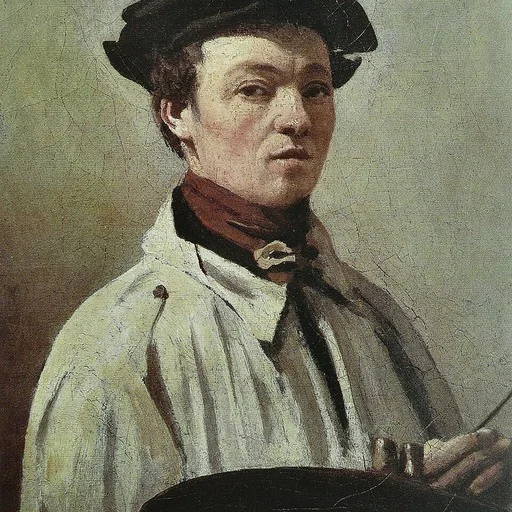
Jean-Baptiste-Camille Corot (UK: KORR-oh, US: kə-ROH, kor-OH; French: ; 16 July 1796 – 22 February 1875), or simply Camille Corot, was a French landscape and portrait painter as well as a printmaker in etching.

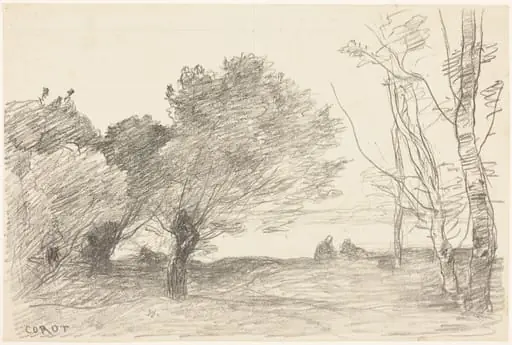 Willows and White Poplars (Saules et peupliers blancs)
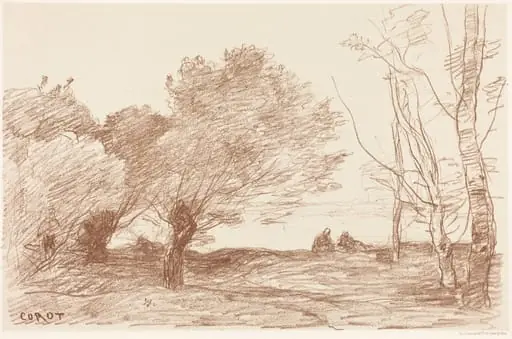 Willows and White Poplars (Saules et peupliers blancs)
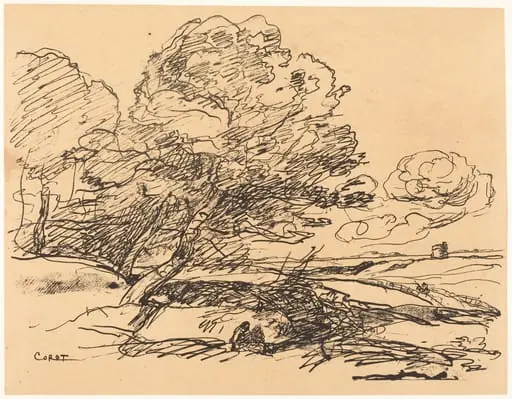 The Lonely Tower (La Tour isolee)
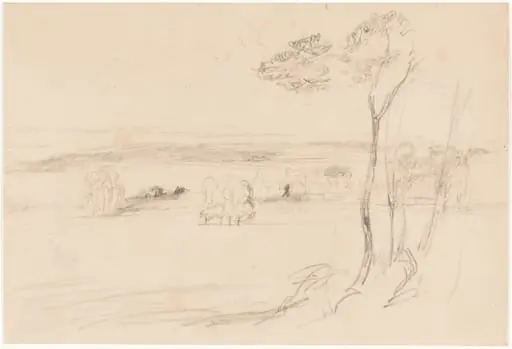 Trouville-sur-Mer
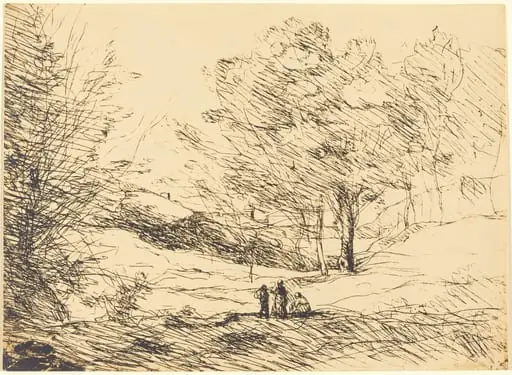 Souvenir of Lake Maggiore (Souvenir du Lac Majeur)
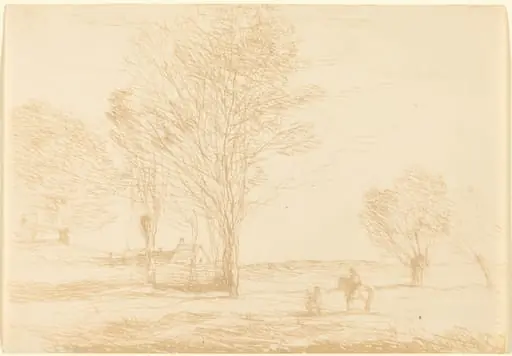 Horseman Halted in the Countryside (Cavalier arrete dans la campagna)
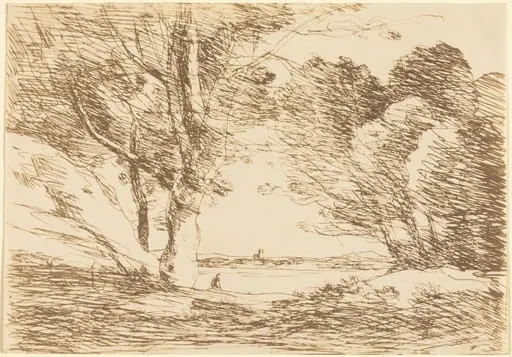 Tower on the Horizon of a Lake (Tour a l'horizon d'un lac)
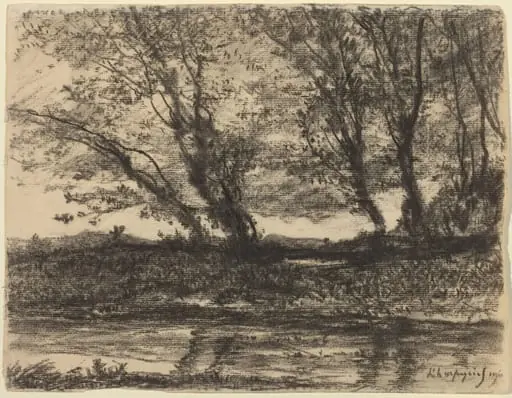 Landscape
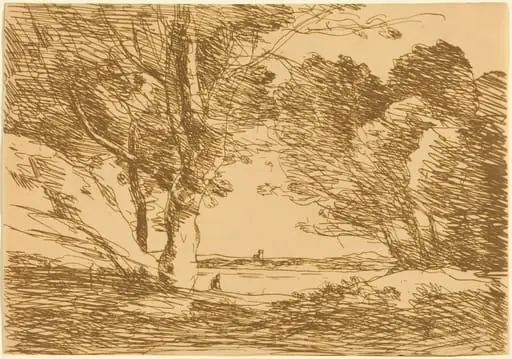 Tower on the Horizon of a Lake (Tour a l'horizon d'un lac)
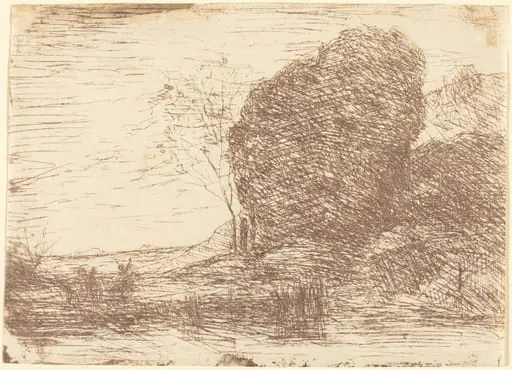 Feast of Pan (La Fete de Pan)
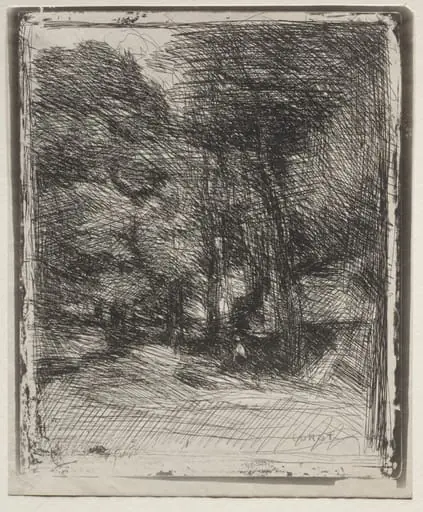 A Souvenir of the Bas-Bréau
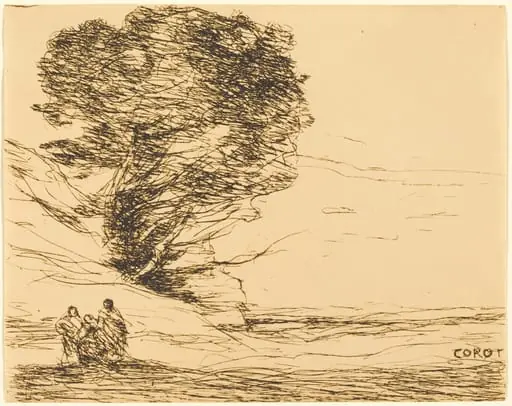 Souvenir of Antibes (Souvenir d'Antibes)