Artwork
Prohodul lui Iisus
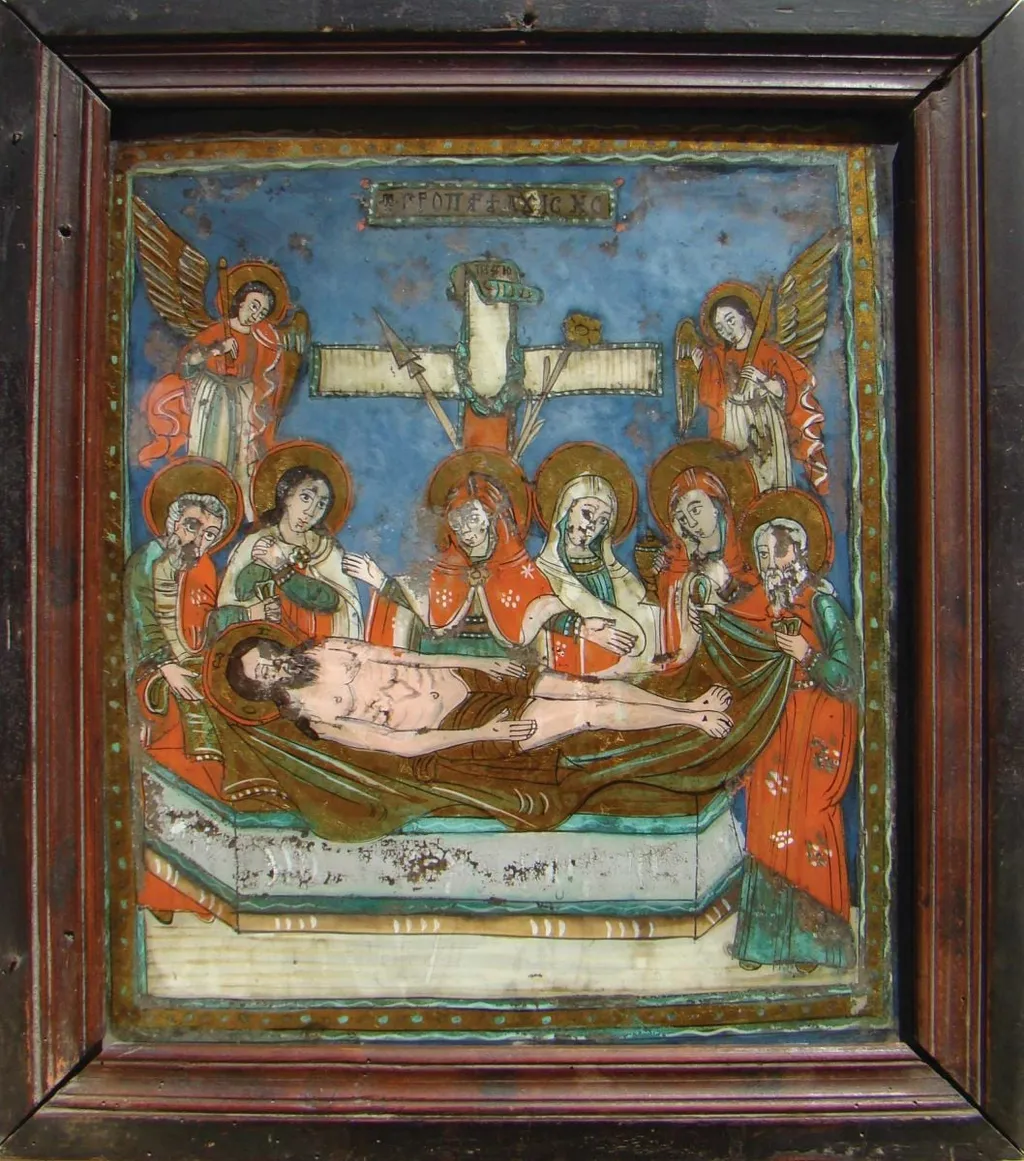
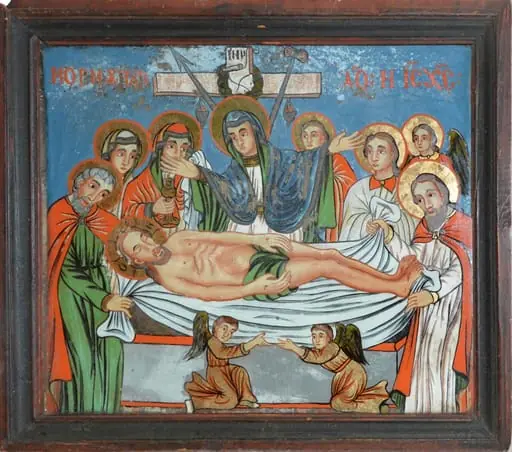
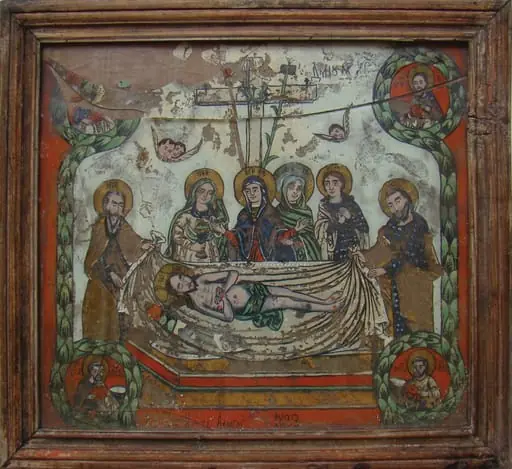
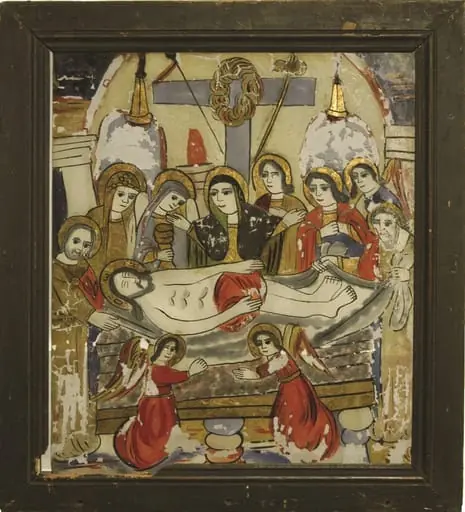
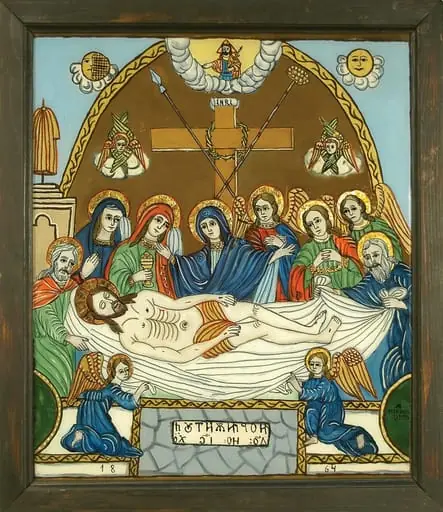
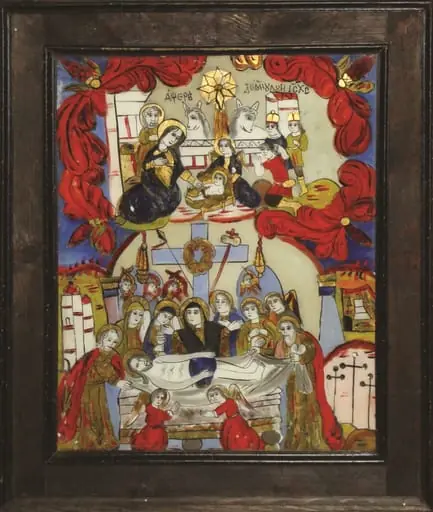
Prohodul lui Iisus is an unspecified painting by Ioan Costea-Verman. It is held in the collection of the Alba Iulia Orthodox Archdiocese. This work depicts a funeral scene centered on a wrapped body laid upon a cloth, surrounded by mourners and celestial figures.
About this work
Overview
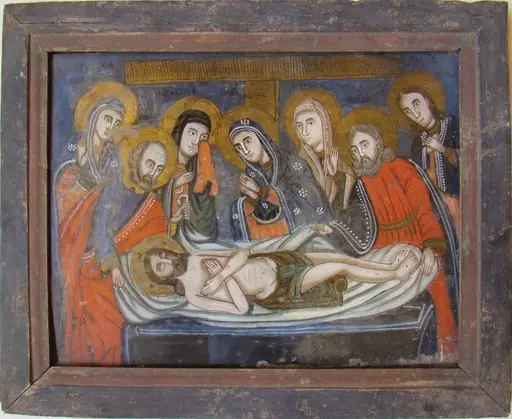
This work depicts a funeral scene centered on a wrapped body laid upon a cloth, surrounded by mourners and celestial figures.
This work depicts a funeral scene centered on a wrapped body laid upon a cloth, surrounded by mourners and celestial figures. The composition follows traditional religious iconography, with figures arranged in a semicircle around the central form. Bright, saturated robes contrast with a flat blue background and gold inscriptions above, suggesting a sacred context. The presence of halos and angels indicates a spiritual dimension to the mourning.
Subject & Meaning
The scene represents the burial of Christ, with the central figure symbolizing his body after removal from the cross. The mourners, identified by halos, likely include the Virgin Mary, apostles, and other saints. Two angels above hold a cross, reinforcing the theological significance of the event. The imagery conveys solemn reverence, emphasizing the transition from death to resurrection within Christian belief.
Technique & Style
The painting employs flat, decorative forms and bold, unmodulated colors—reds, greens, and golds—typical of medieval icon painting. Figures lack naturalistic perspective, instead arranged hierarchically for symbolic clarity. The background is non-representational, with gold lettering suggesting divine presence. Surface wear and fading indicate age, consistent with panel or wall paintings preserved over centuries.
History & Provenance
The work likely originated in a Byzantine or Eastern Orthodox context, possibly as part of a church interior or devotional panel. Its stylistic features align with 12th- to 14th-century iconography from regions such as Bulgaria, Serbia, or Greece. The condition suggests long-term exposure to ritual use or environmental factors, though its specific origin and early ownership remain undocumented.
Context
Created during a period when religious imagery served as both devotional aid and doctrinal instruction, the painting reflects liturgical practices centered on Christ’s Passion. Such scenes were common in Orthodox churches, often placed near altars or in narthexes to guide contemplation. The use of gold and halos affirmed the sacred nature of the event, distinguishing it from secular narratives.
Legacy
This image contributes to a broader tradition of Byzantine and post-Byzantine funerary iconography, influencing later Eastern Christian art. Its formal simplicity and symbolic clarity ensured its endurance in religious communities. Though not widely known outside specialized circles, it remains a representative example of how medieval artists conveyed theological themes through structured, non-naturalistic composition.
Artist & collection
Artist
Ioan Costea-Verman painted saints the way people painted their neighbors—thick brushstrokes, warm light, and no halo glow.