Artwork
The Black Rocks at Trouville
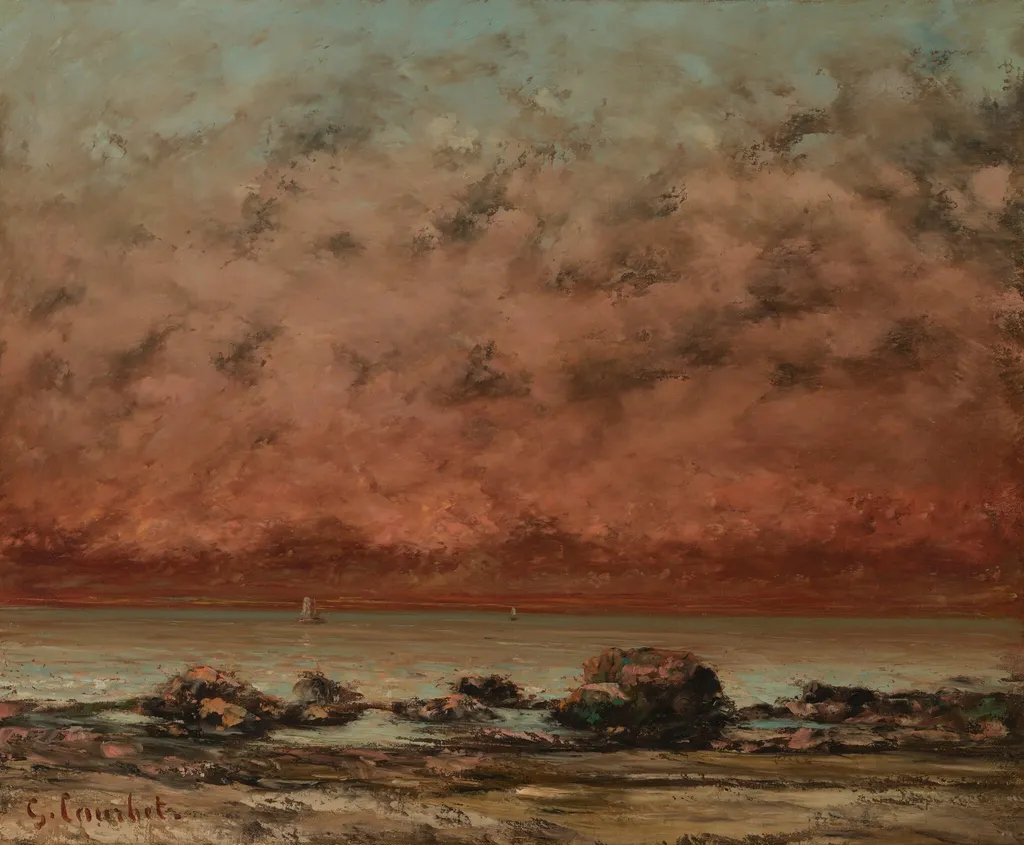
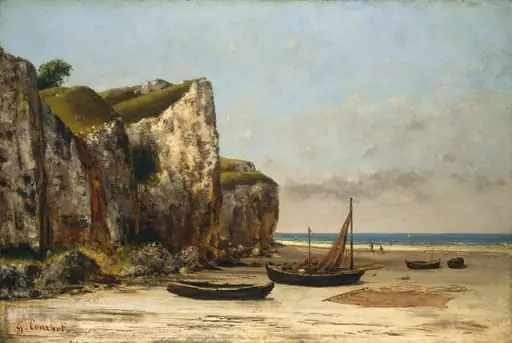
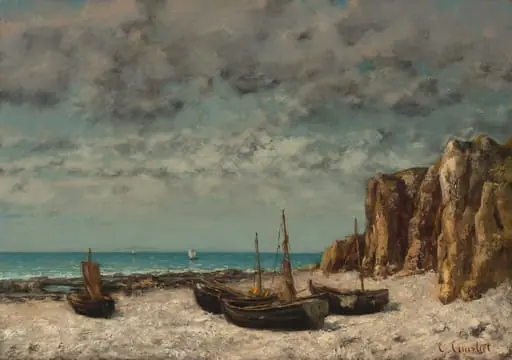
The Black Rocks at Trouville is an oil painting by the Impressionist artist Gustave Courbet. It dates from 1866 and is held in the collection of the National Gallery of Art.
About this work
Overview
Gustave Courbet’s 1866 oil painting *The Black Rocks at Trouville* depicts a coastal landscape dominated by a turbulent sky and a stretch of sea. Executed in the realist idiom, the work presents a natural scene without idealisation, focusing on the atmospheric conditions and the texture of the shoreline.
Subject & Meaning
The canvas captures a beach at Trouville, where dark, brooding clouds loom over the water, their reddish‑brown tones suggesting an impending storm. By foregrounding the raw forces of weather, Courbet emphasizes the immediacy of observation and the inherent drama of the natural environment.
Technique & Style
Visible, vigorous brushstrokes convey the movement of clouds and the churning sea, while the palette of muted earth tones and deep blues reinforces the painting’s somber mood. Courbet’s handling of oil allows for layered textures that heighten the sense of depth and atmospheric pressure.
History & Provenance
Created in 1866, the work belongs to the period when Courbet was consolidating his reputation as a leading realist. It reflects his departure from academic and Romantic conventions, aligning with his broader commitment to painting what he saw directly.
Context
*The Black Rocks at Trouville* sits within Courbet’s series of landscape studies that explore the French coastline. These works contributed to a shift in 19th‑century art toward unembellished depictions of everyday scenery, influencing subsequent generations of naturalist painters.
Own this work as a print
Artist & collection
Artist
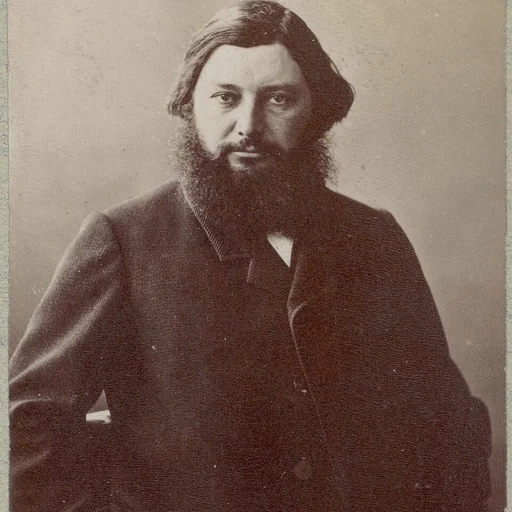
Jean Désiré Gustave Courbet (UK: KOOR-bay; US: koor-BAY; French: ; 10 June 1819 – 31 December 1877) was a French painter who led the Realism movement in 19th-century French painting.