Artwork
Fată din Argeș
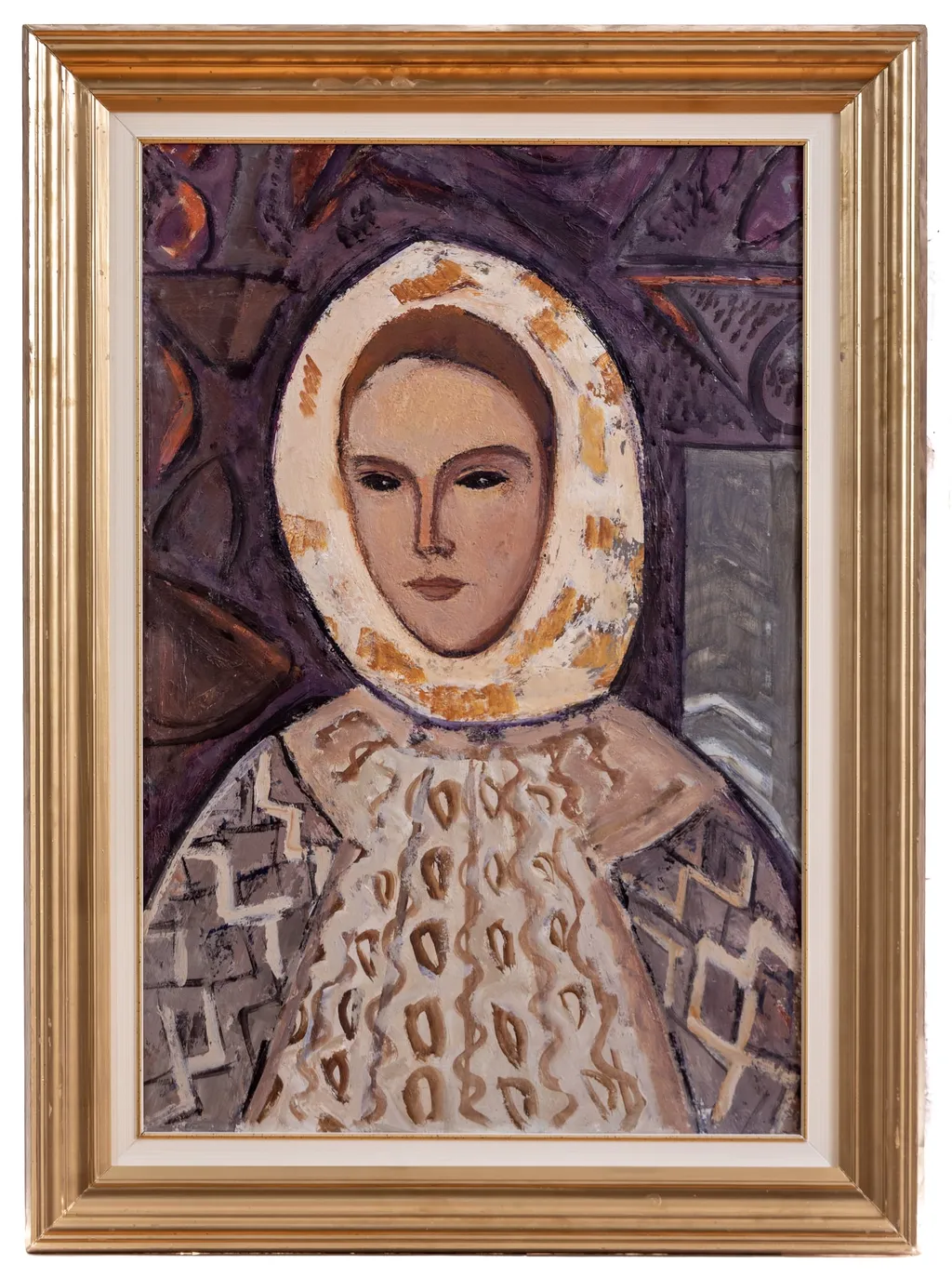
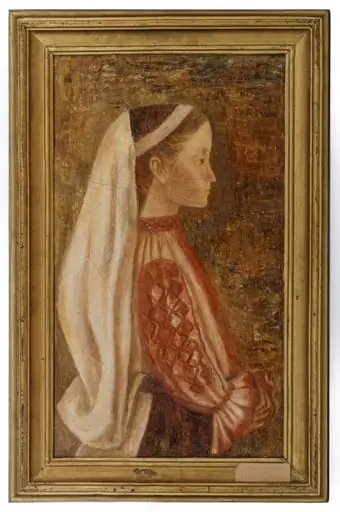
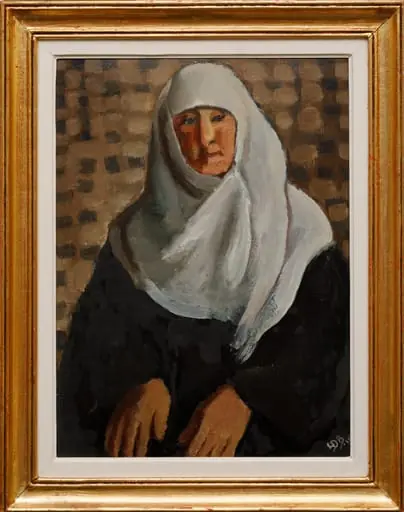
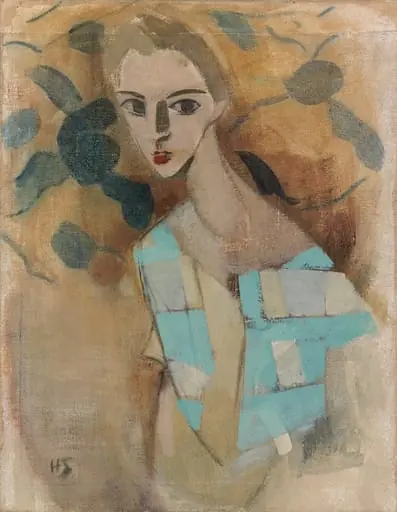
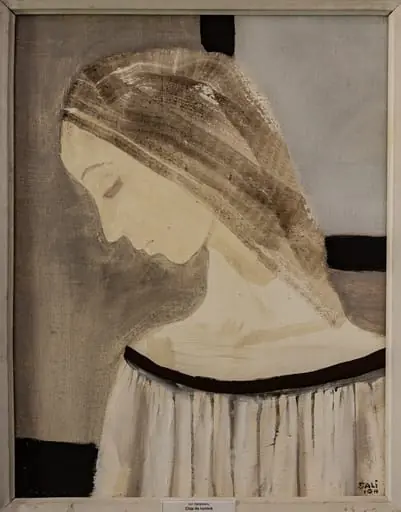
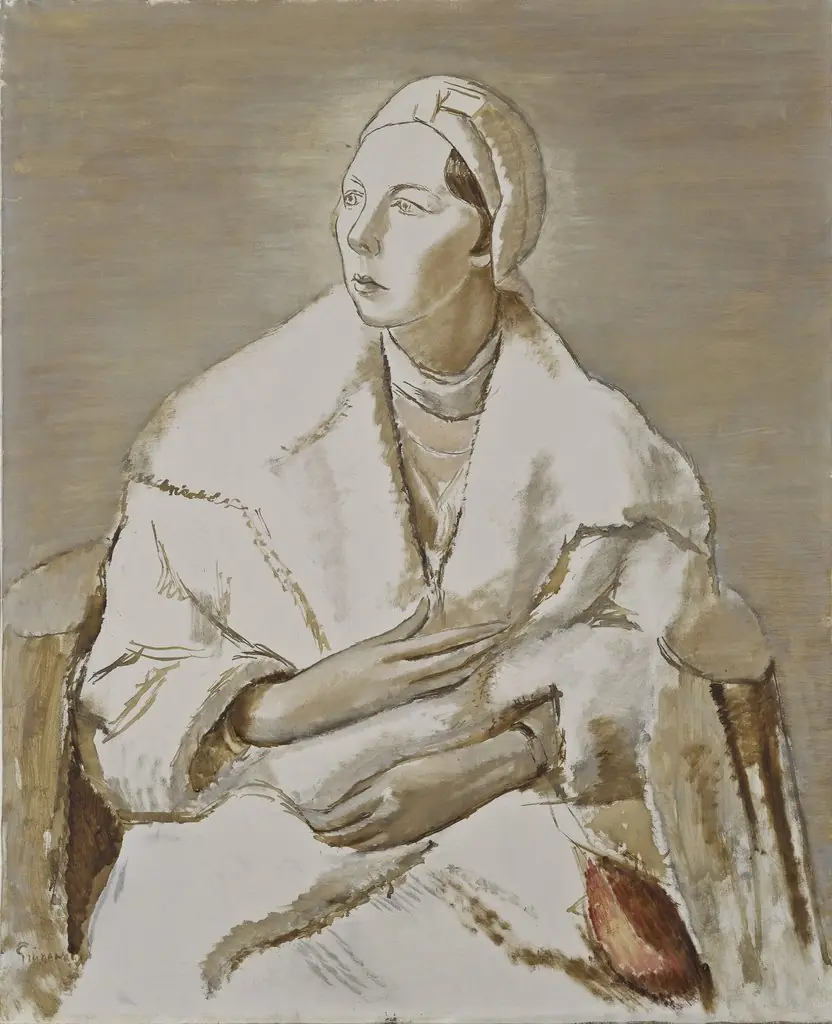
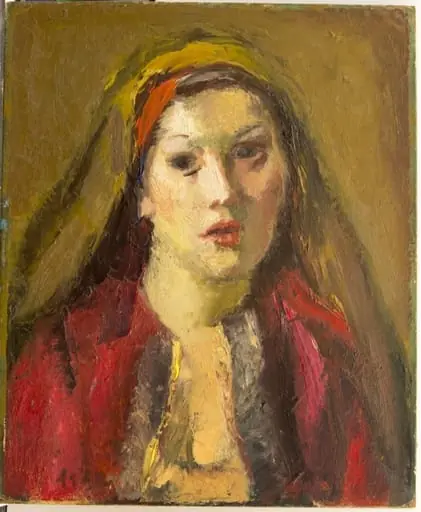
Fată din Argeș is a print by Covaliu Brăduț. It is held in the collection of the Moldova National Museum Complex. This portrait depicts a woman from Argeș, Romania, rendered in a direct, unadorned style.
About this work
Overview
This portrait depicts a woman from Argeș, Romania, rendered in a direct, unadorned style. The figure is centered against a muted, textured background, emphasizing her presence without decorative distraction. The artist uses thick, visible brushwork and a restrained palette to convey a sense of immediacy, as if capturing a fleeting moment rather than a formal composition.
Subject & Meaning
The woman wears a traditional white headscarf and a patterned shawl, suggesting regional identity and everyday life. Her calm, unsmiling expression and simple attire point to a focus on authenticity rather than idealization. The painting does not seek to dramatize or romanticize; instead, it presents a quiet, grounded representation of a local individual.
Technique & Style
The artist applies paint with a tactile, almost impasto quality, particularly in the shawl’s irregular patterns and the rough background. Colors are subdued, with soft transitions on the face contrasting against the heavier, more textured areas. Brushstrokes remain visible, rejecting polish in favor of a handcrafted, immediate aesthetic that aligns with regional folk sensibilities.
History & Provenance
Attributed to Covaliu Brăduț, the work reflects his interest in documenting rural Romanian life during the early 20th century. Little is documented about its original commission or early ownership, but it aligns with his broader practice of portraying local figures without theatrical embellishment, likely created during field studies or regional travels.
Context
Created amid a period of growing cultural interest in Romanian folk traditions, the painting reflects a movement to record and preserve regional identities. Unlike academic portraiture of the time, it avoids idealized forms, instead embracing the textures and rhythms of everyday dress and demeanor, resonating with ethnographic and nationalist currents in interwar art.
Legacy
The work contributes to a modest but significant body of early 20th-century Romanian art that prioritized local subjects over European conventions. While not widely exhibited internationally, it remains a reference point for regional art historians studying the intersection of folk culture and modernist simplicity in Romanian visual practice.
Artist & collection
Artist
Romanian printmaker Brăduț Covaliu made bold woodcuts of everyday life in the 1960s–70s.