Artwork
Rhyl Sands
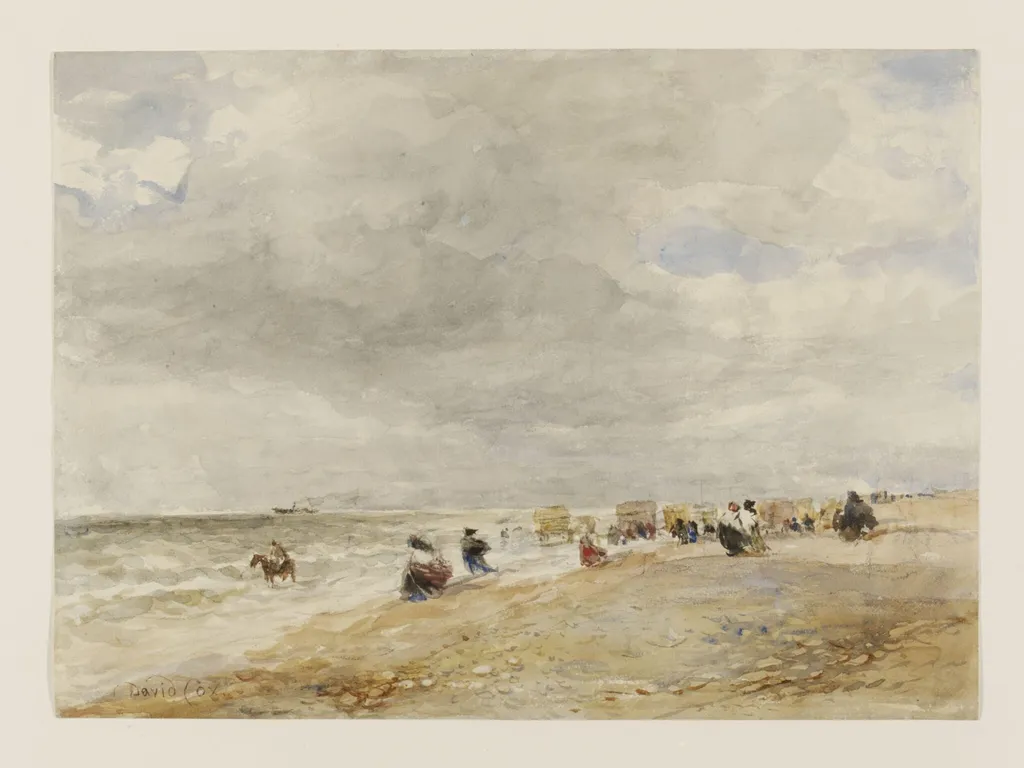
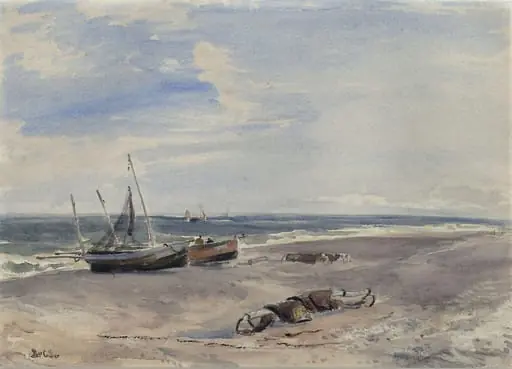
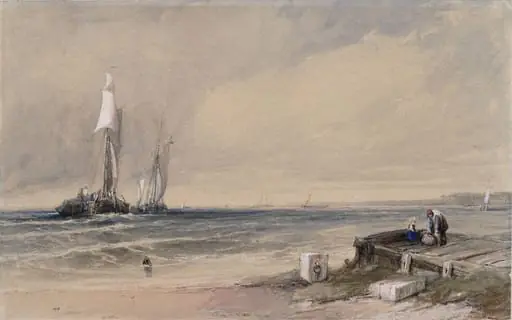
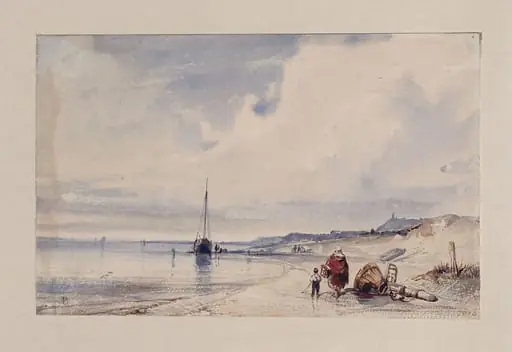
Rhyl Sands is a watercolor work on paper by the British Romanticist artist David Cox. It dates from 1850 and is held in the collection of the Victoria and Albert Museum.
About this work
Overview
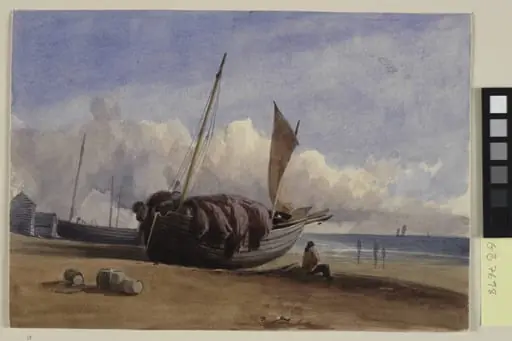
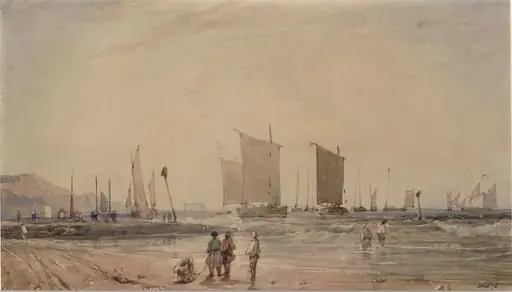
Painted in 1850 by David Cox the Elder, this watercolour captures the coastal expanse of Rhyl Sands in North Wales. The composition features a sparse arrangement of figures, horse-drawn vehicles, and a lone rider in the shallows, all rendered with minimal detail. The work is signed by the artist and reflects his mature approach to landscape, emphasizing atmosphere over precision.
Subject & Meaning
The scene portrays everyday coastal life—pedestrians, laborers, and equestrians moving across the shore under a windy sky. The figures are not idealized but observed in motion, suggesting a quiet record of seasonal activity. The wind, implied by draped clothing and drifting forms, connects the land, sea, and sky as a single, dynamic environment.
Technique & Style
Cox employed loose, fluid brushwork and diluted pigments to suggest movement and light. Forms dissolve into soft edges, and the pale sky merges with the sea without sharp boundaries. The watercolour medium allowed for rapid, transparent layers, reinforcing the transient quality of the moment. This approach anticipates later developments in plein air painting.
History & Provenance
The work was included in the 1890 David Cox retrospective in Birmingham and later shown at the 1924 British Empire Exhibition in Wembley. These exhibitions helped solidify Cox’s reputation as a key figure in British watercolour. Its presence in both events indicates its recognition within institutional circles during the late 19th and early 20th centuries.
Context
Painted during a period when British artists were increasingly turning to naturalistic landscapes, Cox’s work diverged from academic conventions. His focus on weather, light, and unposed human activity aligned with emerging trends in observational art, though he remained distinct from the later Impressionist movement in both technique and intent.
Legacy
Cox’s watercolours, including this one, influenced later generations of British landscape painters who valued spontaneity and atmospheric effect. Though not part of the French Impressionist circle, his handling of light and motion contributed to a broader shift in how nature was rendered in watercolour, paving the way for more expressive approaches in the decades that followed.
Artist & collection
Artist
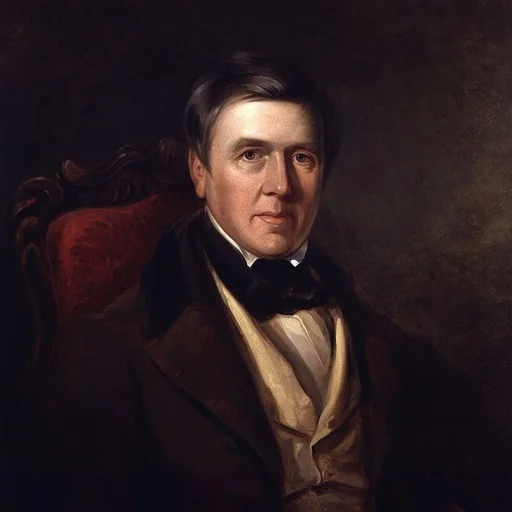
David Cox (29 April 1783 – 7 June 1859) was an English landscape painter, one of the most important members of the Birmingham School of landscape artists and an early precursor of Impressionism.

![Trees [verso], by David Cox](https://artifactworldgallery.com/img/david-cox--trees-verso--2f59ba73e183df09-w320.webp)
![Chatsworth [recto], by David Cox](https://artifactworldgallery.com/img/david-cox--chatsworth-recto--3f4d97adb21a8333-w320.webp)