Artwork
Saint Bartholomew
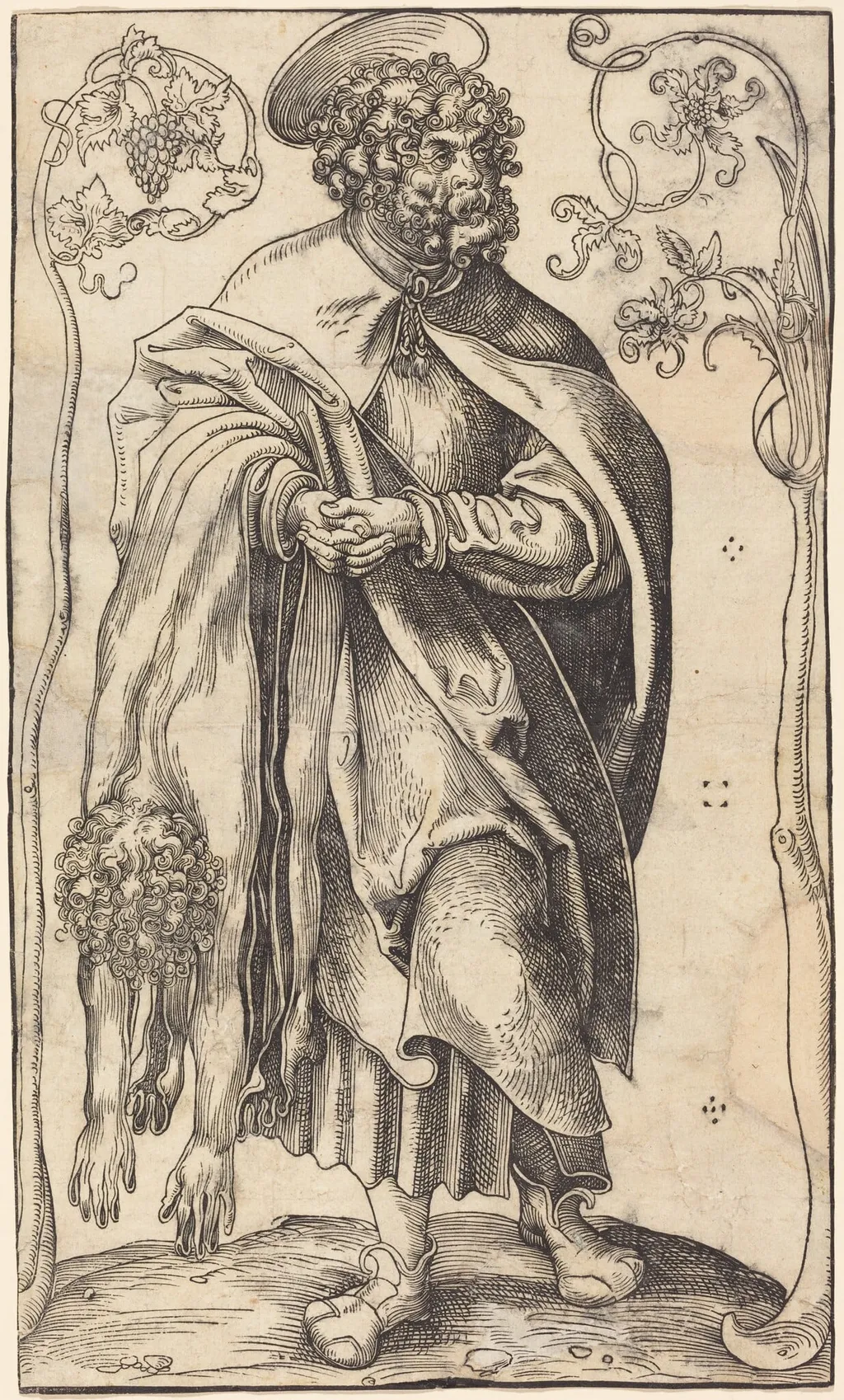
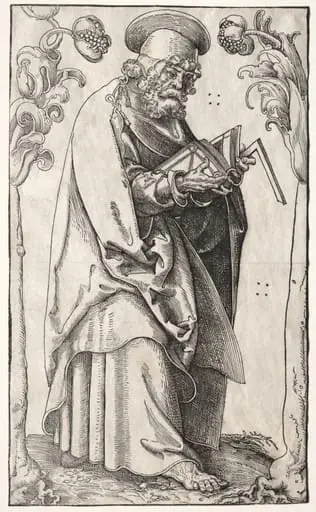
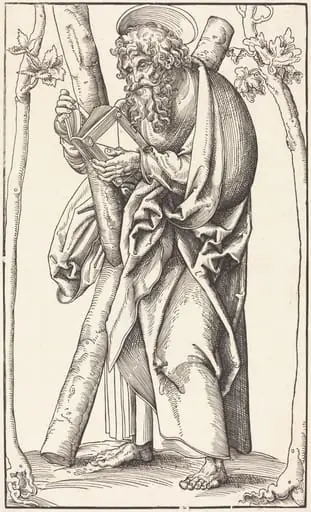
Saint Bartholomew is an ink print by the Renaissance artist Lucas Cranach the Elder. It dates from 1512 and is held in the collection of the National Gallery of Art.
About this work
Overview
Around 1512 Lucas Cranach the Elder produced a woodcut titled Saint Bartholomew, part of his early series of devotional images. Executed in black and white, the print presents the apostle in a solemn pose, his features rendered with the precise line work typical of Cranach’s printmaking before his later focus on explicitly Lutheran subjects.
Subject & Meaning
The figure represents the martyr Saint Bartholomew, identifiable by the knife he holds, an emblem of his martyrdom. In the composition he also bears a large book, suggesting his role as a witness to the Gospel, while his downward pointing gesture may allude to the transmission of faith to the viewer.
Technique & Style
Cranach employed the woodcut process, carving the image into a wood block and printing it in a single inked impression. The work is distinguished by crisp, incised lines that delineate the folds of the robes, the texture of curly hair, and the intricate ornamental background, reflecting the prevailing aesthetic of early sixteenth‑century German prints.
History & Provenance
Created while Cranach served as court painter to the Electors of Saxony, the print belongs to his pre‑Reformation output. It circulated among devotional prints before the artist’s later alignment with Protestant patrons, illustrating the transitional phase of his career and the broader religious currents of the period.
Artist & collection
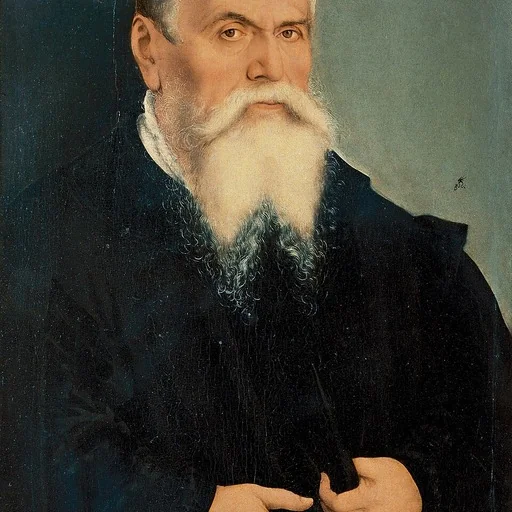
Artist
Lucas Cranach the Elder was a German Renaissance painter and printmaker in woodcut and engraving.