Artwork
Pine Tree
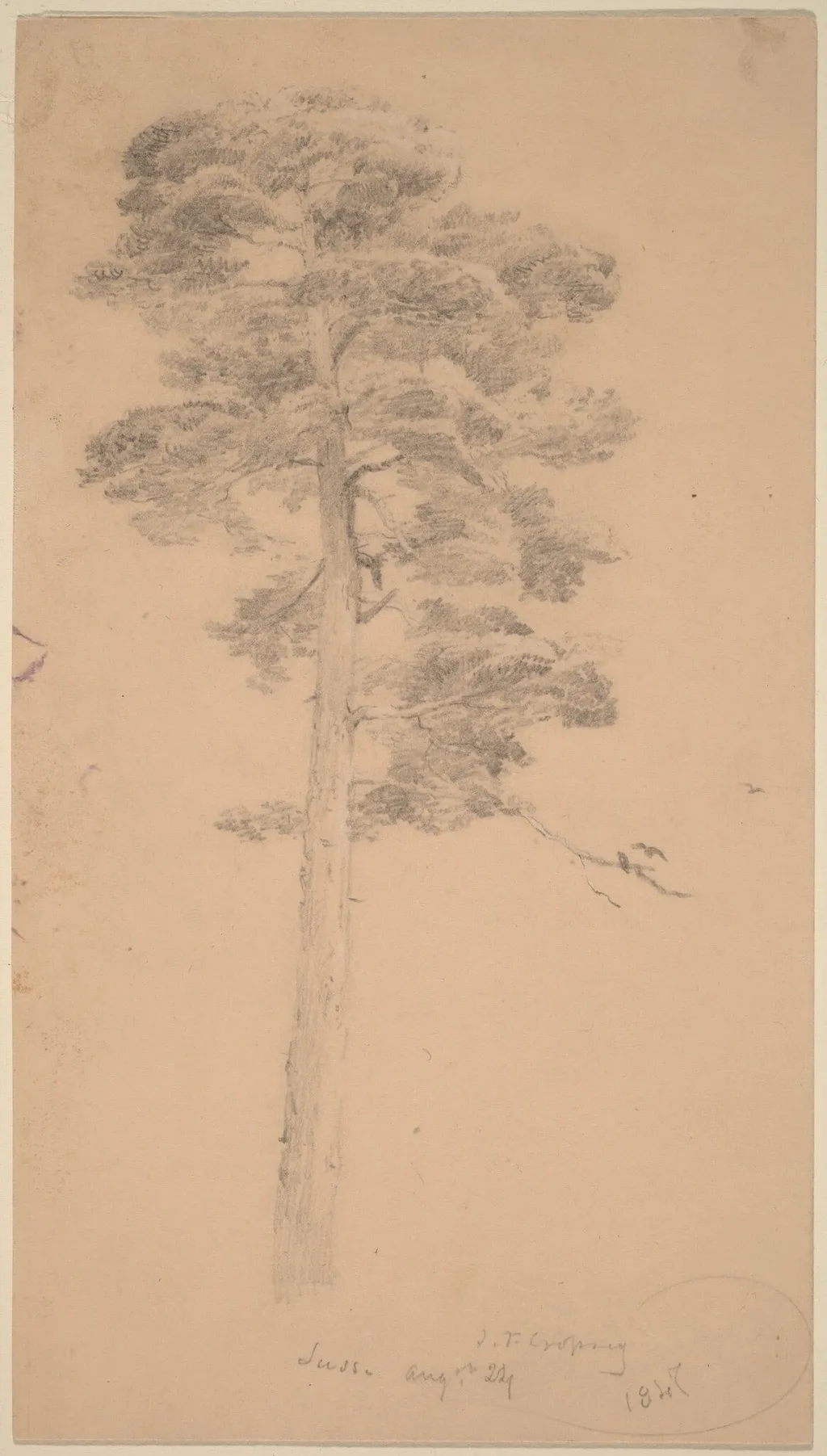
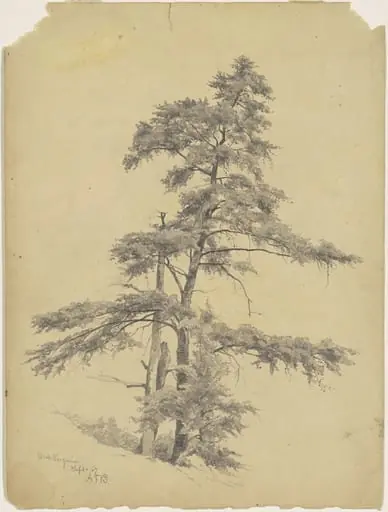
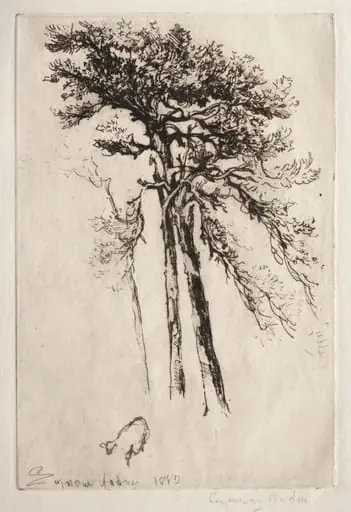
Pine Tree is a graphite drawing by the Romanticist artist Jasper Francis Cropsey. It dates from 1847 and is held in the collection of the National Gallery of Art.
About this work
Overview
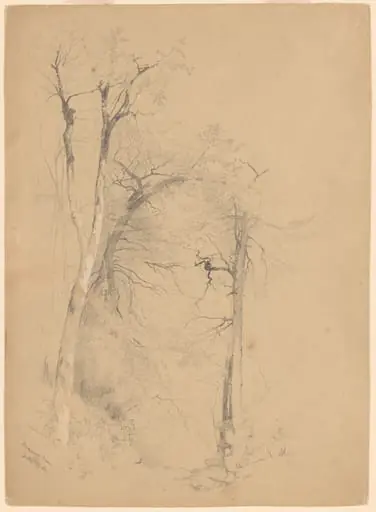
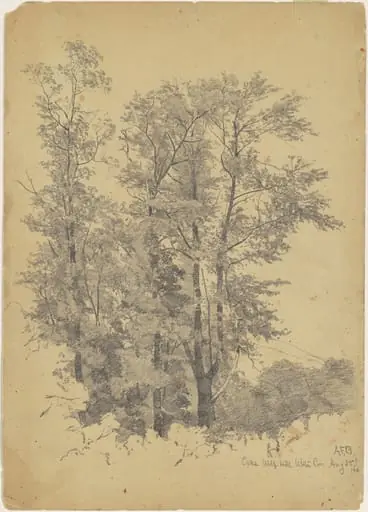
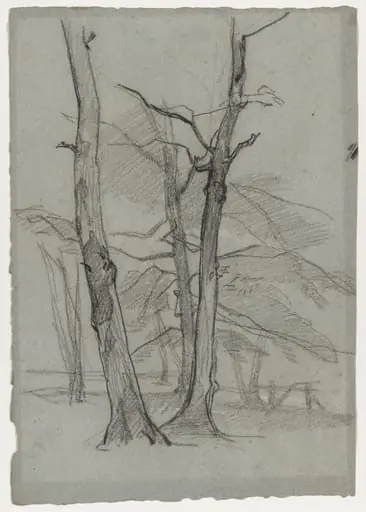
This 1847 drawing by Jasper Francis Cropsey depicts a solitary pine tree rendered in graphite on heavy wove paper. The composition emphasizes the tree’s expansive branches and dense needle clusters, executed with swift, gestural lines. The warm beige tone of the paper contrasts with the darker graphite, while selective white heightening introduces subtle luminosity to the foliage.
Subject & Meaning
The lone pine tree serves as a focal point, evoking themes of solitude and natural grandeur. Such subjects were often employed by artists to convey the sublime—an awe-inspired response to nature’s scale and beauty. The sketch-like quality suggests an immediate, unmediated encounter with the landscape, aligning with Romantic ideals of emotional authenticity.
Technique & Style
Cropsey’s approach combines rapid, expressive lines with controlled tonal modulation. Graphite defines the tree’s structure, while white heightening enhances dimensionality, particularly in the upper branches. The loose, almost improvisational handling reflects a study made directly from nature, prioritizing spontaneity over meticulous detail.
Context
Created during the mid-19th century, this work emerges from the Romantic movement, which elevated nature as a source of spiritual and emotional truth. Artists of this period frequently depicted landscapes as metaphors for human experience, often emphasizing individual perception over idealized representation. Cropsey’s sketch aligns with this tradition.
Legacy
Though modest in scale, the drawing exemplifies the period’s shift toward direct observation in landscape art. It reflects broader artistic trends that valued immediacy and personal interpretation, influencing later movements. Such studies also underscore the role of preparatory works in developing larger compositions, offering insight into an artist’s process.
Artist & collection