Artwork
H Beard Print Collection
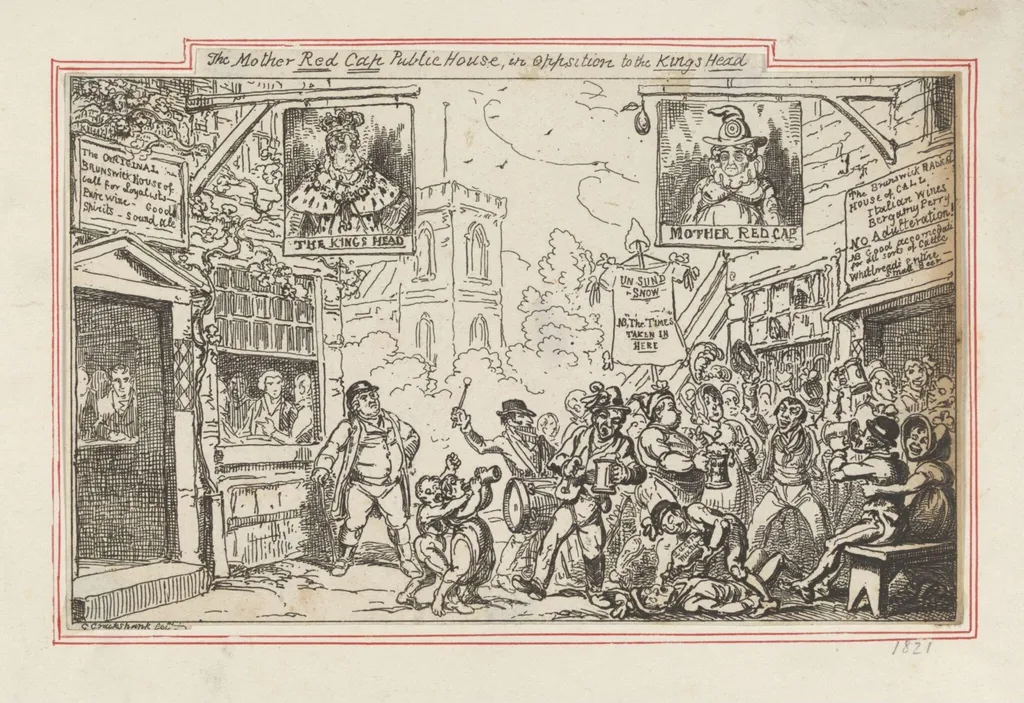
H Beard Print Collection is a print by the Romanticist artist George Cruikshank. It dates from 1820 and is held in the collection of the Victoria and Albert Museum.
About this work
Overview
The work belongs to a broader tradition of political caricature in early 19th-century Britain.
This satirical print contrasts two London public houses—'The Mother Red Cap' and 'The King's Head'—to reflect public sentiment during the marital estrangement of King George IV and Queen Caroline. It uses the symbolism of tavern names to represent political allegiances, with the Queen’s establishment depicted as more popular and lively than the King’s, which appears neglected. The work belongs to a broader tradition of political caricature in early 19th-century Britain.
Subject & Meaning
The print equates 'The Mother Red Cap' with Queen Caroline’s popular support and 'The King's Head' with the monarch’s declining favor. By portraying patrons flocking to the Queen’s pub and ignoring the King’s, it critiques George IV’s unpopularity and highlights Caroline’s role as a symbol of public discontent. The satire targets the monarchy’s detachment from public opinion during a period of intense political and social tension.
Technique & Style
Executed in the style of British graphic satire, the print employs clear, bold lines and exaggerated figures to convey its message. Architectural details distinguish the two establishments, while the crowd’s behavior—lively at one, sparse at the other—reinforces the contrast. The composition is deliberately uncluttered, directing attention to the symbolic rivalry between the two signs rather than intricate background detail.
History & Provenance
Created during the 1820s, the print emerged amid the public outcry over George IV’s attempts to divorce Caroline and strip her of her title. It was likely produced by a radical printmaker aligned with reformist sentiment, though the exact artist remains unconfirmed. The work circulated widely in London’s print shops, reflecting the era’s vibrant and politically charged print culture.
Context
The print reflects a broader cultural moment when Queen Caroline became a figurehead for opposition to the monarchy’s excesses and moral hypocrisy. Public sympathy for her, despite her controversial reputation, was fueled by widespread distrust of the king. Satirical prints like this one served as accessible political commentary, bypassing formal press censorship through visual wit.
Legacy
Though not attributed to a single renowned artist, the print exemplifies the democratic nature of political satire in Regency Britain. It contributes to a visual archive of dissent that influenced later caricaturists and documented how public opinion could be mobilized through everyday imagery. Its survival in collections like the H. Beard Print Collection underscores its role as a historical record of popular sentiment.
Artist & collection
Artist
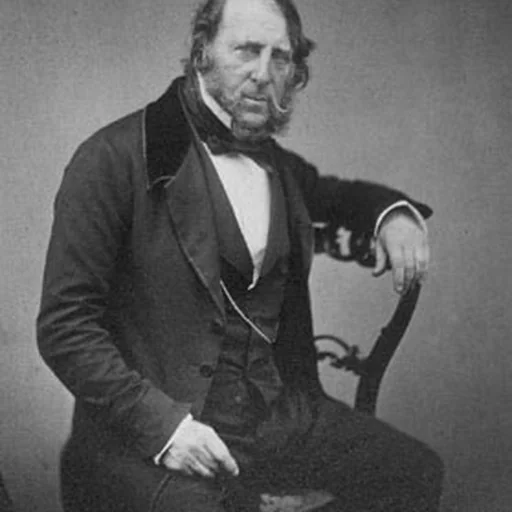
George Cruikshank or Cruickshank ( KRUUK-shank; 27 September 1792 – 1 February 1878) was a British caricaturist and book illustrator, praised as the "modern Hogarth" during his life.

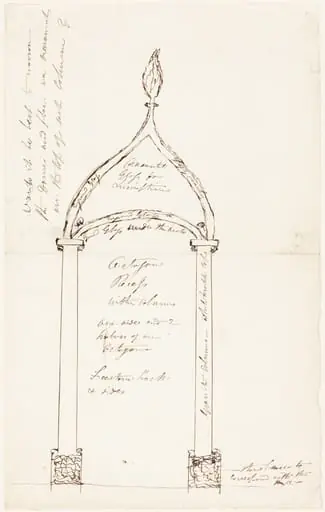 Sketch of Octagon Recess with Columns
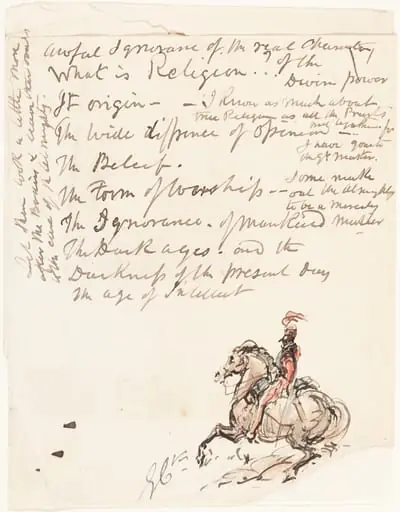 Sketch of Mounted Hussar
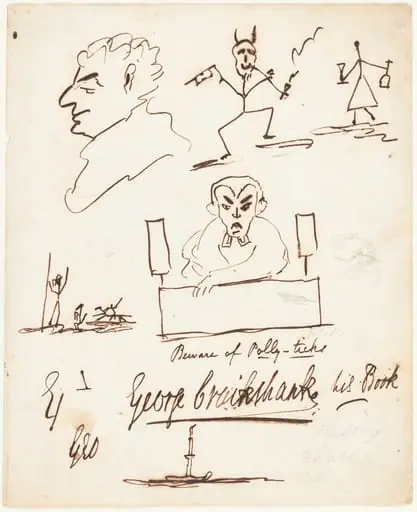 Satirical Sketches
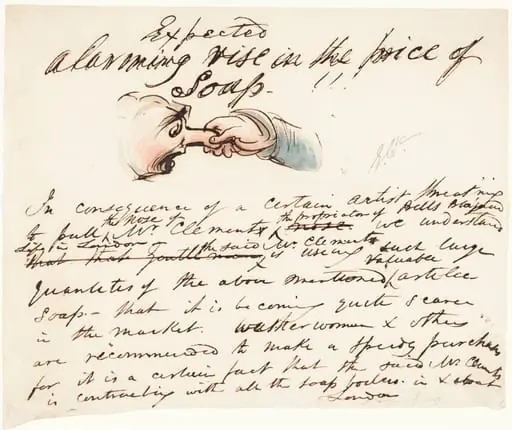 "Expected--alarming rise in the price of soap!"
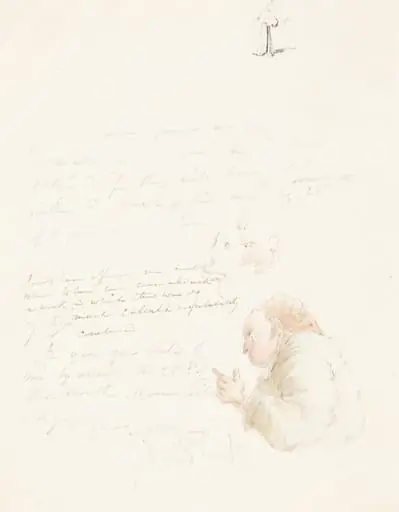 Half-Length of a Lawyer and Other Sketches
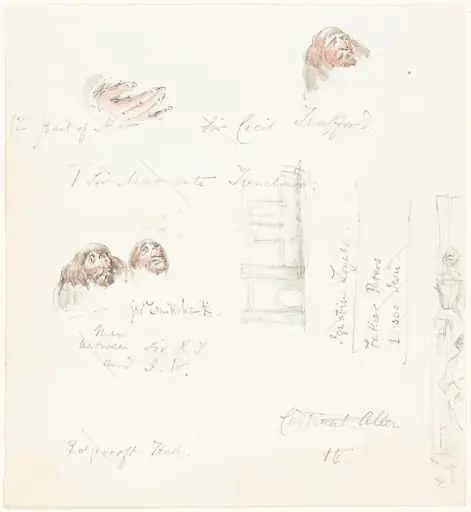 Sketches of Grotesque Faces
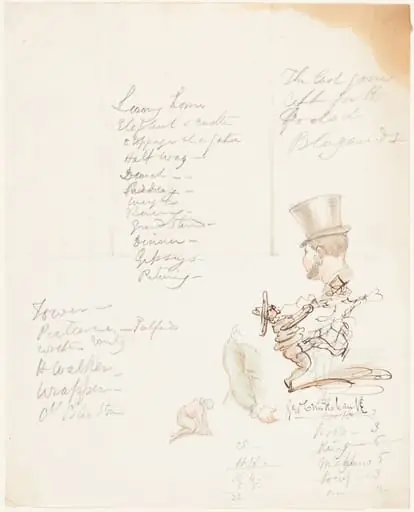 Sketches of Head, Arm, and Kneeling Figure
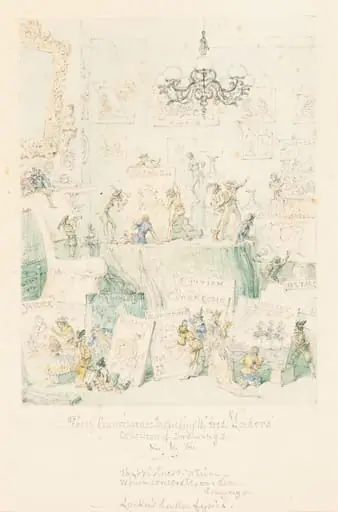 Fairy Connoisseurs Inspecting Mr. Frederick Locker's Collection of Drawings