Artwork
Căruțe Tulcea
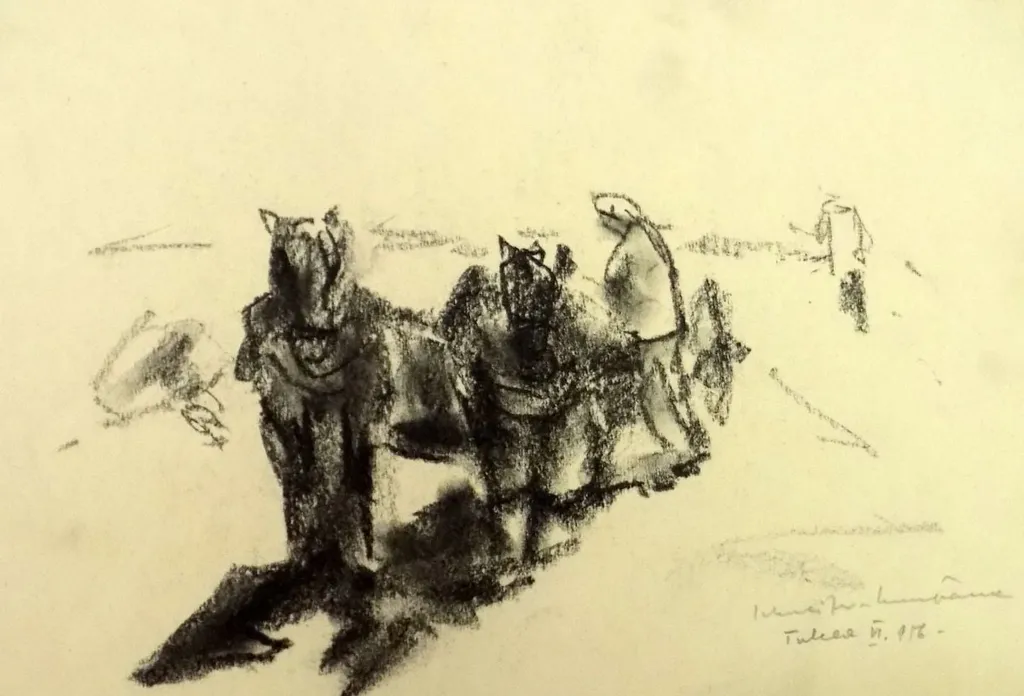
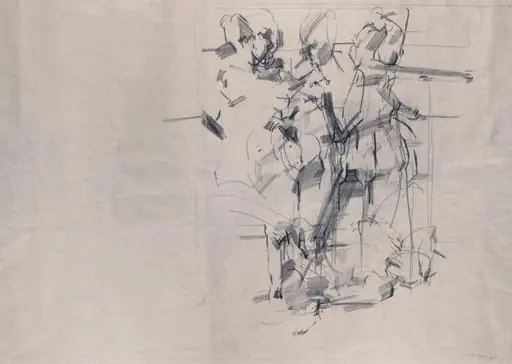
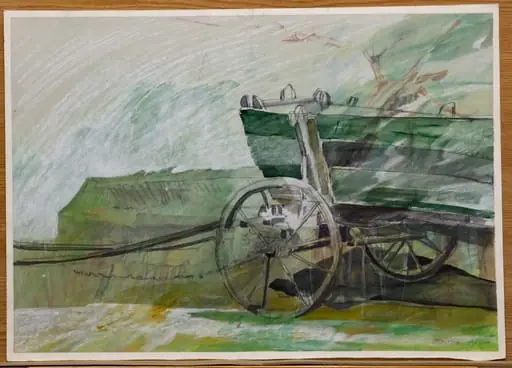
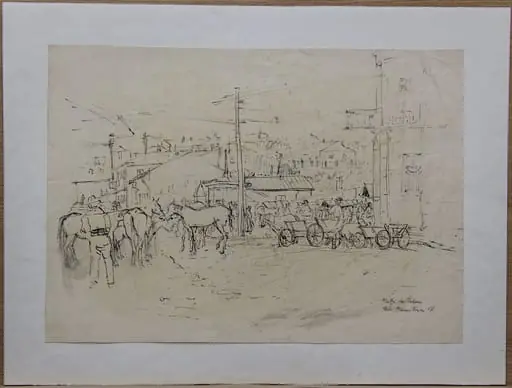
Căruțe Tulcea is a drawing by Rudolf Cumpăna-Schweitzer. It is held in the collection of the Bucharest Municipality Museum. This sketch depicts three figures seated on a horse-drawn cart, rendered in rapid, energetic lines.
About this work
Overview
This sketch depicts three figures seated on a horse-drawn cart, rendered in rapid, energetic lines. The artist’s hand moves with urgency, capturing motion rather than detail. The horses are suggested with bold, rough strokes, conveying strength without refinement. The overall impression is one of immediacy — a fleeting moment recorded in transit, with no attempt at polish or finish.
Subject & Meaning
The scene portrays rural laborers or travelers bundled against the cold, moving along a path likely in the Dobruja region. Their hunched postures and layered clothing imply hardship or endurance. The absence of context — no landscape, no buildings — focuses attention on the human and animal effort, suggesting a quiet dignity in everyday movement.
Technique & Style
The drawing employs loose, gestural lines with minimal shading, avoiding precise contours. Horses and figures emerge through overlapping strokes, their forms implied rather than defined. The sketchiness creates a sense of motion and spontaneity, as if the artist responded directly to the scene before them, prioritizing energy over completion.
History & Provenance
The work is unsigned in a legible hand but undated, leaving its origin in time uncertain. It likely stems from the artist’s field studies, possibly during travels in northern Romania. No documented exhibition or collection history is known, suggesting it remained a private study rather than a public work.
Context
This sketch aligns with 19th-century European traditions of on-site drawing, where artists recorded rural life with immediacy. Similar studies by Romanian and Eastern European contemporaries reflect an interest in peasant labor and regional character, often as part of broader national identity projects during periods of cultural awakening.
Legacy
Though not widely exhibited, the sketch exemplifies a mode of artistic observation valued for its honesty and directness. Its unfinished quality invites viewers to consider the process of seeing and recording, rather than the polished result — a reminder of art’s role in capturing transient moments of ordinary life.
Artist & collection
Artist
Rudolf Cumpăna-Schweitzer left a small but vivid slice of everyday life in mid-20th-century Romania.