Artwork
Saints Stephen, Sixtus, and Lawrence
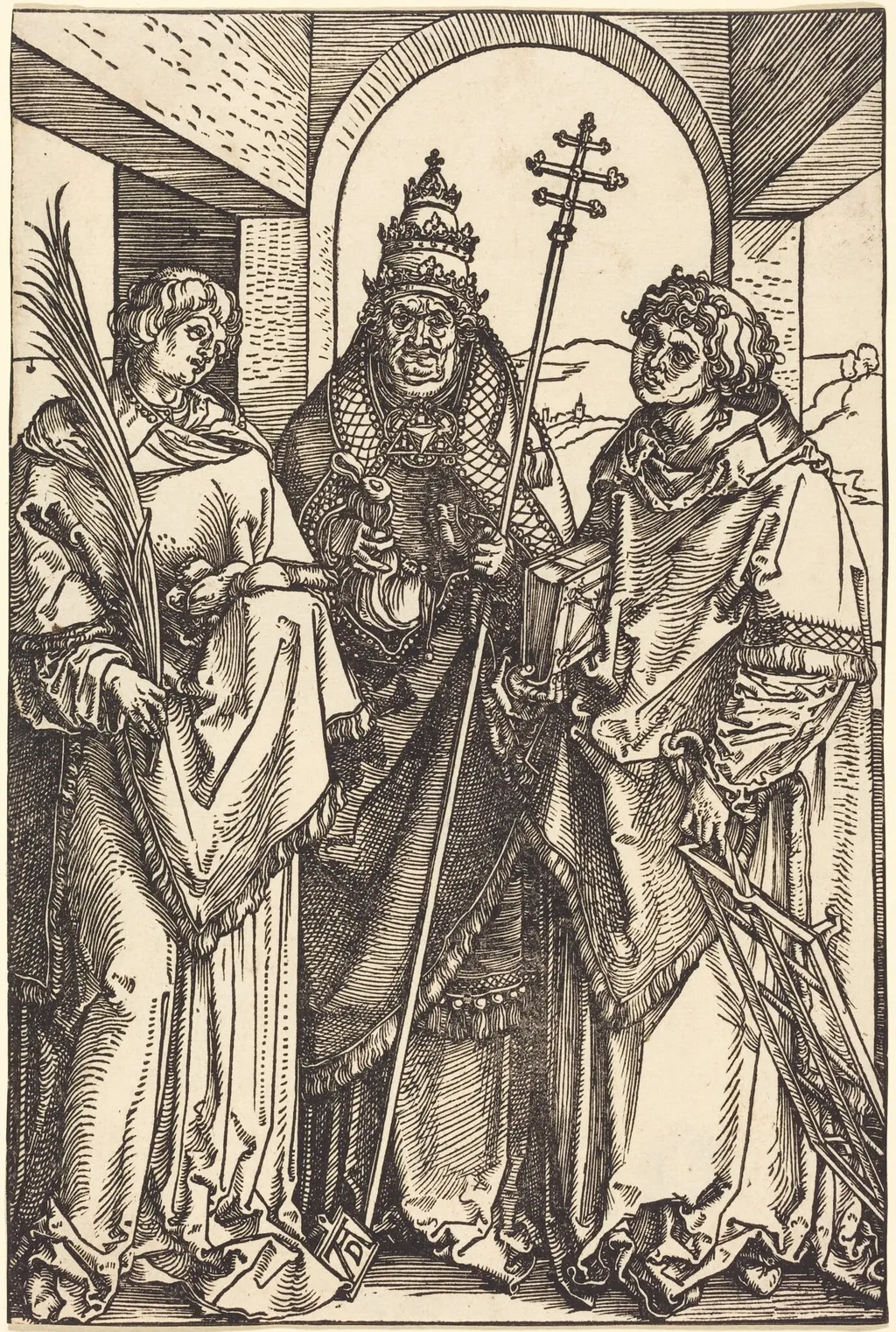
Saints Stephen, Sixtus, and Lawrence is an ink print by the Northern Renaissance artist Albrecht Dürer. It dates from 1504 and is held in the collection of the National Gallery of Art.
About this work
Overview
Albrecht Dürer’s woodcut, dated around 1504, presents three early Christian martyrs—Saint Stephen, Saint Sixtus, and Saint Lawrence—arranged in a solemn, linear composition. Executed on laid paper, the print exemplifies Dürer’s precise handling of line and his interest in rendering fabric and form with a delicate, almost tactile quality.
Subject & Meaning
Each saint is identified by his traditional emblem: Stephen clutches a stone, recalling his death by stoning; Sixtus holds an open book and a broken staff, symbols of his episcopal authority and martyrdom; Lawrence grips a grill, the instrument of his execution by roasting. Together they embody the virtues of faith and sacrifice.
Technique & Style
The image was carved from a single wood block, then inked and pressed onto laid paper, a common support in early 16th‑century printmaking. Dürer’s fine incisions produce soft folds in the robes and subtle shading, creating a sense of depth while maintaining the crispness characteristic of his graphic work.
History & Provenance
Created in the early 1500s, the print belongs to Dürer’s series of religious woodcuts intended for devotional use. It has survived in several impressions, most of which entered European collections during the 19th century, and is now held by major institutions that specialize in Northern Renaissance prints.
Context
The work reflects the period’s renewed interest in hagiographic subjects, aligning with the Catholic Church’s emphasis on martyr narratives. Dürer’s approach combines the detailed observation of his drawings with the reproducibility of print, allowing the image to reach a wider audience than a painted altarpiece.
Legacy
Dürer’s treatment of the three saints influenced subsequent German printmakers, who adopted his careful line work and compositional balance. The print continues to be studied for its technical mastery and its role in the dissemination of religious iconography in the early modern era.
Artist & collection
Artist
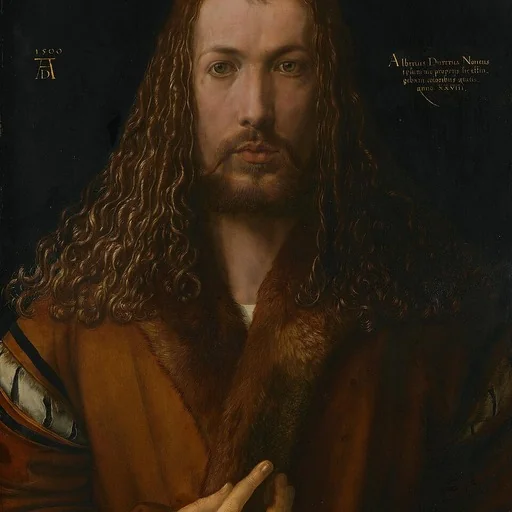
Albrecht Dürer spent his life in Nuremberg, a busy German city where artists traded prints like currency.

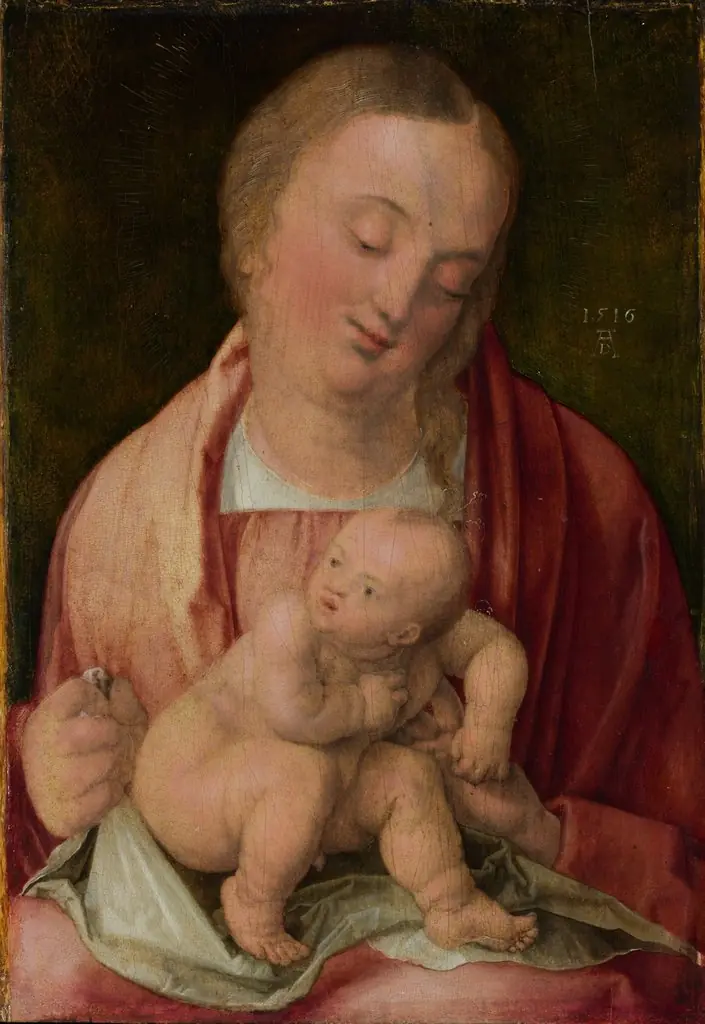
![Madonna and Child [obverse], by Albrecht Dürer](https://artifactworldgallery.com/img/albrecht-durer--madonna-and-child-obverse--d7b8ebf05d22ebe5-w320.webp)
![Lot and His Daughters [reverse], by Albrecht Dürer](https://artifactworldgallery.com/img/albrecht-durer--lot-and-his-daughters-reverse--b4ebf9b282faa17a-w320.webp)